Burkina Faso Cuts Ties with France in 2026
A significant diplomatic rupture in the Sahel region
Model Diplomat6 min readAfrica
France's Ouagadougou Rupture Buries Françafrique in the Sahel
Burkina Faso severed diplomatic ties with France on June 26, 2026, ordering its embassy closed within seven days. Paris has now withdrawn every diplomat — the endgame of a three-year collapse.
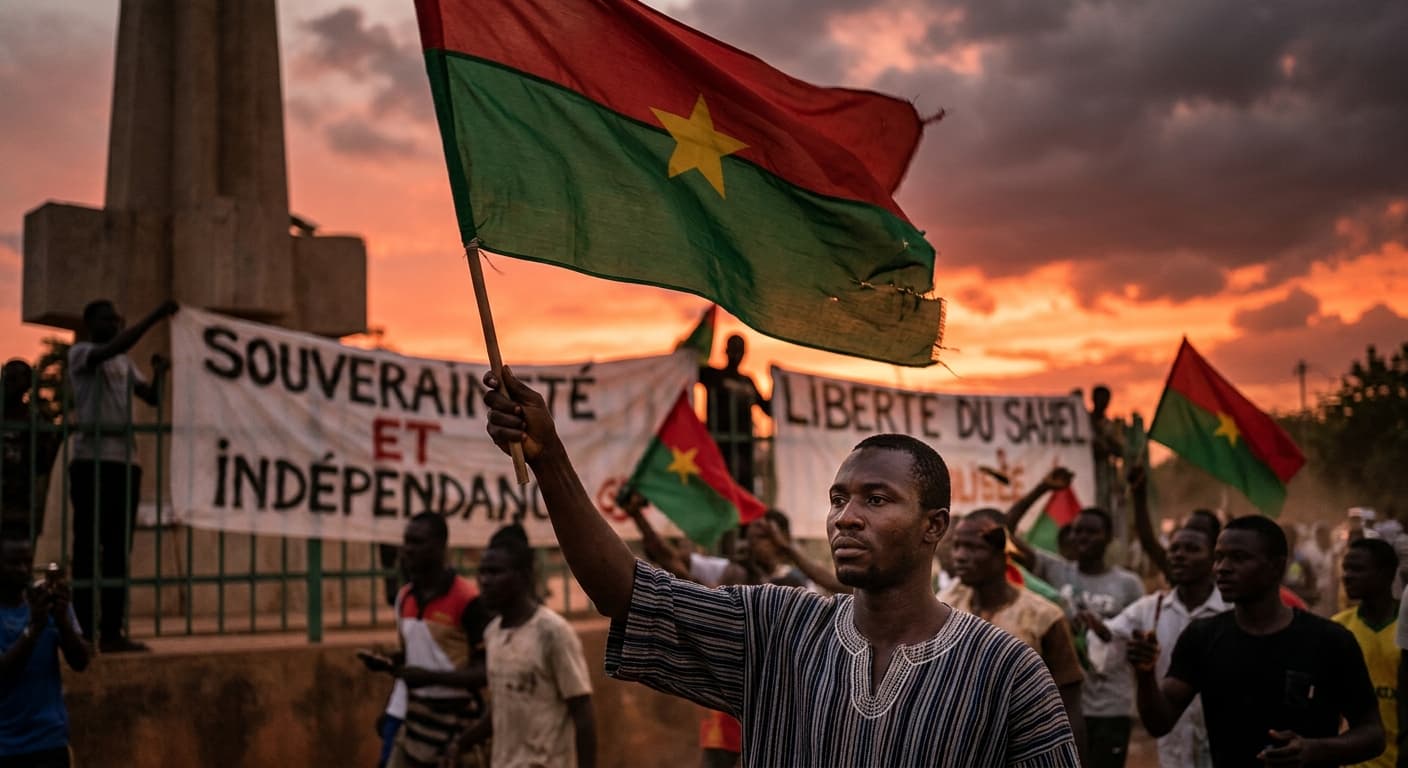
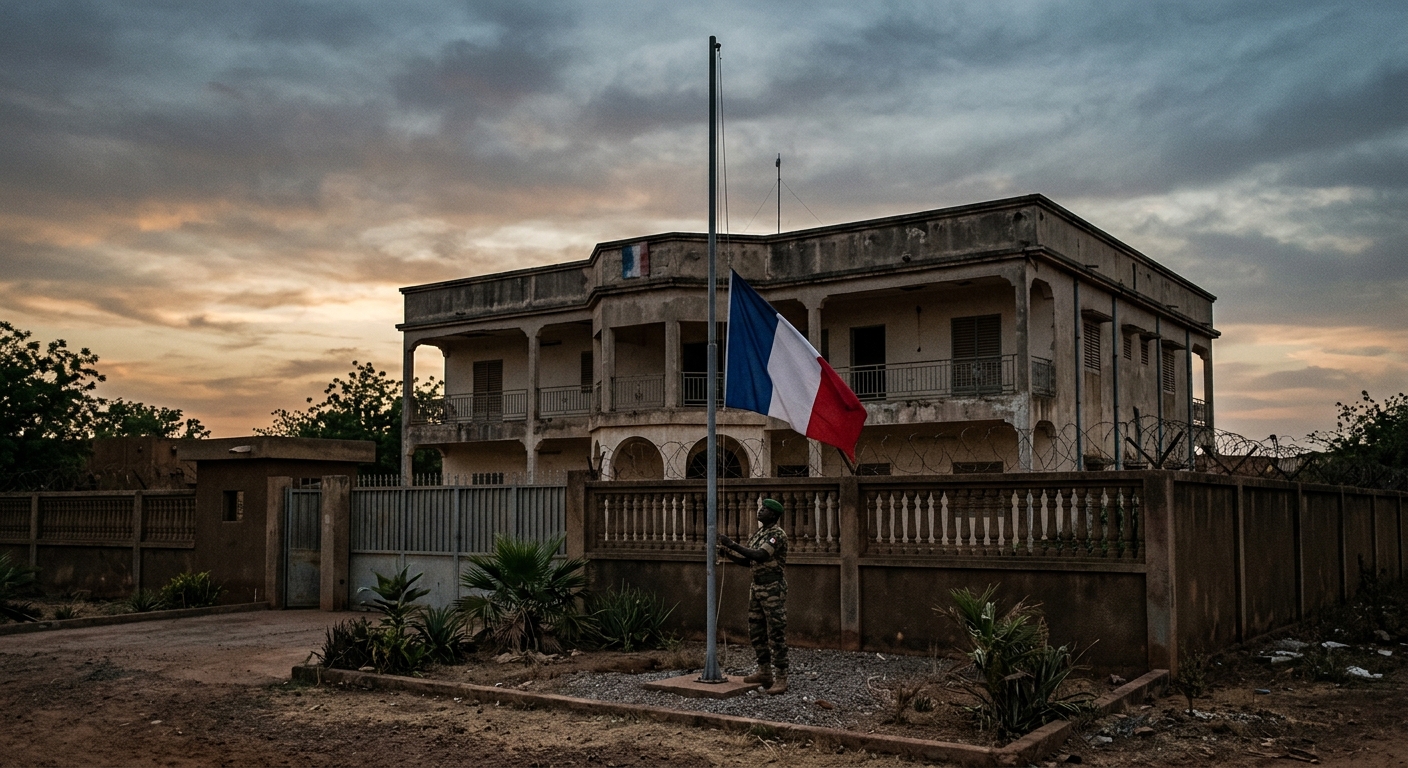
Burkina Faso's junta ended diplomatic relations with France on June 26, 2026, giving Paris seven days to shutter its embassy in Ouagadougou — a rupture that is more coda than earthquake, formalising a French exit from the Sahel that was already complete in every operational sense but this one. The consequential loser is not France, which lost its Sahel policy in 2022; it is Ghana, Togo, Benin and Côte d'Ivoire, now facing a Burkinabé collapse without any Western channel into Ouagadougou to slow it. According to BBC News, Communications Minister Pingdwendé Gilbert Ouédraogo accused France of "ceaseless activism" and "neo-colonial ambitions" in a televised statement; the French foreign ministry called the decision "hostile and unfounded" and evidence of the junta's "troubling drift."
What actually changed on June 26
Very little on the ground — and that is the point. France has not had an ambassador in Burkina Faso since January 2023, when Captain Ibrahim Traoré's transitional government requested the departure of Luc Hallade, according to
Al Jazeera. French forces completed their withdrawal from Ouagadougou on February 19, 2023, after Burkinabé authorities terminated the 2018 status-of-forces agreement in January and the 1961 military technical assistance accord on February 28, according to the
French Ministry for Europe and Foreign Affairs. Development aid and budget support were suspended by Paris on August 6, 2023, per a
Quai d'Orsay communiqué, though humanitarian aid was preserved. In April 2024, three French diplomats — Gwenaelle Habouzit, Herve Fournier and Guillaume Reisacher — were expelled after allegedly meeting civil society leaders, according to
Al Jazeera's reporting on the expulsions; Paris called the accusations "unfounded."
What the June 26 statement adds is the legal wrapper. Ouagadougou has now declared that "conditions for mutual respect no longer exist," while carving out — in the same communiqué — that the break "concerns exclusively the institutional framework of relations" and does not touch "the historical, human, cultural and social ties" between the two peoples, according to BBC News. That distinction matters: it preserves the roughly-Burkinabé diaspora in France, remittance flows and student channels. The Burkinabé chargé d'affaires staff were recalled from Paris; French diplomatic personnel have returned to France. The Quai d'Orsay's
travel advisory, most recently updated June 9, 2026, formally discourages all travel to the country and urges heightened vigilance for French nationals still on the ground.
The real story: a security vacuum coastal states cannot ignore
The rupture matters less for what it does to France than for what it seals inside Burkina Faso. The country is now the world's second-most terrorism-affected state behind Pakistan, according to the Global Terrorism Index 2026 summary reported by BBC — with fatalities up 68% year-on-year even as attack counts fell 17%, meaning each attack is deadlier. The Institute for Economics and Peace's earlier
2025 index already found the Sahel accounted for 51% of global terrorism deaths, with 3,885 of 7,555 worldwide fatalities occurring in 2024 — and Burkina Faso alone hosting nine of the world's twenty deadliest attacks that year, per the
Atlantic Council.
The West Africa Security Tracker's mid-year 2025 report recorded 3,539 conflict-related deaths in Burkina Faso in the first half of 2025 alone — 27.3% of West Africa's total — with JNIM, the al-Qaeda affiliate, responsible for roughly 2,370. Human Rights Watch documented at least 1,837 civilian killings between January 2023 and August 2025, attributing 1,255 of them to Burkinabé forces and allied militias,
BBC News reported; the government dismissed the findings as "conjecture and serious unfounded claims." The Atlantic Council's Africa Center estimates extremists now
operate freely across up to 80% of the territory, a figure Ouagadougou contests, and that government-aligned forces have killed 132% more civilians since Traoré's coup than in the preceding three-year period.
The security architecture that replaces the French one is thin. The Alliance of Sahel States (AES) — Burkina Faso, Mali and Niger — launched a 6,000-strong Unified Force headquartered in Niamey in December 2025, funded by a 0.5% import levy the three signed on March 28, 2025, according to the Institute for Security Studies. Russia's Africa Corps — the rebadged Wagner Group now formally under the Russian Defence Ministry — trains Burkinabé forces but, per ISS, is not in combat there as it is in Mali; engagement in Burkina Faso and Niger is "limited to training." That distinction is quietly consequential: Ouagadougou is farther from Moscow's operational reach than Bamako, and no other external partner is filling the counter-insurgency gap. As the
South African Institute of International Affairs argues, the vacuum left by MINUSMA, Barkhane and the G5 Sahel Joint Force is being filled unevenly by "opportunistic external actors" — Russia most prominently, but also Turkey, Iran, China and Gulf states.
Meanwhile, JNIM claimed more than 280 attacks in Burkina Faso in the first half of 2025 — double the same period a year earlier — with BBC Monitoring verifying nearly 800 killings the group attributed to itself since April 2025. Militants now operate across 11 of the country's 13 regions, according to the Global Initiative Against Transnational Organized Crime, cited by BBC. This is the country from which France now has zero diplomatic sightlines.
Who wins, who loses
The clearest losers are the West African coastal states. Chatham House's April 2025 assessment argued that with AES states abandoning ECOWAS security cooperation — the three formally withdrew on January 29, 2025 — coastal governments face insurgent spillover with fewer diplomatic channels into the countries producing it, per Chatham House. Togo recorded 52 terrorism deaths in 2024 — its worst year on record — with attacks concentrated along the Burkinabé border, according to BBC's
Sahel epicentre analysis. Benin has now climbed into the Global Terrorism Index's top 20. When the French embassy in Ouagadougou closes on schedule, so does the last significant Western diplomatic listening post inside Burkina Faso — a loss that hurts Cotonou, Accra, Lomé and Abidjan more than it hurts Paris. As ISS Africa warned in its
assessment of the ECOWAS-AES split, the alignment of the three central Sahel states with Russia — at a time when Western partners are repositioning in coastal capitals — has brought "face-to-face two blocs supported by opposing great powers."
France, by contrast, has largely already priced this in. President Emmanuel Macron's "Africa Forward" summit with Kenya on May 11–12, 2026 — deliberately held in an Anglophone capital — signalled Paris's pivot toward East and Anglophone Africa, according to the Observer Research Foundation. France's only full military base left on the continent is Djibouti, with roughly 1,500 personnel; small liaison detachments of 80 and 100 troops remain in Abidjan and Libreville respectively. As the Italian Institute for International Political Studies' Roland Marchal noted,
AES members were pointedly not invited to Nairobi — Paris has already written the Sahel out of its portfolio and does not intend to compete with Moscow there, a point
Clingendael flagged as the strategic core of Macron's revised Africa doctrine.
Russia is the notional winner but a limited one. The Real Instituto Elcano argues Africa Corps has "institutionalised" a regime-protection model in the central Sahel while sidelining European actors. Yet the security metrics have not improved under that model — they have worsened. And Traoré's regime is increasingly diversifying suppliers to Turkey, Iran and China rather than deepening dependence on Moscow, per ISS. The Observer Research Foundation frames the AES as
"an African NATO" in embryo, but its integration is more symbolic — a joint passport, tariff schedules and the Unified Force — than operational.
The historical parallel is not the 1960 wave of independence. It is 1966: Guinea's Sékou Touré expelled French advisers, aligned with Moscow, and paid a decade of economic isolation. What is different in 2026 is that Russia is not the Soviet Union; it can provide guns and Africa Corps trainers but not the state-building capital the Sahelian juntas need. And unlike Guinea, Burkina Faso is landlocked, food-insecure, and losing 68% more citizens to terror each year.
Discover more
US Politics
House Ethics Committee Pushes Sexual Miscond.
The House Ethics Committee has shifted responsibility for sexual harassment settlement records to the Office of Congressional Workplace Rights, complicating disclosure efforts.
US Politics
SNAP Food Assistance Faces Legal Challenges
In 2026, SNAP faces stricter eligibility rules and mounting legal challenges, threatening food assistance for the millions of Americans who rely on the program.
India
Rajnath Singh's Durga Squad for 2026 Polls
Rajnath Singh's Durga Squad promised women's safety in Bengal but has since disappeared from the agenda, revealing BJP's true priorities.
Conflict & Security
Guatemala: El Niño 2026–27 becomes regional security test
UNICEF: 25.8M children face El Niño risks in Latin America; Guatemala maps 188 municipalities for drought and food insecurity amid regional security test.