Washington's Belarus Pivot Has a Roadmap
A Quincy Institute blueprint for U.S.–Belarus relations
Model Diplomat3 min readeurope
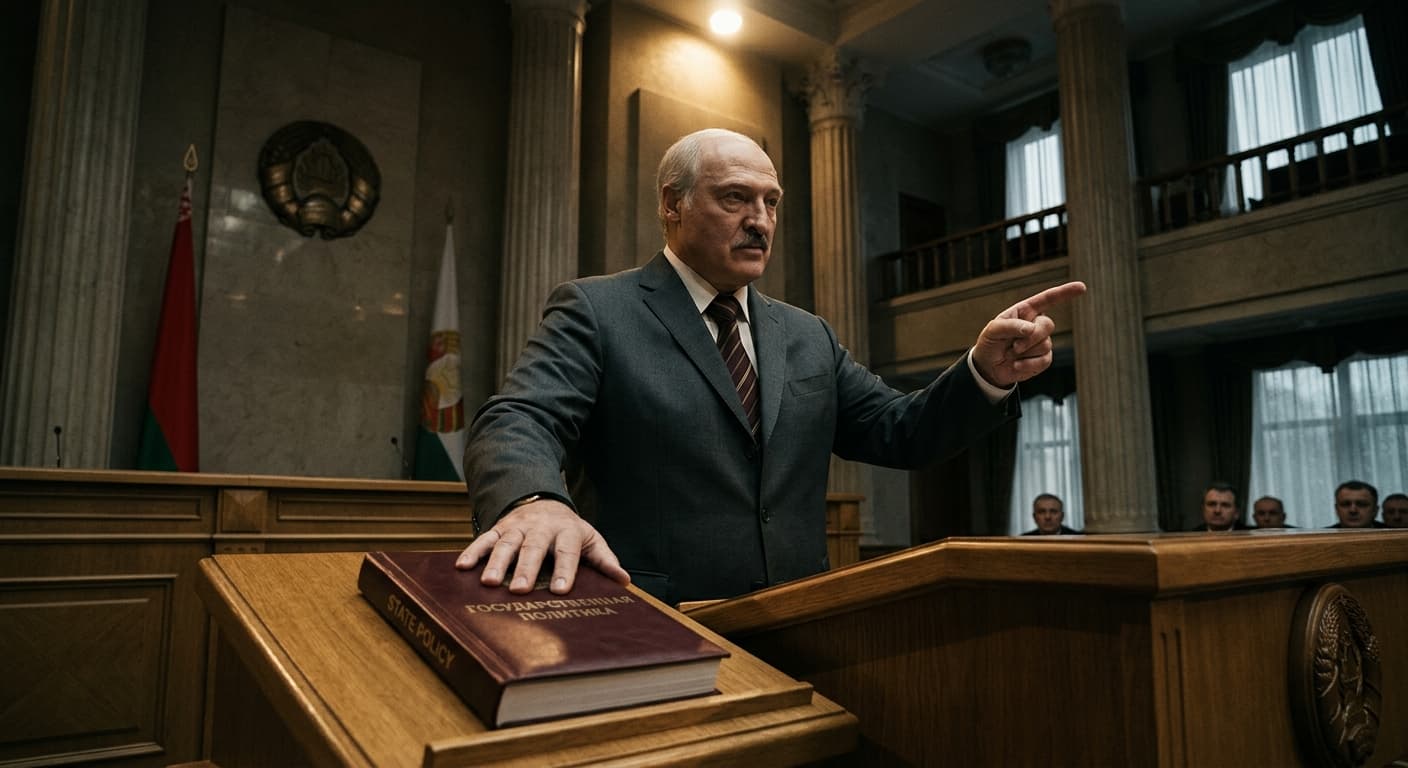
Washington's Belarus Pivot Has a Roadmap — But Lukashenko Holds the Cards
A Quincy Institute blueprint for engaging Minsk lands just as prisoner-swap diplomacy reshapes the U.S.–Belarus relationship. The logic is strategic; the beneficiary, for now, is Lukashenko.
The Quincy Institute for Responsible Statecraft has published a detailed policy brief laying out what it calls a "low-cost, low-risk roadmap" for normalized U.S.–Belarus relations — an argument that arrives not in a vacuum but in the middle of an active, transactional diplomatic channel between Washington and Minsk that has already produced the largest prisoner releases in Belarus in decades.
The timing is no coincidence. The paper, authored by Mark Episkopos, formalizes what the Trump administration has been doing in practice since June 2025, when Special Envoy Keith Kellogg became the highest-ranking U.S. official to visit Minsk in years. That visit produced the release of Siarhei Tsikhanouski, husband of exiled opposition leader Svetlana Tikhanovskaya, alongside 13 other political prisoners. By September, the quid pro quo had escalated: 123 prisoners were freed — including Nobel laureate Ales Bialiatski and activist Maria Kolesnikova — in exchange for U.S. sanctions relief on Belarusian potash exports and airline Belavia, BBC News and
Al Jazeera reported.
The Quincy brief's core argument is that treating Belarus purely as a Russian appendage — and sanctioning it accordingly — has backfired. Western maximum pressure, it contends, has driven Minsk into deeper economic integration with both Moscow and Beijing, giving China a foothold on NATO's eastern flank while doing nothing to dislodge Alexander Lukashenko. The alternative: engage Belarus as a sovereign "pivot player" between East and West, Minsk Herald noted in its coverage of the paper.
The Strategic Logic — and Its Limits
The geography is the argument. Belarus sits on what strategists call the "Belarusian Balcony" — a 1,000-kilometer staging ground between NATO and Russia that makes it central to any conventional or nuclear force posture in the region. The Quincy Institute's case, echoed by Episkopos in a companion piece for The National Interest, is that desecuritizing that balcony serves U.S. interests better than trying to flip it: Washington can retrench from Europe toward the Indo-Pacific only if NATO's eastern flank is stabilized, and stabilization requires constructive relations with the "in-between" states — Belarus, Moldova, Armenia, Georgia — on their own terms, not as prizes in a zero-sum contest with Russia.
There is a clear beneficiary logic here. Lukashenko gets what he has wanted since 2020: an end to diplomatic isolation and a path toward sanctions relief. The U.S. gets prisoner releases, a channel to Moscow via Minsk, and a hedge against Chinese economic penetration. European allies, still locked into sanctions regimes they are politically unable to unwind, get cover from Washington to eventually follow suit.
But the asymmetry is stark. Lukashenko has surrendered almost nothing of strategic substance. He continues to host Russian nuclear weapons on Belarusian soil. He remains Russia's co-belligerent in the Ukraine war, providing territory for the invasion's northern axis. The Institute for Global Politics in Kyiv warned that "Lukashenko's support for Russia's escalation course becomes a condition for his political survival, but it also makes it impossible to achieve positive changes in the Belarusian-American dialogue." The prisoner releases, while significant for the individuals freed, have been accompanied by fresh arrests — a pattern Tikhanovskaya herself flagged: "For 14 people released, 28 more were detained immediately,"
BBC News quoted her saying.
What to Watch
The next decision point is the reopening of the U.S. embassy in Minsk. Trump envoy John Coale told Reuters it would happen "in the very near future," BBC News reported. That would mark the first full diplomatic presence since 2022 and signal that Washington is treating the normalization as durable, not transactional.
The more consequential question is whether Lukashenko can deliver anything Moscow opposes. If engagement fails to produce even marginal Belarusian distance from Russia — on nuclear basing, on military integration, on sanctions evasion — the Quincy Institute's "low-cost, low-risk" premise collapses. At that point, the U.S. will have legitimized an authoritarian regime in exchange for prisoners Lukashenko can rearrest at will, while China and Russia consolidate the economic ground sanctions once denied them.
Discover more

US Politics
SNAP Food Assistance Faces Legal Challenges
In 2026, SNAP faces stricter eligibility rules and mounting legal challenges, threatening food assistance for the millions of Americans who rely on the program.
India
700 Activists Accuse PM Modi of MCC Breach
Over 700 activists allege PM Modi breached election code with a televised address attacking opposition parties just before state elections.
US Politics
Virginia's Redistricting Referendum
Virginia's redistricting referendum is drawing a flood of dark money, shaping future elections and the fight for congressional control amid party stakes.

Conflict & Security
Drone Warfare Killing Aid Workers at Unprec
Over 1,000 humanitarian workers killed in three years as cheap armed drones collapse legal protections. Gaza, Sudan, Ukraine, and DRC see deliberate targeting of aid convoys and hospitals with zero prosecutions.