BJP Puducherry March Sparks Women's Quota Row
Protests reveal political stakes behind women's reservation bill
Model Diplomat3 min readIndia
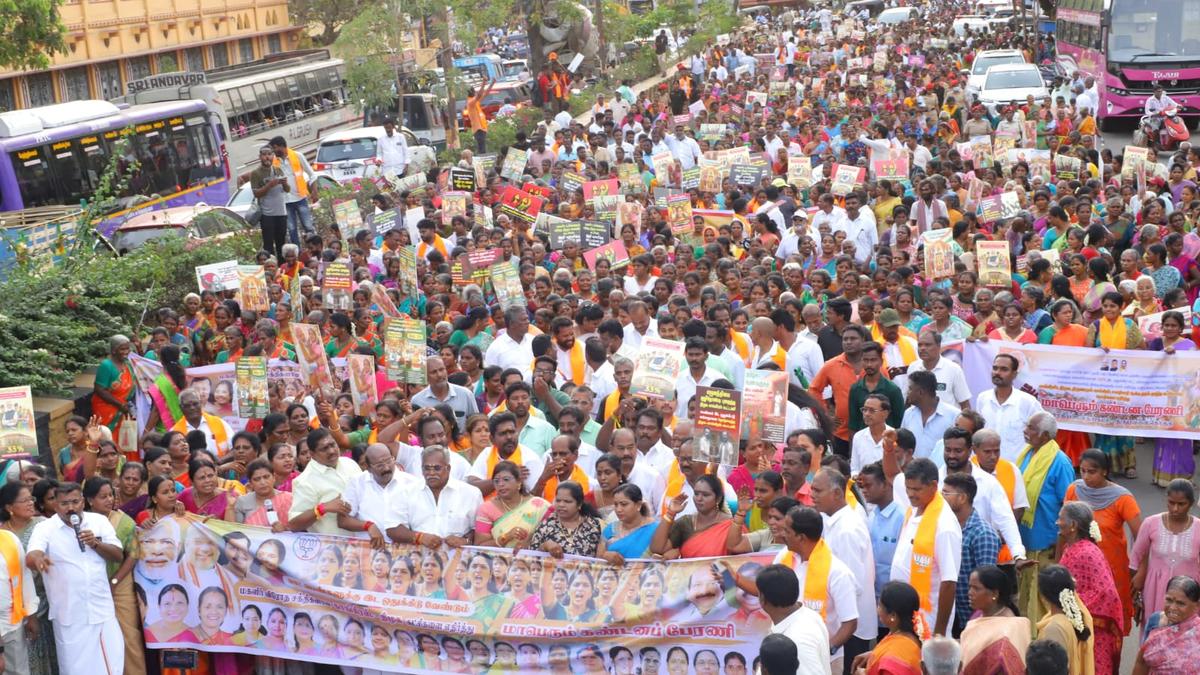
BJP's Puducherry March Exposes the Real Fight Behind Women's Reservation
BJP's nationwide protest campaign turns the INDIA bloc's parliamentary defeat of the reservation bill into a 2029 electoral liability for the opposition.
BJP's Puducherry unit staged a protest march on April 24, led by state president V. P. Ramalingam and Home Minister A. Namassivayam, drawing a crowd dominated by women activists and Mahila Morcha leaders. The march is not an isolated event — it is the Puducherry node of a coordinated, multi-state pressure campaign. Karnataka's BJP announced its own "Akrosha Yatra" across district centres on April 25, with constituency-level protests extending to April 27.
The trigger is specific: the INDIA bloc's successful defeat of the Constitution (131st Amendment) Bill, 2026 in Parliament, a bill that would have operationalised the 33% women's reservation in Lok Sabha and state assemblies by the 2029 elections.
What the Bill Actually Proposed — and Why the Opposition Blocked It
The BJP-led NDA government cleared the package on April 8, introduced it in a special session (April 16–18), and passed the introduction motion 251–185 in Lok Sabha. The bill had two faces: it decoupled the women's quota from a future census (originally tying implementation to around 2034) by anchoring delimitation to 2011 Census data, and simultaneously proposed expanding Lok Sabha seats from 543 to 816 — a 50% increase.
That second element is what broke the INDIA bloc's calculus. Congress president Mallikarjun Kharge announced on April 13 the bloc was not against women's reservation in principle but unanimously rejected the delimitation provisions. DMK's M. K. Stalin demanded a delay to June and guaranteed representation for 30 years. Trinamool Congress gave ambiguous signals. The bloc held — and the Constitutional Amendment Bill fell, requiring a two-thirds majority the NDA could not reach. The Hindu reports the coalition's unity was "neither automatic nor obvious," but it held where it mattered.
The BJP's read: the opposition handed them a narrative weapon. Amit Shah and the party apparatus are now framing the bloc's procedural objections as opposition to women's political representation — full stop. The Puducherry and Karnataka marches are the opening volley of that campaign.
Who Holds the Leverage
BJP benefits from the optics almost regardless of outcome. If the bill eventually passes with opposition amendments, Modi claims the win. If the bloc continues to resist, the BJP has a durable mobilisation issue targeting women voters in southern states — precisely where the party is structurally weak and where delimitation anxieties run deepest.
The INDIA bloc loses on framing even if it wins on procedure. Southern parties — particularly DMK — have legitimate fears that a seat expansion exercise redrafts constituencies to dilute their share. But that argument is harder to sell to a voter in Puducherry than "we blocked women's reservation."
Puducherry specifically is a Union Territory explicitly named in the bills' UT extension provisions, making it a symbolically loaded site for the protest. The territory's small assembly — currently 33 seats — would be directly affected by any delimitation exercise. Learn more about Indian political dynamics.
What to Watch Next
April 25–27: BJP's Karnataka Akrosha Yatras will test whether the street-level campaign generates media traction beyond party cadre.
The critical moment is the next parliamentary session. The government has the Women's Reservation Act already notified into force as of April 16 — but without the amendment, it remains unimplementable before 2034. That gap is BJP's legislative lever. Watch whether NDA reopens negotiations with DMK or SP individually, bypassing bloc solidarity, before the monsoon session.
Discover more
India
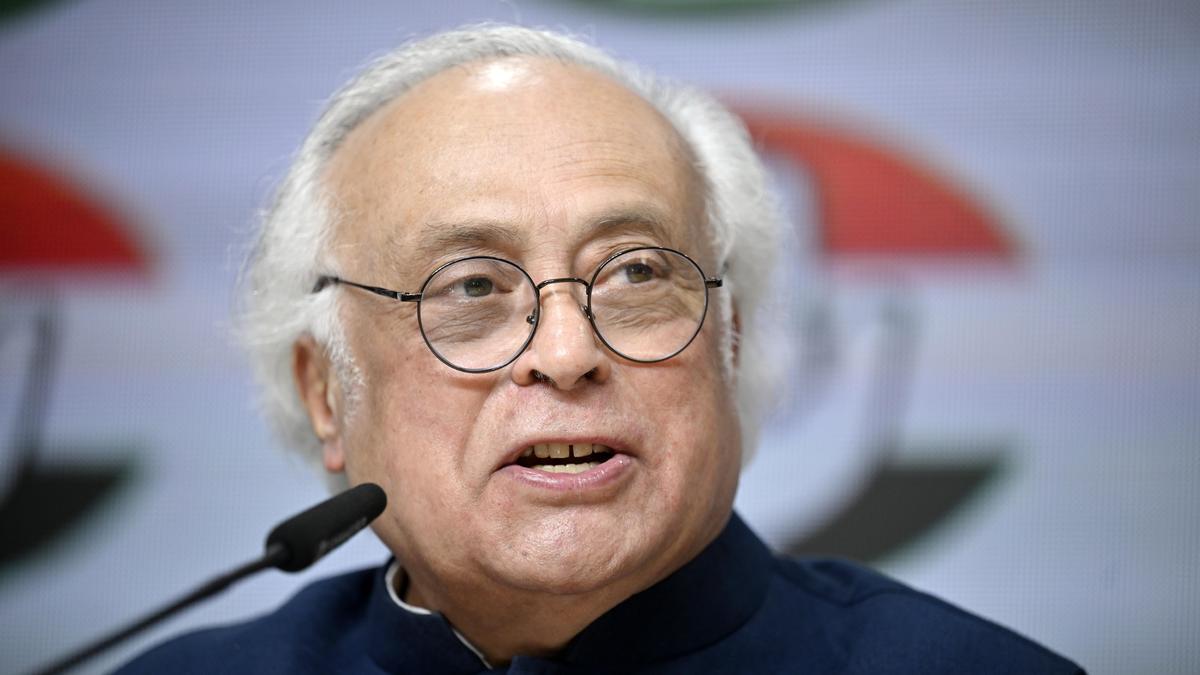
Congress Accuses Modi of Stalling Women's Law
Congress accuses Modi of stalling women's reservation law by linking it to delimitation, revealing a deeper electoral strategy.
India
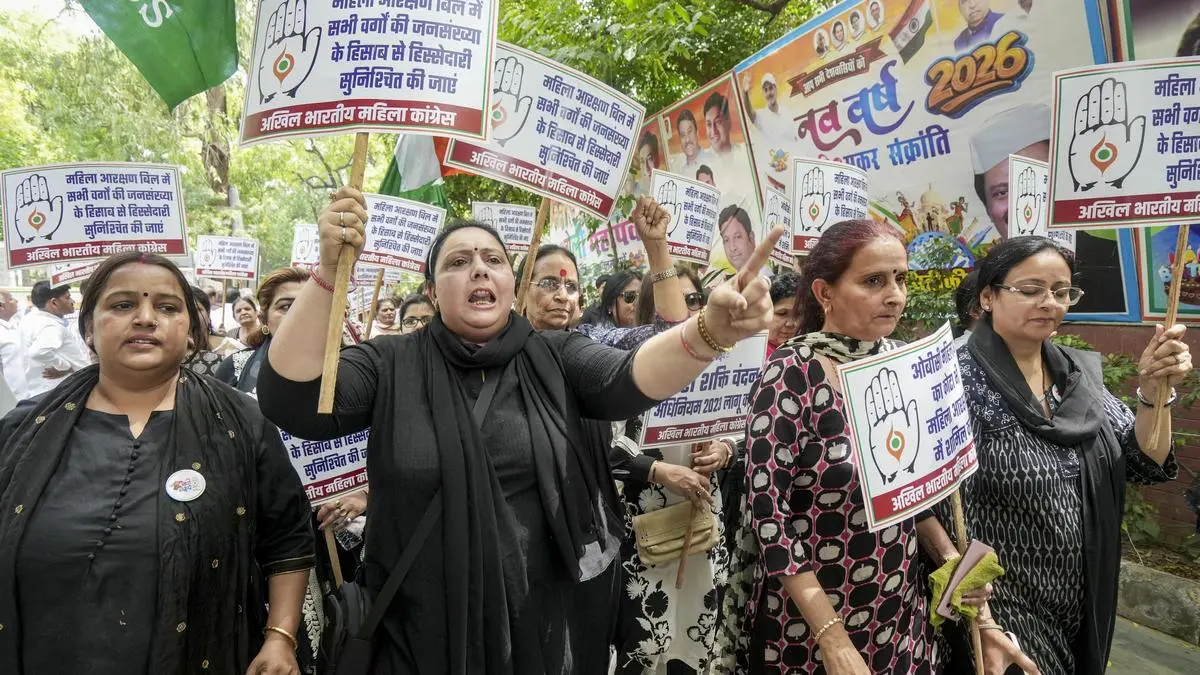
BJP's Misunderstanding of Women's Quota Needs
The BJP's linking of the Women Reservation Bill to delimitation risks delaying women's empowerment in India, misreading the aspirations of female voters.
India
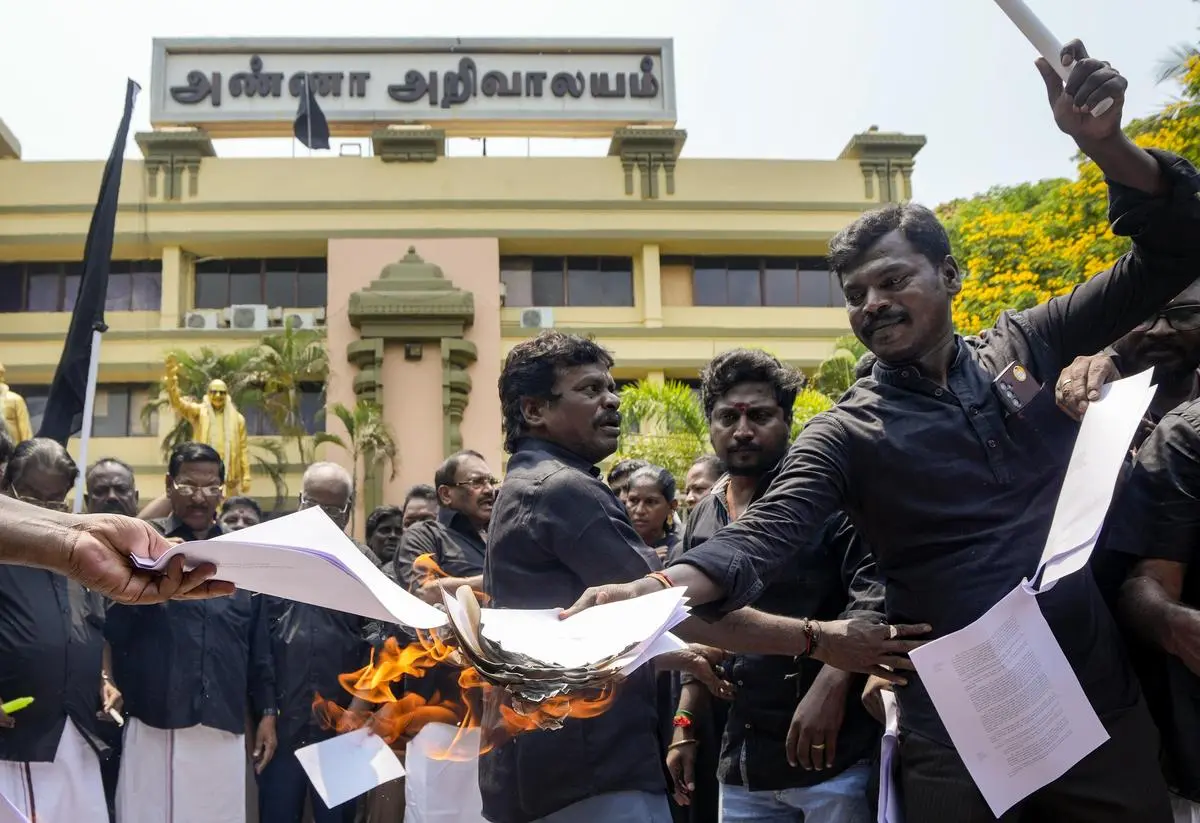
Women’s Reservation Bill 2026
The Constitution (131st Amendment) Bill, 2026 was defeated in Lok Sabha, revealing deeper political conflicts over women's reservation and delimitation.

Conflict & Security
Drone Warfare Killing Aid Workers at Unprec
Over 1,000 humanitarian workers killed in three years as cheap armed drones collapse legal protections. Gaza, Sudan, Ukraine, and DRC see deliberate targeting of aid convoys and hospitals with zero prosecutions.