BJP's Moves Threaten India's Reservation Law
Modi's strategy raises concerns over caste quotas.
Model Diplomat8 min readIndia
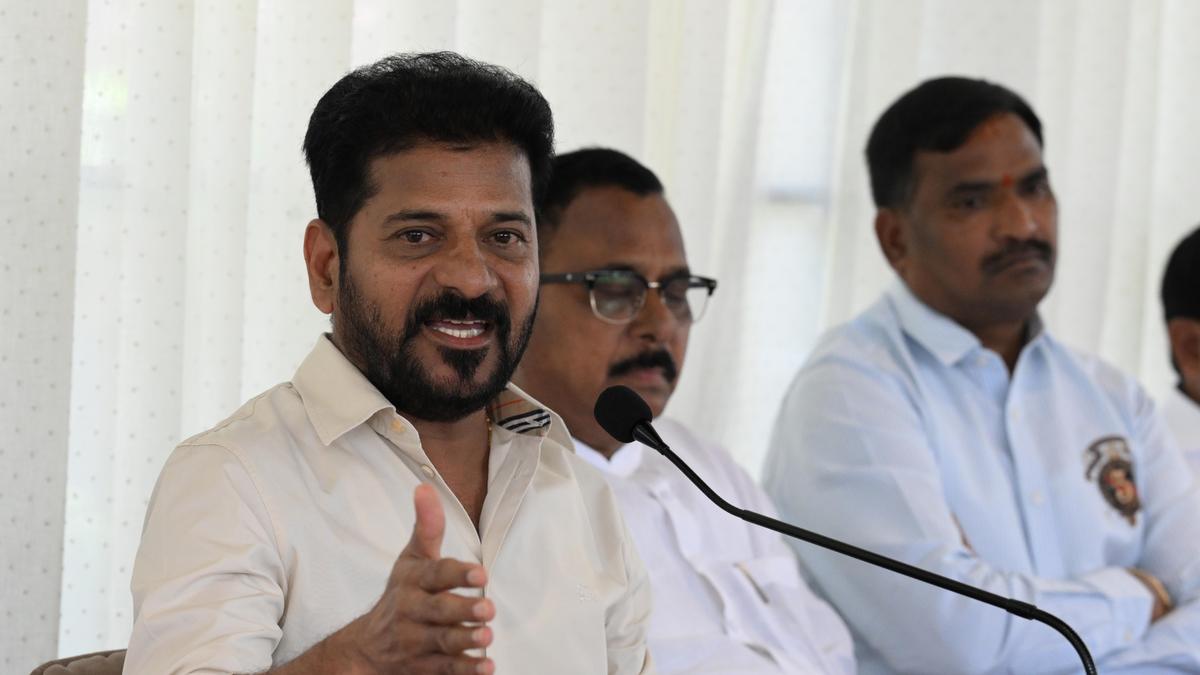
BJP's Moves Threaten India's Reservation Law: The Delimitation Trap
After the 298–230 defeat of Modi's 131st Amendment, the Bharatiya Janata Party is regrouping to bundle women's quotas with a redraw of India's political map — and Congress alleges the real target is caste reservation itself.
The reservation debate in India is no longer about whether women get 33% of Lok Sabha seats — it is about whether Prime Minister Narendra Modi can extract a two-thirds constitutional majority by welding that quota to a delimitation exercise that would tilt Parliament decisively toward the Hindi belt. On April 17, 2026, the Constitution (131st Amendment) Bill fell 62 votes short of the two-thirds needed, the first constitutional-amendment defeat of Modi's tenure. Ten weeks later, on June 24, Congress general secretary Jairam Ramesh escalated the charge — telling PTI Videos that the BJP's
real target is a two-thirds majority to scrap SC/ST/OBC reservation. That is the political framing that now governs the reintroduction expected this winter: every attempt to touch the reservation architecture, however dressed, will be read as an attempt to unpick it.
The bill that broke Modi's amendment streak
The Bharatiya Janata Party (BJP)-led government convened a special session between April 16 and 18, 2026 to pass three linked instruments: the Constitution (131st Amendment) Bill, the Delimitation Bill, and the Union Territories Laws (Amendment) Bill. All three were formally introduced "for providing for reservation of seats for women in the House of the People and the Legislative Assemblies by delimitation of territorial constituencies," according to the Parliament's own Budget Session productivity release.
The bills would have raised the Lok Sabha's ceiling from 550 to 850 seats, used the 2011 census as the enumeration base, and rotated one-third of the enlarged chamber for women. The Carnegie Endowment — in its post-mortem, "Delimitation After Defeat" — argues that the women's quota "functioned as a vehicle to push through a broader reengineering of India's electoral design." The opposition read it exactly that way.
The vote was 298 in favour and 230 against. Modi's National Democratic Alliance holds 293 Lok Sabha seats; a constitutional amendment requires 360, as Al Jazeera noted the morning the session opened. Rahul Gandhi told the House the package "has nothing to do with empowering women. It is an attempt to change the country's electoral map, using and hiding behind India's women." Home Minister Amit Shah countered on the floor that under the proposed 50% expansion, the south would move from 129 seats to 195 — its national share holding at roughly 24% — and that the Delimitation Commission Act itself was reproduced "down to the full stops and commas," per the
government's official summary of Shah's intervention. The numbers did not persuade.
Why Congress is now escalating to the reservation frame
The June 24 statement from Ramesh — that the BJP's "real and ultimate target" in seeking a two-thirds majority is to "amend the Constitution for ending reservation" — is not a fresh factual claim. It is a political repositioning. The opposition has decided that the most durable line of defence against a redrawn map is to link it, in voter perception, to the caste-reservation architecture that binds the Mandal-era coalition Congress has spent a decade rebuilding.
The manoeuvre has history behind it. Rashtriya Swayamsevak Sangh (RSS) chief Mohan Bhagwat's 2015 call for a "review" of the reservation policy is widely credited with costing the BJP the Bihar assembly election that year. Bhagwat has since publicly endorsed constitutional reservation for as long as social discrimination persists — but the earlier remark remains a touchstone for opposition parties arguing that the Sangh Parivar's instinct on quotas is corrective, not protective.
The BJP's counter-record is more complex than the "wants to scrap it" charge admits. The Modi government legislated a 10% Economically Weaker Sections (EWS) quota in January 2019 that the Supreme Court upheld in November 2022 — a ruling that, crucially, pierced the 50% ceiling set by the 1992 Indra Sawhney judgment for the first time. That precedent cuts two ways for the reservation edifice. It expands the reach of affirmative action while dismantling the constitutional firewall that once protected the Mandal settlement. The court held the 50% cap "is not inflexible," as legal analyst summaries at the
Vivekananda International Foundation recorded — a doctrinal shift with quiet consequences.
The map redraw is the actual prize
The 1971 freeze on inter-state seat reallocation has left India with a malapportionment problem that grows every year. One MP in Bihar represents roughly 3.1 million citizens; in Kerala the ratio is 1.75 million, per the Takshashila Institution. Extrapolating from the 2011 census, Takshashila estimates the northern states of Bihar, Madhya Pradesh, Uttar Pradesh and Rajasthan would gain 22 seats between them under a pure population-based redraw, while Tamil Nadu, Kerala, Andhra Pradesh and Telangana lose 17. An
academic modelling exercise published in RSIS journals puts the north's gain higher — 43 seats — and the south's loss at 24.
The BJP draws its parliamentary majority overwhelmingly from that northern zone. Any straight population-based delimitation therefore hands it structurally more seats before a single vote is cast in 2029. The party's proposed workaround — a "uniform 50% increase across all states" preserving each state's current share — was not written into the draft Delimitation Bill, as Vidhi Centre for Legal Policy's Arghya Sengupta pointed out to the BBC. "While no state may lose seats, the absence of a clear proportional formula means outcomes could vary — and favour more populous states," Sengupta said. Tamil Nadu Chief Minister M.K. Stalin publicly burned copies of the draft.
The reservation angle — real threat or opposition rhetoric?
Three concrete mechanisms explain why Congress can plausibly link a delimitation-driven Lok Sabha expansion to a threat against caste reservation, even if the BJP never explicitly proposes cutting quotas.
First is the arithmetic of a two-thirds majority. Article 368 of the Constitution requires two-thirds of members present and voting to amend the Constitution. The 2023 Nari Shakti Vandan Adhiniyam, passed as the 106th Amendment, added Articles 330A and 332A — but the same procedure can amend Articles 15, 16, 330 and 332, the SC/ST reservation provisions. A BJP capable of clearing two-thirds routinely — as it briefly appeared able to in 2019 — is a BJP that can rewrite the caste-reservation clauses without opposition consent. The 131st Amendment defeat matters precisely because it confirmed that threshold is not currently within reach.
Second is the Indra Sawhney erosion. The 50% cap was the operational cordon around caste reservation for three decades. The EWS ruling in Janhit Abhiyan (2022) established that Parliament can breach it via constitutional amendment. If reservation totals can rise for one category, they can be reallocated for another. Karnataka's BJP government demonstrated the political utility in 2022, raising SC quotas from 15% to 17% and ST from 3% to 7% — pushing total state reservation to 56%, as the
Asia Pacific Foundation of Canada documented — and inviting a direct challenge to the ceiling.
Third is the design of the SC/ST reserved constituencies themselves. Reserved seats in the Lok Sabha are allocated on the basis of each state's SC and ST population share. Any pure population-based redraw would mechanically shift reserved seats from southern to northern states — regardless of intent. The Centre for the Study of Developing Societies' Sanjay Kumar told the BBC that "identifying seats for disadvantaged scheduled caste and scheduled tribe (SC/ST) women adds another layer of complexity" atop a fraught process. The reservation map changes even if the reservation percentage does not.
Who benefits, who loses
The immediate winner from the April defeat is the DMK-led southern bloc and the wider opposition INDIA alliance. Their veto held; the political map remains frozen; the assembly elections in Tamil Nadu and West Bengal will be fought on existing boundaries. The Institute of South Asian Studies at NUS called the defeat "the first major legislative loss for the Modi government since it came to power in 2014."
The immediate loser is the BJP's short-cut to 2029 dominance. Modi's cabinet cannot revive the bill without either a compromise formula that guarantees no southern loss in writing — which the draft text conspicuously omitted — or fresh census data. The first phase of enumeration began on April 1, 2026; the government has committed to a caste census in the individual-enumeration phase. Results are not expected until 2027 at the earliest, meaning any legally sound delimitation reallocation cannot commence before then, as Carnegie noted.
The second-order loser is the reformist case for expanding the Lok Sabha at all. The Takshashila Institution's post-mortem on the 131st Amendment argues that expansion to 850 seats "may soften the political problem of apportionment, but it does not solve and may actually worsen the institutional problem of Parliament's effectiveness." A Lok Sabha that already averages 2.5 million constituents per MP — two to three times international norms — has a legitimate representation deficit. That reform is now hostage to the reservation fight.
What to watch next
- Winter session, November–December 2026. Reports cited by
The Wire suggest the BJP is redrafting the package, potentially decoupling the "uniform 50% pro-rata" guarantee into the primary amendment text to peel off a southern regional party or two.
- Census timeline. Home Minister Amit Shah has confirmed that caste data will be captured in the
population enumeration phase. Publication of caste tables will restart the OBC sub-quota fight inside the women's reservation, an issue Samajwadi Party leader Akhilesh Yadav already raised on April 16.
- State elections. Tamil Nadu and West Bengal assembly polls in 2026 are effective referenda on the delimitation package. A BJP setback in either state effectively kills the political capital needed for a second attempt before 2029.
Diplomat View
The Congress framing — that the BJP wants two-thirds power to end reservation — is a stretch as a literal forecast, but it is analytically defensible as a description of capability risk. The 131st Amendment defeat does not prove Modi wants to scrap caste reservation. It proves that he cannot currently clear the constitutional threshold that would let him touch it. That is the load-bearing fact of Indian domestic politics for the next 36 months.
Our call: the delimitation package returns in modified form before the 2027 census results — the government will not concede its best pre-election lever — but any bill that does not statutorily lock in the "no southern loss" guarantee will fail again. The forecast changes if two conditions hold: the BJP wins Tamil Nadu or peels off Chandrababu Naidu's Telugu Desam Party from a firm southern veto, and the caste-census data is timed to arrive before the 2029 poll. Absent those, the reservation architecture is politically safer today than it was on April 15, 2026 — precisely because the opposition has learned that "reservation under threat" is the one frame that unites its base.
The Bottom Line
The bottom line: India's reservation law is not under legislative threat — it is under architectural threat, and the 131st Amendment's 298–230 defeat is the clearest evidence yet that the opposition understands the difference. As long as the BJP cannot bundle delimitation with women's quotas past a two-thirds vote, the caste-reservation edifice built on Indra Sawhney holds. The moment it can, the map redraw does the work no explicit repeal ever would.
Discover more

India
Berhampur Flips to BJP as Odisha's Swing Deep
The BJP's win in Berhampur marks a major shift in Odisha's political landscape, deepening the state's swing toward the party at the expense of regional rivals.
India
BJP's Falta Win Signals TMC's Decline
The BJP's win in Falta exposes the TMC's fraying local machinery and leadership cracks in West Bengal, signaling deeper trouble for Abhishek Banerjee's party.
India
Amit Shah’s UCC Promise and Tribal Votes
Amit Shah's Uniform Civil Code promise aims to win tribal votes while advancing the BJP's broader agenda, exposing the tensions inside its identity politics.
India
BJP’s West Bengal Sweep Forces Rethink
The BJP's sweeping victory in West Bengal reshapes Indian politics, forcing a battered Opposition to rethink strategy as the party extends its dominance.