BJP-Opposition Clash Over Women’s Bill Defeat
The BJP turns a legislative loss into electoral gains.
Model Diplomat8 min readIndia
BJP-Opposition Clash Over Women's Bill Defeat: The Vote Modi Wanted to Lose
The 131st Amendment fell 298–230 on April 17, 2026 — but three weeks later the BJP swept West Bengal and Assam. The women's quota was never the point.
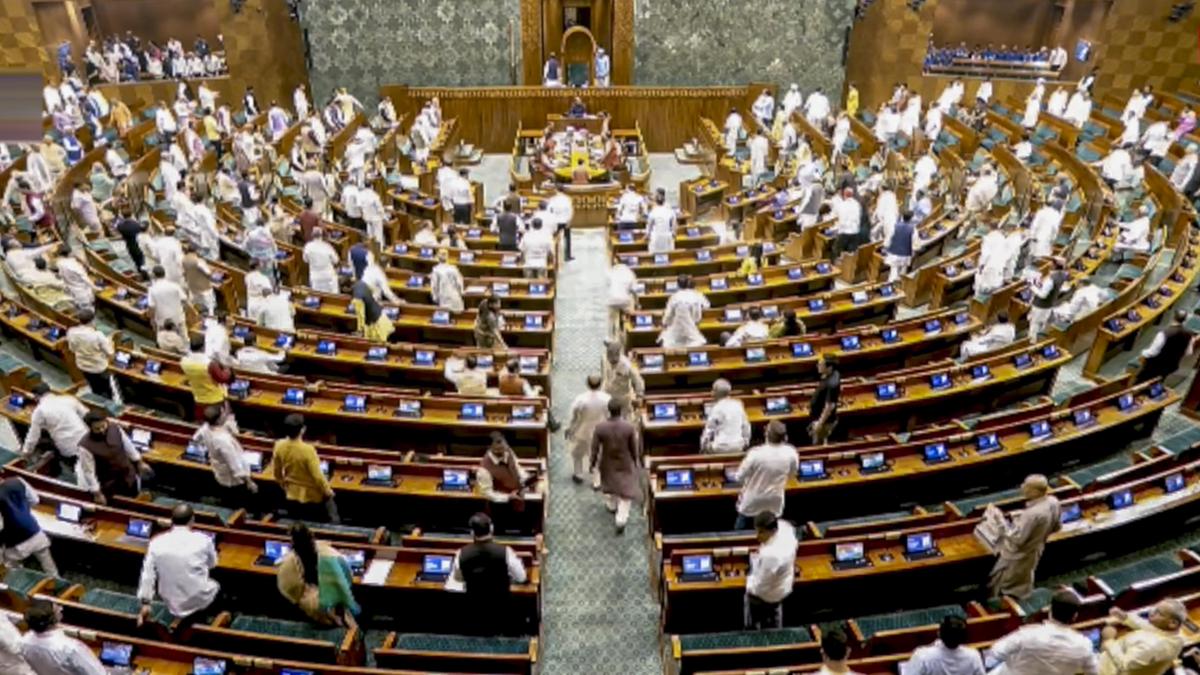
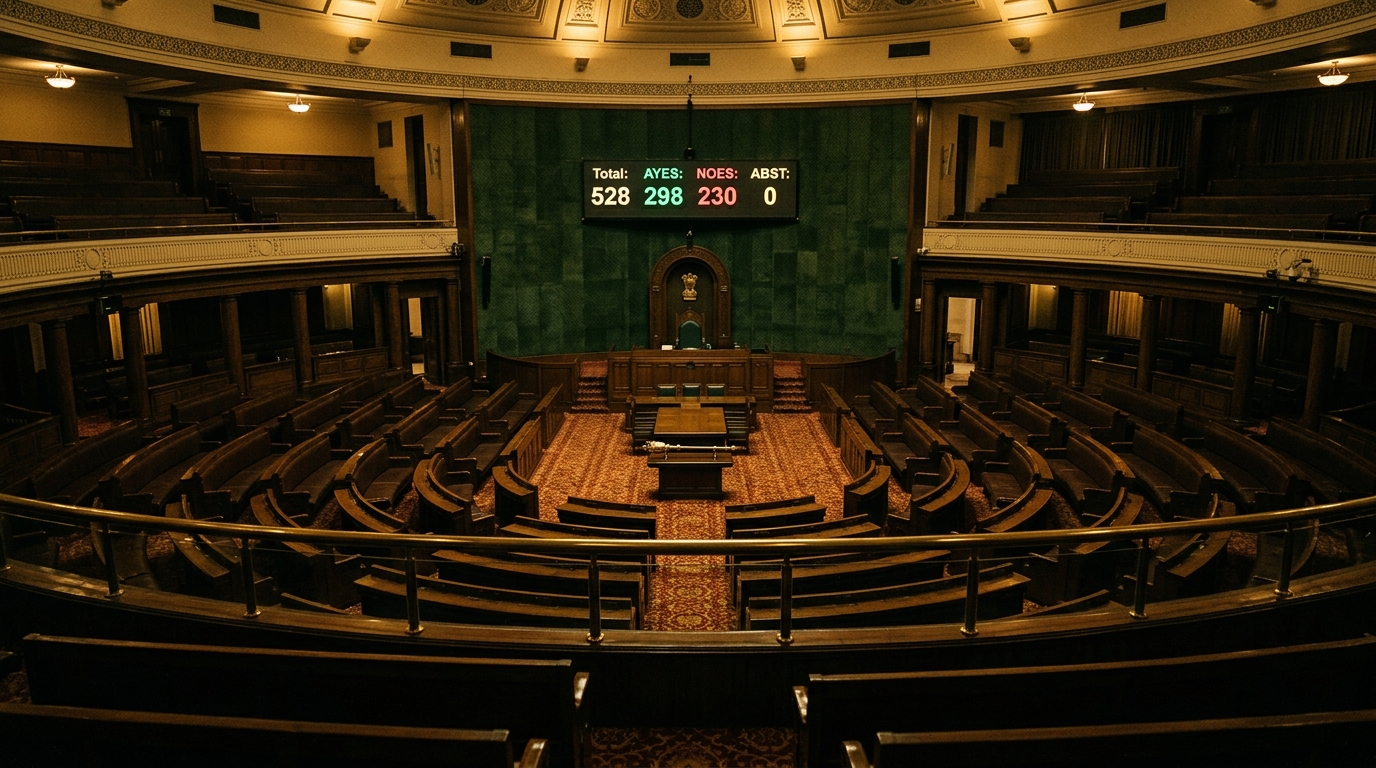
The Constitution (131st Amendment) Bill was defeated in the Lok Sabha on April 17, 2026 by 298 votes to 230 — the first constitutional amendment to fall under Prime Minister Narendra Modi and, on paper, a stinging setback for a government that had convened a rare three-day special session to push it through. The story every wire carried was straightforward: the BJP accused the opposition of "betraying women," the opposition accused the BJP of using the 33% women's quota as a Trojan horse for a delimitation exercise that would rewire India's political map. What the wires understated is the sequel. Within three weeks, the BJP won West Bengal for the first time in its history and returned Assam with an enlarged majority. The women's quota bill was the ammunition, not the objective — and the "defeat" delivered exactly the campaign weapon the BJP needed for the April state polls.
What actually happened on the floor
The government tabled three linked bills at a special session between April 16–18, 2026: the Constitution (131st Amendment) Bill, 2026; the Delimitation Bill, 2026; and the Union Territories Laws (Amendment) Bill, 2026. According to the Press Information Bureau's end-of-session summary, the constitutional amendment "could not have the required majority as per Article 368(2) of the Constitution of India on its motion for consideration, no further action was taken." The two dependent bills lapsed with it. The vote count of 298–230, confirmed by
BBC Hindi, stood against a threshold of roughly 361 — two-thirds of members present and voting, as Article 368 requires for any change to the Constitution.
The package was ambitious. It would have raised the ceiling on Lok Sabha seats from 550 to 850, allocating up to 815 to states and 35 to union territories. It would have empowered Parliament to fix by simple majority which census would trigger a delimitation. And it would have finally operationalised the 2023 women's reservation law — the Constitution 106th Amendment, marketed as the Nari Shakti Vandan Adhiniyam — by reserving one-third of the enlarged chamber for women. A detailed reading by the Carnegie Endowment for International Peace notes that "the quota for women functioned as a vehicle to push through a broader reengineering of India's electoral design."
Home Minister Amit Shah's closing intervention tried to defuse the federal alarm. Per the Press Information Bureau, Shah told the Lok Sabha that "at present, there are 129 MPs from South India; after this Bill, the number will increase to 195" and pledged a uniform 50% expansion "without any changes to the Delimitation Commission Act." That reassurance never made it into the bill's text. As the Delhi-based Vidhi Centre for Legal Policy's Arghya Sengupta told the
BBC, the basis for the 850-seat cap "is unclear and does not appear to be proportionate to population growth recorded in the 1971 and 2011 census," and the absence of a proportional formula "means outcomes could vary — and favour more populous states."
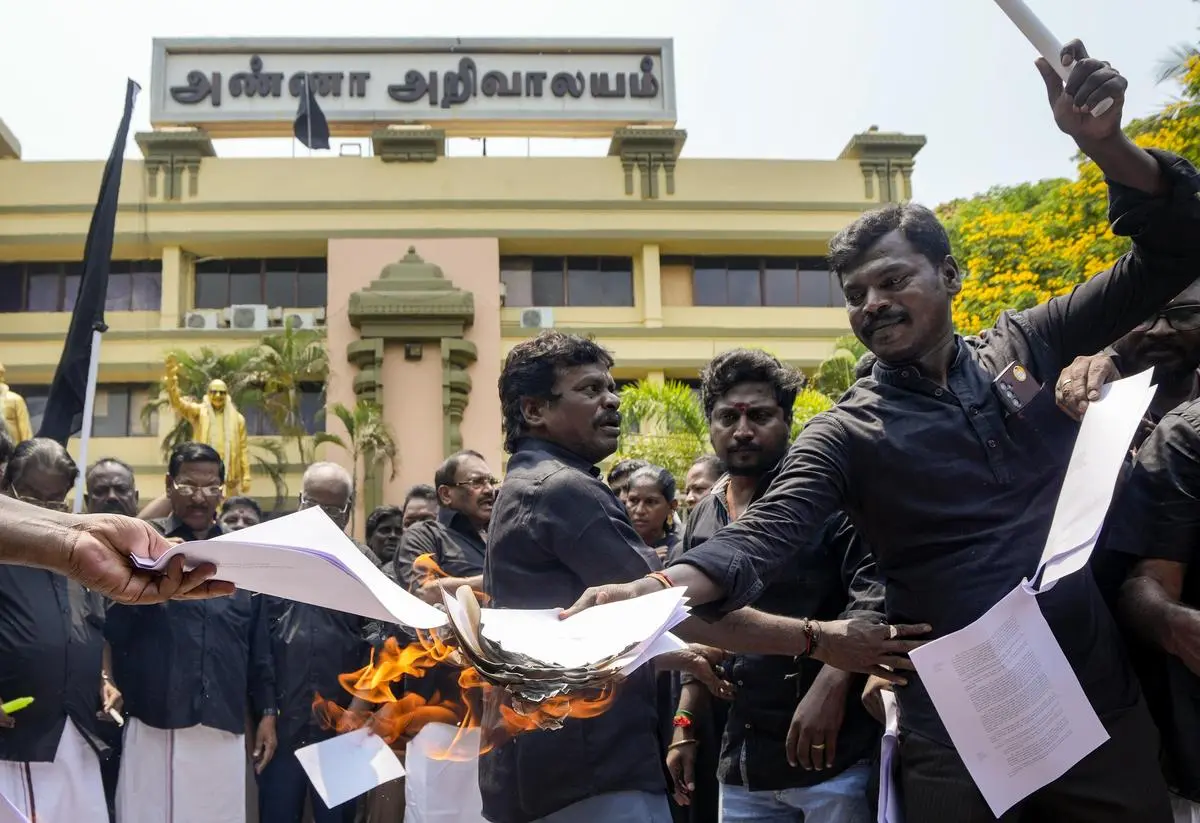
Rahul Gandhi's rebuttal was blunt. "The proposal that the government is now bringing has no connection to women's reservation," he said in a statement carried by Al Jazeera. "It is merely an attempt to seize power through delimitation and gerrymandering." Congress's Gaurav Gogoi argued the government's real intent was to smuggle delimitation "through the backdoor." Tamil Nadu Chief Minister M.K. Stalin burned a copy of the bill on the assembly steps in Chennai and hoisted a black flag, calling the plan a "massive historic injustice." For the first time since 2014,
ISAS-NUS observed, "the entire opposition [was] united against the government."
The arithmetic the BJP already knew
The National Democratic Alliance holds 293 seats in the 543-member Lok Sabha, per Al Jazeera's pre-vote count. A two-thirds constitutional amendment requires roughly 361 votes of members present. The government was short by nearly 70 MPs before it walked into the chamber. Senior journalist Vijay Trivedi told
BBC Hindi the calculation was transparent: "The government knew it did not have a two-thirds majority, but politics is a game of possibilities… it is clear the government wanted to build the narrative that the opposition is against women."
That narrative did not need the bill to pass. It needed the bill to be seen to be blocked. In a televised address on April 18 quoted by ISAS, Modi told viewers: "The opposition has committed a sin by opposing women reservation and they will be surely punished for this." He accused opposition parties of "foeticide" — killing the bill in its cradle — a phrase engineered for campaign clips, not committee minutes. Within 48 hours he was repeating it at rallies in Tamil Nadu and West Bengal, both mid-poll.
The ISAS analysis raises the counter-question the BJP has not answered: "If the government was so keen on the women's quotas, why did it not delink it from expansion of the Lok Sabha and delimitation and test the opposition's resolve?" Most opposition parties had said publicly they would back the quota if applied to the existing 543 seats. That would have delivered a genuine legislative win. It would not have delivered a campaign line.
Why the opposition walked in and voted no anyway
The opposition was not confused about the political cost. It was choosing between two costs.
Voting for the package would have handed the BJP a delimitation exercise anchored to the 2011 census — a formula critics said would shift long-term parliamentary weight toward the Hindi belt where the BJP is strongest. Economist Shruti Rajagopalan of George Mason University told NPR that a straight redistricting today would mean "the southern states would lose voice in parliament because they would have fewer votes." Yamini Aiyar, former head of the Centre for Policy Research, added on the same NPR broadcast that "where the BJP has deeper roots — which is largely in the northern and eastern parts of the country — it is more likely to gain, potentially, from expanded representation." Tamil Nadu, Kerala, Karnataka and Telangana had jointly demanded a 25-year extension of the existing seat freeze.
Voting against meant absorbing the accusation the opposition just heard on the floor: that it had stalled a women's quota already passed in 2023. Congress's counter — that the 2023 law can be implemented on the existing 543 seats without waiting for a census — is legally coherent but rhetorically thin against the phrase "opposition killed women's bill." Senior journalist Sharad Gupta told BBC Hindi the government's political intent was visible from the moment the bill was tabled: it wanted "to obtain more women's votes in West Bengal in the middle of the election."
The opposition took the rhetorical hit rather than the structural one. That was a defensible call in the room. It looks worse in the results.
The May 4 verdict — and the second-order winner
Between April 16 and early May, voters in Tamil Nadu, West Bengal, Assam, Kerala and Puducherry cast ballots. When votes were counted on May 4, 2026, the BJP won 207 of West Bengal's 294 seats — its first majority in the state — and 102 of 126 seats in Assam, per Al Jazeera. The Trinamool Congress, whose 15-year rule under Mamata Banerjee had been anchored in a female-voter coalition, collapsed to 80 seats. The
BBC noted that the Lokniti-CSDS 2021 post-poll survey had put TMC's support among women at 50% — four points ahead of its male vote share. That gender advantage was what the BJP set out to crack, and the quota row was one of the tools it used.
The BJP now governs or is a coalition partner in 21 of India's 28 states — a footprint covering "nearly 80 percent of India's 1.4 billion people," a scale Al Jazeera notes "was last seen in the 1960s when the Congress was at the peak of its power." Political scientist Sandeep Shastri, quoted in the same piece, said the results "substantially increase the national standing of Modi's leadership and extend the hegemonic power of the party to govern India." That is the second-order payoff of an April 17 "defeat."
The historical parallel — and the constitutional deadlock
The 2023 Nari Shakti Vandan Adhiniyam passed the Lok Sabha 454-2, an almost unanimous vote. The proposals for reserving seats for women date back to 1996, and the
Carnegie Endowment counted six previous attempts, each of which fell to smaller regional parties demanding an OBC and Muslim sub-quota — the same fault line Samajwadi Party's Akhilesh Yadav reopened on the floor in April 2026. The through-line across three decades is that women's representation in India has been advanced most in principle and least in practice. Women currently hold 14% of Lok Sabha seats.
The deadlock is now legal, not just political. As Carnegie explains, the 2023 amendment "explicitly ties the implementation of a one-third reservation for women to the completion of a fresh census and the subsequent delimitation exercise." The census enumeration phase began on April 1, 2026 and, per
Al Jazeera, will "take a year to carry out — and even longer for the data to be processed." Until that is done, the women's quota — despite being formally on the statute book since 2023 — cannot legally take effect. The 131st Amendment's real purpose was to unlock this sequencing constraint by allowing Parliament to designate the 2011 census as sufficient. That workaround is now dead until the next attempt.
Meanwhile the "gerrymandering" concern is not hypothetical. In Assam, a delimitation exercise carried out ahead of the 2026 poll saw Muslim-majority constituencies fall from about 35 of 126 to roughly 20, according to Al Jazeera. That is the template the south fears at national scale.
What to watch
The Takshashila Institution argues that the underlying institutional problem — an under-sized Parliament with poor scrutiny capacity — is unresolved regardless of political theatre. Three catalysts sit on the calendar:
- Monsoon session 2026: The BJP could delink women's reservation from delimitation and reintroduce a clean bill. If it does, opposition parties have publicly committed to voting for it. If it does not, the campaign line was the point.
- Census enumeration completion: The individual-enumeration phase, per PIB, follows the current house-listing round. Publication of results is unlikely before late 2027, defining the earliest possible legal path to a delimitation.
- 2029 general election framing: The BJP will run against the opposition as women's-quota blockers. The size of that swing is what the April 17 vote was designed to measure.
The Bottom Line
The 298–230 defeat of the 131st Amendment was not a legislative failure; it was a political product delivered on schedule. The BJP knew it lacked the votes, tabled the bill during two state campaigns anyway, and converted a floor loss into a first-ever conquest of West Bengal within eighteen days. India's women's quota remains legally frozen until the next census and delimitation — and the party that could not implement it has extracted more political capital from its failure than passage would have delivered.
Discover more

India
Modi's Nari Shakti Gambit
Modi's Varanasi speech redefines women's empowerment as a Nari Shakti gambit, blending appeals for women's votes with the contentious delimitation debate.
India
Mahila Congress Postcard Push for Women's Quo
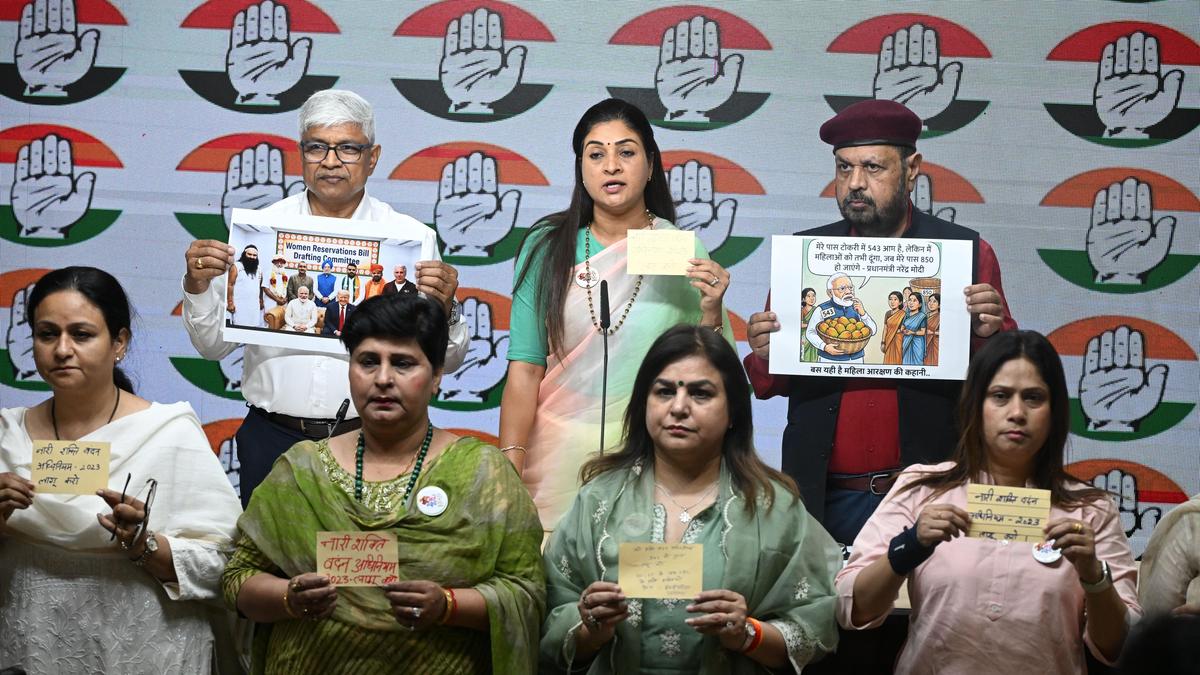
The Mahila Congress launches a postcard campaign to demand immediate implementation of the 33% women's reservation in India's Lok Sabha, targeting PM Modi.
India
Yogi Adityanath's BJP March on Women's Bill
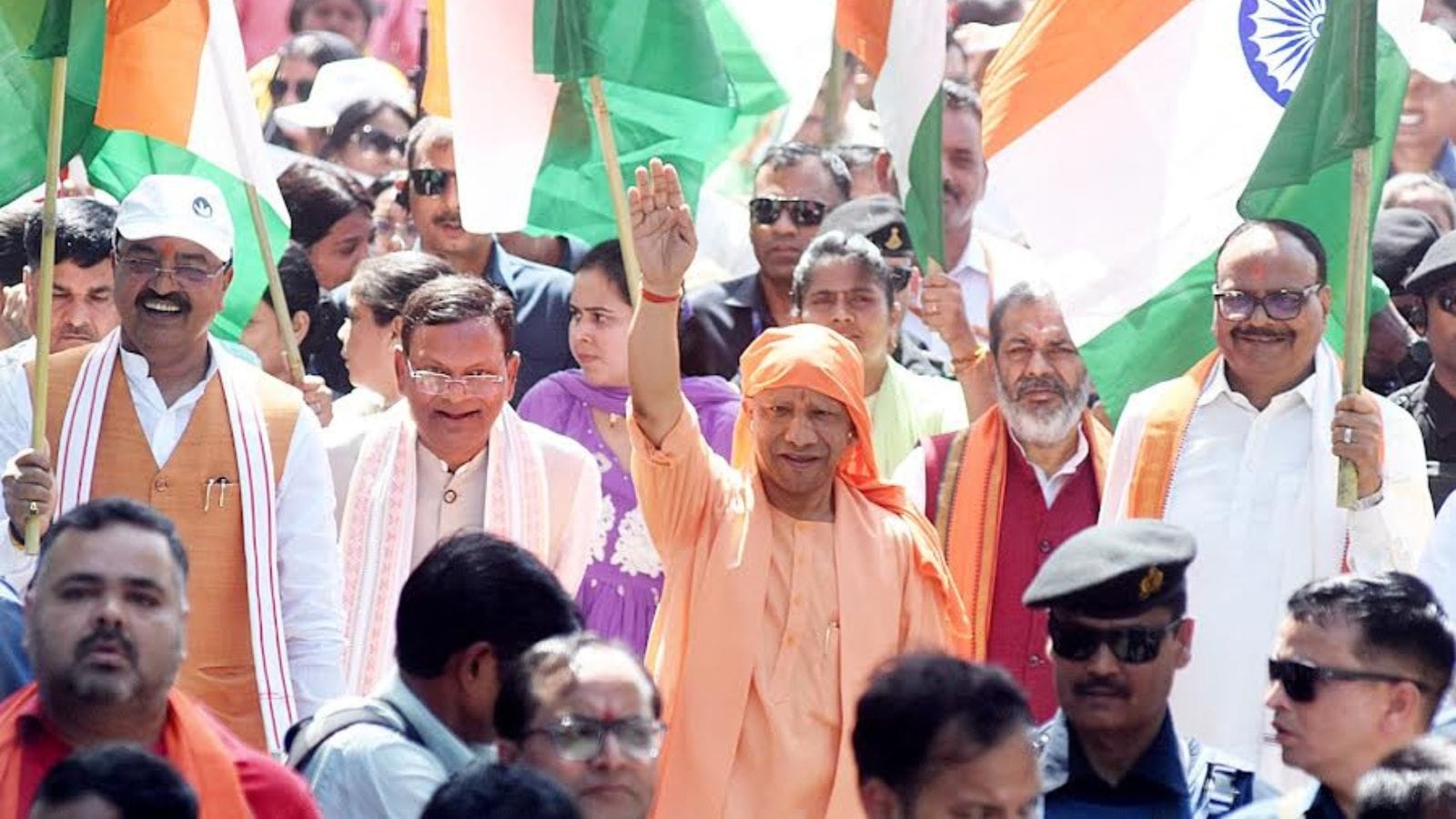
Yogi Adityanath's padyatra after the women's bill defeat aims to reshape UP's 2027 elections, targeting women's votes against the SP.
India
Women’s Reservation Bill 2026
The Constitution (131st Amendment) Bill, 2026 was defeated in Lok Sabha, revealing deeper political conflicts over women's reservation and delimitation.