Biden's $20B Cash-for-Uranium Deal with Iran
A look at the $20B uranium deal linked to Trump and Biden.
Model Diplomat7 min readMiddle East
Trump's $20B Cash-for-Uranium Deal With Iran, Explained
The $20B "Biden" deal is actually Trump's — a swap of frozen Iranian funds for 440kg of enriched uranium, now embedded in the June 17 Lucerne MoU.
The framing is wrong: the $20 billion cash-for-uranium proposal circulating under Joe Biden's name is a Donald Trump negotiation, floated by his envoys in April 2026 and now folded into the 14-point memorandum of understanding Trump signed with Iranian President Masoud Pezeshkian at Lake Lucerne on June 17, 2026. The reason Biden's name keeps attaching to it is that Trump is reviving the exact mechanism — a Qatar-custodied humanitarian escrow — that Antony Blinken built in September 2023 and that Republicans, including Ted Cruz, spent two years denouncing as ransom. The story here is not a new idea. It is the return of an old one, at 3.3 times the price, with a stockpile of near-weapons-grade uranium as the collateral.

What is actually on the table
The $20 billion figure first surfaced in an April 17, 2026 Axios report by Barak Ravid and Marc Caputo. Citing two US officials and two additional sources, Axios described a three-page draft in which Washington would release $20 billion in frozen Iranian assets in exchange for Iran surrendering its stockpile of highly enriched uranium. An earlier US offer of $6 billion for humanitarian goods had been rejected by Tehran, which countered at $27 billion; negotiators landed near the middle.
That draft became the scaffolding for the memorandum of understanding signed two months later. According to the BBC, Trump signed the MoU during a state dinner at Versailles on June 17, hosted by Emmanuel Macron on the sidelines of the G7. The text commits the two sides to negotiate a final deal "in maximum 60 days, extendable with mutual consent," reopens the Strait of Hormuz for 60 days without tolls, and — critically — abandons Washington's original demand that Iran's enriched uranium leave the country. Instead, the stockpile will be "down-blended" on site under IAEA supervision.
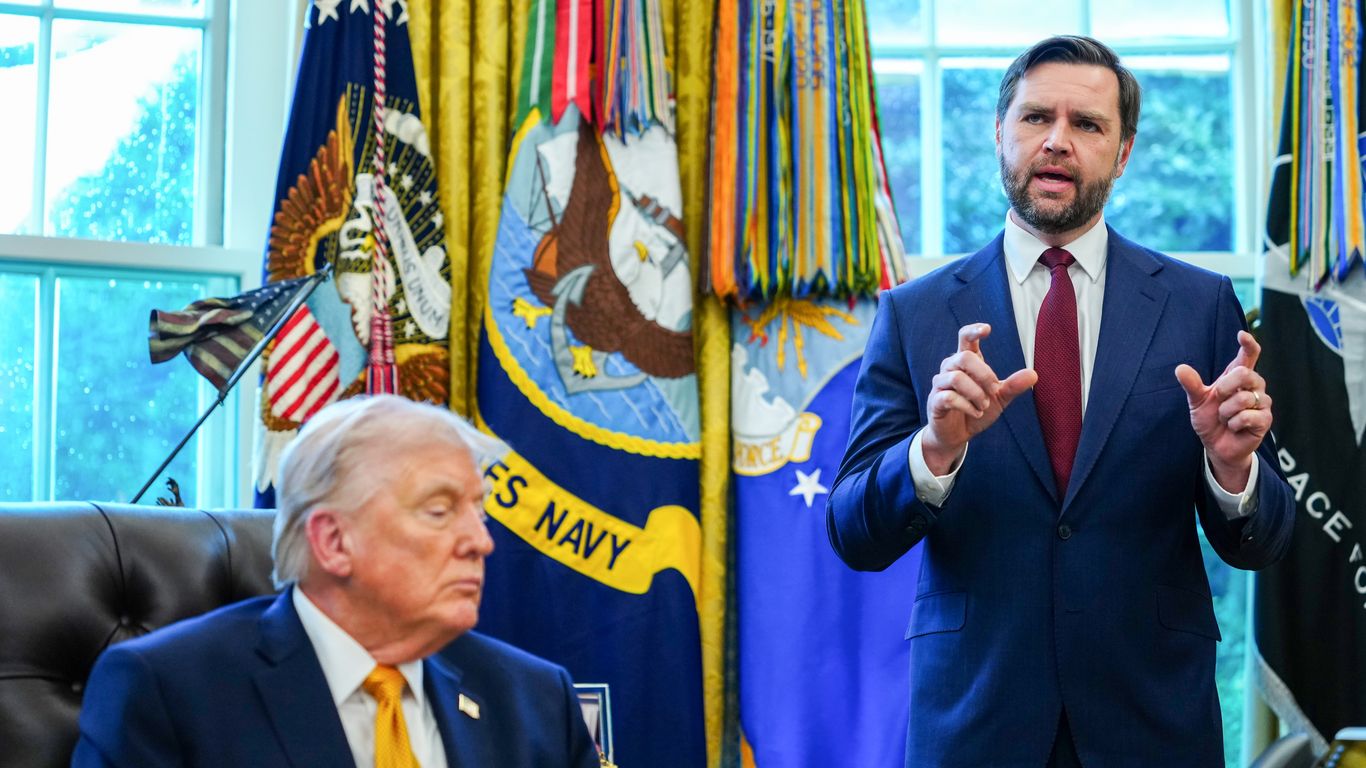
The $20 billion figure does not appear in the signed text. What appears instead is a promise to "develop a definitive, mutually agreed plan" for a $300 billion reconstruction and investment fund for Iran, contingent on compliance. Vice President JD Vance told CBS News on June 15 that a $24 billion Iranian state-media figure "just doesn't appear anywhere in any of the texts that we've talked about with the Iranians." Trump himself has publicly maintained "no money will exchange hands," while conceding that frozen assets — "not our money, it's their money" — will eventually be returned.
Why "Biden's deal" is a category error — and why it's revealing
The confusion is understandable. The first tranche now flowing to Tehran runs through the same $6 billion Qatar mechanism that Biden's State Department created on September 11, 2023, in exchange for the release of five American hostages. The House Financial Services Committee report on H.R. 6000 — the 2023–24 Republican bill to freeze those funds after October 7 — documents the mechanics precisely: proceeds from sanctioned oil sales, held in a monitored Qatari bank, spendable only on food, medicine, and other humanitarian goods vetted by Treasury.
That mechanism is exactly the one Iranian Deputy Foreign Minister Kazem Gharibabadi described after the July 1 Doha technical talks. Speaking to Al Jazeera, he confirmed that Qatar's Central Bank had reviewed spending of "part of the initial $6 billion" and that goods "would be purchased and made available to Iran." Iranian President Pezeshkian said on June 29 that Tehran expects the $6 billion tranche as a first step, with a second $6 billion tranche staged behind it.
Trump is running Blinken's playbook, at scale. The $6 billion is the same account, the same custodian, the same humanitarian-only condition. What has changed is the collateral. In 2023, the trade was five American citizens. In 2026, it is 440 kilograms of uranium enriched to 60 percent — near-weapons grade — that has been unaccounted for since coalition strikes hit Natanz, Fordow and Isfahan on February 28, 2026.
The uranium is the leverage — and it is missing
The 440-kilogram figure is the load-bearing number in this negotiation. It is also, according to the UK Foreign Office, a number the IAEA can no longer verify.
In the Quad Statement (US, UK, France, Germany) delivered to the IAEA Board of Governors in June 2026, the E3+US declared:
"The Agency cannot draw a safeguards conclusion for 2025 in respect of Iran's previously declared nuclear material, that it has been unable to verify, including 440 kg of high-enriched uranium… For a year, Iran's HEU has remained unaccounted for."
That is the real reason Washington is willing to pay. Enriched to 90 percent, 440 kg is theoretically enough for roughly 10 warheads, IAEA Director-General Rafael Grossi told Al Jazeera in March. MIT physicist Theodore Postol has estimated that jumping the last 30 percentage points — 60 to 90 — takes about four to five weeks with existing cascades, versus five years to reach 60 percent from natural uranium. The stockpile is buried, according to BBC reporting, in tunnels beneath the Isfahan complex the US bombed in June 2025 and again in February 2026 during Operation Epic Fury.
An IAEA Board of Governors resolution passed 21–3 on June 11, 2026, demanded Iranian disclosure. On July 2, Iranian parliament speaker Mohammad Bagher Ghalibaf told IRIB that inspectors "currently… only have access to two locations: Bushehr power plant and Tehran reactor" — not the bombed sites. The uranium, in effect, is being sold on credit: Washington cannot see what it is buying.
Congress is watching — under Obama's law
Here is the second-order twist that has escaped most coverage. The statute that now governs whether Trump can lawfully execute this deal is the Iran Nuclear Agreement Review Act of 2015 (INARA), co-authored by Democratic Senator Tim Kaine, who cited his authorship on the Senate floor on June 18, 2026. INARA requires any Iran nuclear agreement to be submitted to Congress within five days, triggering a 30-day review window.
Both AIPAC and JINSA are demanding Trump submit the MoU. Senator Lindsey Graham has publicly agreed. Legal scholars from across the spectrum — including Harvard's Jack Goldsmith at the American Enterprise Institute and former Obama White House lawyer Tess Bridgeman at Just Security — have concluded that INARA applies, as reported by Al Jazeera. Trump has said only, "I like the idea. I mean, who wouldn't approve it?" He has not submitted the text.
The Republican reaction has been unusually raw. Senator Bill Cassidy called the MoU "the worst foreign policy blunder in decades." Senator Ted Cruz, who defended the framework, added: "I do want to urge the president not to give up the victory; we have destroyed their military, and we should not fund the rebuild." Analysts at the United States Studies Centre note the pledged $300 billion is roughly twice the sanctions-relief value Iran secured under the JCPOA — the very deal Trump killed in 2018 for being too generous.
Diplomat View
The $20 billion is a red herring. The number that determines whether this deal survives is not in the MoU at all: it is the 440 kilograms of unaccounted-for HEU. Iran's leverage is precisely that Washington cannot verify the stockpile, and cannot bomb what it cannot find with high confidence a third time without escalating a war Trump has signaled he does not want to restart. The offer Tehran is being asked to accept — on-site down-blending in exchange for staged asset releases and a conditional $300 billion — is materially more generous than the JCPOA, and materially less verifiable than the JCPOA, because the JCPOA's most robust safeguards protocols have been shredded by two rounds of war. Our base case: the August 16 deadline slips, a limited second-tranche release ($6B–$12B) is used to buy time, and the final uranium disposition is punted into a longer technical annex under IAEA supervision. The forecast changes if Iran denies IAEA access to Isfahan by the end of July, or if an Israeli strike on any Iranian facility during the truce window collapses the MoU. Watch Ted Cruz: if he moves from "concern" to a hard INARA vote of disapproval, the White House loses its cover on the Hill.
What to watch next
- July 15, 2026 — Next scheduled Doha technical round following the end of Ayatollah Ali Khamenei's funeral processions. Second $6B tranche mechanics on the agenda.
- August 16, 2026 — 60-day MoU deadline for a final deal on uranium disposition, Hormuz administration, and sanctions relief. Extendable only by mutual consent.
- INARA clock — If Trump submits the MoU to Congress, a 30-day review triggers. A resolution of disapproval requires 60 votes to override a veto; watch Senators Cassidy, Cruz, Kaine, Shaheen and Warner.
- IAEA Board of Governors, September 2026 — Grossi's next report will state whether inspectors have reached Fordow, Natanz and Isfahan. Absence of access at that point makes the final deal politically unsurvivable.
The Bottom Line
The $20 billion cash-for-uranium deal is not Biden's — it is Trump's, run through Biden's mechanism, with 440 kilograms of missing enriched uranium as the collateral. Washington is paying a JCPOA-plus price for a JCPOA-minus level of verification, because two rounds of war destroyed the physical access the 2015 deal was built to guarantee. Whether the exchange holds depends less on the money than on a single question: does the IAEA get back into Isfahan before the August 16 deadline.
Discover more
Global
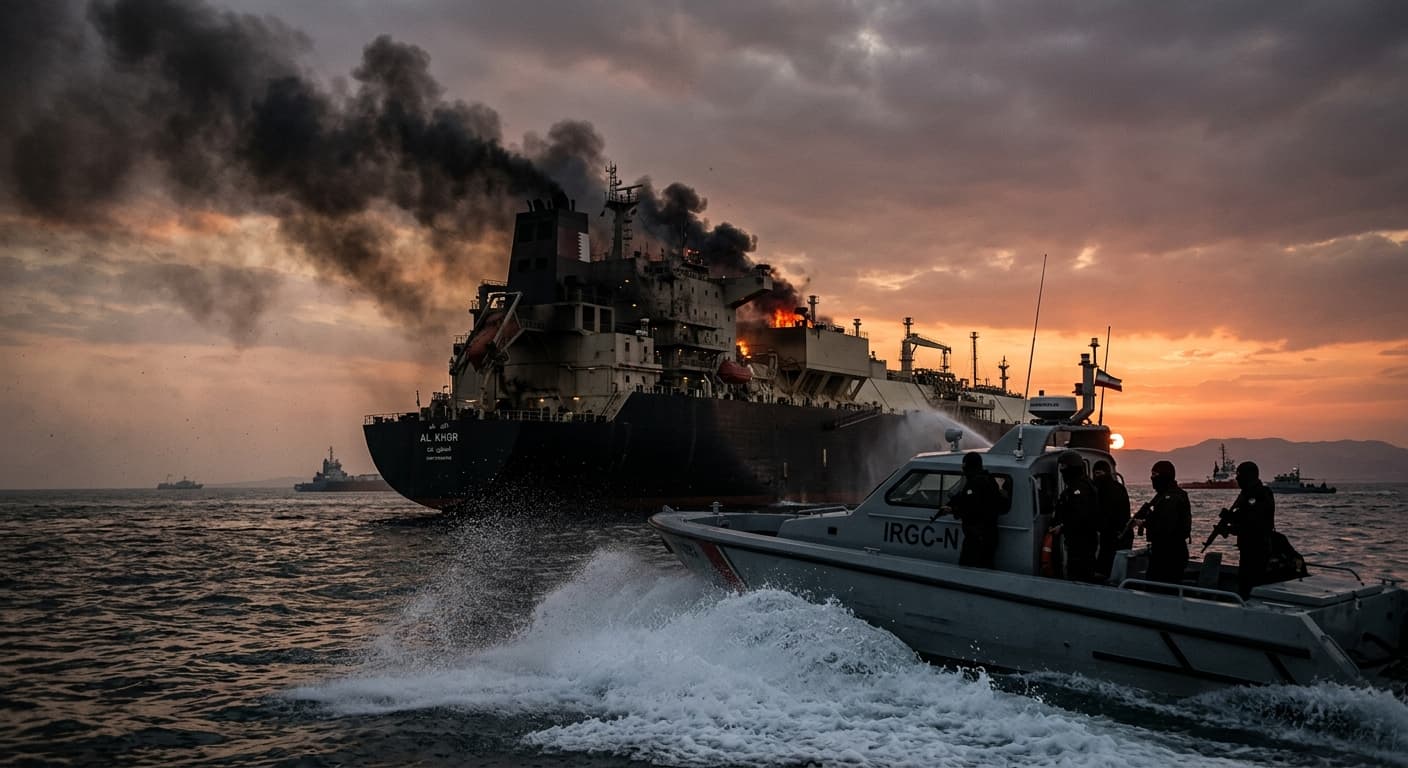
Qatari Tanker Strike Exposes Hormuz Tensions
A Qatari tanker was struck off Oman, revealing the fragility of the Hormuz ceasefire and Iran's influence over maritime security.
Global
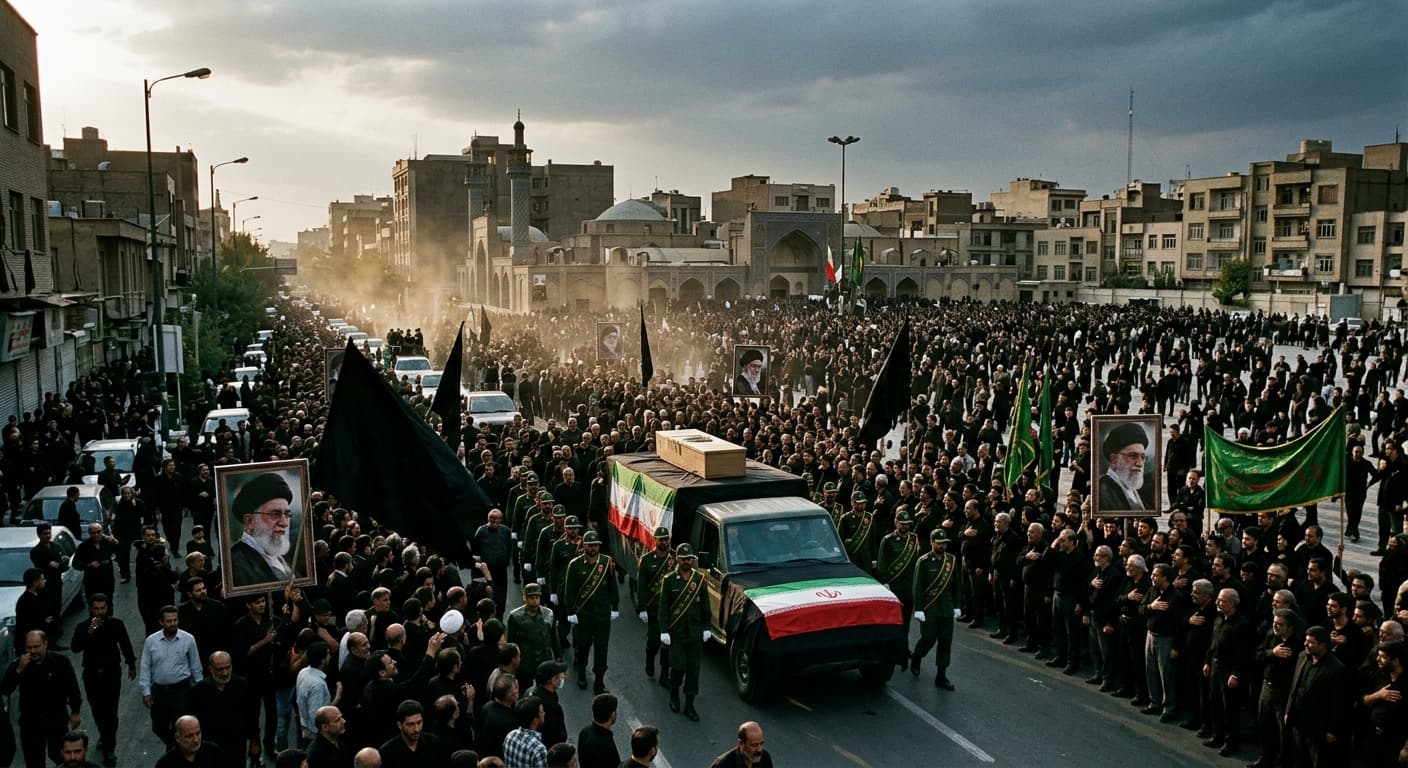
Khamenei's Funeral Signals Iran's Decline
The funeral of Ayatollah Khamenei highlights Iran's diminished influence in the Gulf, with regional powers now dictating terms.
Global
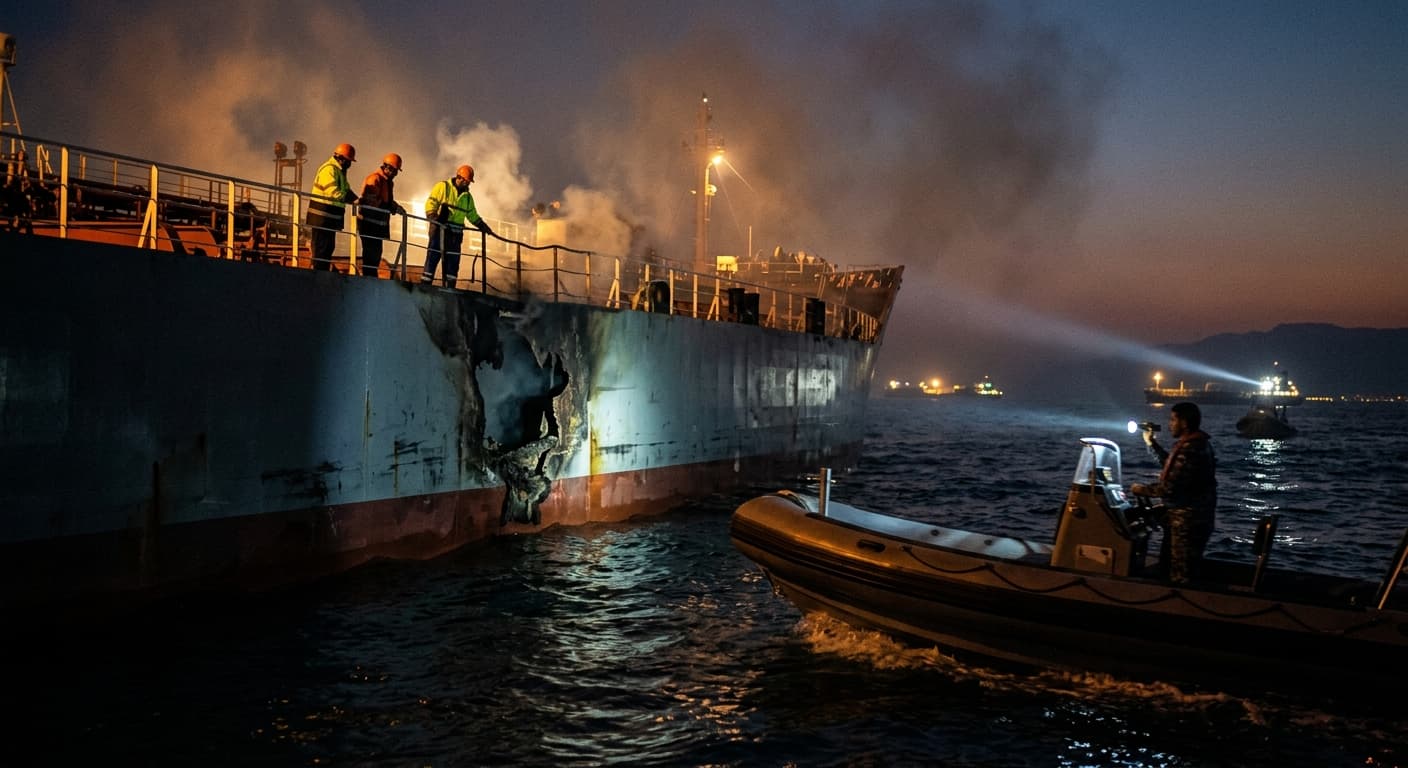
Iran's Hormuz Missile Strikes: A Toll Booth
Iran's missile attack on a Qatari-linked tanker highlights Tehran's strategy to control the Strait of Hormuz, impacting Gulf states and maritime law.
Tech Policy
Iran's Cavern Manticore Targets Israel's IT
Cavern Manticore, an Iran-linked hacking group, targets Israeli IT vendors, prompting a shift in Israel's cybersecurity policy and legislative efforts.