Bahrain's Debt Hits 150% of GDP
Structural issues exposed by the Iran war
Model Diplomat4 min readasia
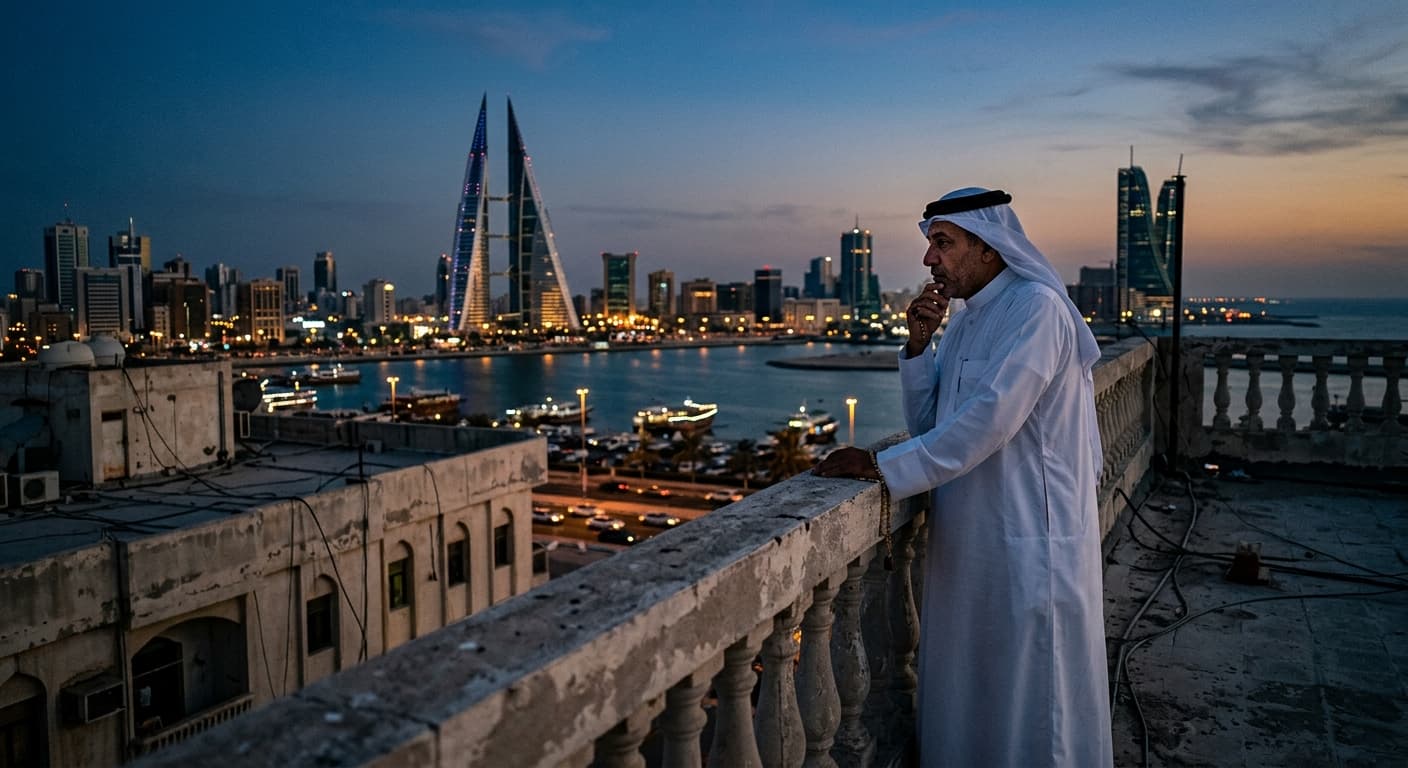
Bahrain's Debt Hits 150% of GDP — The Gulf's Weakest Link After the Iran War
The Iran war exposed Bahrain's structural mismatch: an 85% non-oil economy still 75% dependent on hydrocarbon revenues. The real test now is fiscal reform, not diversification.
The Iran war did not break Bahrain's economy — it revealed a break that was already there. The kingdom entered 2026 carrying government debt projected to exceed 150% of GDP, a fiscal deficit running above 10%, and a revenue base in which hydrocarbons still account for roughly three-quarters of government receipts, according to the AGSI. S&P downgraded Bahrain to "B" in November 2025 — its first cut to that level since 2017 — and Moody's followed in late April 2026 by shifting the outlook to negative, as reported by the
Council on Foreign Relations. The war did not create these numbers. It stripped away the growth narrative that had obscured them.
That narrative rested on a genuine achievement: non-oil sectors now generate roughly 85% of real GDP, driven by financial services, aluminum production, manufacturing, and tourism. But the Institute for MENA Stability identifies the core structural mismatch: non-oil activities produce the output, but oil still produces the budget. Government revenues never diversified alongside the real economy because Bahrain's growth model relied on low taxes and heavy state subsidies to attract foreign capital — the state absorbed the cost but collected little direct return.
Geography as a Trap
The Strait of Hormuz is Bahrain's only maritime route. Unlike Saudi Arabia, which can shift crude through its East-West pipeline to the Red Sea, or the UAE, which routes exports through Fujairah, Bahrain has no alternative. When maritime traffic through the Strait collapsed from roughly 70 tanker crossings per day to near zero after hostilities began on February 28, Bahrain's energy exports effectively ceased. The IMF's April 2026 Regional Economic Outlook confirmed that Manama's air traffic was completely suspended, while
AGBI reported Iranian strikes hitting the U.S. Fifth Fleet base in Juffair, Mina Salman port, and civilian infrastructure in Manama.
The numbers accumulated rapidly. Bahrain's trade value dropped 14.5% in Q1 2026. Aluminium Bahrain (Alba), one of the world's largest smelters, shut down 19% of capacity. Bapco, the national oil company, declared force majeure alongside Alba within days of the conflict's outbreak, according to Credendo. The 2026 Bahrain Grand Prix was cancelled. The World Bank cut its 2026 GCC growth forecast from 4.0% to 1.3%, with Bahrain among the most exposed.
Defensive Policy, Structural Gaps
Manama's response was swift and well-targeted but fundamentally defensive. In April, the central bank deployed an $18.6 billion liquidity package with loan deferrals to ease pressure on borrowers. The government provided wage support for 105,500 private-sector Bahraini workers to receive their April salaries, and the labor fund Tamkeen announced in May a support bundle for more than 7,000 small and medium enterprises affected by the conflict. In early June, Bahrain successfully raised $1 billion through a 10-year dollar bond, and the UAE's central bank signed a $5.44 billion currency swap agreement with Bahrain in April.
These measures buy time. They do not address the fact that debt service already absorbs roughly 33% of government revenue, or that Bahrain's fiscal breakeven oil price sits around $125–130 per barrel in a world where the country cannot reliably export oil at all. A pre-war fiscal reform package — including electricity and water rate increases, a proposed 10% corporate income tax for 2027, and a 20% cut in administrative spending — was the most ambitious the region had seen in years. The war has made those reforms simultaneously more urgent and harder to execute.
What to Watch
The 14-point U.S.-Iran memorandum of understanding, with its 60-day negotiation window, has paused hostilities. But three variables will determine whether Bahrain stabilizes or slides further.
First, ceasefire durability. Any renewed disruption to the Strait of Hormuz immediately restores the export freeze. The BBC reports that the IEA has called this the "biggest energy crisis in history," with over 80 facilities hit across the Gulf and more than a third severely damaged.
Second, the GCC bailout question. Justin Alexander, a GCC-focused economist, told AGBI that the war "changes the calculations" on whether Saudi Arabia, Kuwait, and the UAE will extend fresh support — as they did in 2018. The risk to the shared Abu Safah offshore oilfield, Bahrain's single largest revenue source, gives Riyadh a direct stake in Manama's survival.
Third, sovereign bond spreads and refinancing costs. As Hélà Miniaoui of Lusail University noted, in a high-debt small open economy, confidence moves faster than fundamentals. The June bond issuance succeeded, but the market's patience will be tested if fiscal consolidation stalls while reconstruction costs mount.
Discover more
India
700 Activists Accuse PM Modi of MCC Breach
Over 700 activists allege PM Modi breached election code with a televised address attacking opposition parties just before state elections.
India
Women’s Reservation Bill 2026
The Constitution (131st Amendment) Bill, 2026 was defeated in Lok Sabha, revealing deeper political conflicts over women's reservation and delimitation.

India
Delhi CM Rekha Gupta Blasts Opposition's Delm
Delhi CM Rekha Gupta's remarks on women's quota defeat reveal BJP's strategy for the 2029 Lok Sabha elections, focusing on delimitation.
Conflict & Security
Guatemala: El Niño 2026–27 becomes regional security test
UNICEF: 25.8M children face El Niño risks in Latin America; Guatemala maps 188 municipalities for drought and food insecurity amid regional security test.