Belgrade Protests Challenge Vucic's Power
Student-led protests demand early elections in Serbia.
Model Diplomat3 min readEurope
Belgrade Protests Expose Vucic’s Narrowing Room
Student-led crowds are forcing Serbia’s president to choose between concessions and coercion, with early elections now the movement’s main target.
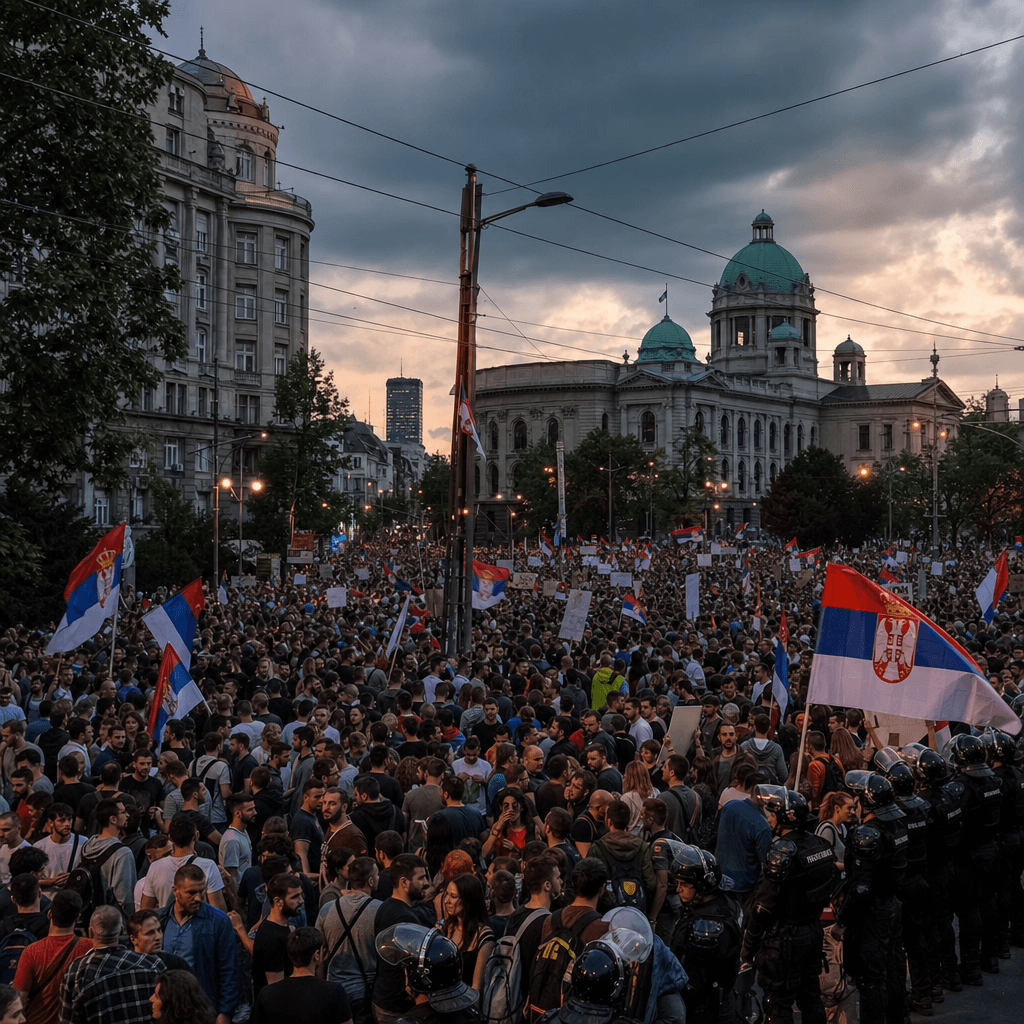
Tens of thousands of anti-government protesters filled central Belgrade on Saturday and clashed with riot police after a rally led by students demanding early elections and the rule of law, according to Al Jazeera and
Reuters. The power dynamic is clear: President Aleksandar Vucic still controls the police, the railway system, and the state media machine, but the students have kept the streets alive for more than a year and are now trying to turn that momentum into a ballot-box challenge.
Vucic still has the state — but the protests have scale
The rally was the latest burst in a movement that began after the collapse of a railway station canopy in Novi Sad in November 2024, which killed 16 people and triggered accusations of corruption and negligence, Al Jazeera reported. Reuters, via
The Star, said the Saturday crowd swelled into the tens of thousands, while police and organizers offered sharply different estimates. That gap matters: the movement is not just a protest against one incident, but a continuing test of whether Vucic can still claim broad consent after more than a decade in power.
His government is responding as strongmen usually do when crowds grow too large to ignore. Serbia’s state railway company canceled trains to and from Belgrade on Saturday, which appeared designed to make travel into the capital harder, Al Jazeera said. Vucic, meanwhile, framed the demonstrators as violent and insisted “the state is functioning,” according to the same report. That is not de-escalation; it is an attempt to deny the opposition any claim that public pressure can force policy.
The students’ advantage is legitimacy, not organization
What makes this movement harder to dismiss is its social base. The crowd in Belgrade carried the “Students win” slogan, and the protests have been tied to university-led activism from the start, Al Jazeera reported. Reuters’ coverage noted banners reading “The students are winning” and a demand for an early election as the route to political change,
Reuters said.
That gives the movement something Serbia’s opposition parties often lack: credibility with younger voters and a narrative that starts with accountability, not factional jockeying. But it also exposes the movement’s weakness. Students can mobilize outrage; they still need a durable electoral vehicle, a candidate slate, and a message that reaches beyond the capital. If they cannot build that, Vucic can wait them out, contain them, and win the next election on his own terms. For broader regional context, see Global Politics and
International.
The next fight is over timing — and whether Brussels cares
Vucic said parliamentary elections could be held between September and November, Al Jazeera reported. That is now the key date to watch. If he sets an early vote, he will be trying to catch the movement before it builds a unified opposition machine. If he delays or tightens repression, he risks proving the protesters’ central charge: that Serbia’s institutions only work when the ruling party wants them to.
There is also an external pressure point. The EU has not formally frozen all support for Serbia, but Brussels has stalled payments tied to disputed judicial reforms, according to BTA. That weakens Vucic’s claim that he can balance repression at home with progress toward Europe. The next decision point is not whether Belgrade sees more protests — it will. It is whether Vucic calls the election he has hinted at, and whether the students can turn street numbers into votes before the state narrows the field.
Discover more
India
Romanian Coalition Party Demands PM Resign
Romania's Social Democrats withdrew from coalition, joining far-right AUR to topple PM Bolojan, risking €10 billion in EU funds by August 2026.

Global Politics
US Seizes Iranian Ship, Tensions Surge
The US seizure of the Iranian ship Touska highlights a shift in control over the Strait of Hormuz, favoring Iran's strategic position.

Conflict & Security
Drone Warfare Killing Aid Workers at Unprec
Over 1,000 humanitarian workers killed in three years as cheap armed drones collapse legal protections. Gaza, Sudan, Ukraine, and DRC see deliberate targeting of aid convoys and hospitals with zero prosecutions.

Global
World Normalises Taliban as Afghan Women Eras
UN data shows Afghan women erased from public life as Russia recognises the Taliban, EU hosts officials in Brussels, and ICC warrants for gender persecution go unenforced.