Belfast Burning: The Far-Right Spark
Racial violence in Belfast reveals deep-seated tensions.
Model Diplomat3 min readEurope
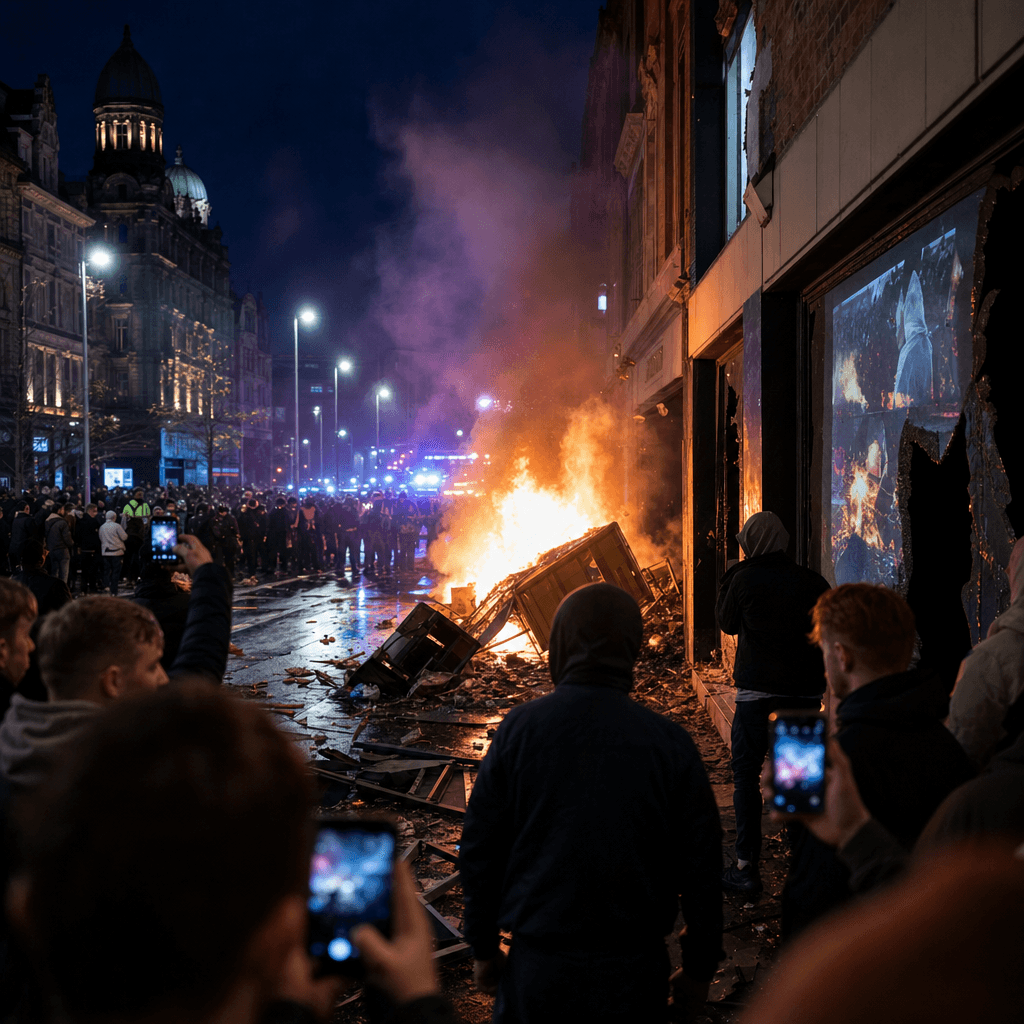
Belfast Burning: The Far-Right Spark in Northern Ireland
Two nights of racial violence in Belfast expose a volatile mix of imported online disinformation and local sectarian friction.
The UK government is scrambling to contain a critical security crisis in Belfast, where two nights of intense anti-immigration violence have forced families from their homes and injured dozens of police officers. The unrest, which Northern Ireland Secretary of State Hilary Benn characterized as "racist thuggery" (Al Jazeera), has raised anxieties that the region's historic sectarian divisions are being weaponized. Local authorities are finding that their traditional containment strategies are poorly suited to combatting digitally coordinated tribal mobs that cross traditional territorial lines.
The Viral Spark and Physical Fallout
The violence erupted following a Monday night stabbing in north Belfast, for which a 30-year-old Sudanese man, Hadi Alodid, was arrested and charged with attempted murder (News.com.au). Graphic footage of the attack was rapidly seized upon by far-right activists on social media platforms, including X, and amplified globally (
News.com.au).
What followed was a rapid translation of online fury into physical intimidation. On Tuesday night, masked men went door-to-door targeting foreign nationals, leaving 27 people homeless in Belfast (BBC News). By Wednesday, police deployed water cannons and plastic bullets to prevent rioters from reaching a hotel used to house asylum seekers (
Al Jazeera). While the direct victim’s family has pleaded for calm, the violence has quickly transcended the original incident, morphing into a broader campaign of intimidation against Belfast's growing ethnic minority population.
Exploiting Sectarian Infrastructure
This development is uniquely dangerous in Northern Ireland's delicate political ecosystem. The violence has mostly concentrated in Protestant, pro-UK unionist enclaves. While security officials have noted there is "no evidence" of formal coordination by outlawed loyalist paramilitaries (BBC News), the muscle memory of street-level vigilantism provides a ready-made structure of masked gangs who can quickly mobilize to intimidate outsiders.
This crisis has also split the fragile power-sharing executive in Belfast along habitual lines. Nationalist Sinn Féin politicians, including First Minister Michelle O'Neill, have characterized the attacks as "pure racism" and condemned any attempt to justify them (BBC News). Conversely, the Democratic Unionist Party (DUP), led by Gavin Robinson, has dual-tracked the issue, condemning the violence but simultaneously demanding government action on border security and tougher migrant screening (
BBC News). This political divide complicates any coordinated local policy response on
Global Politics or regional security.
What to Watch Next
The immediate test of the state's leverage will occur on July 8, 2026, when Hadi Alodid is scheduled to reappear in court (BBC News). This date is a highly probable flashpoint for further far-right mobilization.
In the interim, watch whether the Police Service of Northern Ireland (PSNI) successfully curbs online organizing. Benn has already announced that Police Scotland is sending specialist resources, including dog teams, to bolster public order operations (BBC News). The critical question is whether the Westminster and Stormont governments can disrupt the digital logistics of the organizers before the violence spreads beyond Belfast's borders and triggers wider sectarian confrontations or
international conflict.
Discover more
India
Romanian Coalition Party Demands PM Resign
Romania's Social Democrats withdrew from coalition, joining far-right AUR to topple PM Bolojan, risking €10 billion in EU funds by August 2026.
US Politics
Next Generation Republicans
A leaked survey shows 39% of Republicans under 30 do not identify as MAGA, revealing a split in the GOP's future leadership.

Conflict & Security
Drone Warfare Killing Aid Workers at Unprec
Over 1,000 humanitarian workers killed in three years as cheap armed drones collapse legal protections. Gaza, Sudan, Ukraine, and DRC see deliberate targeting of aid convoys and hospitals with zero prosecutions.

Global
World Normalises Taliban as Afghan Women Eras
UN data shows Afghan women erased from public life as Russia recognises the Taliban, EU hosts officials in Brussels, and ICC warrants for gender persecution go unenforced.