Bangladesh Supreme Court Restores Caretaker
Court ruling reinstates caretaker government system
Model Diplomat8 min readSouth Asia
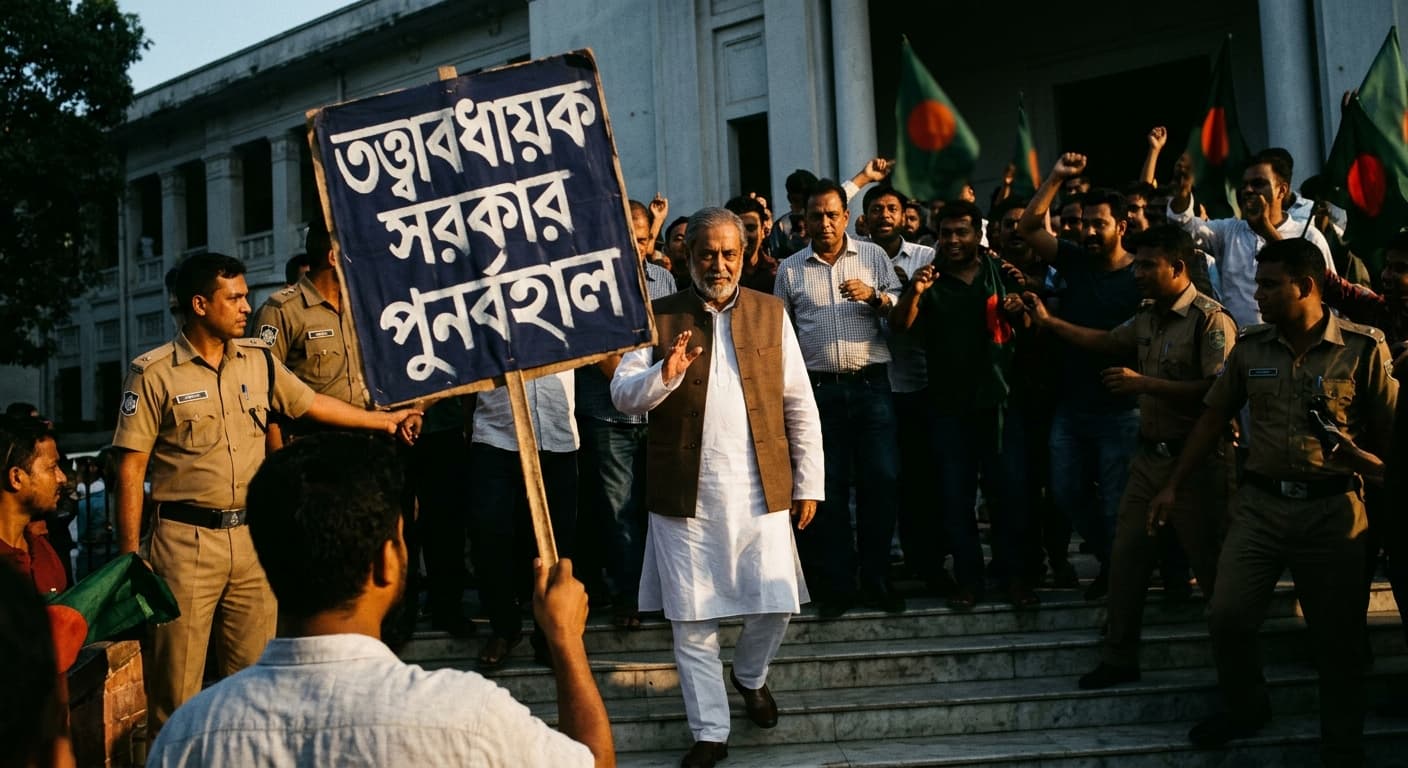
Bangladesh Supreme Court Restores Caretaker Government, Reopens Referendum Route
Bangladesh's Appellate Division on July 9, 2026 upheld the High Court's scrapping of four 15th Amendment provisions, restoring the caretaker government system and referendum clause from the 14th parliamentary election onward.
Bangladesh's Appellate Division on July 9, 2026 finished what a student uprising began two years earlier: it dismantled the constitutional architecture Sheikh Hasina had built to make her rule un-removable. By upholding a High Court verdict that struck four core provisions of the 15th Amendment — including the abolition of the non-party caretaker government and the referendum clause — the court has locked the next generation of Bangladeshi elections into a supervisory model the Awami League destroyed in 2011, and simultaneously stripped Parliament of the "eternity clauses" (Articles 7A and 7B) that once made those changes untouchable. The ruling's real weight is not restoration but reversibility: the court has re-armed judicial review over constitutional amendments and handed the BNP-dominated Parliament the tools, and the political trap, of a referendum-anchored reform agenda it did not entirely want.
What the court actually did
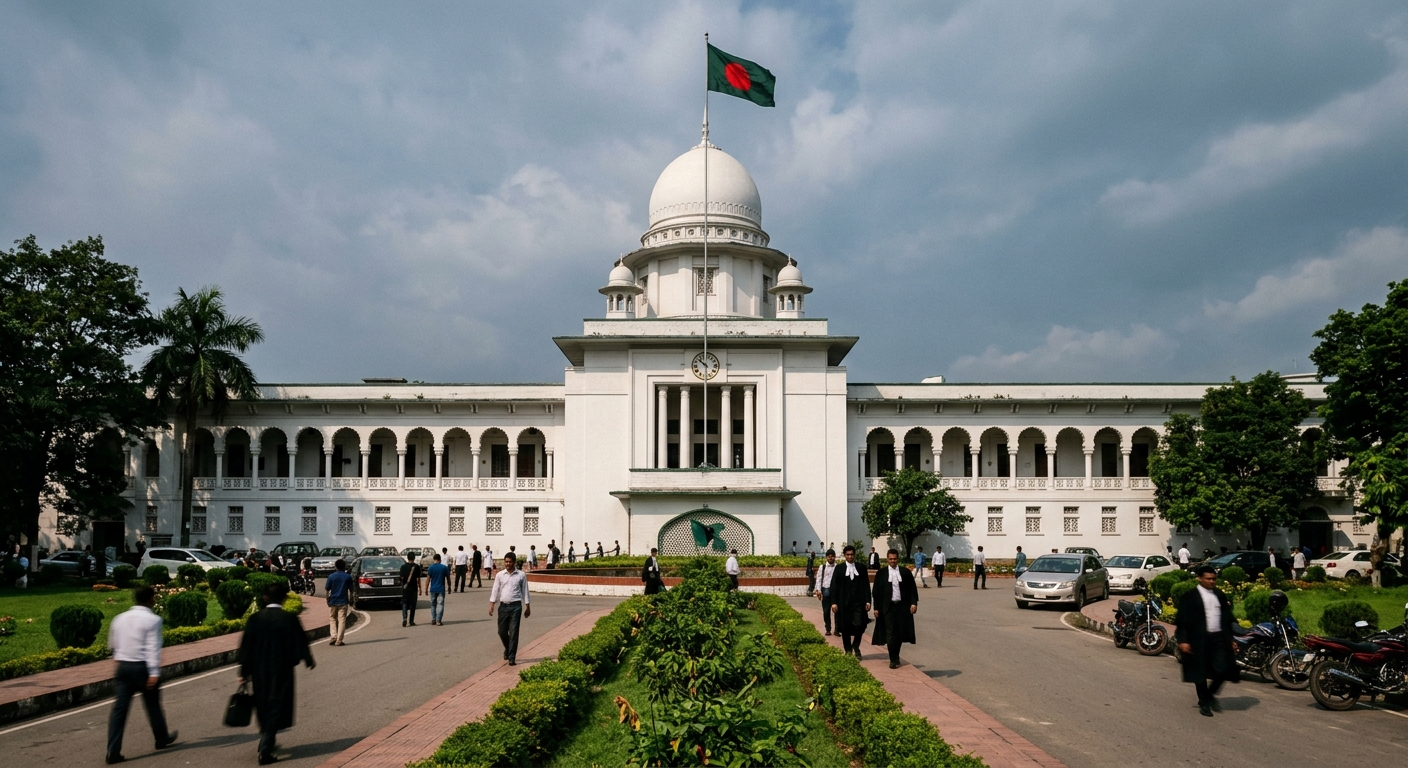
A four-member bench of the Appellate Division, headed by Chief Justice Zubayer Rahman Chowdhury, dismissed the appeals against the High Court's December 17, 2024 verdict, according to The Business Standard. Attorney General Ruhul Quddus Kazal (spelled Kajal in some filings) told reporters that the High Court judgment "remains in force" and that "the authority to repeal Article 7B of the Constitution, reinstate the caretaker government system and the referendum, and enforce fundamental rights will remain exclusively with the Supreme Court", per the same
Business Standard report.
Four discrete strikes were affirmed. Articles 7A and 7B — inserted in 2011 to criminalise "abrogation" of the constitution and to make a long list of provisions unamendable — are gone. The abolition of the caretaker system is void. The provision limiting writ jurisdiction to lower courts under Article 44(2) is void; only the High Court Division will hear writ petitions. And the referendum requirement for constitutional amendments is restored. Petitioner counsel Shishir Manir told reporters that "all other issues arising from the amendment have been left for Parliament to decide", including secularism, state religion, and the definition of citizenship, again according to The Business Standard.
The court explicitly de-linked its ruling from present politics. The restored caretaker mechanism "will not govern the present transitional interim administration" led by Muhammad Yunus; it applies "for the 14th parliamentary elections and all future electoral cycles", Asianet Newsable / ANI reported. The Yunus government's constitutional standing rests on an August 2024 advisory opinion under Article 106, not the caretaker chapter, as
The Financial Post BD noted — a legitimacy that was always circumstantial and whose window the court has now explicitly bounded.
The reversal the Awami League cannot undo from exile
The 15th Amendment was passed on June 30, 2011 by 291 votes to 1, with the BNP boycotting, according to BBC News. That vote followed a May 10, 2011 Appellate Division short order under Chief Justice ABM Khairul Haque which had declared the 13th Amendment (the caretaker system) prospectively void — but had, critically, allowed the next two parliamentary elections to still be held under the caretaker model to preserve "the safety of the people and the State", as documented in
Ali Riaz's testimony before the US House Foreign Affairs Committee. Hasina's parliament ignored that judicial guidance and scrapped the system outright.
The consequences track cleanly with the doctrine. The 2014, 2018 and 2024 general elections — the first three held without a caretaker — are treated as "highly problematic" by the Carnegie Endowment for International Peace, which counts only the 1991, June 1996, 2001, 2008 and 2026 polls as credible in Bangladesh's 55-year electoral history. Every credible national election since 1990 was held under a caretaker government or, in 2026, under the Yunus-led interim acting in that capacity; every election without such supervision was widely judged rigged, boycotted, or both. The court has now written that empirical finding into constitutional law.
The academic literature had reached the same conclusion long before the bench did. Legal scholar M. Ehteshamul Bari argued in a 2019 SSRN paper that the Awami League's repeal facilitated "a virtually voter-less and one-sided election in January 2014" and enabled "the establishment of a tyrannical regime". A book-length treatment by Sonia Zaman Khan, reviewed in
Sage Journals, noted that the 2011 abolition was pushed through with "no meaningful debate about this removal in Parliament nor a referendum" — precisely the two safeguards the July 9 verdict now reinstates.
The Article 7B twist: judicial review is back
The overlooked passage of the ruling is the strike-down of Article 7B, and it may prove the more consequential half of the judgment. The 2011 amendment had used Article 7B to place large blocks of the Constitution — Parts I, II and III, plus Article 150 — beyond parliamentary amendment, and Article 7A had labelled any attempt to abrogate the constitution "sedition". As the Cambridge University Press-published Israel Law Review study of the Asaduzzaman case noted, Article 7B had effectively displaced the older "basic structure" doctrine developed by the Supreme Court since the 1989 Anwar Hossain Chowdhury case. The provision was also self-locking: as the same article pointed out, "Article 7B does not make an exception for any amendment reinstating an original provision of the Constitution" — meaning Parliament could not even use it to restore pre-2011 features.
By striking 7A and 7B, the Appellate Division has restored the pre-2011 constitutional order in which the Supreme Court, not Parliament, has the final word on whether an amendment violates the basic structure. That is the single most important structural change in the verdict. The BNP now enjoys a two-thirds parliamentary majority — the party won 209 of 300 seats in February, according to Carnegie — but the court has just re-drawn the ceiling above which even a supermajority cannot legislate.
Who wins, who loses
The immediate political winner is not the BNP but the courts. For fifteen years the Bangladeshi Supreme Court's higher benches were widely seen as subservient to the executive; a 2017 SSRN study documented the systematic supersession of senior-most judges to politicise the Appellate Division. The July 9 verdict, delivered by a bench appointed after the 2024 uprising, functionally re-establishes the court as the final arbiter of constitutional change — and does so in the same term in which the newly elected Parliament must review 133 ordinances issued by the Yunus administration.
The second winner is Jamaat-e-Islami and the National Citizen Party (NCP), both of which championed the July National Charter's referendum-driven implementation route. The BNP, sceptical throughout, refused to join the Constitution Reform Council on the grounds that "the Reform Council lacks constitutional recognition", according to Al Jazeera. With the referendum provision constitutionally back, Jamaat and the NCP now have a plausible legal argument that further contested reforms — proportional representation, an upper house, a redesigned caretaker selection committee — must be ratified through the people, not simply pushed through BNP's supermajority.
The clear loser is the Awami League and, prospectively, any future single-party dominant government. As the Observer Research Foundation noted this month, the National Consensus Commission's caretaker proposal has already bypassed the older presumption that a retired chief justice heads the interim administration — reflecting exactly what the caretaker system's own history taught. In 2006, the designated leader of the fourth caretaker government resigned under BNP pressure to install a partisan chief adviser, prompting the crisis that led to two years of military-backed rule, as detailed in
MP-IDSA's analysis. Whoever designs the new selection mechanism will be trying, in effect, to fix the 2006 bug that eventually killed the system in 2011.
The more subtle loser is the Yunus government itself. By restoring a constitutional caretaker regime for future elections while explicitly excluding the current interim, the court draws a line: this interregnum is legal but exceptional, and its window is closing — a verdict CSCR analyst Hassan Zaheer had anticipated in his pre-ruling analysis of post-Hasina legitimacy.
The regional signal
Bangladesh's non-party caretaker model was, in the words of the SSRN paper on the 13th Amendment, "a concept peculiar to Bangladesh". Its collapse in 2011 was widely watched across South Asia as evidence that constitutional innovations to manage low-trust electoral politics could not survive dominant-party rule. Its judicial restoration — driven by petitioners including the
electoral reform activist Badiul Alam Majumdar, whose commission also secured expatriate voting rights this cycle — is a regional data point that goes the other way. Where Pakistan operates a truncated 90-day caretaker under the incumbent president and India relies on the Election Commission, Bangladesh has now embedded the strongest version of pre-election institutional neutrality in South Asia and given its highest court the standing power to enforce it.
Whether that endures depends on the choices Parliament makes in the next 180 days. The July Charter's implementation clock is running, the Constitution Reform Council remains unformed because most BNP MPs did not take the second oath, and Law Minister Md Asaduzzaman has confirmed that "the next parliamentary election would be held under a non-partisan caretaker government", per The Financial Post BD. The court has drawn the constitutional frame; whether Bangladesh's parties choose consensus over the 291-to-1 majoritarianism of 2011 determines whether July 9 becomes a foundation or a footnote.
What to watch
- Formation of the Constitutional Reform Council. BNP MPs' refusal to take the July Charter oath has stalled the body; the party's next move on this determines whether reforms flow through the Council or through ordinary legislation.
- Full-text judgment. The Appellate Division released a summary; the reasoned judgment on why Articles 7A and 7B fall — and on what basis the caretaker "basic structure" argument is revived — is the document that will govern future challenges.
- Selection mechanism for the next caretaker Chief Adviser. The National Consensus Commission's July 2025 proposal replaces the retired-chief-justice default with a five-member selection committee using ranked-choice voting. Parliament's version of that mechanism is the fight to watch before the 14th election cycle begins.
The Bottom Line
The July 9 verdict is less about the caretaker government than about who can change the Constitution: by striking Articles 7A and 7B, the Bangladesh Supreme Court has restored itself as the final gatekeeper of constitutional amendment, undoing the single most effective legal instrument Sheikh Hasina used to entrench Awami League rule. Restoring the caretaker system will only matter as much as the next parliament's willingness to build a selection mechanism that survives contact with a two-thirds majority — and on that, the record from 2006 to 2011 is unforgiving.
Discover more
Economics
US Tariffs on Brazil: A Political Play
US imposes 25% tariff on Brazil but exempts 66% of exports, targeting manufactured goods ahead of Brazil's October election. Analysis of the political calculus, exemptions, and Brazil's response options.
Elections & Campaigns
Petro's Farewell: Blueprint for Opposition-in
Colombia's Gustavo Petro refuses to recognize the June 21 election result, calls the incoming government a US-imposed 'viceroyalty', and mobilizes supporters for a general strike, setting the stage for a turbulent transfer of power.
Economics
Brazil Becomes Trump's Section 301 Guinea Pig
Brazil faces a 25% US tariff from July 22, 2026, as the first test of Trump's post-IEEPA Section 301 regime. Exemptions covering 65% of exports reveal US industrial dependence.
Global
Fujimori Pre-Inauguration World Bank Deal
Peru's president-elect Keiko Fujimori secures pre-approved World Bank credits for El Niño prevention before taking office, using multilateral financing as political armor against impeachment.