Zimbabwe's Mnangagwa Ends Direct Presidential
New law shifts presidential selection to parliament
Model Diplomat7 min readAfrica
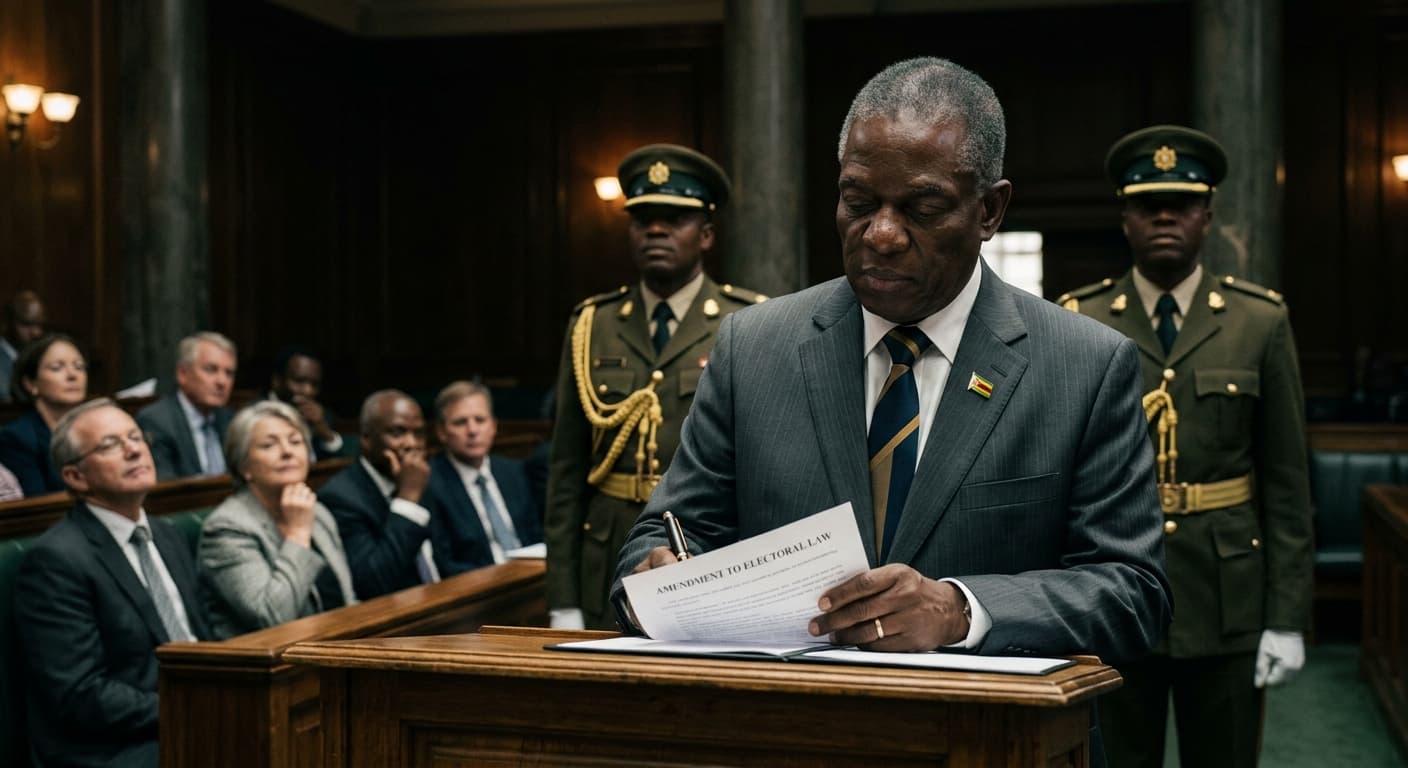
Zimbabwe's Mnangagwa signs law scrapping direct presidential vote
Zimbabwe's Constitution of Zimbabwe Amendment (No. 3) Act, signed July 7, 2026, extends Mnangagwa to 2030 and hands presidential selection to parliament — bypassing a referendum.
President Emmerson Mnangagwa's signature on the Constitution of Zimbabwe Amendment (No. 3) Act on July 7, 2026, did more than extend his rule to 2030. It transferred the power to choose Zimbabwe's president from roughly 6.6 million registered voters to about 350 lawmakers his ruling party already controls — and it did so without the referendum the 2013 constitution requires. The direct presidential election, held every cycle since 1990, no longer exists. That is the load-bearing change; the two-year term extension is the sweetener that made it politically saleable inside ZANU-PF.
Government spokesperson Nick Mangwana confirmed enactment on July 7 via social media, and the law was gazetted the same day, according to reporting by RFI. Human Rights Watch called the amendment an assault on democratic accountability, noting that Mnangagwa had previously described himself as "a constitutionalist" who would abide "by the provisions of [the] constitution to the letter" in a
Human Rights Watch statement issued July 8.
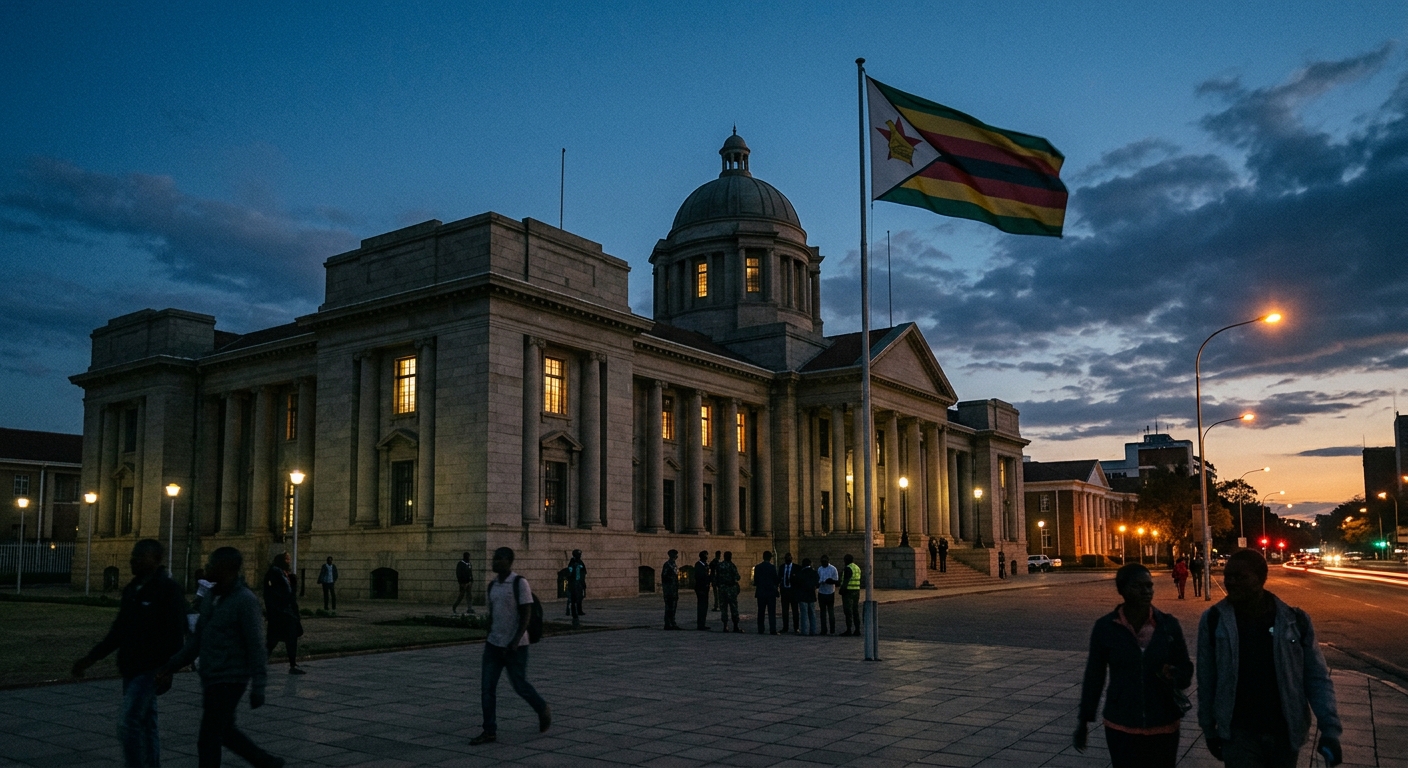
The mechanics of a "constitutional coup"
The law rewrote seven of the 2013 constitution's core electoral provisions in a single package. Presidential and parliamentary terms grow from five to seven years. The next general election, due in 2028, is pushed to 2030. Mnangagwa, whose second and final term was set to expire in 2028, remains in office through the extension. Future presidents will be chosen by a joint sitting of the National Assembly and Senate. The Senate itself expands from 80 to 90 members, with the 10 new seats filled by presidential appointees. Public interviews for some senior judicial appointments — a transparency mechanism won in the 2013 negotiations — are removed.
The vote counts made the outcome inevitable once ZANU-PF whipped its caucus. According to BBC News, Speaker Jacob Mudenda announced on June 18 that 216 lawmakers voted yes and 42 no in the National Assembly, 29 above the 187-vote two-thirds threshold. The Senate followed on June 24 by 75 to 4,
Al Jazeera reported. More than 30 opposition MPs — mostly Citizens Coalition for Change (CCC) legislators who had defected or been recalled — crossed the aisle to vote with the ruling party.
The Brookings Institution notes the deeper machinery. In the 2023 election, the opposition denied ZANU-PF a two-thirds majority. But between 2024 and early 2026, the ruling party used a party-recall procedure to eject opposition MPs and then swept the ensuing by-elections, Brookings analysts Chipo Dendere and Miles Tendi write. By the time CAB3 reached the floor, "passage of the bill was never really in doubt."
Why the referendum bypass is the real story
The 2013 constitution was written to make exactly this impossible. Section 328(7) states that any amendment to a term-limit provision whose effect is to extend the length of time a person may hold office cannot apply to an incumbent, and must be put to a referendum. The provision was drafted, in part, by David Coltart — now mayor of Bulawayo and a leader of the CCC — precisely to inoculate the country against third-termism. Coltart argued on X that the section "doesn't matter how one couches" the change; if it extends time in office, a referendum is required, according to a ISS Africa analysis.
ZANU-PF's answer was a semantic maneuver. Party treasurer-general Patrick Chinamasa argued the law "elongates the electoral cycle" rather than extending the term — the two-term limit, he said, remains untouched. Justice Minister Ziyambi Ziyambi, sponsoring the bill, told parliament on June 3 that CAB3 was "not an abandonment of our constitutional order in any way, shape or form but a continuation of it," according to reporting in Al Jazeera.
Zimbabwe's Constitutional Court had the chance to test that argument. It declined. It dismissed a challenge by lawyer Lovemore Madhuku on procedural grounds and, on June 17, struck out a further challenge on the eve of the National Assembly vote. The result, in the words of the Journal of Democracy, is that Zimbabwe's "long-standing post-liberation war tradition of 'one man, one vote'" has been abolished by a supermajority the ruling party engineered — not endorsed by the voters who installed the term limit by 94% in the March 2013 referendum.
Who actually wins — and who quietly loses
The obvious winner is Mnangagwa, 83, who buys two extra years and a legacy vehicle. The less obvious winner is his inner circle. Under the old rules, Mnangagwa's exit in 2028 would have opened a bruising succession fight, with First Vice-President Constantino Chiwenga — the general who backed the 2017 coup against Robert Mugabe — the presumed heir. Under CAB3, the next president is chosen by a parliament that ZANU-PF controls, in an electoral college the party's central committee can discipline. That mechanism converts a national campaign into an intra-party negotiation.
The loser inside ZANU-PF is Chiwenga. ISS Africa reports that Mnangagwa has methodically removed Chiwenga loyalists from senior military positions since 2024. Constitutional lawyer Alex Magaisa's successor at the SAPES Trust, Justice Mavedzenge, has warned that Mnangagwa "could suffer the same fate as Mugabe" if he loses legitimacy — a pointed reference to the 2017 military intervention that put Mnangagwa in office in the first place.
"The Mnangagwa administration's intensified repression of human rights, including during the constitutional amendment process, and the failure to impartially investigate rights violations and ensure accountability for abuses, raises grave concerns about the future of democracy and the rule of law in Zimbabwe." —
Human Rights Watch, July 8, 2026
The loser outside the party is any future opposition. Under a joint-sitting system, an opposition force needs to control both chambers of parliament to elect a president — a threshold roughly double what it needs under direct election, and one made harder by the new 10 appointed senators and the chieftaincy bloc that traditionally votes with ZANU-PF. The Al Jazeera reporting quotes former finance minister Tendai Biti's warning: "If they can get away with two years, what stops them from getting away with 20 years?"
The regional silence that enables it
The African Union and the Southern African Development Community (SADC) have not issued statements condemning the amendment as of July 8. That silence is the quiet second story. Journal of Democracy contributors argue regional bodies "dropped the ball" on Zimbabwe's 2017 military coup by refusing to call it a coup — and are doing so again. In Article 25 of the International Covenant on Civil and Political Rights, to which Zimbabwe is a state party, citizens must be able to vote for their leaders "in genuine periodic elections" reflecting the will of the electorate — a standard that indirect election through a party-controlled legislature strains, though does not automatically breach.
The European Union's Harare ambassador, Katrin Hagemann, initially made comments that the ZANU-PF-aligned Herald newspaper cast as endorsement; the EU embassy later clarified that constitutional amendments raise no concern only when they reflect "the will of the people" — a standard Mnangagwa's government has declined to test at referendum. Brookings suggests Western partners have limited leverage beyond Zimbabwe's mining sector, where a 2023 raw-lithium export ban has drawn Chinese, Emirati and Russian buyers into refining joint ventures that dilute democratic conditionality.
The historical parallel that reframes everything
Zimbabwe's neighbours have watched this movie before. In Rwanda, a 2015 referendum removed term limits for Paul Kagame. In Uganda, parliament scrapped presidential age limits for Yoweri Museveni in 2017. In Guinea, Alpha Condé pushed through a new constitution in 2020 to reset his term clock — and was overthrown in a coup 18 months later. In Senegal in 2024, mass protests forced Macky Sall to abandon a delayed election.
Zimbabwe's version is distinct in one respect: it does not touch the two-term limit language. It merely lengthens the term and moves the election indoors. That is a template other African incumbents will study. As Justice Mavedzenge warned in a SAPES Trust seminar in February, "constitutional coups" become contagious once regional bodies signal indifference.
What to watch
- Constitutional Court appeals. Civil society groups including the National Constitutional Assembly and Constitutional Defenders Forum are preparing fresh challenges arguing that section 328 mandates a referendum. The court has dismissed prior cases on procedural grounds; a merits ruling is the next hurdle.
- The 2028–2030 succession. With Mnangagwa's extended term running to 2030, watch whether ZANU-PF's December 2027 congress designates a successor — and whether Chiwenga is retired, prosecuted, or promoted.
- SADC summit. The next SADC Heads of State summit in August is the first regional forum where member states could either endorse or criticise the amendment. Silence will be read as endorsement.
- The mining lever. Brookings analysts argue Western partners' remaining leverage sits in mining-sector trade preferences. Watch whether the US extends or lets lapse Zimbabwe-specific sanctions on Mnangagwa and family members, which have been in place since 2024.
The Bottom Line
Zimbabwe has not held a coup; it has held a vote. That is precisely the point. By replacing direct presidential elections with a joint parliamentary vote inside a chamber ZANU-PF has systematically stacked, the ruling party has engineered a permanent incumbency machine that never has to risk another national ballot it might lose — and it did so while insisting the two-term limit remains intact. If SADC and the African Union let the semantic defence stand, CAB3 becomes the continental template for how to end direct presidential democracy without ever calling it that.
Discover more
US Politics
SNAP Food Assistance Faces Legal Challenges
In 2026, SNAP faces stricter eligibility rules and mounting legal challenges, threatening food assistance for the millions of Americans who rely on the program.
US Politics
Congress Targets AI Chatbot Access for Terror
The House passed the Generative AI Terrorism Risk Assessment Act, focusing on AI's role in terrorism and potential surveillance implications.
Global Politics
Trump's Conflicting Messages on Iran War
Trump's mixed messages on Iran reflect a strategy of audience management, benefiting Tehran amid a complex geopolitical landscape.

Economics
Fed's Amex AML order puts correspondent banking on notice
Federal Reserve's Amex AML order requires board-level controls and a 90-day plan; OCC fined the bank $350 million over enterprise-wide deficiencies.