Zimbabwe's Term-Extension Law Rattles SADC
Mnangagwa's rule extended to 2030, altering electoral norms.
Model Diplomat7 min readSouthern Africa
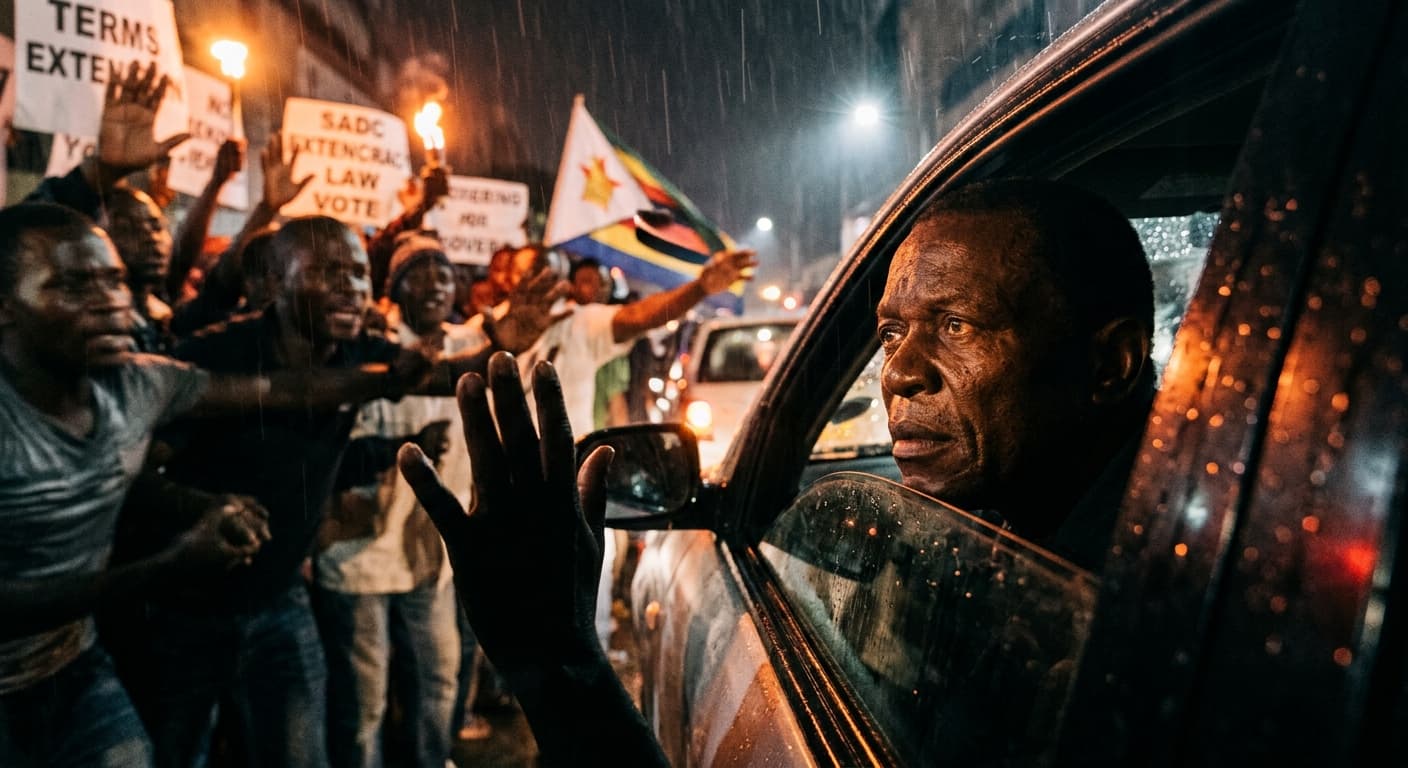
Mnangagwa Signs Zimbabwe Term-Extension Law, Rattling SADC
Zimbabwe's Constitutional Amendment No. 3 extends Mnangagwa's rule to 2030 and scraps direct presidential elections — testing SADC's electoral norms.
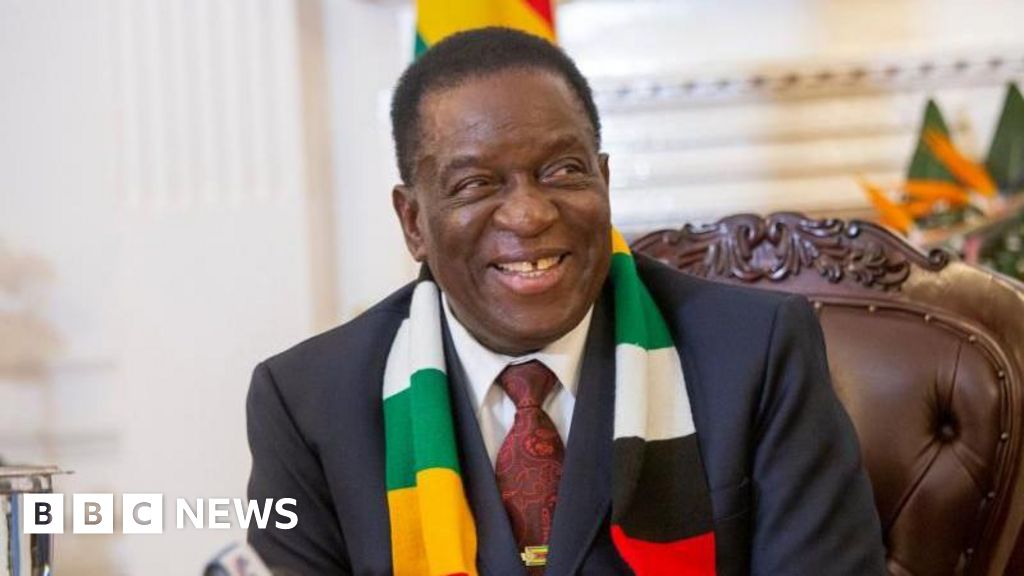
On July 7, 2026, President Emmerson Mnangagwa signed Constitutional Amendment Act No. 3, extending his term to 2030, lengthening all elected mandates from five to seven years, and — for the first time since 1990 — abolishing the direct election of Zimbabwe's president. The most consequential fact for Southern Africa is not that a leader has manufactured extra time in office; it is that a SADC founding member has quietly demonstrated that a parliamentary supermajority plus a compliant Constitutional Court can override an entrenched clause requiring a referendum — a template every ruling party in the region is now watching. That, more than Mnangagwa's personal survival, is why South Africa's opposition — and Zimbabwe's neighbours — reacted this week.
What the law actually does
Constitutional Amendment Act No. 3 rewrites four pillars of the 2013 charter at once. It extends the presidential and parliamentary terms from five to seven years; it postpones the general elections due in 2028 to 2030; it removes voters from the presidential selection process entirely, handing that power to a joint sitting of the Senate and National Assembly; and it keeps the sitting 83-year-old head of state in office through the transition, according to the BBC.
The vote counts leave no ambiguity about ZANU-PF's control of parliament. The National Assembly passed the bill on June 18, 2026 by 216 votes to 42, comfortably clearing the 187-vote two-thirds threshold, Al Jazeera reported. Six days later the Senate followed 75 to 4, according to Senate President Mabel Chinomona,
also via Al Jazeera. The Constitutional Court dismissed the last pending legal challenge on June 17 on technical grounds, clearing the path for enactment — a ruling that drew no published dissent and no inline source in this draft.
Justice Minister Ziyambi Ziyambi, the bill's sponsor, defended the changes in parliament on June 3, telling MPs the reform was "not an abandonment of our constitutional order in any way, shape or form but a continuation of it," according to Al Jazeera. His argument is that Zimbabwe still has a two-term limit; only the length of each term has changed. Critics call that framing a legal fiction.
The referendum ZANU-PF did not want to hold
The centre of gravity of the legal dispute is Section 328 of Zimbabwe's 2013 Constitution — a clause specifically written after Robert Mugabe's era to make term-limit tampering nearly impossible. The provision requires that any amendment with "the effect of extending" an incumbent's tenure be approved twice: once by parliament, and once by voters in a national referendum. The sitting president cannot benefit from the change unless the electorate signs off in a second poll, as the BBC's explainer laid out ahead of the vote.
ZANU-PF's workaround is textbook. Because Amendment No. 3 nominally keeps a two-term ceiling in place — merely stretching each term from five to seven years and moving the 2028 election to 2030 — the government argues Section 328 is not triggered. Constitutional lawyer and former finance minister Tendai Biti has warned that the manoeuvre reverses a hard-fought post-Mugabe safeguard. "If they can get away with two years, what stops them from getting away with 20 years?" Biti told the BBC. Constitutional scholar Justice Mavedzenge went further, telling Al Jazeera the amendment is "an attempt by President Mnangagwa himself to cling on to power, but also to roll out some dynastic plans for the country." Critics call that framing a legal fiction — and the Constitutional Court's June 17 dismissal of the last challenge on procedural grounds gave them no forum to prove it.
Independent observers have been just as blunt. Brookings scholars Chipo Dendere and Miles Tendi wrote on June 26 that the reforms "represent a significant setback for efforts to combat entrenched authoritarianism in Zimbabwe," noting that the amendment was "fast tracked to avoid a referendum" after ZANU-PF used a wave of opposition MP recalls to reclaim its two-thirds majority, according to Brookings.
The public-opinion arithmetic reinforces the accountability gap. Afrobarometer's 2022 Zimbabwe round found 930 of 1,200 respondents — roughly 78% — agreeing "very strongly" or "strongly" that the constitution should limit presidents to two terms, per World Bank microdata. The Journal of Democracy's 2024 review, "
Africa's Leaders for Life," puts the figure at 80%.
Why South Africa's opposition — not its government — is doing the talking
The reaction from Pretoria has revealed the region's real balance of power. The African National Congress-led government has been silent. It is the opposition benches that have spoken. South Africa's Economic Freedom Fighters, led by Julius Malema, condemned the amendment as a betrayal of the liberation struggle, arguing that ZANU-PF was "prioritising its grip on power over the welfare of citizens," according to NewZimbabwe.com. Build One SA leader Mmusi Maimane warned of "broader regional implications," according to
263Chat.
That asymmetry is the story: South Africa is the only SADC member whose diplomatic weight can meaningfully constrain Harare, and it has consistently declined to use it. The Institute for Security Studies has argued for years that SADC's principal problem is not the absence of election norms but the enforcement gap: "in electoral disputes in countries such as DRC and Zimbabwe… the SADC regional bloc has failed to take decisive action to defend its own guidelines," according to ISS Africa. Pretoria — under Zuma and Ramaphosa alike — has treated Zimbabwe as a fraternal-solidarity file rather than a norms file. The 2004 SADC Principles and Guidelines Governing Democratic Elections, hosted by
SAIIA, commit member states to "consolidate, defend and maintain democracy" and to hold elections "at regular intervals as provided for by the respective National Constitutions." Amendment No. 3 does not obviously breach the second clause — it changes the constitution — which is precisely the loophole that makes the Zimbabwe model exportable.
The regional template — and who copies it next
Zimbabwe is not innovating. It is the fifth prominent African term-limit evasion since 2020, and the mechanism this time is the most legalistic yet. Carnegie's April 2025 survey noted that Togo's 2024 constitutional overhaul — creating a lifetime "President of the Council of Ministers" role for Faure Gnassingbé — provided "a mechanism… to remain in office for life, and sidestep Togo's hard-fought provision of presidential term limits," per the Carnegie Endowment. The Africa Center for Strategic Studies has flagged that five of the eight African coups since 2015 occurred in countries whose leaders had evaded term limits: Chad, Gabon, Guinea, Sudan, and Zimbabwe itself in 2017.
An LSE-published quantitative study by Michael Amoah, covering presidential extensions from 1960 to 2022, found that manipulated tenures correlate with heightened risks to "politics, peace and security" in host states, especially where extensions are pushed through without genuine plebiscitary consent, per SAGE Open via LSE.
The template Harare has now perfected has four moving parts: manufacture a two-thirds parliamentary majority; frame the amendment as a "term length" adjustment rather than a term-limit removal; get the constitutional court to dispose of challenges on procedural grounds; and skip the referendum. Every one of those steps is transferable. The Democratic Republic of Congo, where President Félix Tshisekedi has floated constitutional changes ahead of 2028, is the most likely near-term test case. Human Rights Watch flagged in November 2024 that Tshisekedi had signalled he wanted to revise term limits. Mozambique's ruling FRELIMO, coming off the disputed October 2024 election, and Namibia's SWAPO, are watching the enforcement question: does SADC do anything?
The evidence from this week suggests the answer is no. SADC issued no communiqué on the Amendment No. 3 vote. The African Union has been silent. Only the EFF, Build One SA and Zimbabwean civil society have spoken on the record.
The domestic risk Mnangagwa now owns
The paradox for Mnangagwa is that solving his 2028 problem has intensified his 2026 problem. The ZANU-PF succession war between the president and Vice-President Constantino Chiwenga — a former army chief and architect of the 2017 coup against Mugabe — has already spilled into public view. War veteran Blessed "Bombshell" Geza publicly called for Mnangagwa's resignation earlier in 2025, prompting a purge of security officials Al Jazeera reported was aimed at "avoid[ing] being overthrown in a coup," per Al Jazeera. The Zimbabwe Catholic Bishops Conference has warned that the 2030 debate is a distraction from mass unemployment and business closures.
Opposition politicians have vowed street action. Leading Zimbabwean opposition figures told African Insider on July 8 that they would challenge the amendment "at home and internationally." Human rights activist Youngerson Matete's High Court application to compel a referendum is pending. And Tendai Biti has hinted that fresh litigation, this time built on Section 328's non-derogation language, is being prepared.
The Bottom Line
Zimbabwe's Constitutional Amendment Act No. 3 matters less as a personal power grab by an 83-year-old president than as a proof of concept: with a parliamentary supermajority and a pliant Constitutional Court, a SADC member can extend a leader's rule and scrap direct presidential elections without holding the referendum its own constitution requires — and neither Pretoria nor the AU will move. If the DRC, Mozambique, or Namibia follows the template before 2030, Harare will be remembered as the moment Southern Africa's electoral-integrity norms became formally void.
What to watch
- High Court ruling on the Matete referendum petition, expected in the coming weeks — the last domestic legal route to force a Section 328 vote.
- SADC Heads of State Summit, August 2026 in Madagascar: whether Zimbabwe's amendment appears on the agenda, or is absorbed into fraternal silence.
- ZANU-PF succession signalling: any move by Vice-President Chiwenga's faction, or further purges of security officials, ahead of the party's 2027 elective congress.
Discover more
US Politics
SNAP Food Assistance Faces Legal Challenges
In 2026, SNAP faces stricter eligibility rules and mounting legal challenges, threatening food assistance for the millions of Americans who rely on the program.
US Politics
Congress Targets AI Chatbot Access for Terror
The House passed the Generative AI Terrorism Risk Assessment Act, focusing on AI's role in terrorism and potential surveillance implications.

US Politics
White House Pressures Congress for Crypto Leg
The Trump administration's push for the CLARITY Act aims to reshape crypto regulation, impacting trillions in market value and the Trump family's wealth.

Economics
Fed's Amex AML order puts correspondent banking on notice
Federal Reserve's Amex AML order requires board-level controls and a 90-day plan; OCC fined the bank $350 million over enterprise-wide deficiencies.