Atlanta Fed: $56B Tariff Refund Impact
Analysis reveals limited economic stimulus from tariff refunds
Model Diplomat8 min readNorth America
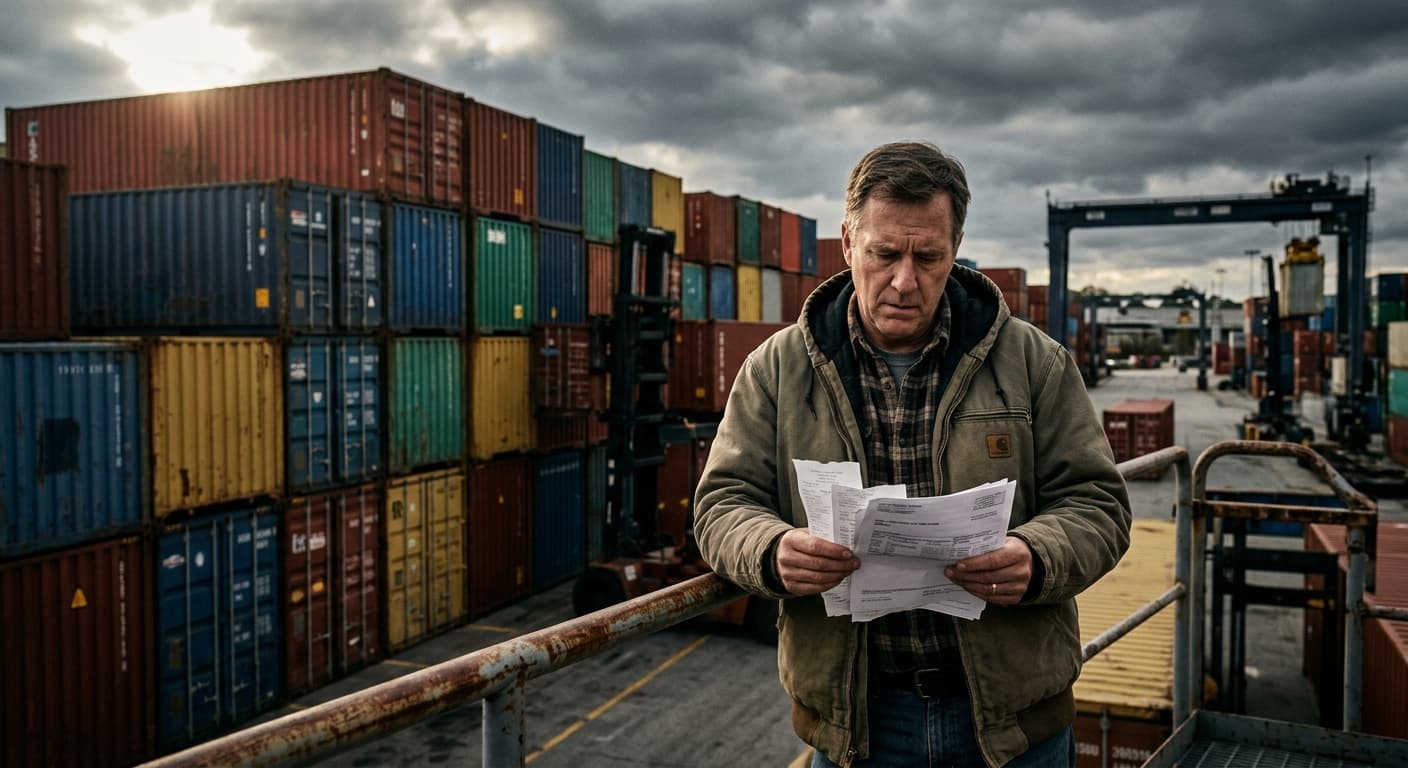
Atlanta Fed: Only $56B of the $166B Tariff Refund Will Actually Move the Economy
Federal Reserve Bank of Atlanta finds two-thirds of the post-IEEPA tariff refund flows to firms that will save it — reshaping the 2026 stimulus calculus.
Only about 34 percent of the $166 billion in tariff refunds ordered after the Supreme Court's February 20, 2026 IEEPA ruling — roughly $56 billion — is going to firms financially constrained enough to convert it into new investment, hiring, or lower prices, according to a July 8, 2026 analysis by economists Simon Fuchs, Veronika Penciakova, and Roberto Robatto at the Federal Reserve Bank of Atlanta. The remaining $110 billion will be saved, used to repay debt, or distributed to shareholders. That reframes the biggest customs-refund program in U.S. history from a Main Street stimulus into what is largely a balance-sheet event, with a real-economy multiplier far below what the headline figure implies.
The distinction matters for the second-half macro path. It shapes the FOMC's read on domestic demand, retailers' pricing plans into holiday 2026, and the political narrative the Trump administration is trying to build around a manufacturing revival financed, in effect, by its own reversed tariffs.
The finding: a windfall isn't stimulus if the recipient wasn't cash-constrained
The Atlanta Fed team built its estimate by linking S&P Global's Panjiva shipment data with Dun & Bradstreet's National Establishment Time Series, tracking 33 million maritime shipments across nearly 175,000 U.S. importers between 2022 and 2024. They classified importers on two proxies for financial constraint: employment size and the Dun & Bradstreet PAYDEX score, which grades how reliably a firm pays its vendors on a 1–100 scale. A missing or weak PAYDEX reading, the Atlanta Fed authors argue, signals limited credit visibility — a reasonable stand-in for restricted access to external finance.
The theoretical backbone is Modigliani–Miller: an unconstrained firm is already operating at its desired scale, so a one-time payment "unrelated to fundamentals" doesn't change its investment or hiring calculus, and the cash migrates to buybacks, dividends, or debt paydown. A constrained firm, by contrast, has been rationing workers, inventory, and capex because it lacks liquidity — a channel the same research team documented in prior work showing that tariff-hit importers drew more heavily on credit lines and paid interest-rate premia of up to 18 basis points on new loans during the 2018–19 China trade war, according to an NBER Digest summary of the underlying paper.
That backward-looking structure is why the multiplier is far below one: refunds compensate firms for duties paid in the past, not for activity going forward. Prior work on the 2004 repatriation holiday — the closest historical parallel — found that unconstrained multinationals overwhelmingly returned windfalls to shareholders. The 2026 refund cycle, the Atlanta Fed model implies, is retracing that pattern at retail scale.
The corporate confirmation is already on the earnings tape
Firm-level data is showing up in Q1 fiscal 2026 filings almost exactly as the Atlanta model would predict. Deere & Co. booked a $272 million tariff refund recovery in its second-quarter accounts — treated as a credit to production costs, with no announced capex uplift, according to the Deere earnings release. PVH Corp., parent of Calvin Klein and Tommy Hilfiger, told investors it expects roughly $100 million of IEEPA refunds in Q2 2026, offset almost precisely by a $195 million gross tariff drag and prolonged Middle East disruption to its EMEA business, per
PVH's first-quarter release. The net effect on operating margin: essentially zero — a textbook unconstrained-firm response.
Small and mid-cap retailers show the constrained-firm channel more cleanly: Cato Corp. attributed most of its Q1 gross margin jump — from 35.1% to 37.2% — to a $5.7 million IEEPA refund claim, though Chairman John Cato flagged that sales softened through the quarter as fuel prices squeezed customer wallets, according to the company's first-quarter press release. American Eagle, Dollar Tree, Target, Williams-Sonoma and Dollar General have all excluded refund impacts from their fiscal 2026 guidance entirely — signaling management treats the payments as one-off recoveries, not a base for ongoing operations. Williams-Sonoma's guidance explicitly
assumes "no refund of tariffs paid," making any refund pure upside optionality — the definition of an unconstrained response.
The Atlanta Fed's constraint proxies also predict which firms hesitate to book the money at all. Gentex, the auto-mirror maker, disclosed roughly $42 million in cumulative IEEPA-tariff payments but recognized zero refund in its first quarter, citing "difficulty in predicting whether any tariff refund claims" would be honored by Customs, per its investor release. Absent a booked receivable, no operating decision changes.
The mechanical bottleneck: the government still holds most of the money
The Atlanta Fed's static allocation assumes the refunds flow. The plumbing says otherwise. Washington has returned only about $20.6 billion of the $166 billion owed, and the Justice Department is contesting further repayments in lower courts, The Financial Wire reports.
The refund architecture — the Consolidated Administration and Processing of Entries portal, or CAPE — opened April 20, 2026, exactly two months after the Supreme Court struck down the tariffs. In its first week U.S. Customs and Border Protection rejected more than a third of claims for technical or data errors, and had accepted claims covering only about a fifth of the shipments for which refunds were owed, according to NPR reporting on the refund quest. More than 330,000 importers paid IEEPA duties across 53 million shipments, but only about 56,500 — largely the biggest firms — had completed the electronic-payment onboarding when the portal went live, per
Al Jazeera's coverage of the launch.
That skew inverts the Atlanta Fed's stimulus logic: the firms best positioned to file are the largest, and the largest are the least constrained — making the paperwork gap an effective means-test that filters out the very importers whose refunds would move the real economy. As Georgetown law professor Greg Shaffer told Al Jazeera, "smaller importers, it's a cost-benefit analysis where they might shrug their shoulders and say it's not worth going through the hassle," according to the outlet's analysis of the Supreme Court ruling.
The pass-through squeeze and the pricing channel
The Atlanta Fed paper's most underappreciated claim concerns prices, not investment. Constrained firms, the authors argue, often keep prices high specifically to generate internal cash flow — a form of financing friction. Refunds ease that pressure and can allow constrained firms to hold or lower prices when input costs rise.
That matters because the tariffs — even the surviving ones — are still binding on end prices. Nearly 90 percent of the economic burden of the 2025 tariffs fell on U.S. firms and consumers rather than foreign exporters, according to a New York Fed analysis of import data through November 2025 by Mary Amiti and co-authors, available through IDEAS. Cost pass-through remained active into 2026: business-survey estimates from the Atlanta, Cleveland, and New York Feds put average cost-price passthrough at
around 60 percent, with meaningful heterogeneity across firms.
Tariff exposure also broadened inflation expectations in the Atlanta Fed's Survey of Business Uncertainty. Firms directly exposed to tariffs pushed up year-ahead price growth expectations by 0.7 percentage points, while firms merely operating in tariff-exposed industries added 0.3 points — a spillover pattern reminiscent of the 2021–23 inflation impulse, as Meyer and co-authors documented. If the $56 billion that reaches constrained firms translates into steadier prices at inventory-intensive small importers, the disinflationary effect is real but modest — worth perhaps a few tenths of a percentage point in core goods, not enough to shift the FOMC's dot plot.
Who wins, who loses, and what to watch
The winners. Large public importers — Deere, PVH, Costco, Revlon, FedEx — that lawyered up early, filed pre-emptive suits in the Court of International Trade, and were first through CAPE. Their refunds are already booked or in the pipeline; per the BBC's coverage, successful applicants can expect payment within 60–90 days. Class-action lawyers targeting consumer pass-through are the second-order winners, given that most retailers have no clean paper trail to reimburse customers directly.
The losers. Individual consumers — who absorbed the tariff pass-through at the register — have no direct claim on the refund pool, per the Al Jazeera launch report. Treasury Secretary Scott Bessent's earlier prediction — "I got a feeling the American people won't see it" — is
tracking accurate. Small importers stuck on hold with CBP are the second loser: the cohort the Atlanta Fed identifies as most likely to spend the cash productively is also the least equipped to extract it.
The historical parallel. The 2004 American Jobs Creation Act's repatriation holiday allowed U.S. multinationals to bring back $312 billion in offshore earnings at a discounted 5.25% rate. Academic follow-up found that between 60 and 92 cents of every dollar went to share buybacks, not the promised investment or hiring — a pattern the Atlanta Fed's 34%/66% split effectively recreates for the tariff refund cycle. The design differs, but the behavioral response of unconstrained firms does not.
The forecast risk to the Atlanta Fed's estimate. Two factors could move the 34% number. If CBP accelerates payouts to smaller importers — the group NPR profiled as still unable to log into the portal weeks after launch, per its portal-day dispatch — the constrained-firm share of realized refunds could rise materially. Conversely, if the Justice Department successfully carves out categories from repayment, the total pool shrinks and the composition tilts even further toward well-lawyered incumbents.
What to watch next
- CBP's next status filing to the Court of International Trade — the running tally of claims accepted, rejected, and paid. Judge Richard Eaton retains sole jurisdiction over refund disputes, per the
BBC's court report.
- Q2 fiscal 2026 earnings, late August through early September. PVH has already told investors to expect $100 million of refunds in the quarter; watch whether Target, Dollar Tree and Williams-Sonoma revise guidance to include refund receipts, and whether any large retailer announces capex or hiring specifically funded by them.
- The Section 122 and Section 232 tariff regime. Trump replaced IEEPA duties with a 15% global tariff via Section 122 in late February 2026. If the administration cements those with congressional backing, the refund episode becomes a one-off rather than a template — and Section 232 tariffs alone, per Tax Foundation testimony to the House Small Business Committee, would offset nearly one-third of the long-run benefits of the 2025 reconciliation law, according to the
Watson testimony.
The Bottom Line
The bottom line: the $166 billion refund is a balance-sheet event dressed as stimulus. The firms best positioned to file are the least likely to spend; the firms most likely to spend are stuck on hold with CBP. That inversion — not the headline number — is what the FOMC, retailers, and the White House should be pricing in for the second half.
Discover more
US Politics
House Ethics Committee Pushes Sexual Miscond.
The House Ethics Committee has shifted responsibility for sexual harassment settlement records to the Office of Congressional Workplace Rights, complicating disclosure efforts.
US Politics
SNAP Food Assistance Faces Legal Challenges
In 2026, SNAP faces stricter eligibility rules and mounting legal challenges, threatening food assistance for the millions of Americans who rely on the program.
India
BJP's Delimitation Strategy
Congress leader K.C. Venugopal claims the BJP uses women's reservation to advance delimitation, raising fears over electoral fairness ahead of the 2029 polls.

Conflict & Security
Drone Warfare Killing Aid Workers at Unprec
Over 1,000 humanitarian workers killed in three years as cheap armed drones collapse legal protections. Gaza, Sudan, Ukraine, and DRC see deliberate targeting of aid convoys and hospitals with zero prosecutions.