Atlanta Fed: $166B Tariff Refund Impact
Analysis of the economic effects of tariff refunds
Model Diplomat8 min readNorth America
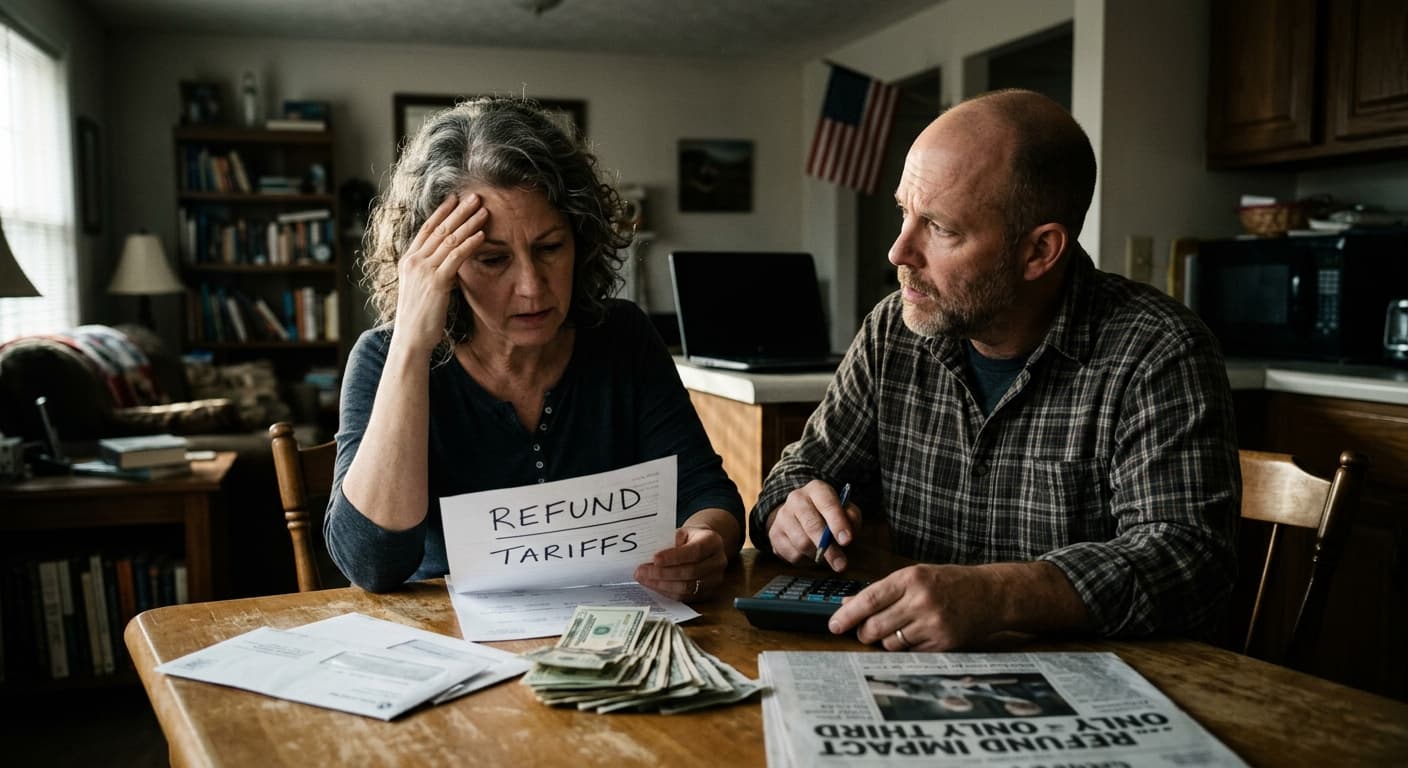
Atlanta Fed: Only a Third of $166B Tariff Refund Will Actually Move the Economy
The Federal Reserve Bank of Atlanta finds financial constraints will steer most of the $166 billion IEEPA tariff refund into buybacks and debt paydown, not hiring or price cuts.
Only about $56 billion of the $166 billion in tariff refunds now flowing back to U.S. importers is likely to fund new hiring, investment, or lower prices — the rest will sit on balance sheets, retire debt, or move to shareholders, according to a July 8, 2026 Federal Reserve Bank of Atlanta Policy Hub Macroblog by economists Simon Fuchs, Veronika Penciakova and Roberto Robatto. That is the fiscal-stimulus story hiding inside a nine-digit number: the headline windfall from the Supreme Court's rejection of Donald Trump's IEEPA tariffs is the largest importer refund in U.S. history, but the macro punch is roughly one-third of what the sticker implies — because the money is arriving at firms that, for the most part, do not need it to operate.
That gap between $166 billion and the ~$56 billion "activated" share is the single most important number for anyone forecasting late-2026 U.S. GDP, the Fed's rate path, or corporate margins in retail and consumer goods. It is why Brookings' Hutchins Center Fiscal Impact Measure has penciled the rebates in as producing only "relatively modest effects on activity," and why Treasury Secretary Scott Bessent's line — "I got a feeling the American people won't see it,"
per the BBC — is turning out to be directionally correct even for the business side.
The Atlanta Fed's argument, in one paragraph
The paper leans on Modigliani-Miller logic that any finance PhD would recognise: a backward-looking cash payment does not, by itself, change a firm's investment plans. Firms that are already at their desired scale — the "unconstrained" — will bank the refund, pay down credit lines, or return it to shareholders. Only firms that were previously unable to fund optimal investment or hiring because of liquidity or credit-access frictions will convert the cash into real activity. Using the Penciakova-Nguyen-Minoiu-Taylor dataset that links Panjiva maritime-shipment records to Dun & Bradstreet's National Establishment Time Series across 33 million shipments and roughly 175,000 importers, Fuchs and co-authors sort firms by employment and PAYDEX credit-quality score. About 34% of imputed refund dollars land at firms in the "constrained" bucket. The rest — 66%, or roughly $110 billion — goes to firms that, on the evidence, will not spend it on operations.
That is a stronger claim than the market has priced. It says the multiplier on this particular fiscal impulse is closer to what economists estimate for corporate tax rebates than for stimulus checks or unemployment top-ups. Historically, the financial-constraints channel is well established: Fazzari, Hubbard and Petersen (1988) is the seminal paper, and more recent Federal Reserve work by Correa, di Giovanni, Goldberg and Minoiu on
trade uncertainty and U.S. bank lending documents that trade-shocked firms cut debt growth by 2.4 points and investment rates by 2.7 points when their banks are constrained. Constrained firms are exactly the ones a refund would unlock.
The court decision that created the windfall
The refund pool exists because, on February 20, 2026, the Supreme Court ruled 6-3 in Learning Resources, Inc. v. Trump that the International Emergency Economic Powers Act does not authorize the president to impose tariffs. The Court left the mechanics of repayment to the U.S. Court of International Trade, where Judge Richard Eaton was blunt at a March 4 hearing: as NPR reported, "The duties were unlawful from the moment they were imposed. And that means that every single cent must be returned to the importer."
CBP's court filing that same week put the total scope on the record:
"As of March 4, 2026, over 330,000 importers have made a total of over 53 million entries in which they have deposited or paid duties imposed pursuant to the International Emergency Economic Powers Act."
That is Brandon Lord, director of CBP's trade policies programme, in the CIT filing that also produced the $166 billion figure. The tariffs represented roughly 63% of 2025 U.S. customs-duty receipts, per Tax Foundation estimates by Erica York and Alex Kraschel that the Atlanta Fed paper cites.
CBP's Consolidated Administration and Processing of Entries (CAPE) portal went live on April 20, 2026. By CBP's own numbers submitted to the CIT, 56,497 importers — a fraction of the 330,566 eligible — had completed the electronic-payment registration required to receive refunds, but that group alone accounted for $127 billion in eligible claims. Refunds are paid 60 to 90 days after claim approval, with interest. As of early July, per
The Financial Wire, the government has returned only about $20.6 billion, and the Justice Department is contesting further repayment in lower courts.
Who actually gets the check
The 34% figure is not the only asymmetry. The refund is going overwhelmingly to importers of record — a group heavily skewed toward large, well-capitalised firms with brokers on retainer. NPR's reporting on small-business claimants tracked how a two-thirds share of eligible importers were not ready when the portal opened, and how CBP rejected more than a third of filed claims for technical or data errors in the first week. The Cato Institute has warned that, "intentionally or not, the federal government will likely keep tens of billions of dollars it should have returned to importers."
That skew stacks against the Atlanta Fed's own stimulus scenario. The refund process is disproportionately serving unconstrained firms — the ones the paper says are least likely to convert cash into real activity — while the small, constrained importers who would invest are the ones stuck in CAPE limbo or writing off the effort as not worth the compliance cost. In other words: the fiscal-multiplier optimists are counting on money reaching exactly the firms that the administrative bottleneck is filtering out.
Not everyone is claiming that money will be redirected productively. In H2 2026 retail earnings previews, Fibre2Fashion reported that most large apparel and retail brands plan to channel recoveries into "lower prices, supply chain resilience, fuel-cost offsets and business investment" rather than earnings — a signal that consumer-facing companies see competitive advantage in pass-through. Costco CEO Ron Vachris has publicly committed to returning refunds "through lower prices and better values." U.S. Trade Representative Jamieson Greer has urged companies to pay any windfall to workers as bonuses. Whether any of that materialises will show up in Q2 and Q3 earnings.
Why the constraint story cuts both ways
The Atlanta Fed's methodology has a mirror finding worth naming: constrained firms also raise prices more when they lack cash, because they need the cash flow. Extra liquidity from refunds could therefore mean lower or steadier prices as costs rise, per Gilchrist, Schoenle, Sim and Zakrajšek (2017). This matters for the Fed. Chair Jerome Powell told the House Financial Services Committee in June 2025
via NPR that "we do expect... tariff inflation to show up more" but that pass-through is uncertain. If ~$56 billion in refunds eases the cash constraint at the exact firms doing the most price-passing — smaller importers with tight margins — the CPI drag could be larger than the modest activity boost. That is the disinflation angle nobody is pricing.
The counter-risk is that the administration replaces the lost duties. Bessent has said combining Section 122, 232, and 301 tools will keep 2026 tariff revenue "virtually unchanged," and Trump signed a Section 122 proclamation the day of the Supreme Court ruling imposing a 10% global tariff (later raised to 15%), BBC reported. The Committee for a Responsible Budget projects the Learning Resources ruling could still cost the government roughly $2 trillion over a decade — but only if replacement tariffs do not stick. If they do, importers receiving refunds today may be writing new tariff checks next quarter, which is precisely why Dan Anthony of
We Pay the Tariffs has said businesses are "far more concerned about the potential for new tariffs" than about the refund windfall.
The IMF and Brookings view
The IMF's 2026 Article IV consultation report noted that inflation moved "sideways during 2025 as tariffs boosted goods prices while services inflation moderated" — evidence that the pass-through Powell warned about did materialise, and that unwinding it via refunds is now a live question for goods CPI. Brookings' Hutchins Center is more explicit: it assumes $150 billion of rebates over Q2-Q3 2026 will produce only limited stimulus, and expects fiscal policy to turn "somewhat restrictive" through year-end. That is consistent with the Atlanta Fed's constraint decomposition and inconsistent with the more optimistic retail-earnings narratives.
Senator Maria Cantwell's February 20 letter to Bessent demanded a refund process "that prioritizes refunds to those small- and medium-sized businesses facing particular financial harm from tariffs, who typically do not have the financial resources on hand to wait for reimbursement." The Atlanta Fed paper is, in effect, the empirical case for Cantwell's ask: the stimulus effect of the refund is almost entirely a function of who gets paid when.
Diplomat View
The Atlanta Fed has quietly reframed the political story around tariff refunds into a monetary-policy story. If only $56 billion of the $166 billion is going to move investment, hiring, or prices, then the Fed's late-2026 rate path is more sensitive to distribution than to aggregate: a refund concentrated among liquidity-constrained importers could deliver a real disinflationary impulse on core goods; a refund captured by unconstrained large-caps will show up in buybacks and add nothing to activity. Watch the CAPE processing data. If CBP continues to clear claims from the top-500 importer cohort first — as its "phased" approach implies — the stimulus share shrinks below 34%, the retail price-relief narrative dies, and the Fed loses the tariff-refund disinflation channel it might otherwise have leaned on to justify a September cut. This call revises if CBP announces a small-business fast track, or if a second CIT order forces automatic refunds of finalised (pre-liquidated) entries — the older tariff payments that would disproportionately land in constrained firms' bank accounts.
What to watch
- CBP CIT status hearings, July–August 2026: Judge Eaton has ordered periodic reports on refund pace. Watch for a small-business carve-out and the pace at which the government processes finalised entries.
- Q2 2026 retail earnings (August): Costco, Walmart, Target and apparel brands will disclose refund receipts and pricing plans. Q2 results, per
Fibre2Fashion, "will reveal how refunds influence margins."
- Section 122/232 tariff replacements: any new duty package that neutralises the refund will change the constraint math for exposed importers in weeks, not quarters. Trump's 15% Section 122 tariff is the base case; a Section 232 expansion on autos, semiconductors, or pharma is the escalatory scenario.
- September FOMC meeting: if goods-CPI eases materially by August, the tariff-refund disinflation channel becomes the analytical frame for a cut.
The bottom line: the Supreme Court gave American importers a $166 billion refund, but the Atlanta Fed has just told the market to price only a third of it — because the money is arriving at the firms least likely to spend it, and the small firms who would are still fighting CAPE's login screen.
Related: U.S. Politics.
Discover more

India
Congress Advocates 33% Women’s Quota
Congress calls for a 33% women's reservation in the existing 543 Lok Sabha seats, countering Modi's plan to expand the house to 850 seats.
India
BJP's Delimitation Strategy
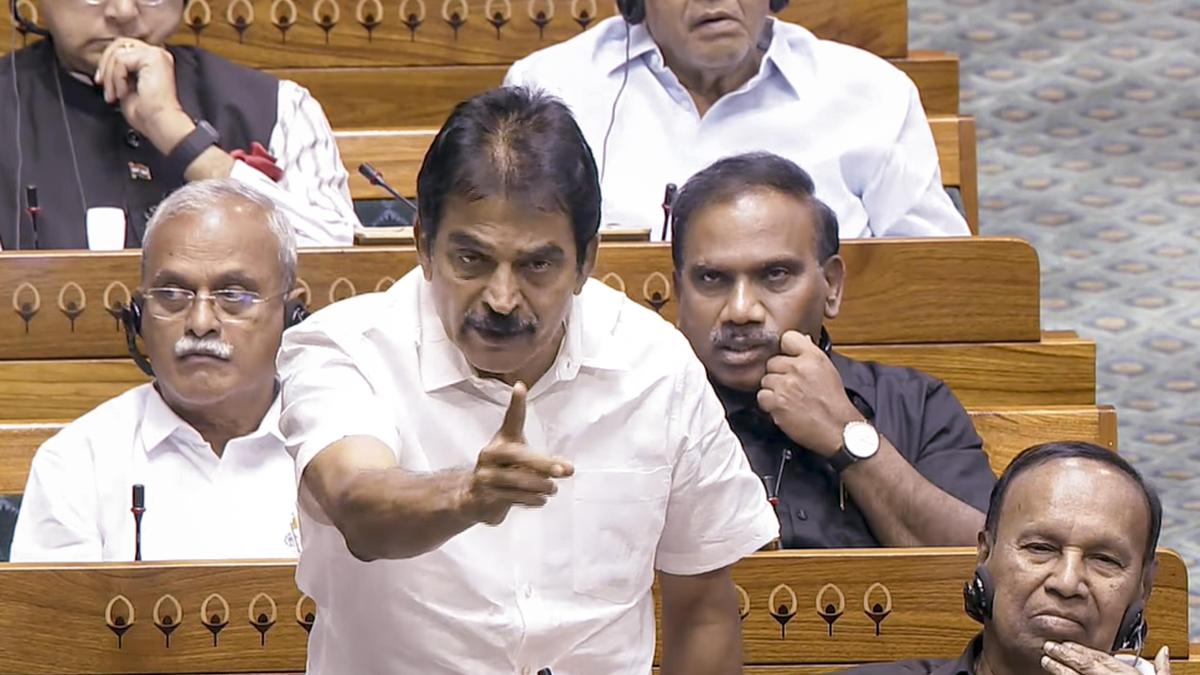
Congress leader K.C. Venugopal claims the BJP uses women's reservation to advance delimitation, raising fears over electoral fairness ahead of the 2029 polls.

US Politics
SNAP Food Assistance Faces Legal Challenges
In 2026, SNAP faces stricter eligibility rules and mounting legal challenges, threatening food assistance for the millions of Americans who rely on the program.

Conflict & Security
Drone Warfare Killing Aid Workers at Unprec
Over 1,000 humanitarian workers killed in three years as cheap armed drones collapse legal protections. Gaza, Sudan, Ukraine, and DRC see deliberate targeting of aid convoys and hospitals with zero prosecutions.