Assad General Pleads Not Guilty in Vienna Torture Trial
The prosecution of Khaled al-Halabi exposes how European courts are bypassing deadlocked global tribunals to pursue Syrian war crimes.
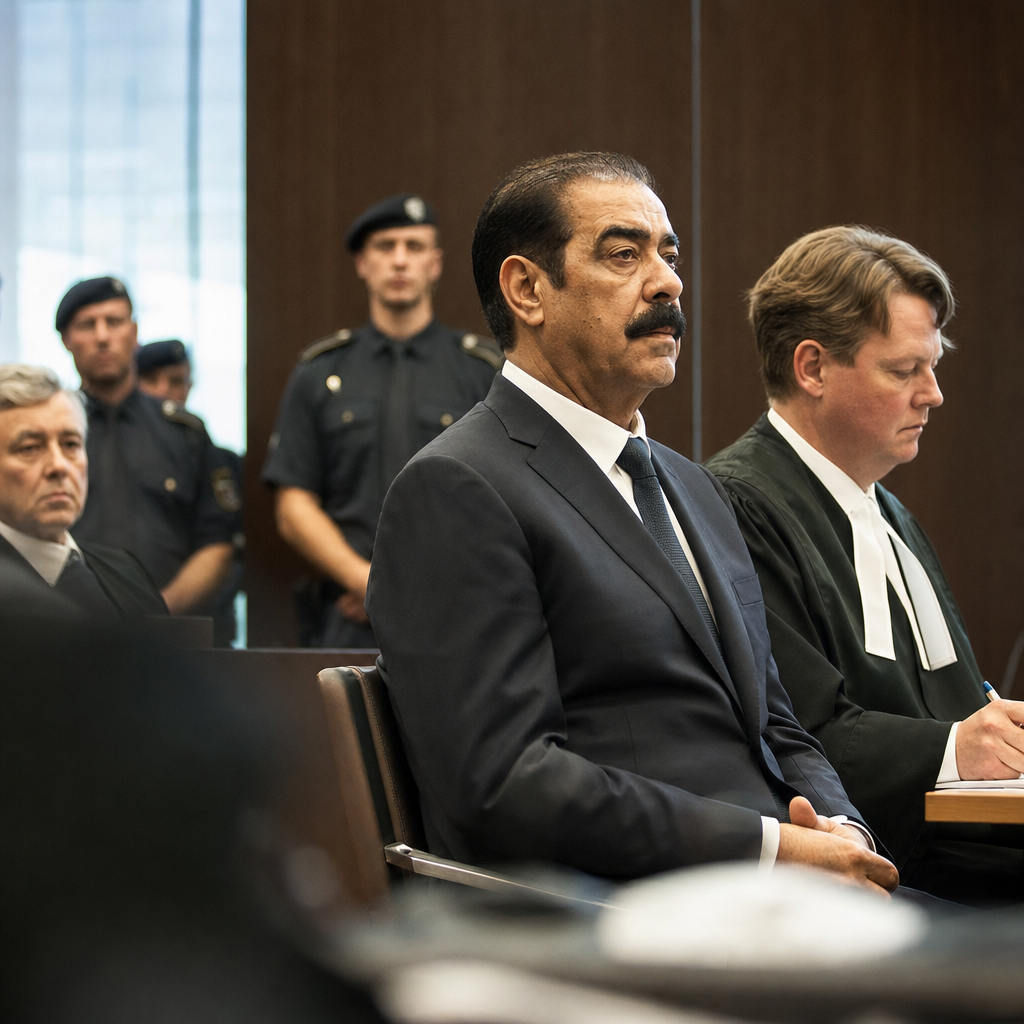
On June 1, 2026, Brigadier General Khaled al-Halabi, the former head of Syria’s General Intelligence Directorate in Raqqa, pleaded not guilty in Vienna to charges of torture, sexual coercion, and inflicting serious bodily harm, according to  Al Jazeera. Standing trial alongside former Raqqa police chief Lieutenant Colonel Musab Abu Rukbah, the 63-year-old al-Halabi denies overseeing systematic torture between 2011 and 2013, asserting that his unit merely recorded the personal details of detainees. However, Austrian prosecutors argue that al-Halabi acted under direct orders from the Damascus government to crush political dissent, and that he routinely authorized "standardized torture methods" such as beatings and water hosing. The trial represents a significant victory for human rights groups seeking accountability under the principle of universal jurisdiction, which allows national courts to prosecute grave crimes committed abroad.
Bypassing Detached International Tribunals
This landmark trial highlights a critical shift in how actors in  Global Politics approach justice for victims of the Syrian Conflict. Because Russia and China have repeatedly vetoed attempts to refer Syrian war crimes to the International Criminal Court, European national courts have become the primary legal venue for holding high-ranking Assad regime officials accountable. By relying on domestic laws that permit the prosecution of foreign state actors, countries such as Germany, France, Sweden, and now Austria are bypassing deadlocked international bodies. Legal advocacy groups, including the Commission for International Justice and Accountability, have spent years gathering survivor testimonies and tracking down former regime figures who settled in Europe during the 2015 refugee influx, as reported by the
  UAE Journal.
The "White Milk" Spy Scandal
The trial also brings to light a highly sensitive intelligence scandal that complicates the simple narrative of humanitarian asylum. Austrian prosecutors previously investigated allegations that domestic intelligence agents collaborated with Israel's Mossad to smuggle al-Halabi from France to Vienna in 2015 under an operation codenamed "White Milk," according to  Yahoo News. Although several Austrian intelligence officials suspected of shielding al-Halabi were acquitted in 2023, the trial has renewed scrutiny of how Western intelligence agencies protected compromised Syrian defectors. For European governments, the case exposes the friction between the geostrategic value of extracting intelligence from regime defectors and the legal obligation to prosecute war criminals.
What to Watch Next
The trial is scheduled to run through June 30, with up to 18 Syrian victims and survivors expected to testify, according to  The Straits Times. The key decision point is whether the Austrian court will accept al-Halabi's claim that he had no operational command over the torture chambers, or if it will set a precedent convicting administrative directors for systemic complicity. Observers should watch whether former intelligence handlers are called to testify, which could blow open the details of "Operation White Milk" and further embarrass European security agencies that prioritize intelligence-sharing over human rights accountability.