ASEAN Fuel Sharing Amid Iran War Crisis
ASEAN leaders adopt fuel-sharing framework to address energy crisis
Model Diplomat2 min readSoutheast Asia
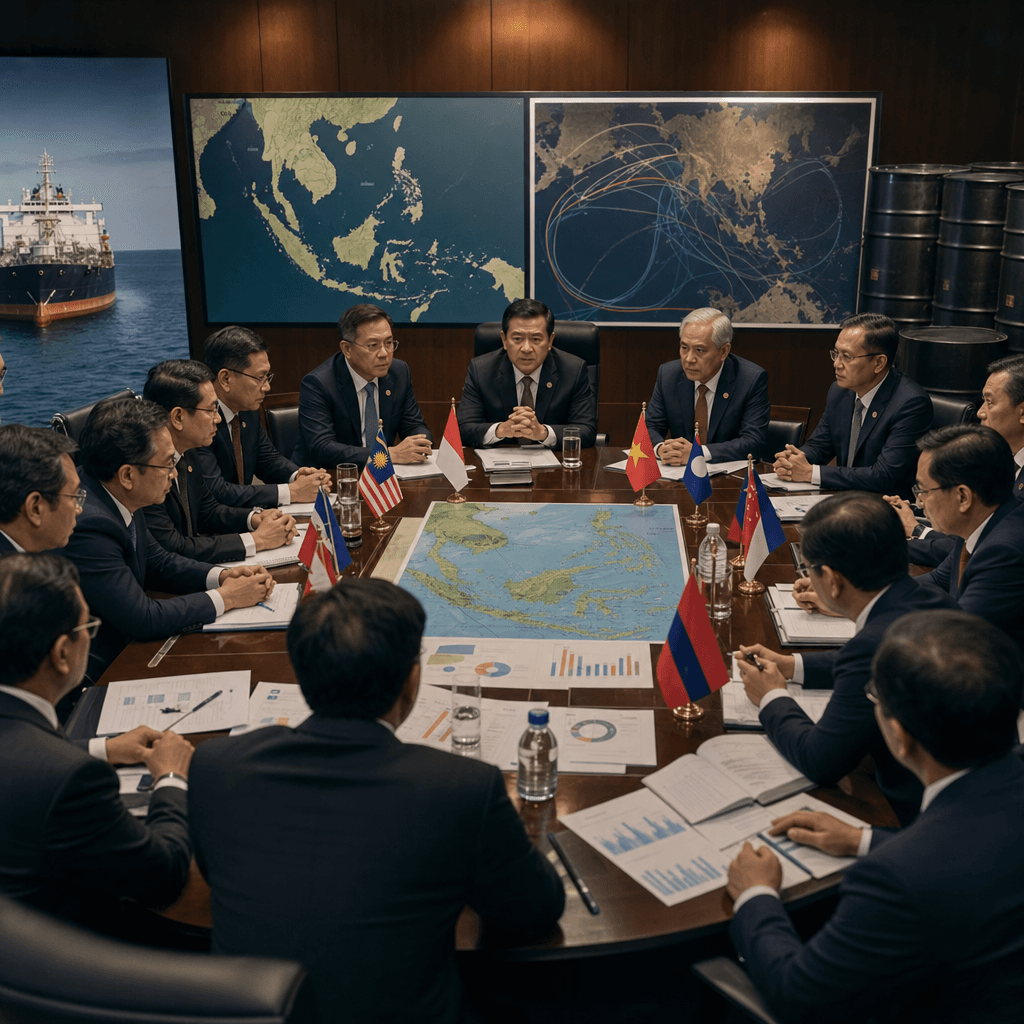
ASEAN Bets on Fuel Sharing as Iran War Squeezes Asia
ASEAN has moved from rhetoric to emergency energy coordination, but fuel sharing, stockpiles and grid links will take time to work.
ASEAN leaders in Cebu adopted a regional fuel-sharing framework and agreed to develop a regional power grid and fuel stockpile to cushion the economic shock from the Iran war, Al Jazeera reported. But Philippine President Ferdinand Marcos Jr., as ASEAN chair, signaled the real problem: the bloc still has to decide “who gets what” and how payments would work,
Al Jazeera. A parallel report from
Channel News Asia said ministers are also drafting a crisis communication protocol and a broader contingency plan for coordinated energy and supply responses.
A regional insurance policy, not a rescue
This is ASEAN admitting that energy security is now a collective vulnerability, not a national problem. The bloc imports more than half of its crude oil and 17% of its natural gas from the Middle East, and the closure of the Strait of Hormuz has turned that dependence into an immediate economic liability, Al Jazeera. The pressure is already visible in higher fuel and living costs across Southeast Asia, with
The Straits Times reporting that ASEAN members are seeing pump prices jump, inflation worsen and government budgets tighten.
The important shift is political. ASEAN is trying to replace ad hoc national stockpiling and bilateral pleading with a regional mechanism that can absorb a supply shock. That matters because fragmented responses — export bans, hoarding, panic buying — would deepen the damage. The bloc’s instinct here is to preserve trade flows and market confidence, not to solve the war in the Middle East, Channel News Asia.
The immediate beneficiaries are the more exposed importers, especially the Philippines and other economies where fuel price spikes feed quickly into transport and food inflation. The losers are households, drivers and firms already facing thinner margins. At the institutional level, the biggest beneficiary is ASEAN itself: if it can coordinate, it can show it still has utility beyond communiqués. If it cannot, each capital will revert to its own emergency playbook.
What to watch next
The next decision point is whether leaders turn today’s political agreement into something operational. Watch for three details in the final Cebu declaration: whether ASEAN sets priority rules for emergency fuel allocation, whether it defines cost-sharing, and whether it pushes the ASEAN Petroleum Security Agreement toward active use, The Straits Times. CNA also reported that the draft response includes language on open sea lanes, freedom of navigation and secure transit for food and energy shipments, which would show ASEAN is thinking beyond fuel to the wider supply chain,
Channel News Asia.
If ASEAN can lock those pieces in, it buys itself a modest shield against the next oil shock. If it cannot, this summit will be remembered less for action than for how exposed Southeast Asia remains.
Discover more

Global Politics
US Seizes Iranian Ship, Tensions Surge
The US seizure of the Iranian ship Touska highlights a shift in control over the Strait of Hormuz, favoring Iran's strategic position.

International Relations
Pakistan's Key Role in US-Israel-Iran Meddle
Pakistan is seeking to mediate the US-Israel-Iran conflict, balancing high-stakes diplomacy against severe economic pressures and steep regional challenges.

Conflict & Security
Drone Warfare Killing Aid Workers at Unprec
Over 1,000 humanitarian workers killed in three years as cheap armed drones collapse legal protections. Gaza, Sudan, Ukraine, and DRC see deliberate targeting of aid convoys and hospitals with zero prosecutions.

Global
World Normalises Taliban as Afghan Women Eras
UN data shows Afghan women erased from public life as Russia recognises the Taliban, EU hosts officials in Brussels, and ICC warrants for gender persecution go unenforced.