Abiy's Landslide Masks Ethiopia's Fractures
Ethiopian PM wins reelection amid rising tensions and exclusions.
Model Diplomat3 min readAfrica
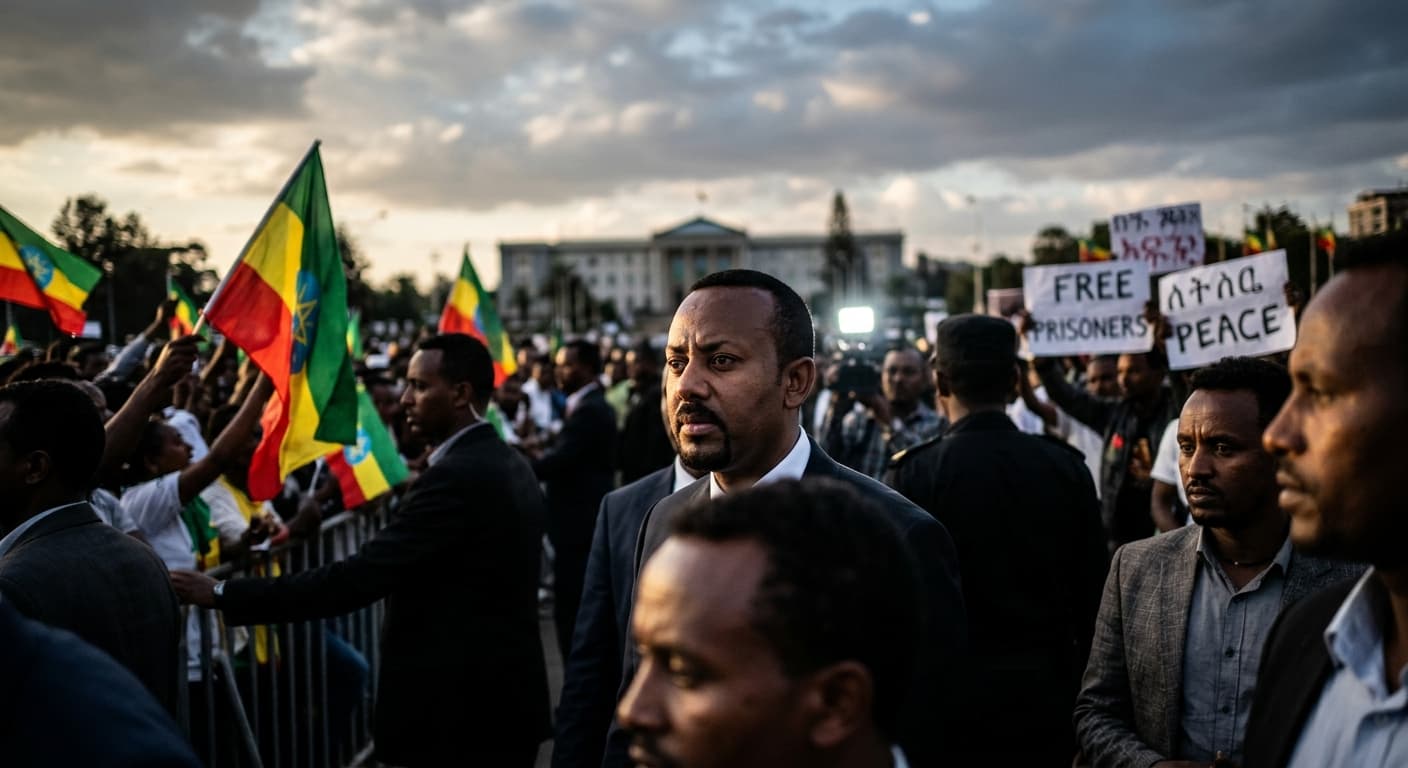
Abiy's Landslide Masks Ethiopia's Deepening Fractures
Nobel Peace Prize winner secures reelection in a vote marred by exclusions and rising war risks in the Horn of Africa's largest conflict zone.
Abiy Ahmed has won a decisive mandate that obscures a dangerous fragmentation. The Ethiopian Prime Minister's Prosperity Party secured what BBC News calls an "overwhelming majority" in elections held June 1, but the result rests on a hollow foundation: an entire region—Tigray, with six million people—was excluded from voting entirely. Meanwhile, 143 polling stations failed to open in the country's two most-populous regions due to security threats from armed groups, and
France 24 reports voting was "interrupted" in Amhara and Oromia constituencies without full details.
An election that delivers overwhelming power to a leader who cannot guarantee open voting across much of his own country is less a political mandate than an amplification of existing fractures. Abiy won the Nobel Peace Prize in 2019 for brokering peace with Eritrea, but that rapprochement has collapsed. Africa Practice notes tensions with Eritrea persist over Abiy's declarations that landlocked Ethiopia has a "right to sea access"—language Asmara views as a veiled military threat.
More corrosive still is Tigray. The 2020–2022 civil war killed an estimated 600,000 people, driving the region to famine. Though the Pretoria Peace Agreement formally ended large-scale fighting in 2022,
BBC reporting reveals that Eritrean troops—once allied with Ethiopia's government—have now switched sides. In a dramatic realignment, Eritrea now backs the Tigrayan People's Liberation Front (TPLF), Ethiopia's former enemy. Security experts quoted by the BBC warn that any new conflict would likely become regional, drawing in Eritrea against Ethiopia's federal forces.
The Machinery of Power Without Consensus
The numbers tell the story. Africa Practice observes that voter turnout fell to around 70%—sharply below the 99.6% in 2021 and 93% in 2015—a sign of disengagement amid insecurity and economic pressure. Inflation stands above 13.4%, with youth unemployment near 20%. The government campaigned on long-term economic reform, but ordinary Ethiopians face immediate hardship, and
BreakThrough News notes that independent media outlets have faced license suspensions and asset freezes, narrowing the space for critical reporting.
Abiy faces active insurgencies in Oromia (the Oromo Liberation Army) and Amhara (the Fano militia), both driving populations from polling places. The government's approach—consolidating power rather than seeking negotiated settlement—alarms analysts. Cameron Hudson, quoted by the BBC, says Abiy has "moved away from the agreement" with Tigray and made "threatening moves towards the Tigranyans," while Tigrayan leaders reciprocate with military preparations. Magnus Taylor of the International Crisis Group warns this "poisonous regional politics" raises the risk that tensions will "escalate into a regional conflict centred on Tigray."
What to Watch
The coming months are critical. Abiy's government, facing no meaningful parliamentary opposition, controls the machinery of further escalation—or de-escalation. The European Union has called for immediate de-escalation in northern Ethiopia, but the track record suggests the Prime Minister will treat his expanded mandate as license to pursue military dominance rather than negotiation. The TPLF's military positioning and Eritrea's alignment with Tigray create the conditions for renewed war, this time with a clearer regional cast. Watch for any resumption of arms transfers to Tigray or Eritrean troop movements along their shared border with Ethiopia. The next critical date is the government's inauguration and cabinet reshuffles, where Abiy's personnel choices will signal whether conflict resolution or consolidation is his priority.
Discover more
India
BJP's Misunderstanding of Women's Quota Needs
The BJP's linking of the Women Reservation Bill to delimitation risks delaying women's empowerment in India, misreading the aspirations of female voters.
India
Romanian Coalition Party Demands PM Resign
Romania's Social Democrats withdrew from coalition, joining far-right AUR to topple PM Bolojan, risking €10 billion in EU funds by August 2026.
India
Women’s Reservation Bill 2026
The Constitution (131st Amendment) Bill, 2026 was defeated in Lok Sabha, revealing deeper political conflicts over women's reservation and delimitation.

Conflict & Security
Drone Warfare Killing Aid Workers at Unprec
Over 1,000 humanitarian workers killed in three years as cheap armed drones collapse legal protections. Gaza, Sudan, Ukraine, and DRC see deliberate targeting of aid convoys and hospitals with zero prosecutions.