£20k Reward Signals PSNI Pressure After Dunmurry Bomb
Crimestoppers is paying for names after a New IRA-style bomb attack on Dunmurry station; the state is trying to trade cash for intelligence before the next hit.
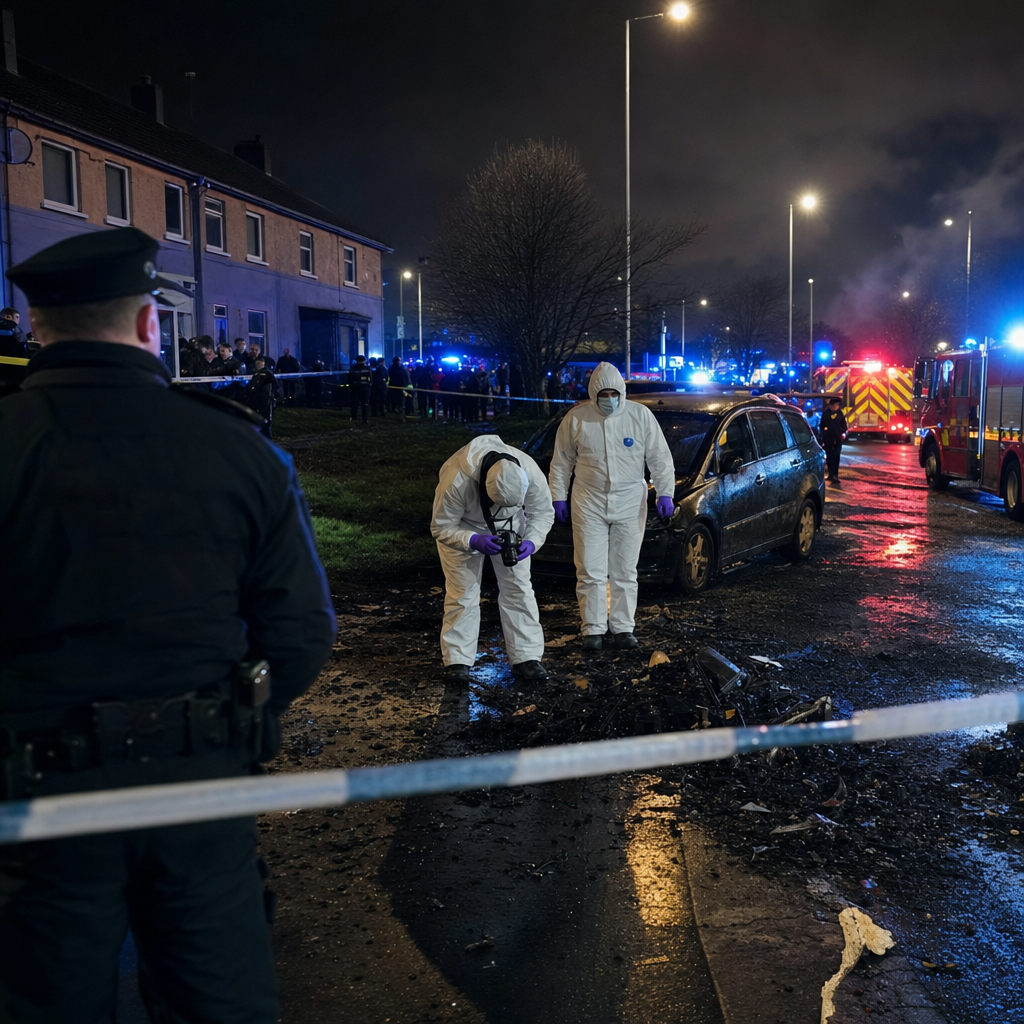
A reward of up to £20,000 has been offered for information on the bomb attack outside Dunmurry Police Station, with Crimestoppers backing the appeal as police widen their inquiry, the BBC reports. The device was planted in a hijacked delivery driver’s car and detonated on 25 April outside the station on the outskirts of Belfast; one man, 66-year-old Kieran Smyth, has been charged with attempted murder and related offences ( BBC News;
  BBC News).
The leverage is with the police — but only if people talk
This is a familiar Northern Ireland security problem: dissident republicans can still generate fear, disruption and headlines, but they do not need battlefield success to claim a win. The Dunmurry attack took place in a built-up area near family homes, and officers had to move residents, including two babies, to safety when the bomb exploded, underlining how the tactic is meant to force the police to react under pressure rather than simply destroy property (BBC News).
That is why the reward matters. Crimestoppers is trying to convert community knowledge into arrests, because the state’s strongest advantage here is not firepower but information. Police can return to the scene, set checkpoints and charge suspects, but they still need witnesses, vehicle movements, device preparation details and local chatter to map the network behind the attack (BBC News; BBC News).
Dunmurry is part of a pattern, not an isolated event
The attack came only weeks after a similar attempt at Lurgan Police Station, where a bomb failed to detonate. That sequencing matters: it suggests either a continuing campaign or at least copycat momentum from the same dissident ecosystem. BBC said police believed the Dunmurry attack may have been carried out by the New IRA, and later reporting from The Irish News said the group claimed responsibility and framed the bomb as an attempt to kill officers as they left the station (BBC News;  The Irish News).
That claim changes the political calculation. A public claim of responsibility is designed to look like reach; the reward, arrests and checkpoints are designed to prove the opposite — that the police can still penetrate the network. For the New IRA, the goal is visibility and intimidation. For the PSNI, the goal is deterrence through disruption and conviction. For local residents, the cost is renewed security theatre around an old conflict that never fully disappeared. For more on the wider pattern, see  Conflict.
What to watch next
The next decision point is whether the investigation produces more arrests or a stronger evidentiary link to the New IRA claim. Watch for any further charge review by the Public Prosecution Service, any new PSNI searches in west and east Belfast, and whether the reward appeal produces the first credible insider tip. The practical test is simple: does this case stay a one-off prosecution, or does it become the start of a broader counter-dissident operation?