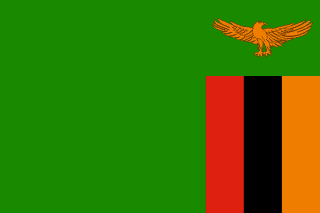
Inside Zambia’s foreign policy.
Republic of Zambia
Africa · UN voting record, treaty positions, and alliances — every claim primary-sourced.
In short
Zambia is a competitive presidential republic that has rebuilt its external credibility under President Hakainde Hichilema, but its room to maneuver is still constrained by debt, copper dependence, and the political test of sustaining democratic openness through the 2026 election cycle…
Capital
LusakaZambia's government & politics
Leadership, governance, and democratic trajectory.

Head of state
Hakainde Hichilema
Head of State

Zambia's UN voting record
How Zambia votes at the UN General Assembly — ideological trajectory, voting partners, topic patterns, and key recent roll calls.
Ideological trajectory
Top voting partners
Topic-level voting
Source: Erik Voeten, “United Nations General Assembly Voting Data”, Harvard Dataverse (CC0). Aggregated by Model Diplomat. Last refresh tracked in profile freshness.
Zambia's foreign policy
Bilateral posture, key relationships, and live diplomatic statements.
Foreign Policy
Zambia’s foreign policy is transactional, debt-aware, and region-first. Under President Hakainde Hichilema, who has served as both head of state and head of government since winning the August 2021 election, Lusaka has tried to restore credibility with Western lenders and investors while preserving working ties with China and its neighbors; Foreign Minister Mulambo Haimbe took office in September 2023 after a cabinet reshuffle Electoral Commission of Zambia, Presidency of Zambia, Reuters. The decision structure is highly presidential: State House sets the line on strategic external issues, while the Ministry of Foreign Affairs executes it, especially on SADC, AU, and UN business Presidency of Zambia, Ministry of Foreign Affairs and International Cooperation of Zambia. Zambia does not publish a sharply ideological grand strategy; its official language instead stresses peaceful coexistence, non-interference, good-neighborliness, economic diplomacy, and support for multilateralism and international law Ministry of Foreign Affairs and International Cooperation of Zambia, UN General Assembly.
Its core interests stack clearly. Survival and regional security come first: Zambia is landlocked, borders eight states, and treats stability in the Democratic Republic of the Congo, Mozambique, and the wider southern African corridor as a direct national interest because conflict disrupts trade routes, energy access, and border security SADC, African Development Bank. Regime and state capacity come next through debt restructuring and macroeconomic recovery. Zambia became the first African state to default in the COVID era in 2020, then reached a debt restructuring agreement with official creditors under the G20 Common Framework in 2023 and an agreement in principle with bondholders in 2024; that makes relations with the IMF, World Bank, Paris Club members, and China central to foreign policy, not just finance policy IMF, Reuters, Reuters. Economic interests then center on copper, cobalt, power, and transport corridors. Mining dominates exports, so Lusaka’s diplomacy is designed to attract capital from the US, EU, Gulf states, and China while also backing projects such as the Lobito Corridor that diversify export routes away from single-channel dependence World Bank, U.S. Department of State, UNCTAD.
Zambia’s bilateral map is deliberately diversified. China remains indispensable because it is a major creditor, investor, and infrastructure partner, even as the Hichilema government has tilted rhetorically toward transparency, Western capital, and IMF-backed reform Reuters, SAIS-CARI. The United States has gained ground through investment diplomacy, governance support, health financing, and backing for the Lobito transport corridor; Hichilema’s participation in the 2022 U.S.-Africa Leaders Summit and repeated emphasis on private-sector partnership fit that line The White House, U.S. Department of State. South Africa is a major commercial and transport partner, while Tanzania matters through the TAZARA corridor and Indian Ocean access; the DRC is economically vital because Zambian logistics and mining strategy are tied to the Central African Copperbelt International Trade Administration, SADC, UNECA. That mix explains why Zambia avoids hard alignment. It wants Western money, Chinese financing, and regional stability at the same time.
In regional and multilateral forums, Zambia is a conventional African multilateralist with a few useful distinctions. It is active in the African Union, SADC, COMESA, the Commonwealth, the UN, and the Group of 77, and it routinely frames positions through sovereignty, development finance, climate justice, and peaceful dispute resolution African Union, SADC, COMESA, United Nations. At the UN, Zambia broadly aligns with the African Group and G77 on decolonization, development, debt relief, and calls for reform of the international financial architecture UN General Assembly, Group of 77. On Ukraine, however, Zambia has often been closer to the sovereignty-and-territorial-integrity line advanced by Western states than some governments in southern Africa. Zambia voted in favor of the 2 March 2022 General Assembly resolution condemning Russia’s aggression against Ukraine, joining many African states but not the more Russia-sympathetic posture seen in parts of the region UN Digital Library, ES-11/1 Roll Call. That matters because SADC is not uniform on Russia, and Zambia’s vote signaled a legalist rather than bloc-loyal reading of the war.
The most analytically useful divergence is that Zambia presents as non-aligned


Zambia's treaties & memberships
UN multilateral treaty positions and IGO memberships.
International Organizations
Society & economy
Macro-economic snapshot and demographic context.
GDP (nominal)
$25.3B
#117/250GDP per capita
$1,187.109
#182/250Currency
—
HDI
0.56
#154/250GDP (nominal USD)
GDP per capita (USD)
Top trading partners


In the news
Stories surfacing across Zambia’s authoritative outlets, plus headline events and the diplomatic calendar.
Headlines
Elections 2026: Is Zambia’s democratic success story beginning to fray? | News24
Summary: - The article assesses Zambia’s 2026 elections within the country’s relatively stable but fragile democracy. While Zambia has a history of peaceful power transfers and strong on-paper institutions (ECZ, judiciary, oversight bodies), governing constraints and political manipulation threaten electoral credibility. - Key risks include: gerrymandering from the ECZ-delimitation that expanded constituencies in favor of the ruling party, a surge of legislation (over 70 bill
Elections 2026: is Zambia’s democratic success story beginning to fray? | ISS Africa
Summary: - The piece assesses Zambia’s 2026 elections in the context of its relatively stable, but increasingly fragile, democratic framework. While Zambia has a history of peaceful power transfers, credibility hinges on the Electoral Commission of Zambia (ECZ) and other institutions amid a charged political climate. - The 2025 Democracy Index places Zambia among Africa’s top democracies but labels it a ‘hybrid regime’ due to governance constraints. Key concerns ahead of Augu
How Zambia’s Mining Wealth is Shaping Foreign Diplomacy | Mining Digital
Summary: - The article discusses how Zambia’s mining wealth shapes its foreign diplomacy, focusing on a controversial leaked US-Zambia health financing deal worth about US$1 billion. The draft MOU reportedly ties health funding to access to Zambia’s critical minerals sector, potentially giving the US leverage over mining concessions and reforms. - Key points: - The Guardian reports terms requiring Zambia to share health data with the US for up to 10 years and conditions lin
Diplomatic calendar
Upcoming key dates
- Aug 13, 2026Electionpast
2026 Zambian general election
- Aug 31, 2026Electionpast
2026 Zambian parliamentary election
Explore Zambia in depth
Frequently asked questions about Zambia
Quick answers to the most common questions about Zambia.
What type of government does Zambia have?
Zambia is governed as a unitary presidential constitutional republic, with its capital at Lusaka.
Who is the head of state of Zambia?
Hakainde Hichilema is the head of state of Zambia, in office since 2021-08-24.
Who leads the government of Zambia?
Edgar Lungu serves as the head of government of Zambia.
What is the population of Zambia?
Zambia has a population of approximately 21.3 million people, making it the 63rd most populous country.
What is the economy of Zambia like?
Zambia has a nominal GDP of about $25 billion, or roughly $1,187 per capita.
What languages are spoken in Zambia?
The official language of Zambia is English.
When did Zambia join the United Nations?
Zambia has been a member of the United Nations since 1964.
Who are Zambia's closest allies?
Zambia's key allies include United States, United Kingdom, South Africa, Botswana, and Tanzania.
More about Zambia
Zambia is a competitive presidential republic that has rebuilt its external credibility under President Hakainde Hichilema, but its room to maneuver is still constrained by debt, copper dependence, and the political test of sustaining democratic openness through the 2026 election cycle [Constitute Project](https://www.constituteproject.org/constitution/Zambia_2016.pdf?lang=en), [Encyclopaedia Britannica](https://www.britannica.com/place/Zambia), [Reuters](https://www.reuters.com/world/africa/zambia-president-hichilema-wins-second-term-2026-08-16/). Power is centered in the presidency, with foreign policy run primarily through State House and the Ministry of Foreign Affairs and International Cooperation, while parliament is influential on legislation but not the main driver of external strategy [Government of Zambia](https://www.statehouse.gov.zm/), [Ministry of Foreign Affairs and International Cooperation](https://www.mofa.gov.zm/). Since the 2021 transfer of power, Hichilema’s United Party for National Development has governed on a platform of debt restructuring, investor confidence, and closer engagement with Western lenders and multilateral institutions [Electoral Commission of Zambia](https://www.elections.org.zm/), [Reuters](https://www.reuters.com/world/africa/zambias-hichilema-sworn-president-after-landslide-win-2021-08-24/). The government is currently led by Hichilema as president; Zambia does not have a separate prime minister, so the user-provided reference to Edgar Lungu as head of government is stale and incorrect [State House Zambia](https://www.statehouse.gov.zm/president-hakainde-hichilema/), [CIA World Factbook](https://www.cia.gov/the-world-factbook/countries/zambia/). The ruling party is the UPND, which won the presidency in 2021 and has governed with support from allied legislators and local political partners rather than through a grand coalition structure [Electoral Commission of Zambia](https://www.elections.org.zm/), [African Development Bank](https://www.afdb.org/en/countries/southern-africa/zambia/zambia-economic-outlook). Foreign Minister Mulambo Haimbe has represented the government’s line of “economic diplomacy,” which links Zambia’s international posture directly to investment, trade access, and debt normalization [Ministry of Foreign Affairs and International Cooperation](https://www.mofa.gov.zm/?p=16089), [Zambia Daily Mail](https://www.daily-mail.co.zm/2024/03/01/haimbe-rallies-diplomacy-around-economy/). Zambia’s place in the world is larger than its military weight because it sits at the intersection of southern and central African trade corridors, holds major copper and cobalt reserves, and remains a useful diplomatic partner for both Western governments and regional organizations [World Bank](https://www.worldbank.org/en/country/zambia/overview), [U.S. Department of State](https://www.state.gov/u-s-relations-with-zambia/), [SADC](https://www.sadc.int/member-states/zambia). It is active in the African Union, SADC, COMESA, the Commonwealth, the UN, and the G77, and its diplomacy usually favors non-confrontation, regional stability, and development finance over ideological positioning [African Union](https://au.int/en/member_states/countryprofiles2/zambia), [United Nations Digital Library](https://digitallibrary.un.org/). Zambia’s external posture is formally non-aligned, but in practice Hichilema has tilted toward IMF-backed reform, Western investment, and relations repair after years of creditor distress and uneven ties with donors [IMF](https://www.imf.org/en/Countries/ZMB), [Reuters](https://www.reuters.com/world/africa/zambia-secures-debt-rework-deal-with-official-creditors-2023-06-22/). Economically, Zambia is a lower-middle-income economy of roughly 21.3 million people with nominal GDP around $25.3 billion, and copper remains the decisive sector for exports, fiscal expectations, and foreign-policy messaging [World Bank Data](https://data.worldbank.org/country/zambia), [IMF](https://www.imf.org/en/Countries/ZMB), [OEC](https://oec.world/en/profile/country/zmb). The growth story the government sells abroad rests on three pillars: scaling up copper output, restoring macroeconomic stability through the IMF program and debt restructuring, and attracting investment into energy, agriculture, and value-added mineral processing [IMF](https://www.imf.org/en/News/Articles/2024/06/12/pr24218-zambia-imf-executive-board-completes-second-review-under-ecf-arrangement), [World Bank](https://www.worldbank.org/en/country/zambia/publication/zambia-economic-update), [Ministry of Mines and Minerals Development](https://www.mines.gov.zm/). This strategy is rational but exposed. Drought-linked power shortages have hurt mining and agriculture, inflation and cost-of-living pressures remain politically salient, and Zambia’s debt workout has improved confidence without removing vulnerability to commodity swings and climate shocks [World Bank](https://www.worldbank.org/en/country/zambia/publication/zambia-economic-update), [Reuters](https://www.reuters.com/world/africa/zambia-seeks-manage-impact-drought-power-shortages-economy-2024-04-08/), [IMF](https://www.imf.org/en/Countries/ZMB). Three issues define Zambia’s current trajectory. First is whether debt restructuring translates into visible household improvement before electoral pressure rises; this is the central link between regime security and economic policy [IMF](https://www.imf.org/en/Countries/ZMB), [Reuters](https://www.reuters.com/world/africa/zambia-bondholders-agree-debt-restructuring-terms-2024-03-25/). Second is whether the copper expansion agenda can survive electricity deficits, infrastructure gaps, and investor concerns over policy consistency [International Energy Agency](https://www.iea.org/countries/zambia), [Reuters](https://www.reuters.com/world/africa/zambia-aims-lift-copper-output-3-million-tonnes-2031-2024-02-05/). Third is democratic credibility: Zambia is still widely treated as one of the more competitive political systems in the region, but scrutiny of media freedom, opposition space, and election administration has increased as the next national contest approaches [Freedom House](https://freedomhouse.org/country/zambia/freedom-world