

Diplomat Briefing
Hormuz MOU 95% Done Amid Tensions
·6 developments
For the complete documentation index, see llms.txt.Skip to main content
Three wars are intersecting simultaneously: the US–Iran ceasefire is fraying at the seams, Russia is weaponizing diplomatic terror against Kyiv, and Israel is daring Washington to choose between a deal with Tehran and a free hand in Lebanon.
CENTCOM struck missile sites and mine-laying boats near Bandar Abbas on Monday, hours after Iran's top negotiating team — Foreign Minister Abbas Araghchi, Parliament Speaker Mohammad Bagher Ghalibaf, and Central Bank Governor Abdolnaser Hemmati — landed in Doha for ceasefire talks. Tehran called it a "gross violation" of the April 8 truce and vowed it "will not leave any evil unanswered." Rubio, speaking from Jaipur, insisted a deal is still possible but will "take a few days," while Trump posted on Truth Social that it's "a Great Deal for all, or no Deal at all." The reported MOU — a 60-day ceasefire extension, Strait of Hormuz reopening, and a framework for nuclear talks — is described as 95% complete, with frozen Iranian assets and sovereignty over the strait as the remaining sticking points. Iran's hardline IRGC Aerospace commander publicly declared "negotiation with the enemy is pure loss" — a reminder that Tehran's internal politics are as much an obstacle as Washington's military posture.
Al Jazeera |
BBC |
Al Jazeera
Israeli forces struck over 100 Hezbollah sites across southern and eastern Lebanon on Tuesday, killing at least 31 people including children — one of the heaviest bombardments since the mid-April Lebanon ceasefire began. Netanyahu told his security cabinet that Israel is "deepening our operation" and "seizing dominant terrain," pushing ground forces beyond the so-called "Yellow Line" buffer zone. The structural problem for Washington: Iran has made including Lebanon in any final deal a non-negotiable demand, meaning Israel's escalation directly threatens the Hormuz MOU. Analysts at the University of Tehran and CSIS both flagged that as long as Netanyahu operates without a US veto, a durable US–Iran agreement remains structurally unstable.
Moscow issued an unprecedented warning Tuesday demanding foreign diplomats and citizens leave Kyiv, telling them that "systematic strikes" on decision-making centres and drone manufacturing facilities are imminent — framed as retaliation for a Ukrainian strike on a vocational school in Luhansk that killed 21 people. Germany, the Netherlands, Norway, and the EU all summoned Russian envoys in response; von der Leyen described a recent strike that hit 50 meters from the EU delegation as an "attack on our union." The Institute for the Study of War assessed that Russia is losing more soldiers monthly than it can recruit, making this rhetorical escalation read more as pressure management than genuine strategic shift. Ukraine's foreign ministry dismissed the threat as "shameless blackmail" and declined to recommend evacuations.
Rubio signed a comprehensive strategic partnership with Armenia in Yerevan on Tuesday — including a critical minerals framework and a formal agreement on the TRIPP corridor (Trump Route for International Peace and Prosperity), a 43km transit route through southern Armenia giving Azerbaijan direct access to Nakhchivan and Turkey. The US State Department retains a 74% stake in the TRIPP Development Company. The timing is explicit: Armenia's June elections pit Pashinyan's pro-West government against pro-Russia parties, and Moscow has already threatened to raise gas prices if Yerevan deepens Western integration. This follows February's civil nuclear 123 Agreement signed by Vance, worth up to $9 billion in US exports and contracts — systematically stripping Russia of its energy leverage in its own historical backyard.
3,213 — Lebanese civilians killed by Israeli strikes since March 2, per Lebanon's Health Ministry. The toll has accelerated sharply since Netanyahu's order Monday to "press the pedal even harder," with displacement orders now covering dozens of towns across southern Lebanon and the Bekaa Valley. Al Jazeera
1.73 million rials per US dollar — Iran's currency rate Tuesday, still near its all-time low but up 5% this week as Tehran markets price in an eventual deal. The Tehran Stock Exchange reopened above 4 million index points — a market verdict that a MOU gets signed, even if the IRGC disagrees. Al Jazeera
Ukraine Is Running Out of Patriot Interceptors — Because of the Iran War
US Patriot PAC-3 missiles are being consumed in the Middle East at a rate of hundreds to thousands per year against a global production of roughly 600 annually. Ukraine, which relies exclusively on US-made Patriots to intercept Russian ballistic missiles — including the hypersonic Oreshnik used in Saturday's 690-drone assault on Kyiv — is now quietly rationing intercepts. Zelensky acknowledged this publicly in April: "Our stock of missiles is depleting." The Iran war and the Ukraine war are competing for the same irreplaceable munitions stockpile, and Washington has not resolved that allocation conflict. No new production surge has been announced. If Russia keeps deploying Oreshnik at scale, Ukraine's air defenses over Kyiv face structural depletion — a second-order consequence of the Middle East campaign that receives almost no attention in Western capitals.
Diplomat Briefing — Daily political intelligence.
Read more:
Today's stories
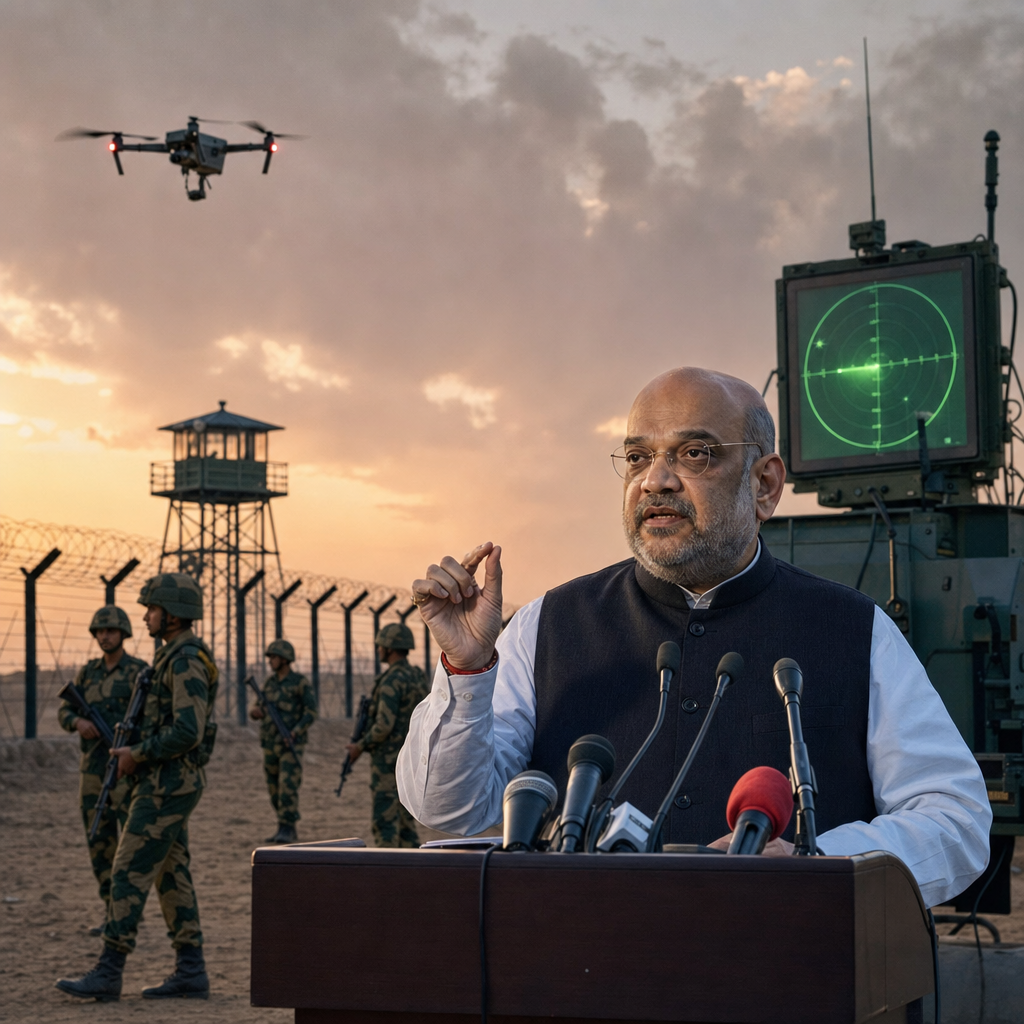
Amit Shah announces anti-drone systems for India's border, shifting security dynamics.
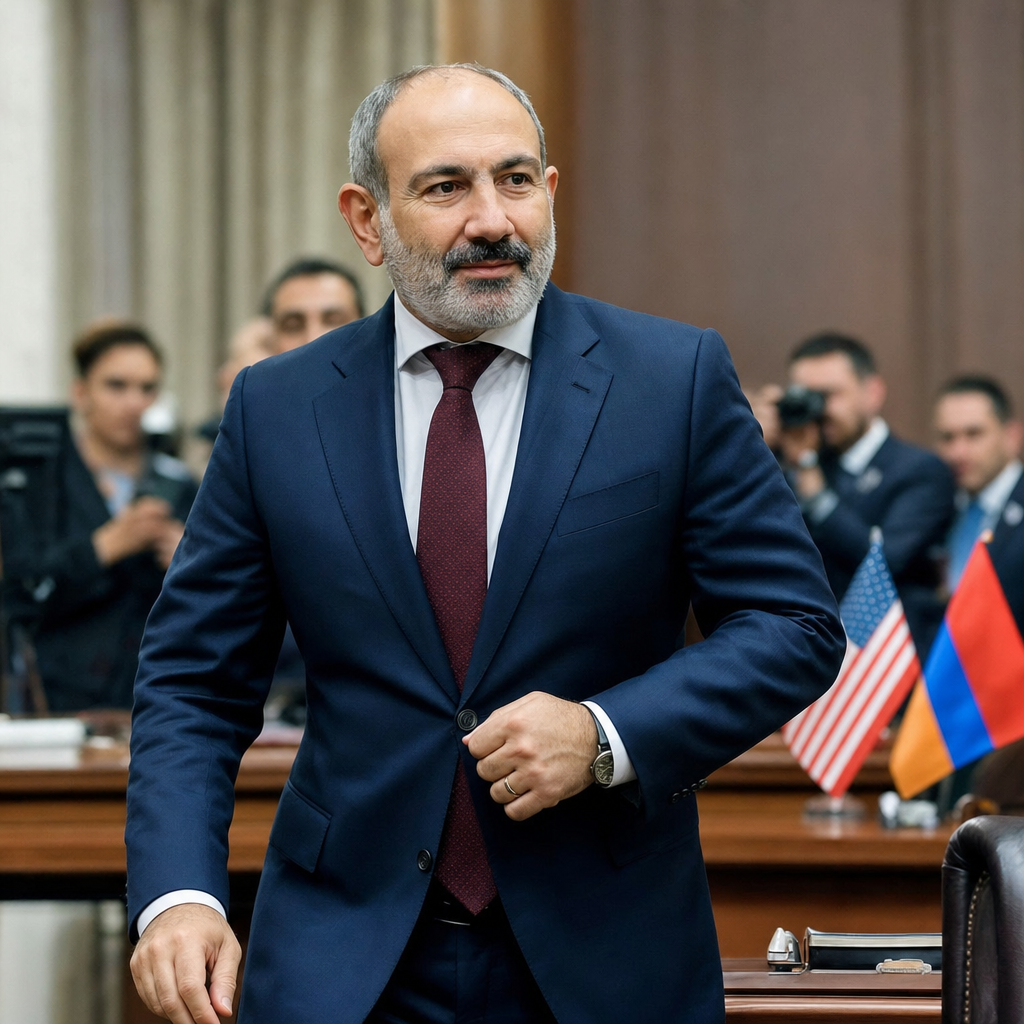
Armenia's US deal strengthens Pashinyan's campaign ahead of elections.

Moscow is trying to turn the foreign diplomatic presence in Kyiv into leverage.