

Briefing — May 25, 2026
For the complete documentation index, see llms.txt.Skip to main content
Every major front — Iran, Ukraine, Cuba, NATO — is at an inflection point simultaneously, and the decisions made in the next 72 hours will define the second half of 2026.
Trump declared on Saturday that a US–Iran memorandum of understanding had been "largely negotiated," only to instruct his team by Sunday not to "rush into a deal" because "time is on our side." What's actually on the table, per officials from both sides: a ceasefire on all fronts including Lebanon, reopening of the Strait of Hormuz without tolls, lifting of the US naval blockade, and release of $25 billion in frozen Iranian assets. What remains a chasm: the fate of Iran's enriched uranium stockpile, any moratorium on future enrichment, and Iran's ballistic missile arsenal — the three issues Iran successfully pushed off the MoU entirely, deferring them to 30–60 days of further talks. US officials told the New York Times that the deal includes an Iranian commitment to dispose of its highly enriched uranium; three Iranian officials told the same paper that the MoU says nothing of the kind. Netanyahu, silent for 18 hours after Trump's announcement, finally confirmed a joint call in which both leaders agreed Iran must dismantle its nuclear enrichment sites — a position Tehran has flatly rejected. Pakistan's army chief Asim Munir served as the on-the-ground broker in Tehran through Saturday; Islamabad and Doha are coordinating the next round. An internal US intelligence assessment, leaked to major newspapers, concluded Iran can sustain its current posture for three to four months — a timeline that runs directly into the November midterms.
New York Times Live Updates |
Al Jazeera Live Blog |
Al Jazeera Explainer
In the early hours of May 24, Russia launched 690 aerial attack systems — drones, cruise missiles, ballistic missiles, and the hypersonic Oreshnik — against Ukraine, killing at least 4 people and injuring nearly 100. Kyiv was the primary target; Ukrainian forces intercepted the majority of incoming systems but confirmed the Oreshnik's use, a weapon Moscow claims travels at 2.5–3 km per second and that NATO has no confirmed intercept capability against. The strike followed Ukrainian deep-strike campaigns that have forced Russia to cut oil production by 460,000 barrels per day compared to April 2025, and which hit a student dormitory in Russian-occupied Luhansk, killing 21. Ukraine's commander-in-chief Syrskii said this week that Ukrainian offensive assaults now outnumber Russian ones for the first time in 2026, as Russia bleeds more than 1,000 soldiers per day against a recruitment rate of only 800–930. Russia's 2026 fiscal deficit already stands at $78.4 billion through April — against a full-year budget of $50.5 billion.
EFE — Oreshnik Strike |
Al Jazeera — Russia Falters
Trump announced 5,000 additional troops to Poland days after the Pentagon had cancelled a 4,000-troop deployment to the same country — and in the same week it announced a withdrawal of 5,000 from Germany. The announcement was tied explicitly by Trump on Truth Social to his personal relationship with newly elected Polish President Karol Nawrocki, whom Trump endorsed. The net effect is a reshaping of NATO's eastern footprint along ideological rather than strategic lines: Poland, spending 4.5% of GDP on defense and backing the Iran war posture, is rewarded; Germany and Spain, which have criticized the war and refused to participate, are punished. The Pentagon has not clarified whether the Poland deployment involves the same soldiers whose orders were reversed, or redeployments from Germany. NATO Secretary-General Rutte welcomed the Poland announcement while simultaneously warning that Europe must reduce its dependence on Washington — a signal of just how unstable the alliance's internal geometry has become ahead of the July 7–8 Ankara summit.
Al Jazeera — Poland Deployment
The Senate voted 50–47 on May 20 to advance a War Powers Resolution that would require congressional authorization for continued military force against Iran — a procedural win, but a notable one. A handful of Republicans broke with Trump, reflecting growing unease over a war now in its fourth month with no formal authorization, rising energy prices, and public opposition in opinion polls. The resolution faces immense hurdles: it still needs a full Senate vote, passage in the Republican-led House, and two-thirds majorities in both chambers to survive a veto. Trump declared on May 1 that a ceasefire had "terminated" hostilities, a legal maneuver to reset the 60-day War Powers Act clock — even as US forces continue to blockade Iranian ports and exchange fire with IRGC vessels. Senator Thom Tillis captured the Republican unease most starkly: "Now we're talking about a posture where we may accept the nuclear material may remain in Iran. How does that make sense at all?"
Al Jazeera — Senate War Powers Vote
The Trump administration has deployed the USS Nimitz carrier strike group to the Caribbean — the same ship used in last year's Iran strikes — as the DOJ unsealed a federal indictment against 94-year-old former Cuban President Raúl Castro on charges of murder, conspiracy to kill US nationals, and destruction of aircraft, stemming from Cuba's 1996 shoot-down of two Brothers to the Rescue planes in international airspace. CIA Director John Ratcliffe visited Havana in recent weeks to deliver ultimatums directly, reportedly demanding closure of Chinese and Russian intelligence-gathering stations on the island. The template is Venezuela: Maduro was indicted, then captured in a January special operations raid in Caracas. Cuba's Foreign Minister Rodríguez called the indictment a "fraudulent case" designed to justify military aggression; Secretary of State Rubio said a peaceful resolution was "not high" probability. Cuba's economy is already in crisis — an ongoing oil blockade has left the island with chronic blackouts. Whether Washington intends an actual Castro arrest operation, or is running a psychological pressure campaign to force negotiating concessions (including shutting down the Luhansk and Pskov-equivalent signals-intelligence facilities), remains the open question.
With the third round of Israel–Lebanon talks under US auspices approaching (security talks are scheduled for May 29 at the Pentagon, political talks for June 2–3), the US Treasury sanctioned nine individuals on May 21 — including sitting Hezbollah MPs, an Iranian diplomat-designate to Beirut, and two Lebanese Armed Forces and General Security officers accused of sharing intelligence with Hezbollah. The sanctions are a deliberate pressure tool ahead of the negotiating table, aimed at forcing Lebanese institutions to distance themselves from Hezbollah ahead of disarmament discussions. Hezbollah called the move an attempt to "intimidate official security institutions" and has refused to recognize the talks. Lebanon's army, by contrast, confirmed its Pentagon delegation and stated commitment to "national principles." Israel has killed 3,151 people in Lebanon since early March, and the ceasefire has been strained repeatedly. Trump's interest in a formal peace treaty — a second Abraham Accords-style political win — is the primary force keeping Washington engaged, but the Hezbollah disarmament gap remains unbridged.
Al Jazeera — US Lebanon Sanctions
690 — Aerial attack systems launched by Russia against Ukraine overnight May 24, including the hypersonic Oreshnik missile system, in Russia's largest single bombardment of 2026. EFE
$78.4bn — Russia's fiscal deficit through the first four months of 2026, against a full-year budget of $50.5bn, driven by collapsing oil revenues after Ukrainian long-range strikes on refineries and export terminals. Al Jazeera — Russia Falters
20% — Share of global oil and LNG supplies that transited the Strait of Hormuz before the war began on February 28; the strait has been effectively closed ever since, reshaping global energy markets and contributing to the creeping global recession risk flagged by analysts. Al Jazeera — Deal Explainer
Pakistan's Army Chief Is Now the Most Important Third-Party Operator in Global Diplomacy
Field Marshal Asim Munir has, in the span of a week, traveled to Tehran, coordinated with Xi Jinping and Li Qian in Beijing, and submitted a revised joint Iran–Pakistan peace proposal to Washington. Islamabad brokered the April 8 ceasefire that stopped the shooting; it hosted the only direct US–Iran talks; and it is now the functional back-channel between Tehran and a White House that has frozen out European allies. None of this appears in Western coverage as a story about Pakistan — it's always framed as an Iran story or a Trump story. But the structural implication is significant: a country with its own nuclear arsenal, a history of institutional instability, and a complex relationship with both China and the US is now the indispensable intermediary in the most volatile active conflict on earth. The leverage this creates for Islamabad — with Beijing, with Washington, and over the terms of any eventual deal — is quietly enormous, and almost entirely underdiscussed.
Al Jazeera — Pakistan Mediation
Diplomat Briefing — Daily political intelligence.
Read more:
Today's stories

India's speed-climbing meet reveals challenges in building a competitive pipeline.
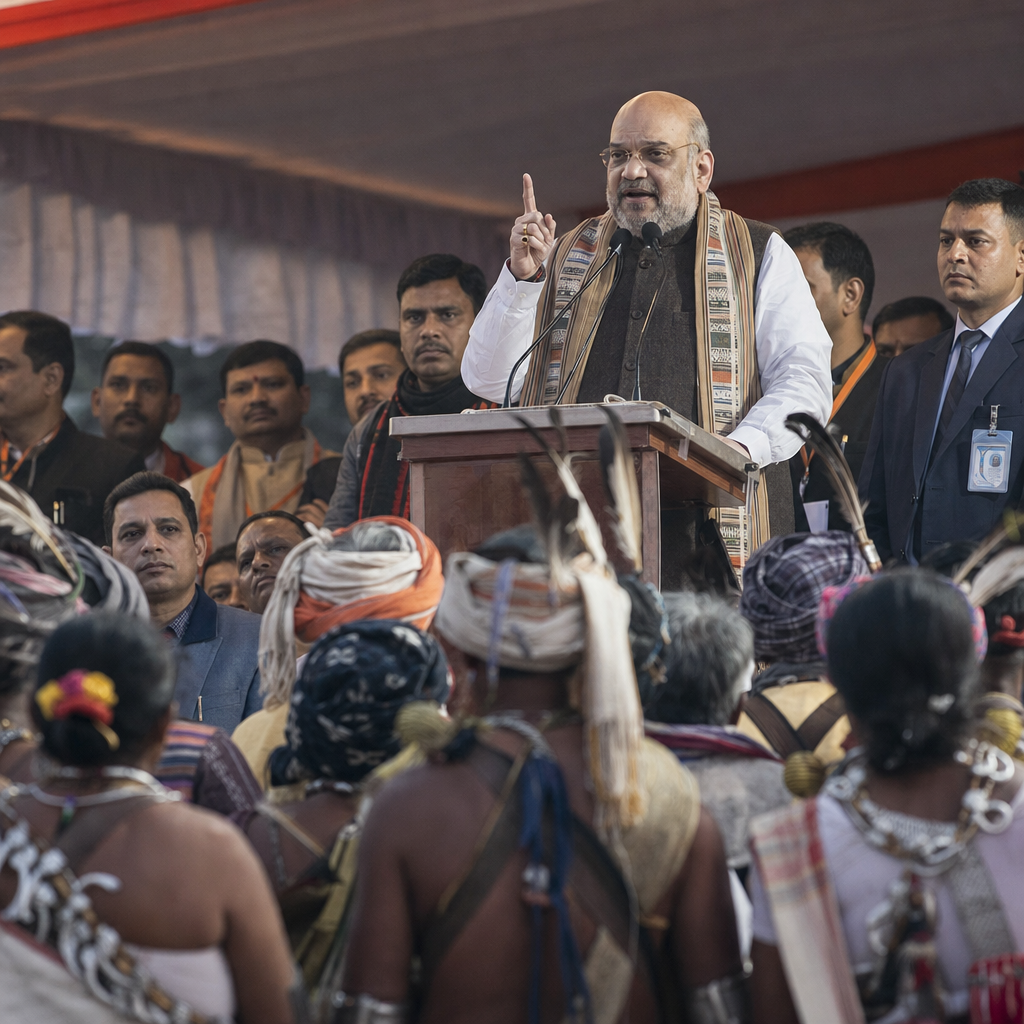
Amit Shah's UCC promise seeks to secure tribal votes while maintaining BJP's agenda.
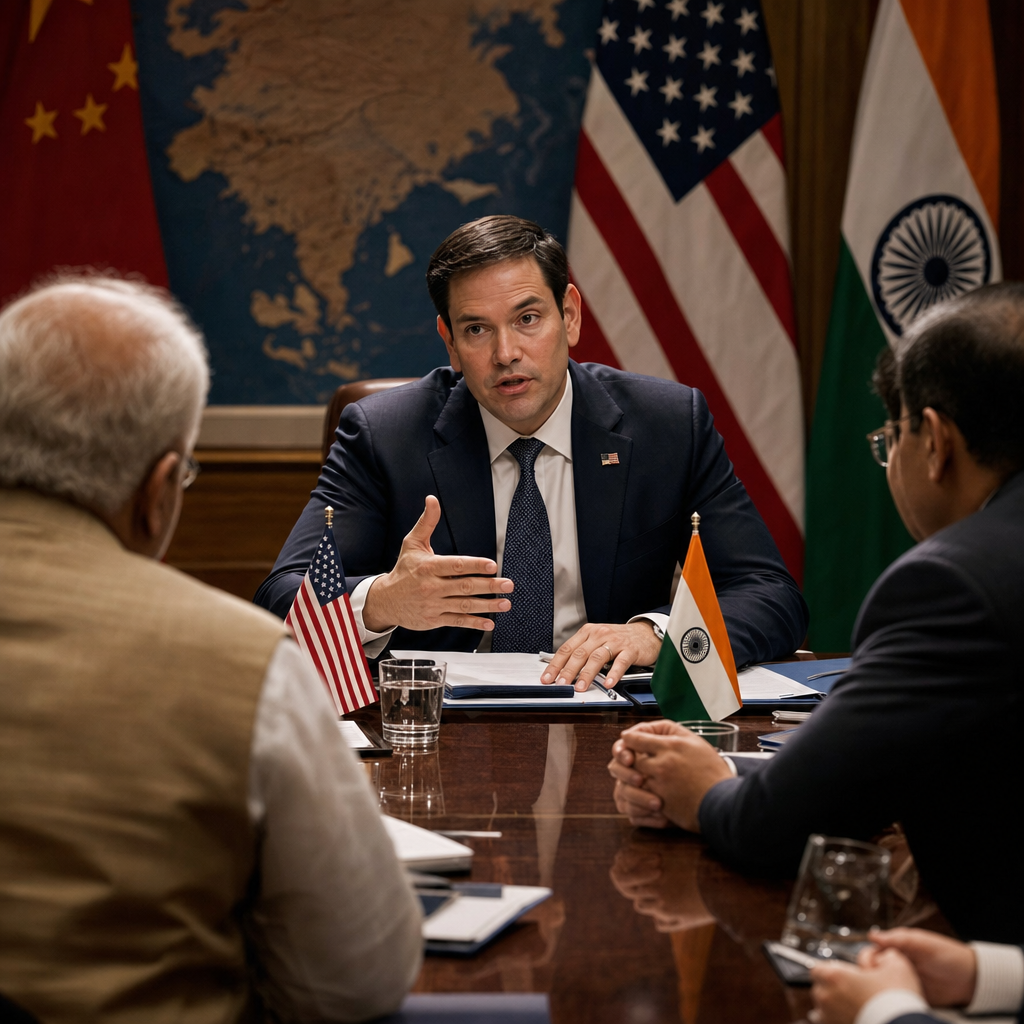
Rubio emphasizes India's role in US strategy against China while managing trade issues.