

Diplomat Briefing
Iran Ceasefire Extended Amid US Blockade Issues
·6 developments
For the complete documentation index, see llms.txt.Skip to main content
The US-Iran ceasefire is holding on paper while collapsing in practice — and every major power from Beijing to Ottawa is repositioning around the vacuum.
Trump announced an indefinite extension of the US-Iran ceasefire — but the move is essentially a unilateral American gesture. Iran has refused to return to negotiations while the US naval blockade of Iranian ports remains in force, and VP JD Vance's planned trip to Islamabad has been shelved with no new date. Tehran's position is unambiguous: the blockade must be lifted before any talks resume. Washington has not moved on that demand.
The underlying stakes are severe. The Strait of Hormuz partial closure continues to constrain approximately 13 million barrels per day of global oil supply. Iran's IRGC has warned it will target regional energy flows if hostilities resume — a direct threat to Gulf export infrastructure. Pakistan's PM Shehbaz Sharif, who brokered the ceasefire extension request, is now in an uncomfortable middle position: unable to deliver Iranian cooperation and absorbing American diplomatic traffic that has yielded no agreement. The Islamabad talks that ended without accord in mid-April remain the last point of direct contact between Washington and Tehran.
The structural problem: Trump's port blockade — announced after the Islamabad talks collapsed on April 11 — gave Iran a concrete grievance to justify non-participation. Iran now holds the procedural high ground: it can claim it wants to talk, while the US precondition (the blockade stays) makes resumption impossible. Neither side appears to have a face-saving off-ramp engineered.
AP News — Trump extends ceasefire at Pakistan's request |
Al Jazeera — Pakistan races to get Iran back to talks |
Reuters — US military blockade of Iranian ports
A concentrated week of high-level visits to Beijing — Spain's PM Pedro Sánchez, UAE officials, Russian envoys, Vietnamese leadership — signals that Xi Jinping is successfully positioning China as the stable center of a fragmenting international order. Sánchez explicitly urged China to take a "bigger role in a multipolar world" and called for Beijing's engagement on Iran, Lebanon, and Ukraine. Separately, German Chancellor Friedrich Merz floated the idea of an EU-China trade deal in the Bundestag, marking a notable softening from Berlin. Beijing is simultaneously running a more granular play: bilateral market-access concessions and visa gestures to individual EU member states (France, Ireland, Spain, Czech Republic) to fracture Brussels' unified trade pressure. China is buying national capitals retail while Europe tries to negotiate wholesale.
Straits Times — World leaders converge on Beijing |
Reuters — Spanish premier urges China's bigger role |
SCMP — Merz floats EU-China trade deal
Three April by-election wins — two Toronto ridings and Terrebonne in Quebec — gave Liberal PM Mark Carney 173 of 343 Commons seats, crossing the majority threshold for the first time since Trudeau's 2015 win. Carney has already moved: a temporary suspension of federal fuel excise taxes on gas, diesel, and aviation fuel is in effect, and previously stalled legislation — including online harms — is being fast-tracked through reconstituted parliamentary committees. Conservative leader Pierre Poilievre is pressing for broader tax cuts but has no procedural leverage until 2029. Oil and gas CEOs are reading the majority as a green light for energy policy stability, with an Ottawa-Alberta energy accord and a major Alberta carbon-capture project both progressing.
CBC News — Carney clinches majority with byelection wins |
CBC News — Carney, Poilievre clash on fuel taxes
The European Court of Justice ruled on April 21 that Hungary's 2021 law restricting LGBTQ content to minors violates EU anti-discrimination rules, privacy law (GDPR), and the right to human dignity. The case was brought by the European Commission alongside 16 of 27 EU member states — an unusually broad coalition. The ruling lands directly on incoming PM Peter Magyar, who defeated Orbán in the April 12 election on a platform of EU realignment and democratic reset. The prize for compliance is concrete: approximately €18 billion in frozen EU funds. Magyar must now decide whether to repeal the law quickly — risking a domestic backlash from Orbán's base — or delay and forfeit Brussels' goodwill before his government has even taken full shape.
France 24 — EU court finds Hungary anti-LGBTQ law violates bloc's rules |
DW — ECJ rules Hungary LGBTQ law breaches EU law
Tehran has granted IRGC field commanders autonomous operational authority over Iran-backed militias in Iraq, removing the requirement for central approval on operations. The US has responded by sanctioning seven commanders from hard-line Iraqi militia groups. The strategic logic for Tehran is clear: decentralized command provides plausible deniability, complicates American targeting decisions, and preserves coercive leverage during ceasefire negotiations without direct Iranian fingerprints on escalation. For Baghdad, the shift is a direct challenge to sovereign authority — these militias are simultaneously embedded in Iraq's formal security apparatus and funded partly through the Iraqi state. Any diplomatic settlement with Iran becomes harder to enforce when the IRGC's proxy network no longer requires Tehran's explicit sign-off.
AP News — Iran gives field commanders more power over militias in Iraq
Cuba and US officials held direct talks in Havana — confirmed by Cuban deputy foreign minister Alejandro Garcia de Toro — the most substantive bilateral contact in years. The Cuban side pressed for an end to Trump's three-month energy blockade. US conditions, per Axios and Reuters reporting, included release of political prisoners, easing of political repression, and economic liberalization. Starlink access and compensation for post-1959 confiscated assets were also reportedly on the table. Garcia de Toro described the exchange as "respectful and professional" with no ultimatums. Cuba's energy crisis — compounded by the blockade — gives Washington structural leverage, but the gap between US demands and Cuban political constraints remains very wide.
Al Jazeera — Cuba confirms talks with US officials
~13 million bbl/day — Global oil supply constrained by the partial Hormuz closure. The IMF's Spring Meetings in Washington were dominated by the economic fallout; the FAO reports a 2.4% rise in global food prices as fuel and fertilizer cost spikes begin working through supply chains — with the heaviest exposure in South Asia and sub-Saharan Africa. Reuters — IMF meetings coverage |
Al Jazeera — Global food crisis fears
€18 billion — EU funds frozen from Hungary, now explicitly tied to the ECJ LGBTQ ruling and Magyar's legislative response.
$171 billion — Brazil-China bilateral trade in 2025, a record high driven by US tariff pressure redirecting Brazilian exports. China is now Brazil's dominant partner by a widening margin. SCMP — Brazil-China trade record
Bulgaria Is Voting — And Russia Has a Horse in the Race
Bulgaria's legislative elections are underway with almost no coverage in Western outlets. Former President Rumen Radev — who has openly admired Orbán and maintained ambiguous ties to Moscow — is leading a new party, Progressist Bulgaria, against the pro-EU We Continue the Change bloc. The timing is pointed: Hungary's political shift (Orbán's defeat by Magyar) just demonstrated that EU-aligned voters can mobilize, but Bulgaria's political landscape is more fragmented and Russia's influence in Sofia runs deeper — through energy dependencies, historical cultural ties, and longstanding intelligence penetration of state institutions. A Radev win would hand Moscow a sympathetic voice inside the EU at the exact moment Brussels is trying to hold sanctions cohesion on Ukraine. Watch the results.
Le Monde — Bulgarian elections: corruption and Russia ties at the heart of the campaign
Diplomat Briefing — Daily political intelligence.
Read more:
Today's stories
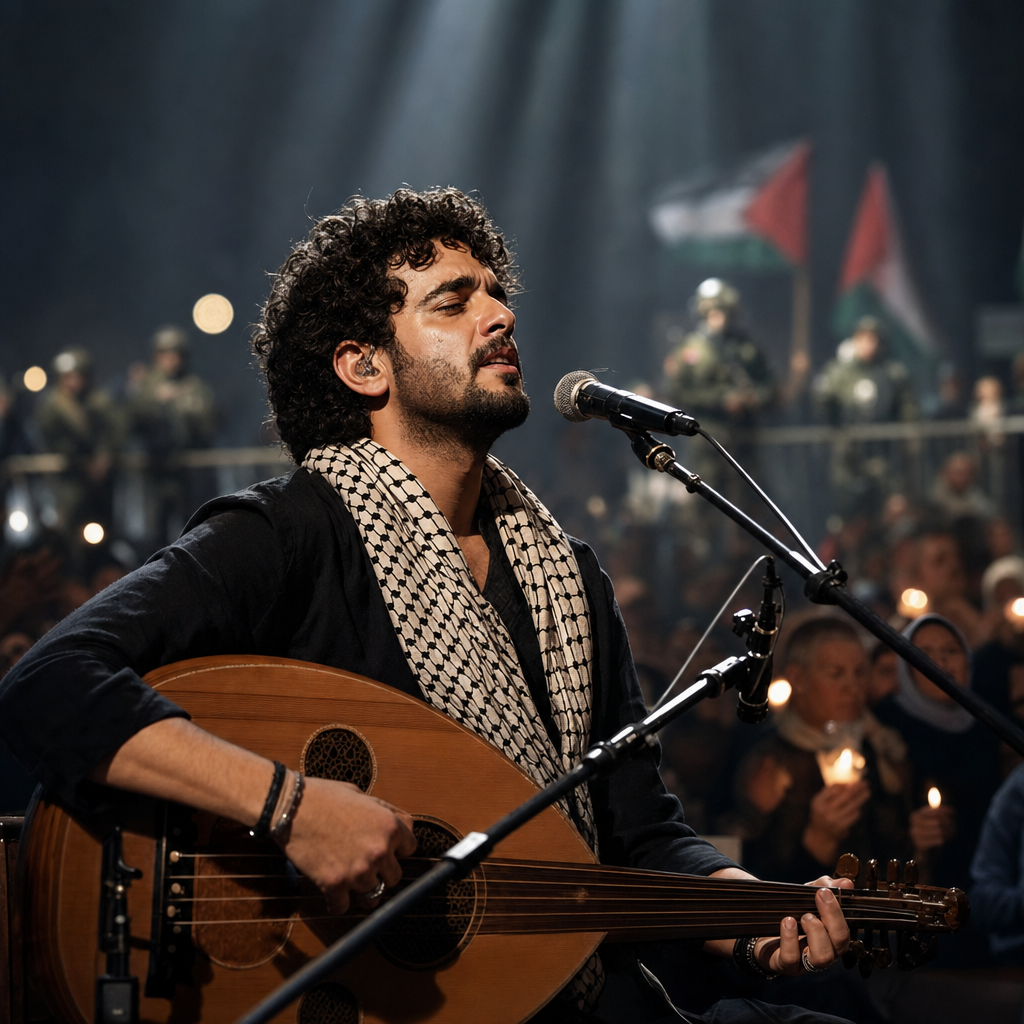
Arab Barghouti's concert appearances aim to pressure for his father's release.
President Abdelmadjid Tebboune signed a decree calling for elections to the People’s National Assembly (lower house) on July 2, 2026. This confirms the date for Algeria’s legislative elections and signals the formal start of the electoral process for selecting members of the parliament. The report does not provide details on foreign policy, diplomacy, economy, or security implications beyond the scheduling of the election.
Summary: The piece argues that Edi Rama’s grip on power in Albania is secure not because of strong institutions or broad public satisfaction, but because the opposition has discredited itself. Rama has built a personal, centralized leadership style—“Rama projects” in infrastructure, culture, and diplomacy—creating a one-man governance model that appeals to international investors and Western elites, yet raises concerns about transparency, accountability, and the primacy of pe