

Diplomat Briefing
Pakistan Mediates US-Iran Talks Amid Tensions
·5 developments·1 deep dive
For the complete documentation index, see llms.txt.Skip to main content
Every major power is now making a side bet on the Iran war's outcome — and the diplomacy has moved to Islamabad, not Washington.
Pakistan Army Chief Gen. Asim Munir is running the most consequential back-channel in global diplomacy right now. After a first round of US-Iran talks at Islamabad's Serena Hotel collapsed without agreement, Washington imposed a naval blockade of Iranian ports — and then asked Pakistan to keep the channel open anyway. The three core issues on the table: Iran's nuclear enrichment freeze, control of the Strait of Hormuz, and wartime damages compensation. The decisive sticking point is Iran's 440kg stockpile of highly enriched uranium — whether it gets exported, converted, or simply frozen in place. Tehran has signaled trust in Islamabad as a venue and Iran's Foreign Minister Abbas Araghchi has welcomed Pakistan's role, but no date for a second round has been set. The US is simultaneously tightening the vice: sanctions waivers on Iranian oil are being reimposed, and financial institutions have been warned of secondary exposure. Trump has said the blockade stays until a deal is reached. Iran's Revolutionary Guards have warned that approaching US military vessels will be treated as a ceasefire violation. Both sides are daring the other to blink first — with Pakistan as the only wire still connecting them.
Al Jazeera |
AP News |
Al Jazeera — No Date Set
A 10-day Israel-Lebanon ceasefire brokered with US involvement went into effect at midnight local time, with Trump inviting Netanyahu and Lebanese President Joseph Aoun to the White House for direct talks — the first such invitation in over three decades. The optics are significant: Israeli and Lebanese ambassadors to the US held a rare direct exchange this week. But the architecture is fragile. Hezbollah demanded a comprehensive cessation across all Lebanese territory; Israel has explicitly stated it will continue operations in southern Lebanon during the pause and that Lebanon is excluded from the Iran ceasefire parameters. Netanyahu is managing two tracks simultaneously — a diplomatic track he needs to show voters, and a military track he refuses to surrender. With Israeli elections due by late October, his approval ratings are slipping as the public sees no decisive victory and no coherent endgame. Nearly 2,200 Lebanese civilians have been killed since fighting began.
Iran reopened the Strait of Hormuz to commercial shipping following the Lebanon ceasefire announcement, but made the political framing explicit: the opening is conditional, and the Strait will not stay open if the US blockade of Iranian ports continues. The US position is the inverse — the blockade stays until a comprehensive nuclear deal is signed. Oil prices fell sharply on the reopening before partially recovering as markets processed the conditionality. The IMF has already cut its 2026 global growth forecast from 3.3% to 3.1%, with an emergency floor of 2.5% modeled in the event of prolonged conflict. Energy-importing Asian economies — Vietnam, Thailand, South Korea — are bearing the sharpest immediate pain, prompting Seoul to explore refinery capacity adjustments and Gulf producers to build supply redundancies. The Hormuz corridor is now functionally a live diplomatic instrument, not just a shipping lane.
AP News |
Reuters — IMF/Markets |
Al Jazeera
Spanish PM Pedro Sánchez — on his fourth China trip in four years — told an audience at Tsinghua University that Europe must intensify its own leadership as the US withdraws from multilateral commitments. He explicitly invited Xi Jinping to take a larger role on climate, AI governance, nuclear non-proliferation, and conflict resolution in Lebanon, Iran, Gaza, and Ukraine. The visit is commercially motivated: China accounts for roughly 74% of Spain's trade deficit, and Madrid wants expanded market access for agricultural and manufacturing exports. But the political signal is the louder message. Xi framed the meeting around a stable multipolar order and caution against "the law of the jungle" — diplomatic shorthand for Washington's current posture. For Brussels, Sánchez is running ahead of consensus: the EU has no unified China strategy for the post-Iran-war order, and Spain is making bilateral moves while that vacuum persists.
A survey of 100 central banks managing $9.5 trillion in reserves, conducted January–March 2026, shows nearly 70% now cite geopolitical tensions as the top global risk — up from 35% in 2024. The dollar remains the dominant safe-haven currency for about 80% of managers, but confidence is eroding: the greenback has shed roughly 12% against a broad basket year-over-year, with only partial recovery. Fewer than one-third of reserve managers now expect US bonds to outperform other G7 and Chinese debt — down from over 70% in 2024. Gold is the direct beneficiary: roughly 75% of central banks hold gold, with 40% considering expanding positions, and central banks have added over 1,000 metric tons per year for each of the past three years. This is a structural reallocation, not a panic move — and it's accelerating precisely as the Iran war stress-tests the existing monetary architecture.
Reuters — Central Banks Survey
~2,200 — Lebanese civilians killed since the Israel-Hezbollah conflict began, per US-brokered ceasefire briefings. AP News
$112.41/bbl — US crude oil price at last settlement before the Hormuz reopening, reflecting the war premium baked into energy markets. Reuters
440kg — Iran's highly enriched uranium stockpile, the central technical obstacle in the Islamabad nuclear talks. Al Jazeera
The Dollar's Quiet Demotion Is a Multi-Decade Story Accelerating in Real Time
The Iran war and Hormuz blockade are getting the headlines, but the real structural story of April 2026 is what's happening in central bank reserve rooms globally. A 12% decline in dollar value against a broad basket, collapsing confidence in US bond outperformance, and a three-year streak of 1,000+ metric ton annual gold purchases by central banks represent a slow-motion reconfiguration of the post-Bretton Woods order. This isn't driven by ideology — it's driven by the same risk calculus that's pushed geopolitical tension to the top concern for 70% of central bank reserve managers, up from 35% just two years ago. The Iran war accelerated the timeline, but the direction was already set. The institutions that manage sovereign wealth are betting that the world they're hedging into looks less dollar-centric than the one they inherited. That shift doesn't announce itself — it just compounds.
Pakistan's Role in US-Iran Nuclear Talks: A Strategic Shift
Pakistan emerges as a key mediator in US-Iran nuclear talks amid stalled negotiations.
Diplomat Briefing — Daily political intelligence.
Read more:
Today's stories
Summary: - Egypt and Eritrea (President El-Sisi and President Afwerki) plan formal talks in Cairo to deepen bilateral relations and discuss regional and international issues of mutual interest. - The discussions are expected to cover expanded cooperation across multiple sectors and joint perspectives on Horn of Africa developments, Red Sea security, and regional stability. - The two countries have stepped up political, security, and diplomatic coordination over the past years
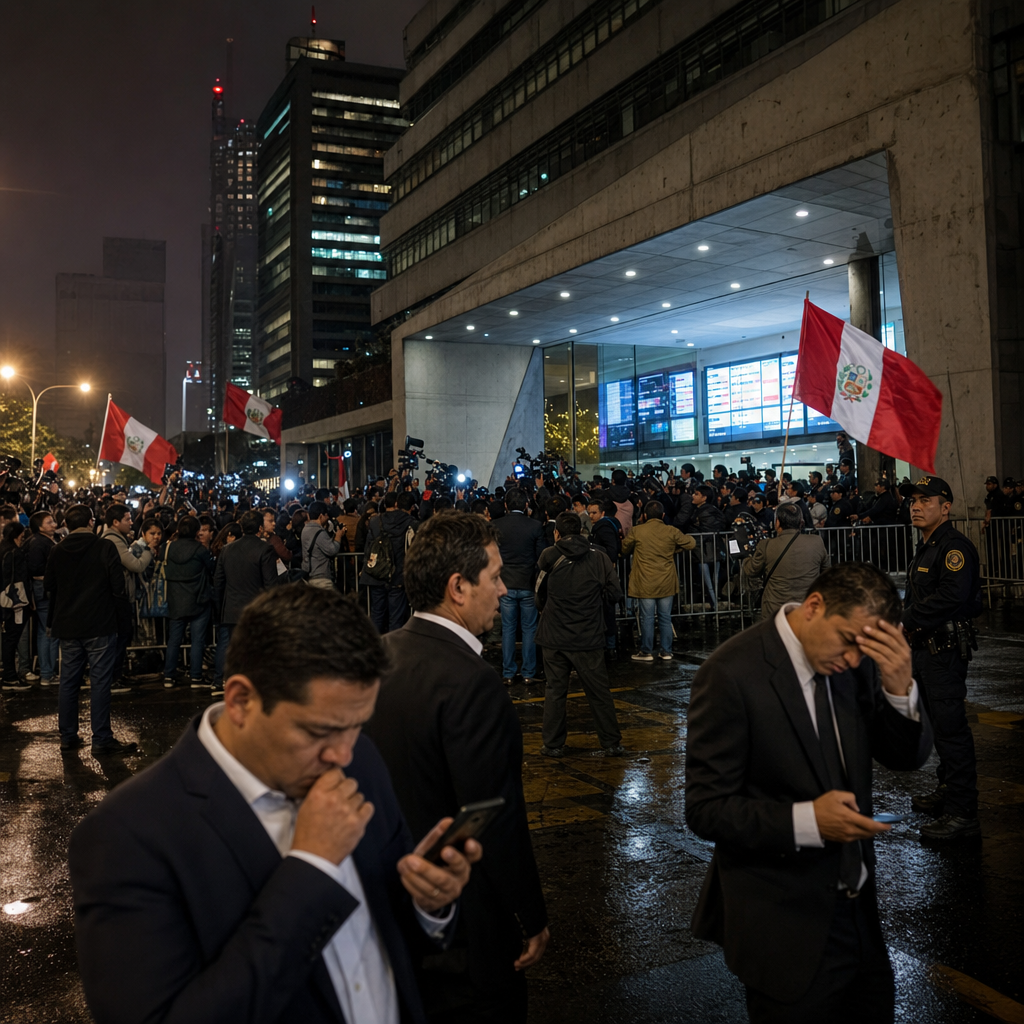
Peru faces a political crisis as Fujimori and Sánchez are in a dead heat for presidency.
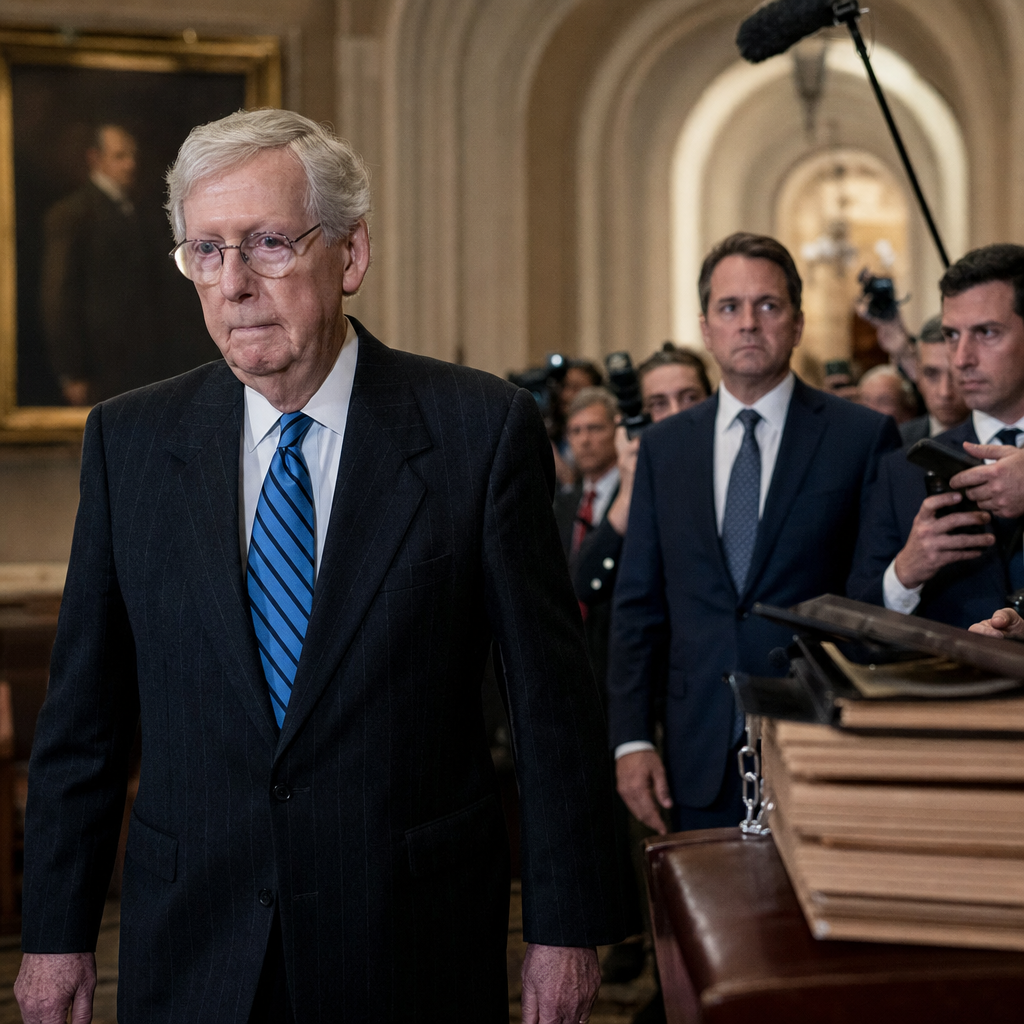
Thune's push for FISA extension faces hurdles from Pulte's controversial nomination.