

Diplomat Briefing
US-Iran Ceasefire at Risk as Tensions Escalate — Global Politics Brief
·5 developments·1 deep dive
For the complete documentation index, see llms.txt.Skip to main content
The world's most consequential conflict in a generation is hinging on whether Iran will walk into a room in Islamabad — and everything else in global politics is downstream of that answer.
The two-week US-Iran ceasefire — agreed April 7 after US-Israeli strikes killed Iran's Supreme Leader and cratered its command structure — has nominally expired. President Trump extended it at Pakistan's request, but the extension is hollow without Iranian buy-in. Vice President JD Vance is leading the US delegation in Islamabad alongside Steve Witkoff and Jared Kushner; Iran has publicly stated it has no plans to attend. Tehran's position: it will not negotiate under threat, and Trump's rhetoric — which included public warnings to destroy Iran's power grid, bridges, and "civilization" — has given hardliners in Tehran the pretext to walk. Meanwhile, two ships were attacked in the Strait of Hormuz on April 21, with Britain's Maritime Trade Operations attributing the first strike to Iran's Revolutionary Guard. The attacks are doing exactly what Iran intends: reminding Washington and energy markets that Tehran still holds a card worth ~20% of global oil supply. The Soufan Center warns the ceasefire is at genuine risk of collapse, and Al Jazeera's analysts have mapped four plausible scenarios — ranging from a limited conditional extension to a full regional blow-up if Hormuz incidents escalate beyond control. Watch whether any Iranian official — even a mid-level envoy — boards a plane to Pakistan by Thursday.
Al Jazeera — Iran-US war: Four scenarios |
AP News — Ships attacked in Strait of Hormuz |
Al Jazeera — Pakistan races to get Iran to talks
Six-plus weeks into the conflict, Israel has demonstrated overwhelming firepower but cannot point to a decisive strategic outcome. Iran's nuclear stockpiles remain intact, Hezbollah in Lebanon is battered but operational, and Hamas in Gaza has not been eliminated. Netanyahu's approval ratings are falling ahead of elections due by late October, with Israeli voters now asking what the endgame actually is. A separate 10-day Israel-Lebanon ceasefire went into effect April 16 — brokered with US involvement, with roughly 2,200 killed in the Lebanese theater — but Israel has reserved the right to strike if provoked, and Netanyahu has maintained that Hezbollah is excluded from the ceasefire's protection. The gap between the war's initial promise and its current trajectory is becoming Netanyahu's central political liability.
Reuters — Netanyahu struggles for political gains |
AP News — Israel-Lebanon ceasefire goes into effect
Iraq's ruling Shia Coordination Framework has nominated Nouri al-Maliki — 75, former PM, Dawa Party leader — for a return to the premiership, and Washington is not hiding its displeasure. Trump's envoy Tom Barrack met Maliki in February and the US has since stated it would "reconsider its support for Iraq" if Maliki is confirmed. The deadline for a nomination is April 26. Maliki's record is polarizing: his 2006–2014 tenure presided over sectarian fracturing and the conditions that enabled ISIS's rise, yet he commands Iran-backed militia networks that no governing coalition can currently afford to alienate. The Sunni Azm Alliance is divided; Sunni and Kurdish blocs are wary. This is the US-Iran proxy war fought through parliamentary arithmetic — the outcome will shape whether Baghdad tilts toward Tehran or keeps its balancing act alive.
Al Jazeera — Iraq's ruling Shia bloc races to choose PM |
Reuters — Maliki in Trump's crosshairs
Pope Leo XIV — the first American-born pope, elected in May 2025 — has escalated from cautious criticism to direct public rebuke of the Trump administration's Iran posture. His Palm Sunday message framed Trump's threat rhetoric as "truly unacceptable," and the Vatican has urged an off-ramp from the conflict. The political dimension is significant: conservative Catholics, a core Trump constituency, are showing signs of fracture. Bishop Joseph Strickland has publicly called the Iran war unjust, aligning with Leo rather than Trump. The pope's criticism now extends beyond the war to US migration and deportation policy, delivered in English from Castel Gandolfo — an unusually pointed choice of language and venue for a message aimed squarely at American audiences. Pew data cited in US coverage shows White Catholics backed Trump strongly in 2024; Leo's sustained critique is testing the durability of that alignment.
AP News — Trump and Pope Leo at odds over Iran |
France 24 — Pope Leo comes into his own with Trump spat |
BBC — Trump's rift with Pope
The EU and Mercosur (Argentina, Brazil, Paraguay, Uruguay) formally signed their landmark free trade agreement in Asunción on January 17, after 25 years of negotiations. Brazil's Senate ratified the deal in March, joining Argentina and Uruguay; Paraguay's parliament has yet to act. The EU is provisionally implementing the pact — creating immediate customs benefits for businesses on both sides — but full legal force requires European Parliament ratification, and the Parliament has already voted 334-324 to refer the deal to the EU Court of Justice for a legality review, a process that could take two years. French farmers remain the loudest opponents, and Macron called the Commission's provisional move "disrespectful." The strategic logic is hard to dispute — the deal hedges European supply chains against US tariffs and Chinese mineral leverage — but the gap between signature and implementation could stretch well into the decade.
Le Monde — EU and Mercosur sign historic deal |
DW — EU to provisionally implement Mercosur deal |
France 24 — Brazil Senate ratifies deal
2.5% — IMF's worst-case 2026 global growth projection if the Iran conflict is prolonged, down from a pre-war forecast of 3.3%. Low-income and developing economies — already exposed to elevated energy and food costs — face the sharpest hit. Wall Street's biggest banks are, paradoxically, among the conflict's beneficiaries: Morgan Stanley posted $5.57B in Q1 profit (+29%), Goldman Sachs $5.63B (+19%), JPMorgan $16.49B (+13%), each riding elevated trading volumes and volatility spreads. Al Jazeera — Iran war's big winners
Sudan's Civil War Enters Year Four — and Nobody Is Watching
While the Iran conflict has consumed virtually all bandwidth in Western foreign policy coverage and diplomatic attention, Sudan's war between the national military and the paramilitary Rapid Support Forces (RSF) has entered its fourth year with no resolution in sight. The UN describes it as the world's largest displacement and humanitarian crisis, with mass famine in Darfur and millions fleeing active combat zones. The Biden administration designated RSF violence as genocide in January 2025, but — as NPR's Code Switch documented — the gap between that designation and any tangible international response has been stark. The Iran war has made that gap wider: diplomatic bandwidth, US military attention, and international media oxygen are all fully occupied elsewhere. The strategic risk is that prolonged neglect in Sudan produces a failed-state dynamic in the Sahel's eastern flank at precisely the moment Western governments have zero capacity to respond. AP News — Sudan's war enters fourth year
US-Iran Ceasefire Negotiations: Islamabad's Critical Role
The US-Iran ceasefire negotiations in Islamabad face critical challenges.
Diplomat Briefing — Daily political intelligence.
Read more:
Today's stories
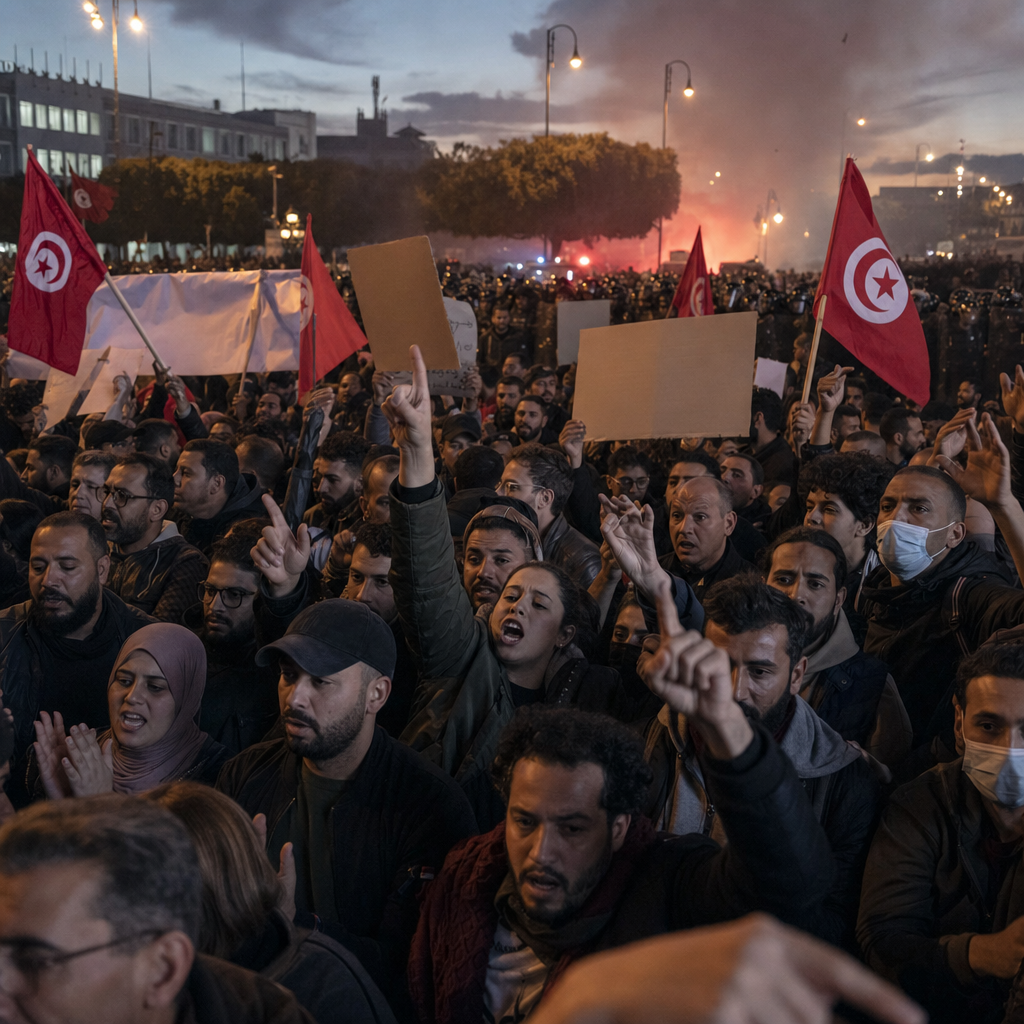
Tunisia faces mass protests as President Saied's crackdown escalates amid economic crisis.
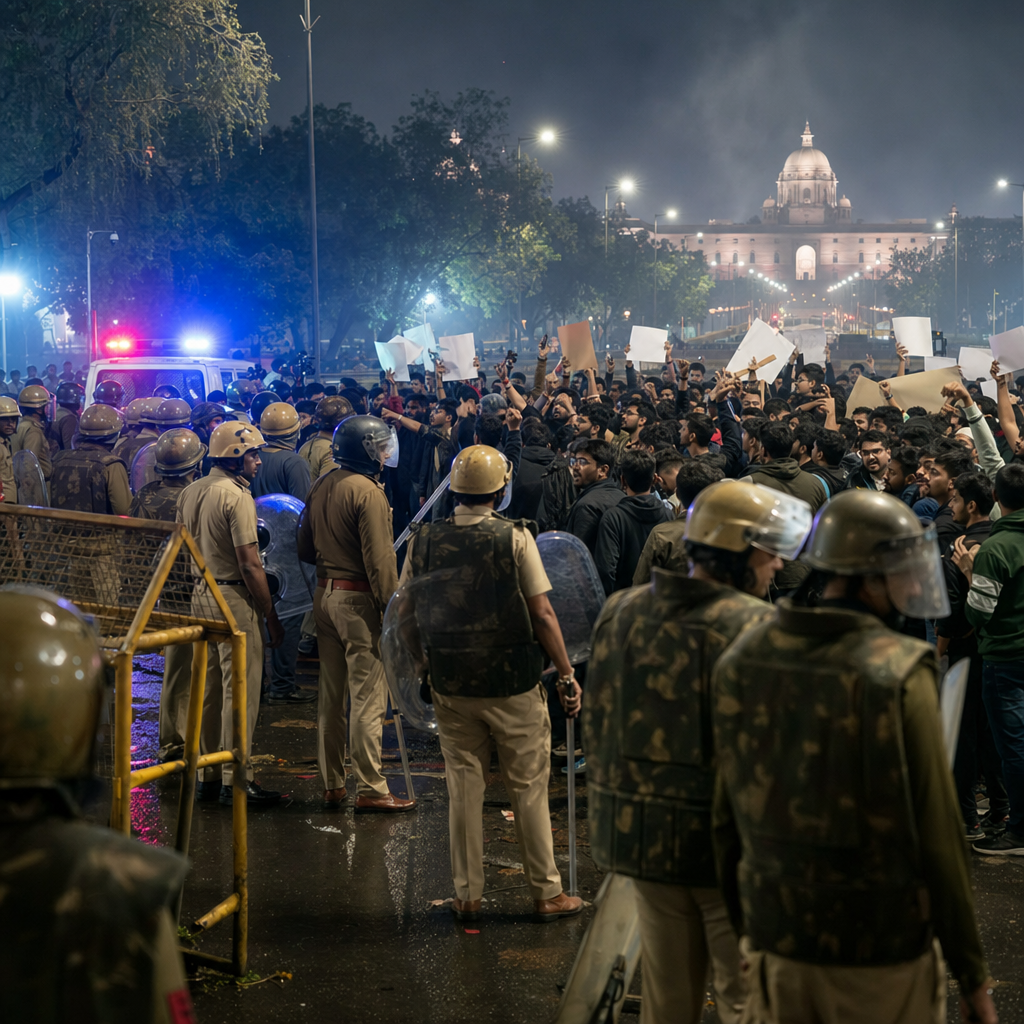
Delhi Police's rare tactical pivot signals political risk amid youth protests.
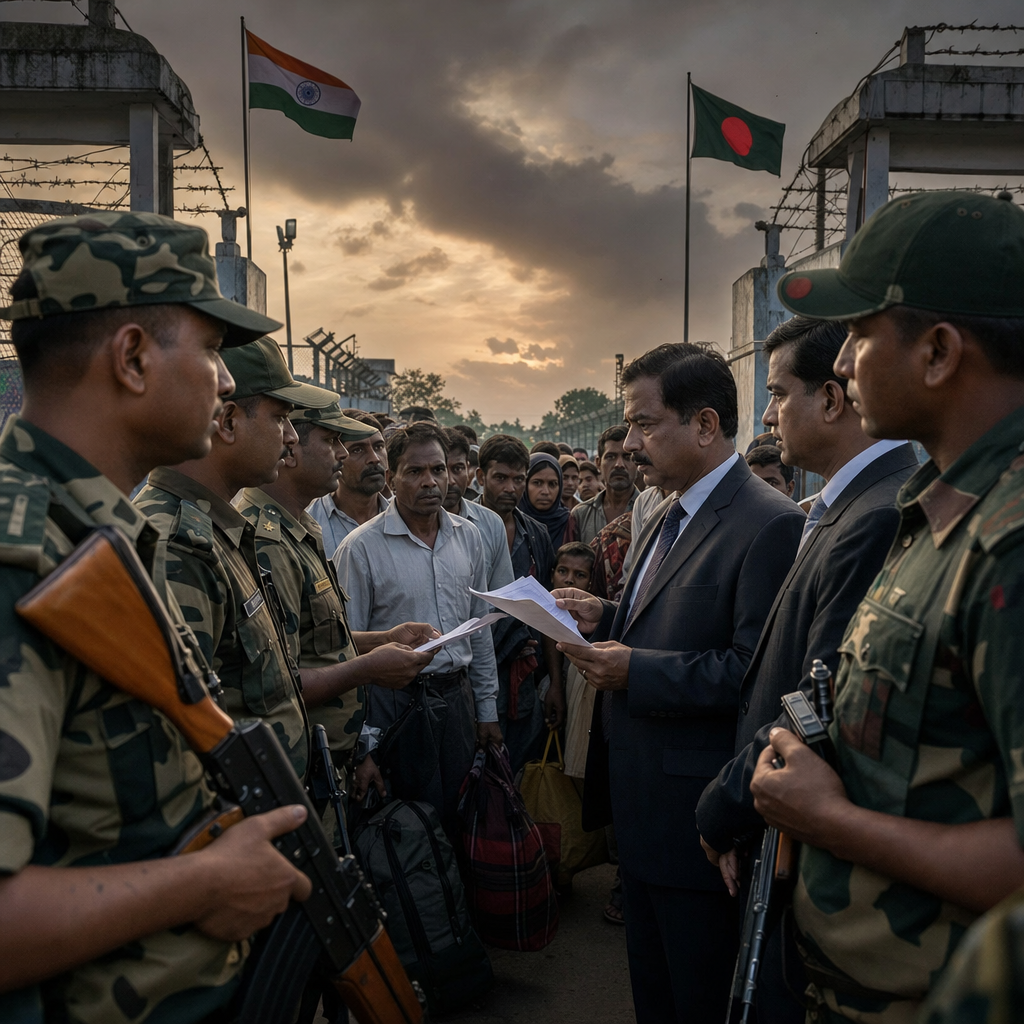
India's request to Bangladesh for migrant verification escalates diplomatic tensions.