Kerala's Canteen War
A political battle over subsidized meals in Kochi ahead of elections.
Model Diplomat3 min readKerala
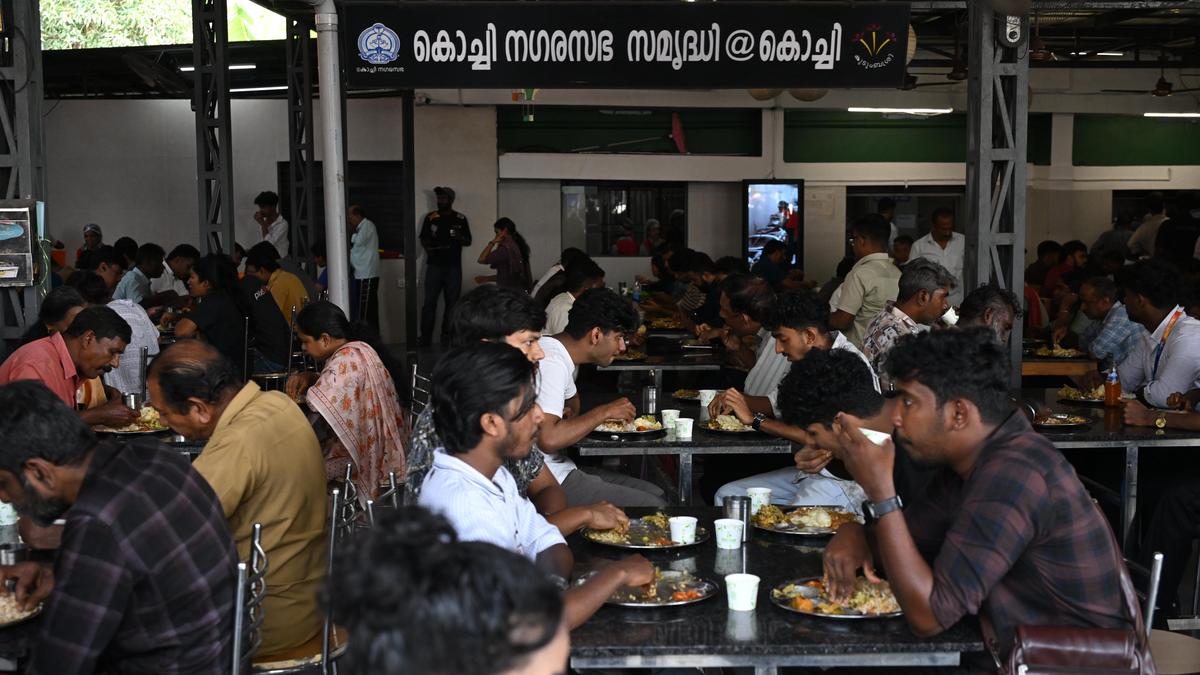
Kerala's Canteen War: Branding, Ballots, and ₹10 Meals
In Kochi, a fight over subsidized food is really a fight over political credit — and who controls welfare delivery ahead of state elections.
The row over Samridhi@Kochi and Indira Canteen has flared again, and the escalation follows a clear pattern: whichever coalition controls Kochi Corporation moves to stamp its brand on the city's subsidized meal infrastructure, and the other accuses it of sabotage. Right now, that means the UDF-led Kochi Corporation — with Mayor V.K. Minimol — pushing Indira Canteen expansion while the LDF opposition defends Samridhi, the scheme it built.
Two Schemes, One Kitchen, Zero Consensus
The numbers are modest but politically charged. Indira Canteen offers three meals a day for ₹50 — breakfast and dinner at ₹10 each, lunch at ₹30 — funded through CSR contributions and positioned as the mass-access option. Samridhi@Kochi, run jointly by the Kochi Corporation and Kudumbashree, has expanded from a 14-person operation to a 206-person workforce, secured an IRCTC tie-up to serve meals on trains, and operates canteens inside Cochin Shipyard and the Greater Cochin Development Authority.
The UDF's plan is to run both programs off a shared central kitchen — using Samridhi's existing infrastructure to supply Indira Canteen while repositioning Samridhi itself as a "premium brand." The LDF reads this as a slow-motion rebrand: Indira Canteen signage on Samridhi premises, a Congress-linked name absorbing an LDF-linked institution. The political optics are the entire point.
Then came the audit. A preliminary review of Samridhi's accounts flagged financial discrepancies, giving Mayor Minimol a governance argument to go alongside the access argument. The LDF contests the framing, noting that the UDF simultaneously opened a new Samridhi canteen at its own party headquarters during the audit — a detail that undercuts the transparency narrative. The Hindu reported the audit's final findings are still pending council approval.
Welfare as Electoral Infrastructure
This isn't really about food sourcing. Subsidized canteen networks in Kerala function as visible, daily-contact welfare delivery — the kind that builds durable voter loyalty at the ward level. The LDF built Samridhi precisely for that reason. The UDF is now trying to do the same thing with the Indira Canteen brand, named after a figure with deep Congress symbolism.
The LDF's counter-accusation — that the UDF budget conceals moves to hand Corporation assets to private players — escalates the stakes beyond branding into questions of long-term institutional control. If CSR funding underwrites Indira Canteen's launch but proves unreliable, the program either collapses or gets quietly folded back into Samridhi's structure, handing the LDF a ready-made narrative ahead of the 2026 Kerala Assembly elections.
Kerala's political dynamics make this particularly combustible: the state has a near-perfect electoral alternation record between UDF and LDF, meaning today's municipal branding fight is direct preparation for the state-level contest.
What to Watch
Three signals matter. First, whether the Kochi Corporation's audit of Samridhi produces findings serious enough to justify structural changes — or gets buried. Second, whether the Mattancherry Indira Canteen opens on schedule; delays will be used as evidence of UDF overreach. Third, and most consequential, whether the 2026 Assembly election flips control of the state government — which would reverse the leverage entirely and put Samridhi's champions back in a position to dismantle what the UDF is now building.
The ₹10 breakfast is the battleground. The 2026 ballot is the prize.
Discover more
India
Rajnath Singh's Durga Squad for 2026 Polls
Rajnath Singh's Durga Squad promised women's safety in Bengal but has since disappeared from the agenda, revealing BJP's true priorities.
India
BJP's Delimitation Strategy
Congress leader K.C. Venugopal claims the BJP uses women's reservation to advance delimitation, raising fears over electoral fairness ahead of the 2029 polls.

Conflict & Security
Drone Warfare Killing Aid Workers at Unprec
Over 1,000 humanitarian workers killed in three years as cheap armed drones collapse legal protections. Gaza, Sudan, Ukraine, and DRC see deliberate targeting of aid convoys and hospitals with zero prosecutions.

Global
World Normalises Taliban as Afghan Women Eras
UN data shows Afghan women erased from public life as Russia recognises the Taliban, EU hosts officials in Brussels, and ICC warrants for gender persecution go unenforced.