Women’s Reservation Act Sparks Federal Tense
India's political landscape faces a major shift post-2026 vote.
Model Diplomat7 min readIndia
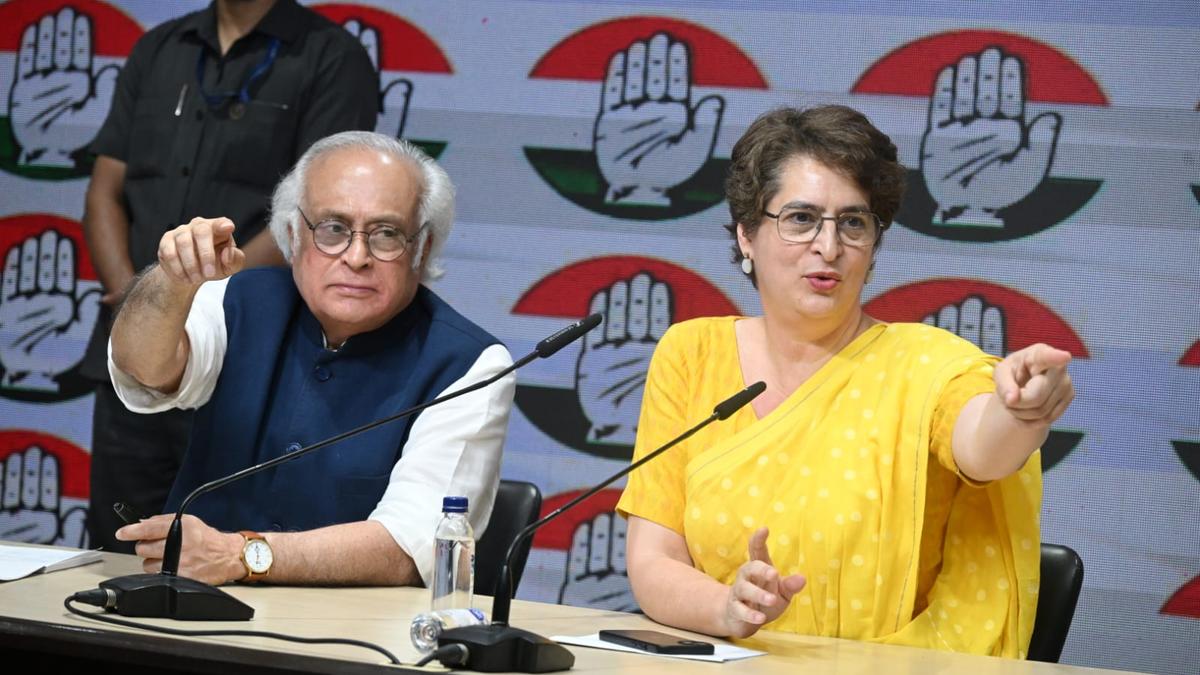
Women's Reservation Act Sparks India's Sharpest Federal Standoff Since 1971
The 131st Amendment Bill fell 298–230 in the Lok Sabha on April 17, 2026 — killing not the women's quota, but Modi's attempt to redraw India's political map through it.
The Women's Reservation Act did not fail in April 2026. The vehicle Prime Minister Narendra Modi tried to strap it to did. On April 17, the Lok Sabha voted 298 in favour and 230 against the Constitution (131st Amendment) Bill — 62 short of the 360-vote two-thirds majority required for a constitutional amendment, according to BBC Hindi. The bill's ostensible purpose was to operationalise the 33% reservation for women passed unanimously in 2023. Its real payload was a delimitation clause that would have expanded the Lok Sabha from 543 seats to 850 based on the 2011 census — a redraw analysts project would hand the Hindi belt roughly 22 additional seats while stripping 17 from the four southern Dravidian states. The story is not that women's representation was defeated; it is that the south, for the first time since Indira Gandhi's 1976 freeze, killed a constitutional amendment on the House floor.
What the government actually put on the table
The April 16–18 special session tabled three linked bills, not one. The Carnegie Endowment for International Peace lays out the package in Delimitation After Defeat: the Constitution (131st Amendment) Bill, 2026; the Delimitation Bill, 2026; and the Union Territories Laws (Amendment) Bill, 2026. The constitutional amendment raised the Lok Sabha ceiling from 550 to 850 seats — 815 for states, 35 for Union Territories — and removed the requirement that reapportionment follow every census, letting Parliament choose which census to use. The Delimitation Bill then specified "the latest census figures published as on the date of the constitution of the Commission," which, with the 2027 census enumeration still in the field, meant the 2011 numbers.
Union Home Minister Amit Shah framed the package as unfinished business from 2023. In an official Press Information Bureau release, he argued that "the Nari Shakti Vandan Act stipulates that reservation for women will be ensured in the delimitation exercise to be carried out after the Census conducted post-2026," and warned opposition MPs they would "face the anger of women" at the next polls. The Bharatiya Janata Party (BJP) spokesperson insisted a uniform 50% seat increase would apply pro-rata across all states — a claim
Al Jazeera noted "the draft delimitation bill does not explicitly spell … out."
That gap between political assurance and legal text is what sank the bill.
The federal arithmetic the opposition actually read
Since the 42nd Amendment in 1976, Lok Sabha seats have been frozen at 1971 census levels to protect states that succeeded in family planning from being penalised for it. Break the freeze on 2011 data, and the imbalance shifts violently north. Research by the Takshashila Institution, published on April 18, 2026, projects that under a 2011-anchored redraw, Bihar, Madhya Pradesh, Uttar Pradesh and Rajasthan would gain 22 seats between them, while Tamil Nadu, Kerala, Andhra Pradesh and Telangana would lose 17. One Bihar MP already represents 3.1 million citizens; one Kerala MP represents 1.75 million.
That asymmetry — combined with the amendment's silence on a proportional guarantee — is why Tamil Nadu Chief Minister M.K. Stalin burned a copy of the bill outside parliament on April 16, calling the plan a "massive historic injustice," per BBC News. Congress leader Rahul Gandhi called it "an attempt to seize power through delimitation and gerrymandering." DMK MP Kanimozhi and Congress's Shashi Tharoor, quoted in
The Economic Times, framed the women's quota as "a cover for the delimitation push." Trinamool's Kalyan Banerjee joined them. That coalition — DMK, Congress, TMC, CPI(M) and the Samajwadi Party — held the 230 no-votes together, denying Modi the 67 crossover votes his 293-seat National Democratic Alliance needed to clear the two-thirds bar.
The non-obvious angle: the quota was already law
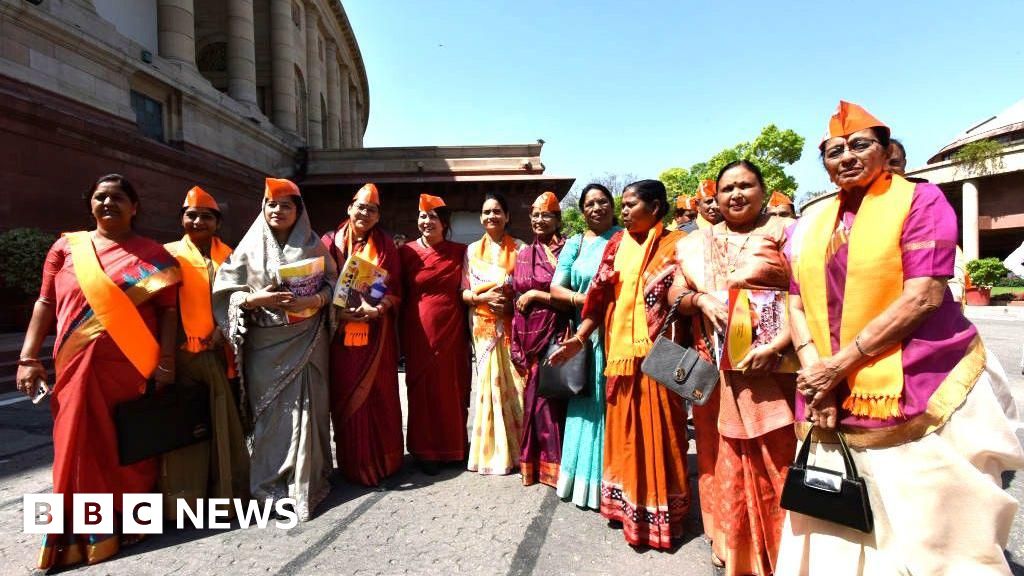
Here is what most of the coverage misses. The Constitution (106th Amendment) Act — the Nari Shakti Vandan Adhiniyam — was passed 454–2 in the Lok Sabha in September 2023 and signed into law. The 131st Amendment Bill was not "the women's reservation bill." It was a delimitation vehicle that also happened to specify how the pre-existing quota would be operationalised. That distinction is legally decisive.
As The Diplomat noted in April, "the constitution has already been successfully amended in 2023 to include women's reservation. Women's reservation will be implemented after the next census and delimitation exercise." Carnegie's Milan Vaishnav and co-authors reach the same conclusion: the 2023 amendment "explicitly ties the implementation of a one-third reservation for women to the completion of a fresh census and the subsequent delimitation exercise." The quota's fate is now hostage to a delimitation the south will not let happen on 2011 data.
The BJP's political framing — that opposition parties killed women's representation — is therefore only half true. What the opposition killed was the government's right to skip the 2027 census and lock in a Hindi-belt seat surge before the next election. The women's law, formally on the books since September 29, 2023, is untouched. It also remains inert.
Who benefits, who loses
The immediate winner is the Dravidian bloc. Stalin's DMK has been trying since March 2025 to convert delimitation into a pan-southern grievance; the BBC Tamil service reported his Chennai joint action committee, which brought in chief ministers from Kerala, Telangana, Andhra Pradesh, Karnataka, Punjab and Odisha. The April vote validated that coalition and gave Stalin, facing a 2026 Tamil Nadu assembly election, a live "save the south" mandate.
The BJP loses two ways. First, the party burned political capital on a bill it knew lacked the numbers — the NDA holds 293 seats, Al Jazeera confirms, when it needed 360. Senior journalist Sharad Gupta, quoted by BBC Hindi, called it a rare public admission of legislative weakness mid-cycle. Second, the "women's rights" framing the BJP intended to weaponise against the opposition is blunted by the fact that the 2023 law remains on the statute book. As
The Indian Express reported, the government even issued a notification hours into the debate declaring the 2023 Act "will come into force" — a manoeuvre the opposition read as an attempt to muddy responsibility.
The quiet loser is women in politics. The Constitution (106th Amendment) Act cannot activate until fresh delimitation, and fresh delimitation cannot happen until the 2027 census results are published — Phase I house-listing runs through 2026, with population enumeration in early 2027, per the Observer Research Foundation. Add processing time, a delimitation commission, and the constitutional requirement that the reservation apply only after the first Lok Sabha or state assembly dissolves post-delimitation, and 2029 is now almost certainly out of reach. India ranks 141 of 185 countries in women's parliamentary representation, per a Carnegie analysis from
2023. The next feasible entry point is the 2034 cycle.
The historical parallel that reframes this
This is the first constitutional amendment defeated on the floor of the Lok Sabha since 1990. But the closer parallel is Indira Gandhi's 42nd Amendment in 1976, which froze seat apportionment to prevent exactly the north-south rebalancing Modi's bill would have accelerated. That freeze was the compact that held the union together through the family-planning years — smaller states accepted disproportionate representation in exchange for not being politically demoted for demographic responsibility. Modi's 131st Amendment attempted to end that compact in a three-day session, with no proportional formula in the legal text and no fresh census data. The compact held. The Takshashila analysis, in a follow-up note, described the defeat bluntly: "seen as an affront to federalism and … defeated."
Diplomat View
The April 17 defeat is a genuine, if narrow, loss for the Modi government — its first serious legislative rebuff of the third term. But the deeper story is a shift in Indian federal politics that will outlast this bill. The south has learned that a coordinated Dravidian-Congress-TMC bloc can block a constitutional amendment; the BJP has learned it cannot bundle a controversial delimitation into a popular gender reform and expect the package to hold. The government's next move will be to unbundle. Expect a slimmer bill after the 2027 census results, offering an explicit "no state loses seats" clause and a pro-rata expansion capped closer to 750 than 850. That is the compromise Arghya Sengupta of the Vidhi Centre for Legal Policy has publicly urged and that BJP MP K. Laxman has hinted at.
The forecast changes if two things happen: if the 2027 census enumeration slips into 2028 (plausible; the 2021 census slipped four years), women's reservation is dead for 2029 and probably 2034 as well. And if Stalin loses the 2026 Tamil Nadu assembly election, the southern veto coalition weakens and Modi gets a second attempt — this time with different arithmetic.
What to watch:
- Autumn 2026: Tamil Nadu assembly election. A Stalin loss reshuffles the southern bloc; a Stalin win entrenches the "save the south" mandate through 2029.
- Early 2027: Publication of Phase I census data. Any delay past mid-2027 effectively closes the door on 2029 implementation of women's reservation.
- Winter 2026 session of Parliament: Watch whether the government reintroduces a stripped-down delimitation bill with an explicit proportional guarantee. If it does not, the 2023 women's quota stays on the books but out of force — the longest-serving dead law in Indian constitutional history.
The Bottom Line
The Women's Reservation Act did not fail on April 17, 2026 — the Modi government's attempt to use it to break the 1976 seat-apportionment freeze did. India's south now holds a working veto over federal redistricting, and until Delhi accepts a proportional formula in legal text rather than press releases, the 33% women's quota will remain a signed statute nobody can enforce. That is not a defeat of gender reform; it is the return of federalism as India's binding constraint.
Discover more
India
India's Women's Reservation Act
West Bengal's elections expose a stark gap in women's political representation despite India's Women's Reservation Act promising reserved legislative seats.

India
India's 2026 Governance
India's 2026 governance agenda centers on GST reform and the Women's Reservation Act, testing federalism and the country's push for fairer representation.
India
Rajnath Singh's Push for Women's Reservation
Rajnath Singh's push for 33% women's reservation is entangled with a contentious delimitation plan, complicating its future.
India
Women’s Reservation Act Defeated
India's Lok Sabha voted against the Women's Reservation Act, revealing deep federalism issues and Modi's first legislative defeat.