Women Peacebuilders Combat Gang Violence
Informal networks in Maiduguri are changing lives.
Model Diplomat3 min readAfrica
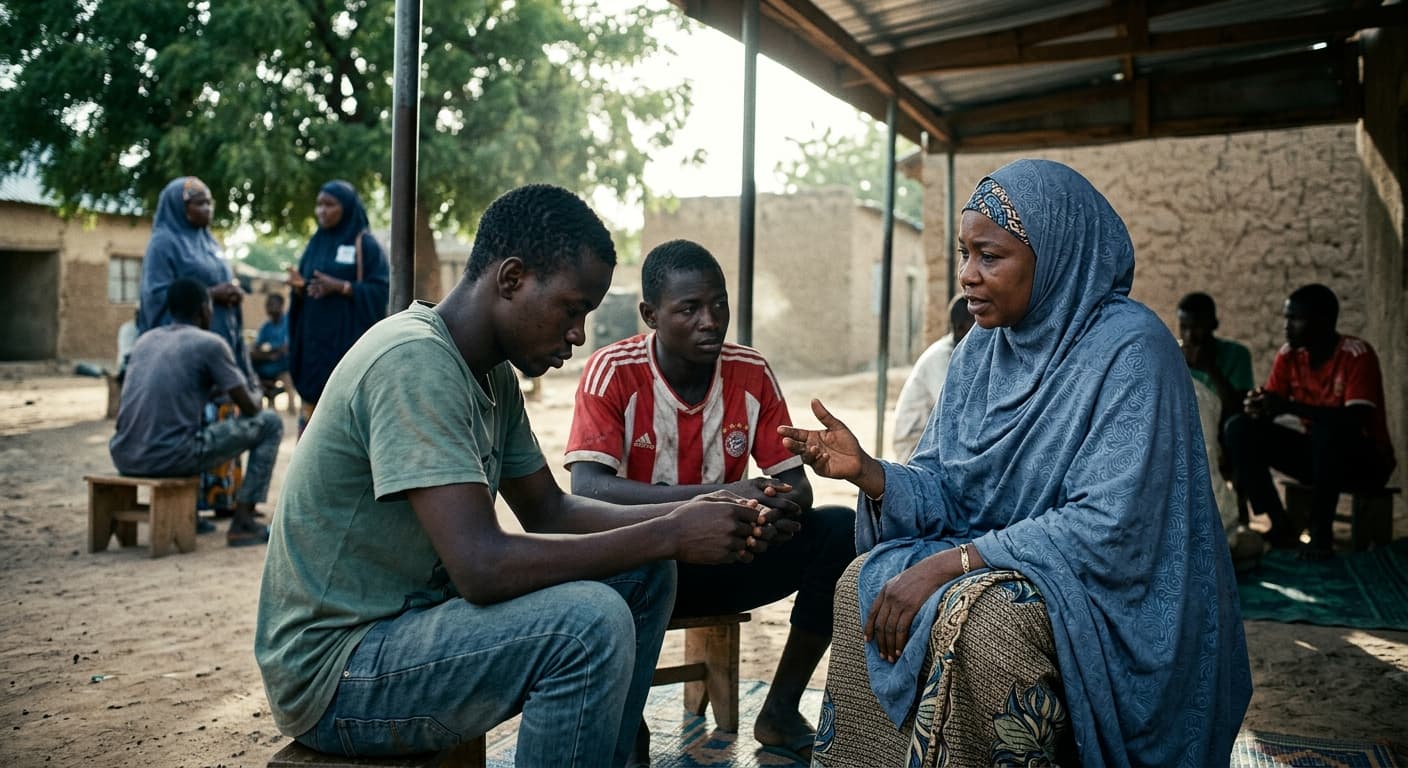
Women Cut Gangs Off at the Source in Maiduguri
Where police arrests fail, informal networks of women peacebuilders are persuading young men to leave violence behind.
In neighborhoods where a decade of insurgency bred gang culture, Al Jazeera reports that the breakthrough came when security forces stopped treating gang members as purely a law enforcement problem. Organizations like the Umma Mothers and Wives Association (UMWA) began holding regular dialogue with gang leaders as of 2018, moving away from arrests-first strategies toward change-focused conversations. Rather than cages, they offered meaning—the chance to be advocates for peace in their own neighborhoods.
This is not rehabilitation at scale. It is legitimacy capture at the neighborhood level: taking young men with reputations built on fear and reframing what power means in a community destroyed by conflict. In Maiduguri's Ajilari Cross and Gomari areas, women leaders embedded themselves as mediators and trackers. Some worked behind the scenes, monitoring emerging disputes and tipping off police before blood was spilled. Others ran weekly peace circles on Sundays. Fatima Tahir, a leader with the Gomari Development Association, faced early resistance from men—communities do not hand soft power to women easily—but attitudes shifted once residents saw that women could defuse the disputes that security operations could not.
The results are measurable, though fragile. Bulama Babangida, a community leader in Ajilari, confirmed that former gang members have formally renounced violence. One unnamed youth who had been feared as a fighter told Al Jazeera that dialogues forced him to confront the suffering his violence inflicted on families, including his own. His reputation shifted from feared fighter to peace advocate. He now leads a group of former gang members. Others cited renewed respect for community elders as a reason to step back. Yet the cost structure remains harsh: some former combatants told Al Jazeera they continue to face threats from rival neighborhoods seeking revenge. Without formal reintegration frameworks, community leaders fear some will slide back into violence.
Why This Matters
Maiduguri's approach inverts the standard counterinsurgency playbook. The National Accord reported that Borno State has reintegrated 9,680 former insurgents through structured rehabilitation programs since 2021—vocational training, counseling, and cash support. That is top-down, state-run, time-bound. The women's dialogue model runs parallel: decentralized, unpaid, continuous. It targets the second-order problem that even rehabilitation misses: the gang ecosystem that recruits young men post-discharge, the local grievances that fester in camps where jobs and hope are absent. Women are reaching them in the neighborhoods where displacement and poverty make extremism or banditry the only visible path to status.
Borno's government now acknowledges this. After more than a decade in which military operations dominated, officials have begun framing the non-kinetic approach—dialogue, rehabilitation, community reintegration—as core strategy. DriveTv News noted that nearly 10,000 individuals have participated in rehabilitation since 2021. Yet the women-led dialogue work is running on fumes. Al Jazeera reported that dwindling donor funding has left mediation initiatives fragile; organizers are paying for meetings from their own pockets. This is the margin where effective peacebuilding dies—not in ideology but in cash.
What to Watch
Three hinges matter going forward. First, formal reintegration architecture. Community leaders explicitly told Al Jazeera they fear gaps in the framework will pull former gang members back into violence. That means Borno State and federal authorities need to design and fund protection mechanisms—not just jobs programs, but safe passage out of gang territory and active mediation when old enemies surface. Second, donor consistency. If organizations like UMWA lose funding, the dialogue network collapses, and former gang members lose the social pressure keeping them out. That is not a problem the state can solve by itself; it requires NGO partners and international support to hold. Third, scaling without coercion. The model works because it is voluntary and led by trusted women in the community. Growth means more trainers, more mediators, more circles. It cannot be centralized or militarized without breaking the trust that makes the model work at all.
The lesson is stark: in neighborhoods where the state competes with gangs for young men's loyalty, only the networks closest to them—mothers, sisters, wives—have the legitimacy to pull them out.
Discover more
India
Modi's Women’s Convention in Varanasi
Modi's Varanasi rally frames women's reservation as a national mission, targeting the 2027 Uttar Pradesh elections with a strategic narrative.

India
Rajnath Singh's Durga Squad for 2026 Polls
Rajnath Singh's Durga Squad promised women's safety in Bengal but has since disappeared from the agenda, revealing BJP's true priorities.
India
BJP's Misunderstanding of Women's Quota Needs
The BJP's linking of the Women Reservation Bill to delimitation risks delaying women's empowerment in India, misreading the aspirations of female voters.

Conflict & Security
Drone Warfare Killing Aid Workers at Unprec
Over 1,000 humanitarian workers killed in three years as cheap armed drones collapse legal protections. Gaza, Sudan, Ukraine, and DRC see deliberate targeting of aid convoys and hospitals with zero prosecutions.