WHO Addresses Hantavirus Ship Near Tenerife
Spain prepares for a controlled evacuation amid public fears.
Model Diplomat3 min readEurope
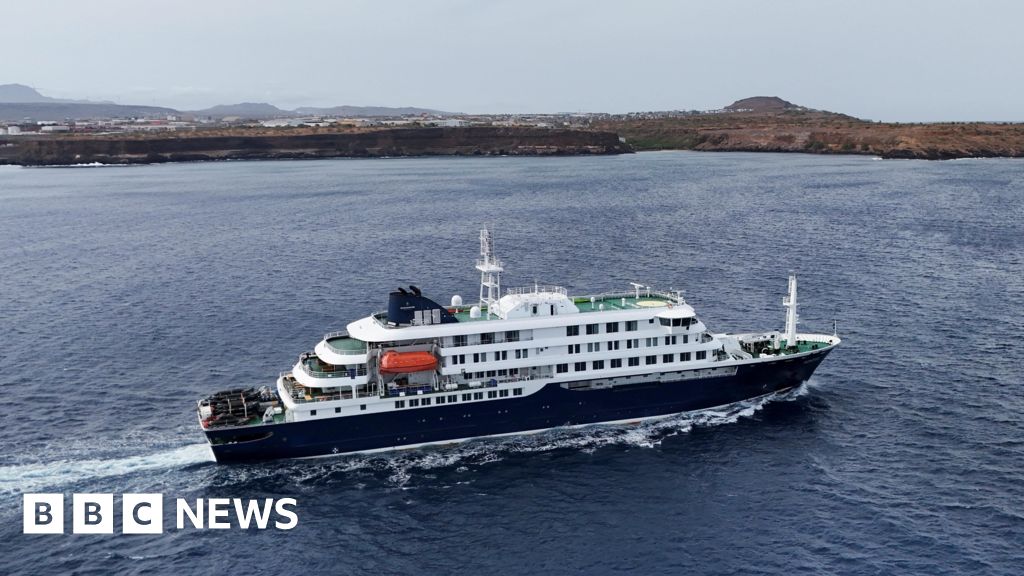
WHO Reassures Tenerife as Hantavirus Ship Nears Port
Tedros is trying to separate a dangerous shipboard outbreak from public fear as Spain prepares a tightly controlled evacuation.
The power dynamic is straightforward: Spain and the WHO are trying to control the landing narrative before the ship controls it for them. WHO director-general Tedros Adhanom Ghebreyesus told Tenerife residents that “this is not another Covid” and said the public risk from hantavirus remains low as the Dutch-flagged MV Hondius approaches Granadilla port for an organized transfer of passengers (BBC). The message is aimed less at the ship than at the island — and at the political backlash building around whether Tenerife should become the staging point for an international medical evacuation (
AP).
Spain is using Tenerife as a containment corridor
Madrid’s logic is operational, not political: keep the passengers moving, keep the virus off the street, and avoid a wider diplomatic problem. Spanish health minister Mónica García said people will be assessed on board, then moved ashore under strict precautions only if a repatriation flight is already waiting, with FFP2 masks for passengers and anyone handling them (BBC). The plan is to disembark by nationality, keep Spaniards under quarantine in Spain, and send foreign passengers home as quickly as possible (
AP).
That matters because Tenerife is doing the state’s risk management for it. The Canary Islands’ president, Fernando Clavijo, has objected that the island was not properly consulted, while dockworkers and local residents have voiced concern about the ship’s arrival (BBC;
The Independent). But Spain’s central government and the WHO are making the key decision: the island is a transit point, not the endpoint.
The real issue is not transmission — it is trust
Health officials are still treating this as a contained shipboard outbreak, not a community event. The WHO says there are six confirmed cases, with no symptomatic passengers currently aboard, and that the Andes strain — the only hantavirus known to spread person to person — is the likely culprit in at least some cases (BBC;
The Local). That is why Tedros is publicly insisting the risk to Tenerife residents is low: the agency is trying to prevent the outbreak from being recast as a mass-casualty threat when the evidence points to a tightly managed exposure event (
AP).
The beneficiaries are the passengers, who need a path off the ship, and Spain’s central authorities, who can claim a controlled public-health response. The losers are local officials on Tenerife, who absorb the political heat of hosting the operation, and the cruise operator, which now has an outbreak associated with delayed testing and a messy cross-border tracing effort (BBC;
The Independent).
What to watch next
The next decision point is Sunday’s arrival window at Granadilla, when Spanish authorities will test whether the quarantine-and-repatriation plan works in practice (BBC). Watch for two things: whether any new passengers show symptoms during disembarkation, and whether Tenerife’s opposition hardens into a broader regional dispute with Madrid. If the transfer goes cleanly, the outbreak stays a medical story. If it does not, it becomes a political one fast.
Discover more

Global Politics
US Seizes Iranian Ship, Tensions Surge
The US seizure of the Iranian ship Touska highlights a shift in control over the Strait of Hormuz, favoring Iran's strategic position.
Conflict & Security
Guatemala: El Niño 2026–27 becomes regional security test
UNICEF: 25.8M children face El Niño risks in Latin America; Guatemala maps 188 municipalities for drought and food insecurity amid regional security test.

Economics
Fed's stress-test overhaul is a capital-smoothing exercise
Federal Reserve finalized stress-test overhaul: two-year averaging for bank capital buffers and public input, expected to halve volatility.

Conflict & Security
Drone Warfare Killing Aid Workers at Unprec
Over 1,000 humanitarian workers killed in three years as cheap armed drones collapse legal protections. Gaza, Sudan, Ukraine, and DRC see deliberate targeting of aid convoys and hospitals with zero prosecutions.