White House Calm After Shooting Masks a Security Test
Tourists saw routine at the White House a day after gunfire nearby, but the real story is how fast the Secret Service restored normalcy.
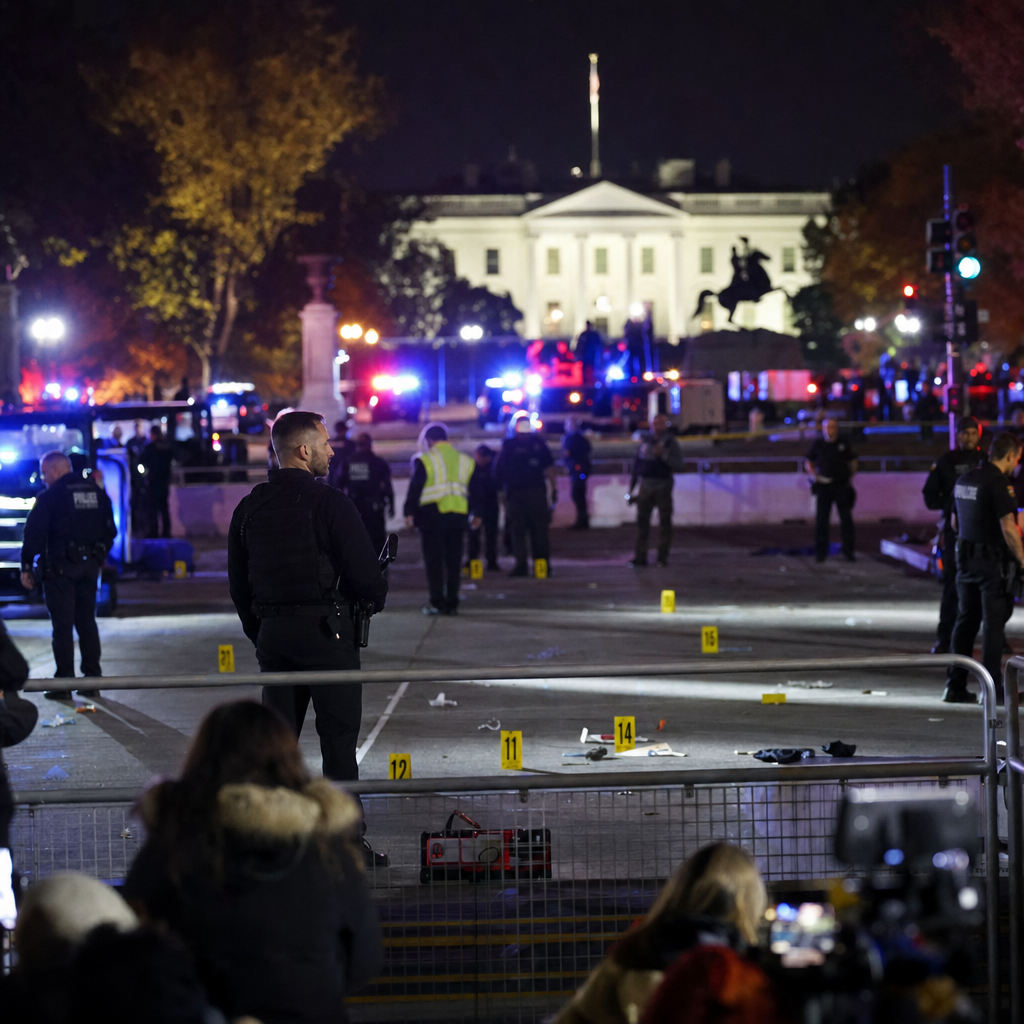
A day after a shooting near the White House, the message on the ground was calm. Reuters’ video showed tourists still taking photos and moving past the executive mansion on Sunday, with one visitor describing the area as “calm” despite the previous day’s gunfire ( Reuters). That matters because in Washington, visible normality is part of the security architecture: if the perimeter looks disrupted, the political cost spreads far beyond the crime scene.
A perimeter that must look unshaken
The leverage here sits with the Secret Service and the White House. They do not just secure the complex; they manage the signal that federal power remains in control. Bloomberg reported that a man was shot by Secret Service agents after he opened fire near the White House on Saturday, with gunfire outside the secure complex around 17th Street and Pennsylvania Avenue ( Bloomberg). That detail is the key one: the incident happened close enough to matter politically, but not close enough to force a visible lockdown that would advertise vulnerability.
For the White House, the priority is obvious: contain the event, keep the grounds open, and avoid a narrative of drift. For the Secret Service, the goal is to show that a fast response can neutralize an armed threat without turning the center of Washington into a fortress. That benefits the Biden-era security posture by preserving credibility, but it also leaves the agency exposed if investigators later find warning signs were missed.
Why this becomes a political story fast
This is not just a public-safety incident; it lands in the middle of  US Politics, where optics travel quickly. Any shooting near the White House raises two questions at once: how did the gunman get close, and how long can officials keep saying the system worked?
That dual test matters because the White House is both a symbolic target and a live workplace. Even a contained incident can feed broader concerns about security around federal institutions, especially when it unfolds in a city already saturated with law-enforcement presence. The public reaction is also different from a mass-casualty event elsewhere: here, the question is not whether the government can respond, but whether its most protected site can remain routine under pressure.
The likely winners in the immediate aftermath are the Secret Service and White House communications staff, if they can keep the story narrow. The losers are any officials who need to explain why an armed suspect reached the perimeter at all. If the investigation shows a lone actor, the incident fades into the background. If it reveals a missed threat cue, the debate broadens quickly into staffing, surveillance, and how much security Washington can absorb without feeling shut down.
What to watch next
Watch for the next law-enforcement update on charges, motive, and whether the suspect had any prior contact with police or the Secret Service. Also watch for whether the White House adjusts access or screening in the coming days; any visible change will be the clearest sign officials think the threat is not over. For now, the government’s message is simple: the scene is calm, and that calm is part of the response.