White House Recasts $1B Ballroom Ask as Security Spend
The East Wing funding fight is now about leverage: Trump wants public money wrapped in security language, while Senate Republicans decide whether to buy it.
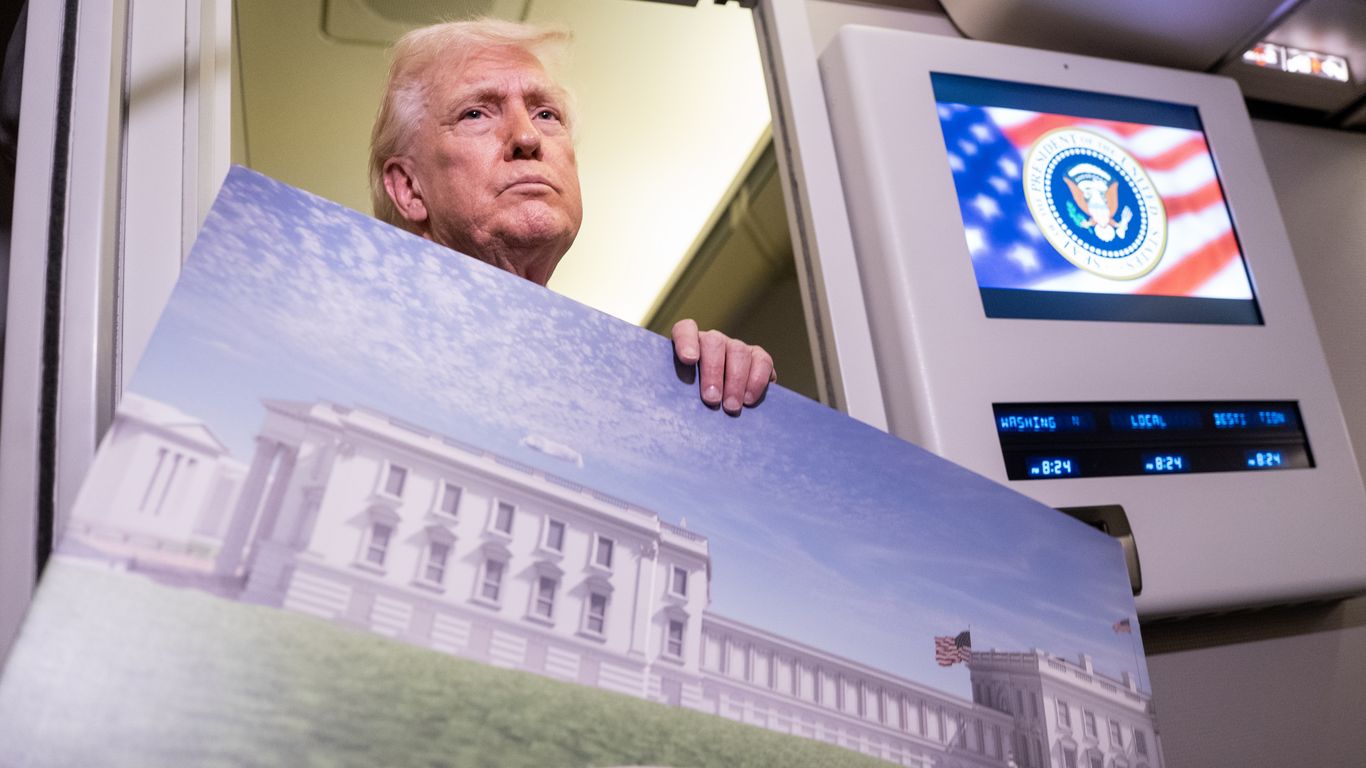
The White House is trying to turn a politically awkward ballroom request into a national-security package. On Tuesday, Secret Service Director Sean Curran is set to brief Senate Republicans on a $1 billion East Wing plan, and Axios reports the administration will walk lawmakers through a line-by-line justification that includes hardening the White House complex, a new visitor screening facility, training, drone defense and protection for high-profile events ( Axios). The pitch is simple: this is not just a ballroom ask, but a broader Secret Service funding request.
Why the framing matters
That framing matters because it widens the coalition the White House needs. Trump had said the ballroom itself would cost about $400 million and be paid for with private money, but the Senate proposal would put taxpayer dollars behind security features tied to the project ( AP;
AP;  The Seattle Times). The White House’s own court filings, as reported by AP, go further: the East Wing project would be “heavily fortified,” with bomb shelters, military installations and a medical facility under the ballroom (The Seattle Times). That is not a cosmetic renovation. It is a security build-out being sold through the optics of an event space.
The White House also has a procedural advantage: Republicans have folded the $1 billion into a budget-reconciliation bill that would also fund ICE and Border Patrol, letting them move without Democratic votes (Axios; AP). For Trump, that is the real prize. He gets to attach the ballroom to a must-pass partisan vehicle and force Republicans to defend the entire package as security, not vanity. For Democrats, the target is equally clear: if they can strip the language with the parliamentarian or force a series of floor votes, they can isolate the ballroom from the Secret Service argument (AP).
Who benefits, who loses
The immediate beneficiary is Trump, if he can keep the funding inside the reconciliation bill and preserve the security narrative. The Secret Service also benefits if Congress hands it a new line item for hardening, drone countermeasures and protectee security (Axios). The loser is the White House’s earlier promise that private money would cover the project; AP reports Senate Republicans including Susan Collins and Rand Paul are already signaling discomfort with shifting the burden to taxpayers (The Seattle Times).
That split is the tell. Collins wants Sean Curran to explain exactly how the money would be used, and Paul says private funding is still his preference (The Seattle Times). Other Republicans, including Josh Hawley and Cynthia Lummis, are more open to the request (The Seattle Times). That means the White House is not just fighting Democrats; it is trying to keep its own caucus from treating the ballroom as a bridge too far.
What to watch next
The next decision point is Tuesday’s closed-door Senate GOP lunch with Curran, followed by the parliamentarian fight and expected voting next week (Axios; AP). If Republicans stick together, the White House keeps the security frame and gets a path to funding. If Collins, Paul and a few others harden against it, the ballroom’s public-money problem becomes the story.
For the broader political angle, see  US Politics and United States.