Vietnam's Foreign Policy as Growth Engine
Vietnam elevates diplomacy to drive economic growth.
Model Diplomat4 min readasia
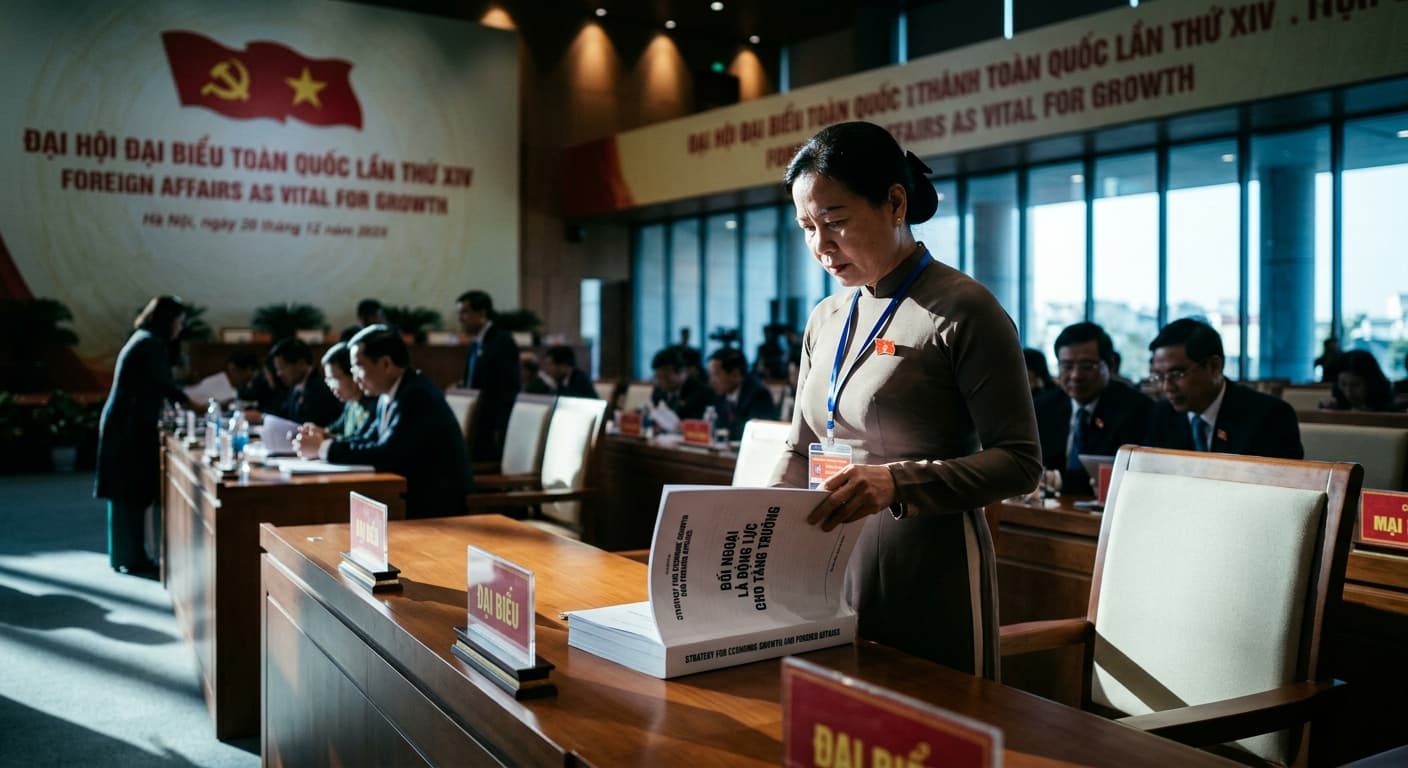
Tô Lâm Elevates Diplomacy to Pillar Status — Why Vietnam Is Betting Its Growth on Foreign Policy
Vietnam's 14th Party Congress has, for the first time, classified foreign affairs as a "vital and regular" task on par with national defense and security — a structural reordering that subordinates diplomacy to economic growth targets.
Vietnam has elevated diplomacy from a protective shield to a growth engine. The Politburo's Resolution No. 06-NQ/TW, enacted June 11 to implement the 14th National Party Congress's foreign policy line, formally designates foreign affairs as a "vital and regular" task alongside defense and security — the first time in party history that diplomacy has been assigned co-equal strategic weight with the security apparatus, according to
Vietnam News.
The resolution operationalizes a shift that General Secretary and State President Tô Lâm has been signaling since his consolidation of power: diplomacy must move from "protecting development space to building national development capacity," from "market integration to market creation," and from "participating in the rules of the game to contributing to shaping them," as he told the June 11 implementation conference, reported by Vietnam.vn.
The beneficiary here is unmistakable. Tô Lâm has doubled Vietnam's comprehensive strategic partnerships — the highest tier in its diplomatic hierarchy — since assuming power, according to the BBC. By elevating diplomacy to pillar status, he expands a domain where he, as General Secretary and President, holds direct authority, while defense remains the institutional preserve of a military that has viewed his reforms skeptically, as the
Council on Foreign Relations noted in its January assessment of the Congress.
What the Shift Actually Means
Resolution 06 is not a rhetorical document. It lays out five operational principles anchored in "strategic autonomy" and "self-reliance," and ties foreign policy explicitly to economic outcomes: diversifying markets and supply chains, attracting high-quality FDI with technology transfer, and positioning Vietnam in global value chains beyond low-cost assembly.
The numbers explain the urgency. Vietnam's economy has expanded nearly 100-fold since 1986, with per capita income rising from under $100 to over $5,000, as Vietnam News detailed in a June 15 op-ed. But Tô Lâm's target — 10% annual GDP growth through 2030, reaching $8,500 per capita — requires a diplomatic machinery that actively creates trade lanes, not merely keeps them open. Vietnam maintains diplomatic relations with 194 countries, 38 partnership frameworks, and 20 free trade agreements including the CPTPP, EVFTA, and RCEP. The resolution aims to convert that breadth into depth.
The Southeast Asia Daily reported that the June 11 announcement also emphasized "technology diplomacy," green energy partnerships, and international climate finance — signaling that Hanoi sees diplomacy as the procurement arm for its innovation and sustainability agenda, not just a trade facilitation tool.
The Power Logic
The reclassification carries internal political logic. Tô Lâm, a former Minister of Public Security, has concentrated power in the General Secretary role — the 14th Congress was cut short by nearly two days, which CFR interpreted as evidence of "de facto one-man rule." Elevating diplomacy to parity with defense and security rebalances the institutional triad in his favor. The army, historically skeptical of his reform agenda, sees its relative portfolio weight diluted.
Externally, the timing reflects the Trump II tariff environment. No Southeast Asian economy is as dependent on US market access as Vietnam. "Bamboo diplomacy" — flexible, non-aligned, bending without breaking — now carries an economic mandate: it must secure alternatives if American tariffs tighten, deepen EU and CPTPP integration, and prevent overdependence on any single major power.
The resolution also formalizes what had been an ad hoc practice: tighter coordination among diplomacy, defense, and security pillars to address non-traditional threats — cyber, climate, pandemic response — while maintaining Vietnam's "Four Noes" defense policy (no military alliances, no siding with one power against another, no foreign bases, no use of force).
What to Watch
The test of Resolution 06 is implementation, and the metrics are concrete. Watch for three things:
First, whether the EU-Vietnam Comprehensive Strategic Partnership, announced January 29 after the Congress, produces measurable investment flows beyond the existing EVFTA framework — or remains ceremonial.
Second, whether Vietnam's diplomatic machinery can deliver on "market creation" — opening new export destinations sufficient to offset any US tariff exposure. The resolution's language about "contributing to shaping international rules" is ambitious for a country that, until recently, was primarily a rule-taker.
Third, Tô Lâm's visit to the Philippines following the Shangri-La Dialogue — and the deepening defense cooperation with Manila that followed, as the BBC reported — signals that diplomacy-as-development does not mean backing away from South China Sea sovereignty claims. The resolution explicitly reaffirms UNCLOS adherence. How Hanoi balances deeper China ties with maritime coordination with Manila and Washington will be the defining tension of this new diplomatic posture.
Discover more
US Politics
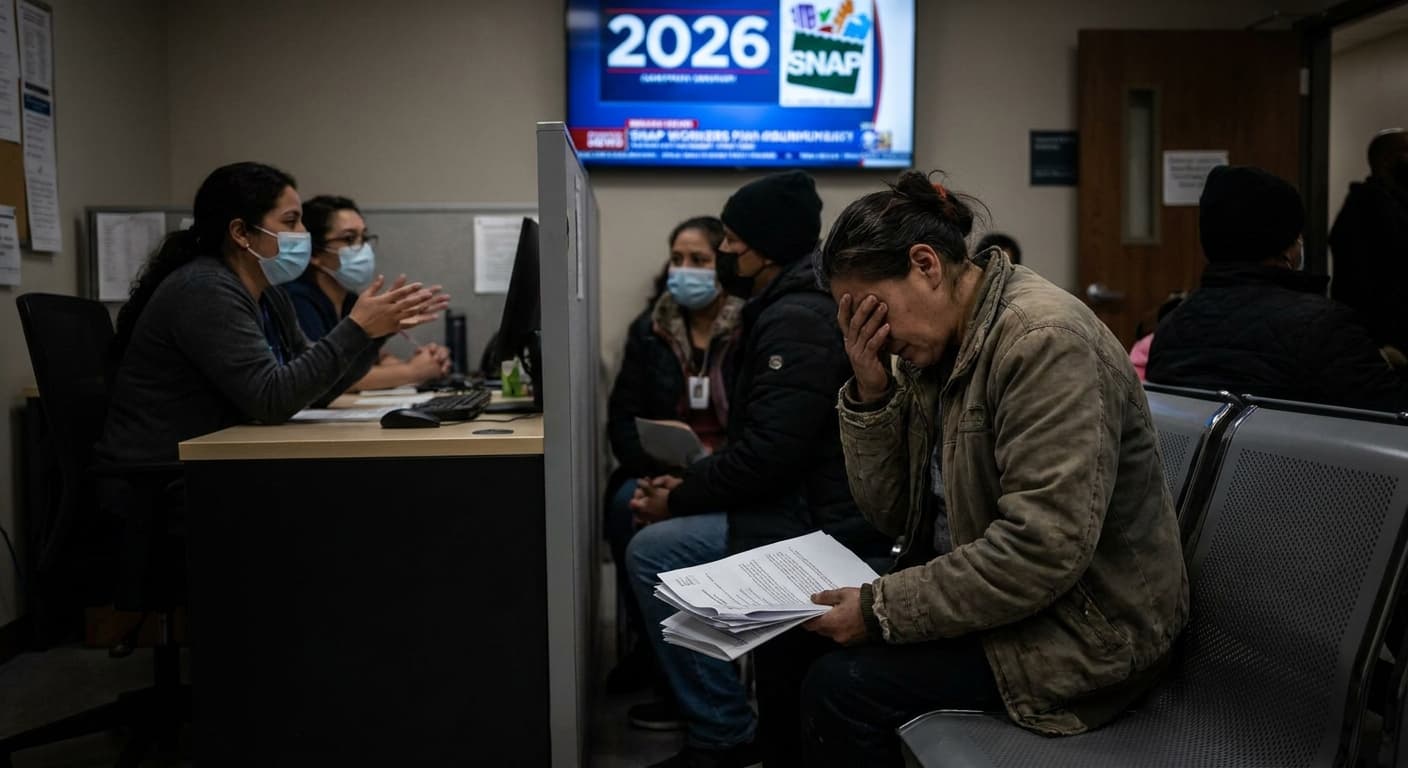
SNAP Food Assistance Faces Legal Challenges
In 2026, SNAP faces stricter eligibility rules and mounting legal challenges, threatening food assistance for the millions of Americans who rely on the program.

US Politics
US Launches $166B Tariff Refund Portal
The US is launching a $166 billion tariff refund portal to aid importers hit by Trump-era tariffs, with major implications for trade and supply costs.
US Politics
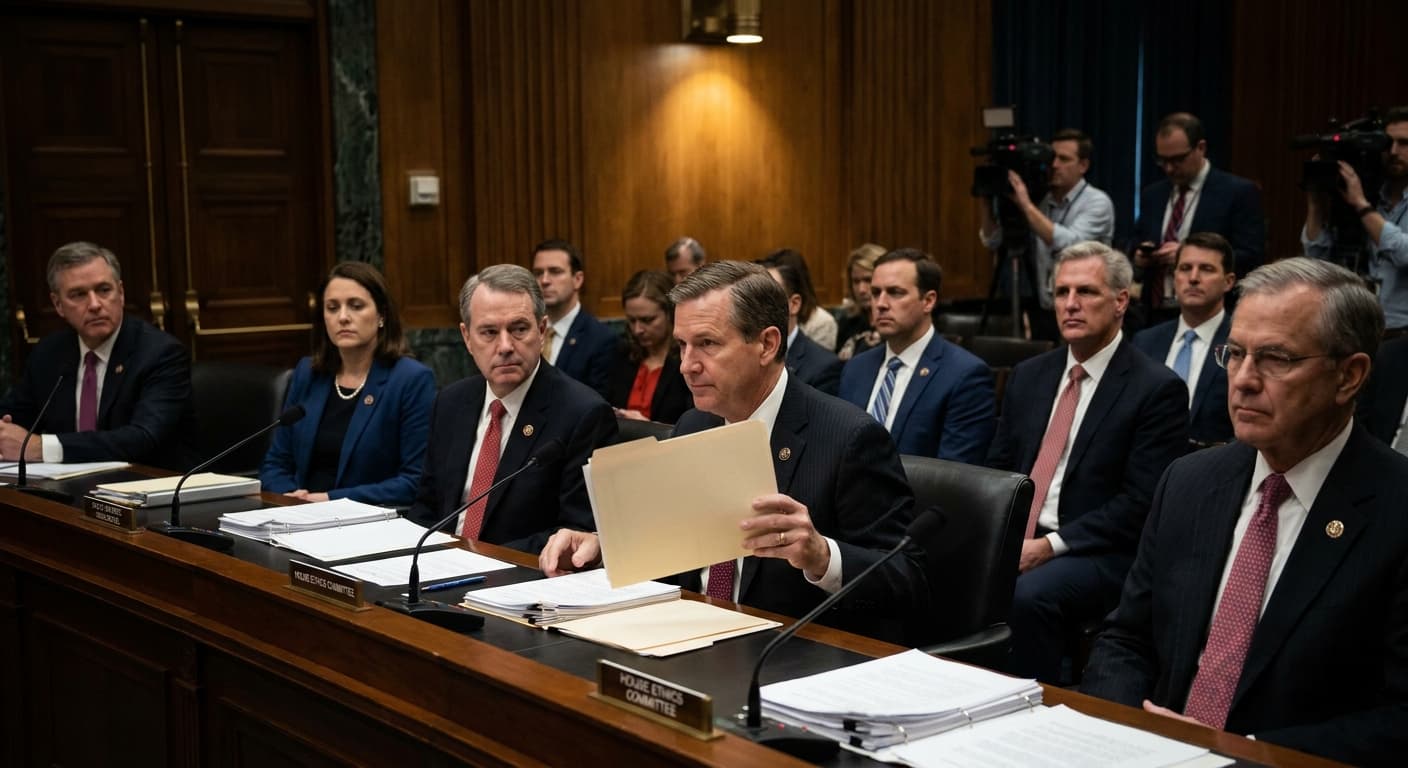
House Ethics Committee Pushes Sexual Miscond.
The House Ethics Committee has shifted responsibility for sexual harassment settlement records to the Office of Congressional Workplace Rights, complicating disclosure efforts.

Conflict & Security
Drone Warfare Killing Aid Workers at Unprec
Over 1,000 humanitarian workers killed in three years as cheap armed drones collapse legal protections. Gaza, Sudan, Ukraine, and DRC see deliberate targeting of aid convoys and hospitals with zero prosecutions.