Vietnam Strengthens Ties with Philippines
To Lam's visit focuses on trade and security cooperation.
Model Diplomat3 min readSoutheast Asia
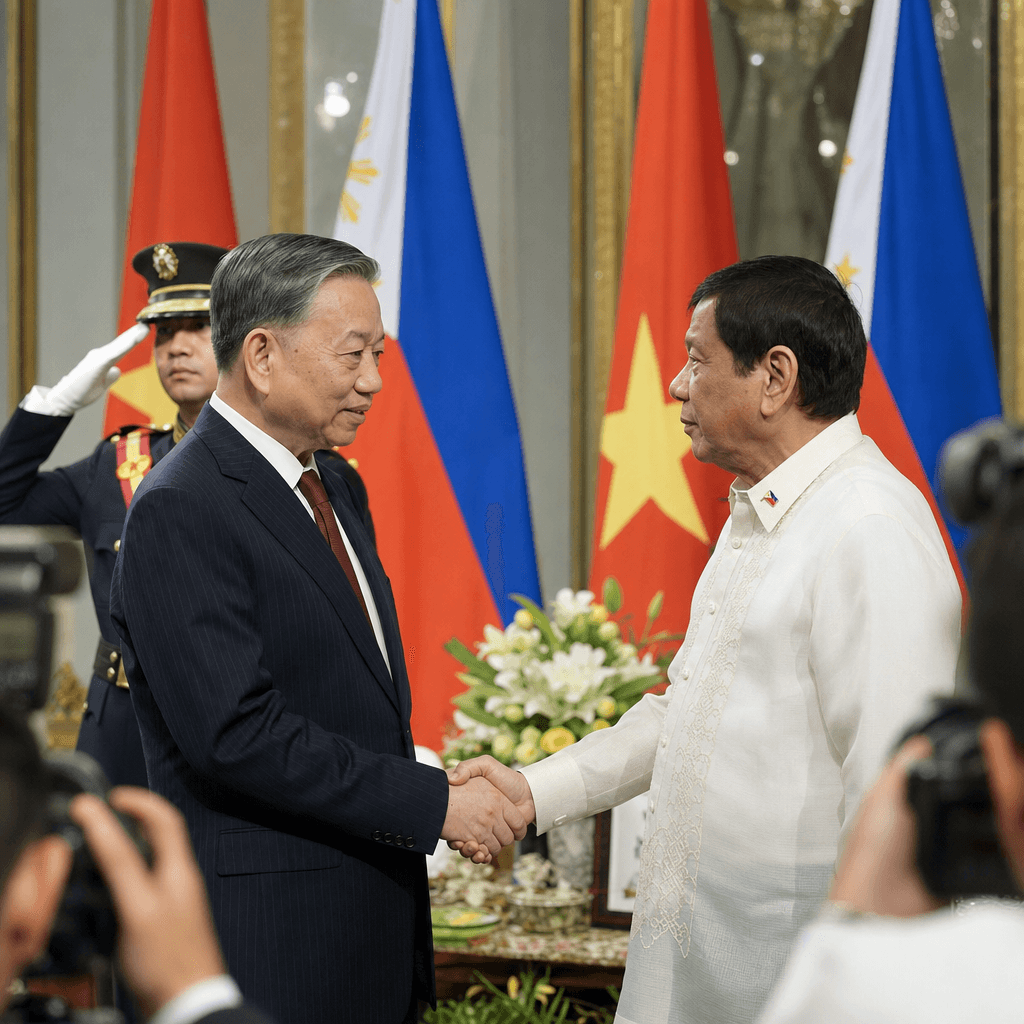
Vietnam Courts Manila on Trade, Sea Lanes, and Leverage
To Lam’s Philippines trip is about more than commerce: Hanoi is tightening an ASEAN-facing security hedge while keeping pressure on China in the South China Sea.
Vietnam’s top leader To Lam will visit the Philippines next week for trade and security talks, according to Reuters. The timing matters because Hanoi is not just shuttling diplomats; it is using regional ties to widen its options as maritime pressure in the South China Sea remains unresolved. Manila gets a partner that shares its concerns. Hanoi gets a louder ASEAN platform and another way to avoid being boxed in by Beijing.
A bilateral visit with regional purpose
The Philippines is not a random stop. Manila and Hanoi already treat each other as important maritime partners, and they have built a framework for that cooperation. In a January state visit, the two sides signed agreements on rice trade, agriculture, and an understanding on incident prevention and management in the South China Sea, alongside a coast guard pact meant to strengthen coordination at sea. Philippine officials said the goal was to promote trust and confidence through dialogue and cooperative activity.
That makes To Lam’s trip less about launching a new relationship than thickening an existing one. Vietnam and the Philippines have both been under pressure from China in disputed waters, and both want to keep maritime frictions from spilling into broader economic ties. This is why trade and security are being packaged together: each gives the other political cover.
Why Hanoi wants Manila in its corner
Hanoi is also signaling a broader shift in how it uses diplomacy. As CNA has reported, To Lam has been consolidating Vietnam’s foreign-policy push, with the leadership elevating external relations as a core tool for growth and “defending the country from afar and early.” In practice, that means more active engagement with regional middle powers that can help Vietnam resist strategic isolation without forcing it into a formal alignment.
The Philippines is useful for that reason. It is an ASEAN state with direct South China Sea exposure, close security ties with the United States, and a growing need for practical maritime coordination. For Vietnam, that combination is attractive because it keeps pressure on China while preserving Hanoi’s long-standing strategy of balancing major powers rather than choosing sides.
There is also an economic angle. Vietnam wants more trade routes, more market access, and more resilience in supply chains. Manila wants food security, maritime stability, and a stronger ASEAN response to coercion at sea. The overlap is real, even if the relationship remains constrained by legal and sovereignty sensitivities.
What to watch next
Watch for three things: whether the visit produces new coast guard or maritime protocols, whether the two sides announce trade follow-through beyond symbolism, and whether Manila and Hanoi coordinate messaging ahead of any ASEAN discussion on the South China Sea. If To Lam and Philippine President Ferdinand Marcos Jr. leave the meeting with a firmer incident-management mechanism, that will matter more than any generic statement about friendship.
The bigger signal is strategic: Hanoi is building a network of maritime partners, not an alliance system, and Manila is one of the few capitals that can give it both economic and security value at once. For more context on how Southeast Asian states are managing this pressure, see Global Politics and
Conflict.
Discover more

India
India-South Korea $50B Trade Expansion Plan
India and South Korea target $50 billion in bilateral trade by 2030, focusing on industrial cooperation and strategic alignment amid US pressures.

Conflict & Security
Drone Warfare Killing Aid Workers at Unprec
Over 1,000 humanitarian workers killed in three years as cheap armed drones collapse legal protections. Gaza, Sudan, Ukraine, and DRC see deliberate targeting of aid convoys and hospitals with zero prosecutions.
Global
World Normalises Taliban as Afghan Women Eras
UN data shows Afghan women erased from public life as Russia recognises the Taliban, EU hosts officials in Brussels, and ICC warrants for gender persecution go unenforced.
Conflict & Security
West Africa Food Crisis: Three Shocks in 2026
Conflict, climate extremes, and the Strait of Hormuz closure drive a severe food crisis in West and Central Africa, with fertilizer prices surging 80% and millions displaced.