Venice Biennale’s Russia Row
Exploring the clash over Russia's participation in the Biennale.
Model Diplomat2 min readEurope
Venice Biennale’s Russia Row Is a Soft-Power Fight
Russia’s return has turned the Venice Biennale into a test of cultural sanctions, with the EU, Italy and activists all using leverage.
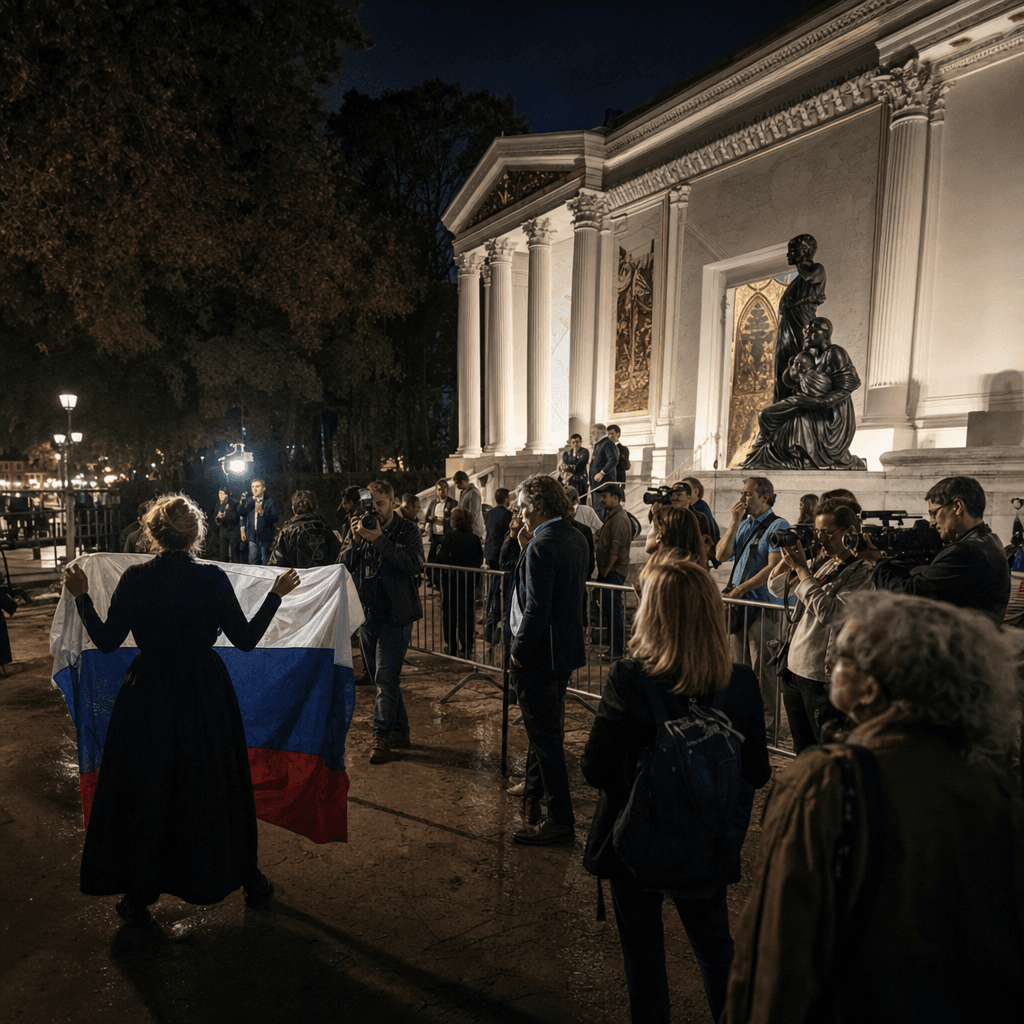
Russia is not entering Venice for art’s sake; it is entering to recover legitimacy. The immediate backlash — from Pussy Riot and FEMEN’s protest in the Biennale gardens to the European Commission’s threat to pull funding — shows the battle is over whether Moscow can use a flagship Western cultural platform to look normal again, even as the war in Ukraine continues (BBC,
POLITICO).
Russia is back, and that is the point
The power dynamic is blunt: Russia gets the visibility, while critics are trying to deny it the prestige that comes with a national pavilion at the self-styled “Olympics” of art. According to the BBC, activists shouted “Russia kills! Biennale exhibits!” outside the Russian pavilion, and Pussy Riot’s Nadya Tolokonnikova said Moscow’s cultural push is part of “hybrid warfare” — not a separate sphere from the military campaign, but another front in it (BBC).
That framing matters because it explains why the controversy has escalated so quickly. This is not a niche arts dispute. It sits squarely in the same policy space as sanctions, information warfare and reputation management — the kind of fight usually tracked under Conflict, not the arts pages. If Russia can claim a place at Venice, it chips away at the diplomatic isolation Europe has tried to impose since 2022 (
BBC,
France24).
Brussels and Rome are using money and legitimacy
Europe is responding with the tools it still controls: funding, access and political signal. The European Commission has threatened to suspend or terminate an EU grant worth €2 million over three years, and 22 European culture and foreign ministers wrote to Biennale president Pietrangelo Buttafuoco calling Russia’s inclusion “unacceptable” while the war continues (POLITICO,
BBC).
Italy is split between institutional caution and political theater. Culture Minister Alessandro Giuli said he would not attend the opening, while Deputy Prime Minister Matteo Salvini rejected exclusion and argued that no pavilion should be blocked (BBC). That split is useful to Moscow: it lets Russia argue that even inside Europe, the response is not unified.
The Biennale leadership is betting on a narrower principle — inclusion at any cost. Organizers say the event must remain a “place of truce” and that Russia cannot simply be barred because it owns its pavilion, a line that presents neutrality as artistic virtue but in practice gives an aggressor state a public stage (BBC,
France24).
What to watch next
The key decision point is whether Brussels follows through on funding cuts and whether Venice keeps trying to separate access to the pavilion from public legitimacy. The Biennale opens to the public on May 9, and the next few days will show whether the protests, the jury resignations and the EU pressure change the organizers’ calculation — or simply harden it (BBC,
POLITICO).
Discover more

Conflict & Security
Trump's Iran Deal Faces Bipartisan Backlash
Trump's Iran deal sparks fierce criticism from both parties, revealing deep political divides.
Conflict & Security
Trump Signs Iran Ceasefire—But Issues Remain
Trump's Iran ceasefire halts conflict but leaves key issues unresolved.
Conflict & Security
Norway Proposes Ban on Settlements Trade
Norway's government plans to ban all trade with Israeli settlements, escalating pressure on Israel.
Global Politics
Iran Demands US Enforce Ceasefire
Iran insists the US must enforce a ceasefire in Lebanon to uphold the MoU.