Venezuela Oil Boosts India Amid Hormuz Crisis
India turns to Venezuelan oil amid Gulf supply disruptions.
Model Diplomat3 min readAsia
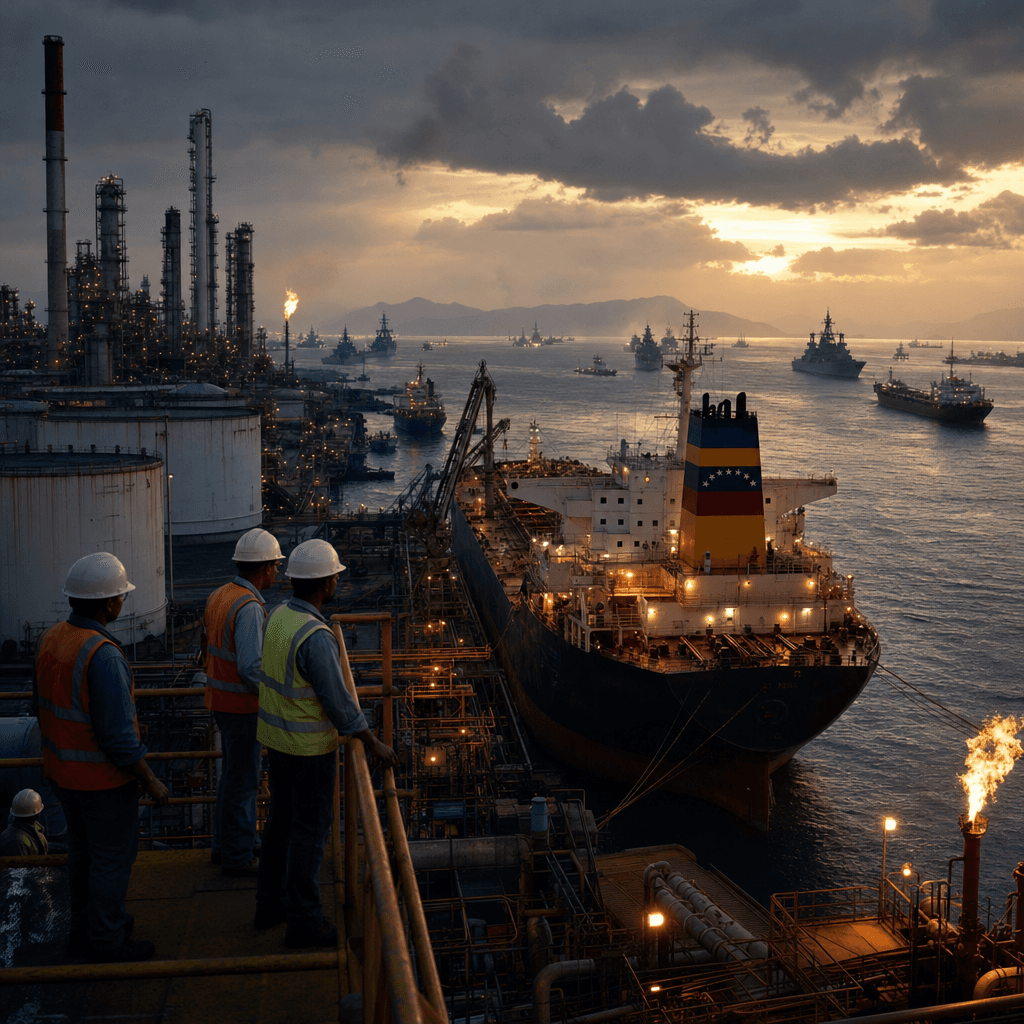
Venezuela’s Oil Gives India Breathing Room in Hormuz Crisis
As Hormuz disruptions squeeze Gulf supplies, Indian refiners are turning to Venezuela—but the route is costly and politically fragile.
India is not “saved” by Venezuelan oil; it is buying time. Venezuela has become India’s third-largest crude supplier this month, according to Al Jazeera, as the Strait of Hormuz crisis cuts off normal Gulf flows and forces refiners to rebuild their cargo slate fast. Shipments from Venezuela to India are nearly 50 percent higher than in April, and U.S. Secretary of State Marco Rubio says Venezuelan Acting President Delcy Rodriguez will visit India next week to discuss oil sales, a sign Washington now wants Caracas back in the market, not sidelined.
WION
Why Venezuela matters now
The power shift is simple: when Hormuz is unstable, the sellers with barrels that can move win leverage. India imports close to 90 percent of its crude, and nearly half of those imports normally come from Gulf producers through Hormuz, leaving New Delhi exposed when shipping is disrupted. Al Jazeera reported that Saudi supplies to India have almost halved this month, while Iranian arrivals have stopped again under the U.S. naval blockade.
That is why Venezuelan heavy crude is suddenly useful. It is not just available; it fits the hardware of India’s more complex refineries, especially Reliance’s Jamnagar plant. The Economic Times says Indian refiners have increased purchases because Venezuela’s grades are compatible with those facilities and still trade at a discount to Brent. In other words, India is not chasing Venezuelan oil out of strategy purity. It is chasing margin protection.
The limits are hard, not theoretical
This is a tactical hedge, not a structural fix. Venezuela is supplying more, but it still produces far less than the Gulf volumes India lost when Hormuz tightened. Al Jazeera notes that India’s imports have risen to about 4.9 million barrels per day this month, yet the country is still dependent on Russia, the UAE and whatever can be rerouted from the Atlantic Basin.
The Economic Times adds that overall imports remain below February levels, before the Iran war disrupted trade.
The other limit is political. Venezuelan barrels come with U.S. sanctions risk, and India has already been punished before for buying too much from politically sensitive suppliers. That means the real beneficiary here is not India alone, but the U.S.-backed Caracas arrangement that lets Washington shape which barrels reach Asia. India gains supply; Washington gains influence over that supply.
What to watch next
The next decision point is Rodriguez’s expected trip to India next week and Rubio’s India visit from May 23–26, both of which will show whether this becomes a commercial bridge or just a one-off emergency swap. Watch for three things: whether Indian refiners lock in longer-term Venezuelan cargoes; whether Washington offers more sanctions flexibility; and whether Gulf disruptions force New Delhi to accept a more expensive, more politically exposed crude basket. For now, Venezuela is not replacing Hormuz. It is helping India survive its closure.
Discover more

Conflict & Security
Venezuela's Debt Overhaul: Pigasse's Role
Matthieu Pigasse's role in Venezuela's debt restructuring spotlights US influence over the deal, reshaping the geopolitics of the country's financial recovery.
International Relations
U.S. Troops Conduct Drill in Caracas, Signals
US troops conducting a rare drill in Caracas highlight a tense new phase in US-Venezuela relations, as Washington presses its bargain with Maduro's regime.

Conflict & Security
U.S. Military Overflight Signals Control in V
US military overflights and an evacuation drill near Caracas signal a tense new phase in US-Venezuela relations, projecting control over Maduro's airspace.
Conflict & Security
Venezuela Retains Esequibo Dispute Control
Venezuela seeks to dodge an ICJ ruling on the Esequibo, pushing bilateral talks with Guyana to keep control of the disputed, resource-rich border territory.