Venezuela's Delcy Rodríguez Reshuffles Power
A strategic move to consolidate economic control post-earthquake
Model Diplomat7 min readLatin America
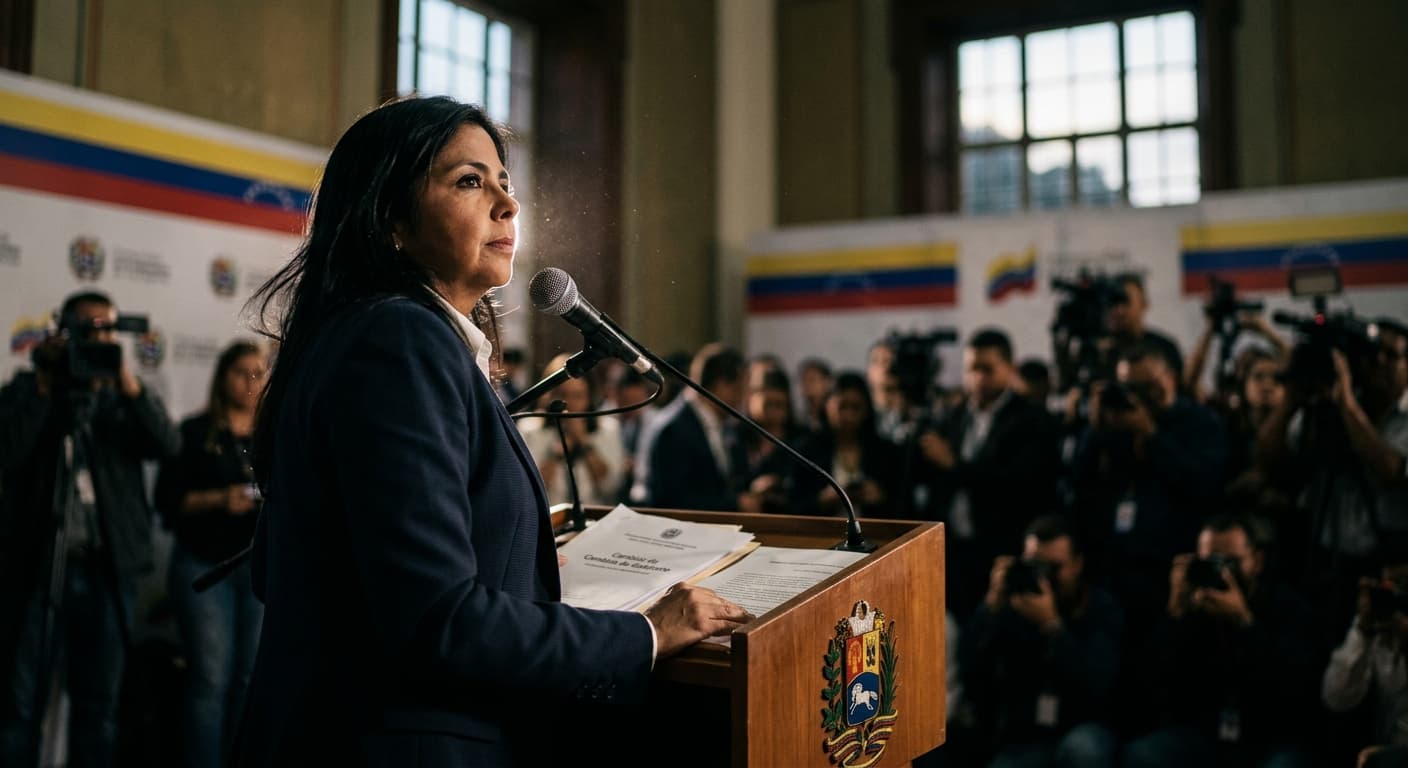
Delcy Rodríguez Sidelines Diosdado Cabello's Brother in Venezuela Reshuffle
Venezuela's interim president used the earthquake emergency to remove the Cabello clan from the tax authority after 18 years — consolidating economic control on July 7, 2026.
Delcy Rodríguez chose the fourteenth day after Venezuela's deadliest earthquake in a century to do the one thing her predecessor Nicolás Maduro never managed: pry the Cabello family off the country's tax authority. Her July 7 reshuffle moves José David Cabello — brother of hardline Interior Minister Diosdado Cabello — out of the SENIAT after 18 years and hands the levers of tax collection, the state bank and the sovereign-investment vehicle to her own technocratic circle. Framed as an earthquake response, it is in fact the sharpest internal power move of the post-Maduro era: Rodríguez is using a national tragedy to lock down every institution that touches money, precisely as the Trump administration prepares to route billions in oil revenues and reconstruction aid through Caracas.
The reshuffle: who lost, who won
The mechanics matter. According to EL PAÍS, Rodríguez removed José David Cabello from the Servicio Nacional Integrado de Administración Aduanera y Tributaria (SENIAT), where he had presided since 2008, and reassigned him to Pequiven, the state petrochemicals company. Cabello was placed there by Hugo Chávez himself; the U.S. Treasury
sanctioned him in 2018 alongside his brother Diosdado for allegedly using his post to run extortion and money-laundering schemes.
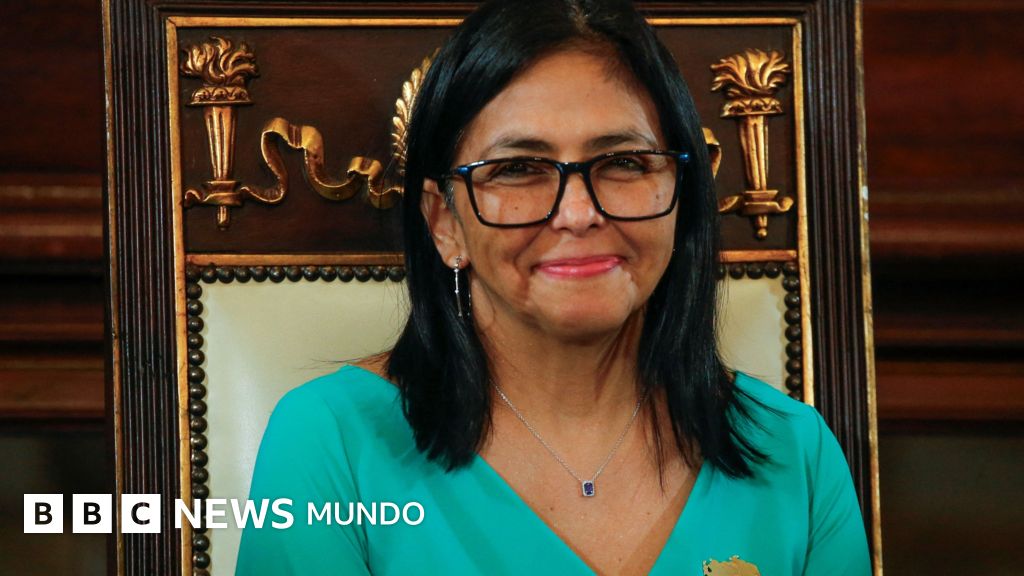
In his place at SENIAT goes Román Maniglia — until Tuesday head of Banco de Venezuela and Pequiven — a figure BBC Mundo describes as "una ficha clave de Delcy Rodríguez" in her emerging "Chavismo 3.0" circle. Calixto Ortega Sánchez, a former Central Bank president who is also Rodríguez's sectoral vice-president for the economy, takes over Banco de Venezuela, the largest public bank. Alejandro Puglia inherits the Centro Internacional de Inversión Productiva, the sovereign-investment shell that once processed the deals of Colombian fixer Álex Saab — now back in a U.S. prison after Rodríguez extradited him earlier this year.
Only one of the moves genuinely concerns the earthquake. Jacqueline Faría, an old Chávez-era operator whom Infobae notes was named just weeks ago as Transport Minister, will now run the newly created "Misión Venezuela Renace" out of the presidency itself. Faría, a hydraulic engineer, presided over the failed cleanup of Caracas's Guaire River and a still-unbuilt aqueduct — a résumé the opposition is already noting.
The earthquake is the pretext, not the reason
The June 24 disaster is real, and catastrophic. According to the Council on Foreign Relations, the twin quakes — a magnitude 7.2 followed 39 seconds later by a magnitude 7.5 with an epicenter ten miles from Morón — were the strongest to hit Venezuela in a century. The U.S. Geological Survey's PAGER model estimated fatalities between 10,000 and 100,000. By July 7,
Al Jazeera reported, National Assembly President Jorge Rodríguez — the interim president's brother — put the confirmed death toll at 3,535, with 16,740 injured and 17,854 left homeless. The UN Development Programme estimates material damage at more than $6.7 billion; UNICEF says
680,000 children need humanitarian assistance.
Yet the four institutions Rodríguez reshuffled — SENIAT, Banco de Venezuela, Pequiven, the Centro Internacional de Inversión Productiva — have nothing to do with search-and-rescue, temporary shelter, or seismic reconstruction. They are, precisely, the pipes through which money enters and leaves the Venezuelan state. That is the tell.
Rodríguez is doing this now because two revenue floods are about to converge on Caracas. First, the U.S.-supervised oil sales. The White House has said sales will start with 30 million to 50 million barrels of previously sanctioned crude, with revenues held in U.S.-controlled accounts and released selectively into Venezuela. Second, disaster aid: $300 million already pledged by the Trump administration, €5 million from the EU, and a queue of multilaterals lining up behind the
IMF's April resumption of relations with Caracas. Whoever runs SENIAT and Banco de Venezuela decides how those flows are audited, taxed and disbursed inside the country.
The primary document that changed everything
The regulatory scaffolding sits, ironically, in Washington. On April 14, 2026 the U.S. Treasury's Office of Foreign Assets Control issued General License 57, formally titled "Authorizing Financial Services Transactions Involving Certain Venezuelan Banks and Government of Venezuela Individuals." The license — read alongside GL 56, which cleared negotiations of contingent contracts — reconnected the Banco Central de Venezuela and state banks including Banco de Venezuela to the correspondent banking system after seven years of exclusion. That is why the presidency of Banco de Venezuela suddenly matters more than at any point since Chávez nationalized it from Spain's Santander in 2009. Rodríguez put her own vice-president for the economy in that chair.
The Cabellos, meanwhile, remain locked out of that pipeline: José David has never been removed from the U.S. Specially Designated Nationals list, and Diosdado still carries a $25 million U.S. bounty for narco-terrorism. Any bank that touches them risks secondary sanctions. Handing José David the petrochemicals portfolio — a domestically-facing, non-dollar-denominated business — is the elegant compromise: he keeps a fiefdom, but not one that can contaminate the country's re-entry into global finance.
The "Chavismo 3.0" thesis
Analysts in Caracas have begun describing what Rodríguez is building as "Chavismo 3.0." Mariano de Alba, an International Crisis Group specialist quoted by BBC Mundo, calls her inner circle "the most technocratic government one could aspire to within Chavismo," populated by figures like Ortega Sánchez, Anabel Pereira at the finance ministry and Héctor Silva on mining. Their common denominator: economic training, foreign education, and — crucially — no independent power base outside Rodríguez herself.
That is the second layer of the July 7 move. The Cabello brothers represent the ideological, military-adjacent wing that Rodríguez inherited but does not control. Diosdado sits atop the National Police, the Guard, and the colectivos — the armed neighborhood groups Christopher Sabatini of Columbia University has described as his "private army." She cannot fire him. But she can systematically strip his relatives of positions with financial discretion. José David's move from SENIAT — where he decided which importers got customs waivers and which paid full duty — to Pequiven is a demotion dressed as a promotion. Everyone in Caracas knows it.
Foreign Affairs, in a recent Ricardo Hausmann-authored analysis, argued that Venezuela's paradox is that the very oil-and-mining revenues that could revive its economy could also destabilize its transition if institutions remain weak. Rodríguez's answer is not to strengthen institutions — she has not touched the judiciary, the electoral council, or the Constitutional Chamber — but to concentrate them in a smaller, more legible technocratic core answerable directly to her.
The pragmatic bet: survive to 2028
Rodríguez's underlying wager, as NPR's Caracas dispatch captured, is a temporal one. Former U.S. Ambassador James Story described her strategy as doing "just enough to make it look as if they're complying," while betting that the U.S. midterm elections in November weaken Trump's ability to sustain pressure. Every technocrat she installs in a financial post is one more insurance policy against the day Washington's attention drifts elsewhere — and one more moderate face she can present to Chevron, Repsol and the IMF in the meantime.
The Atlantic Council's Jason Marczak and his co-authors have been sounding an alarm on precisely this point, arguing that Washington risks treating "a diplomatic and political breakthrough in Venezuela as an end state rather than the starting line for the hard, patient work of institutional rebuilding." Roughly $5.1 billion in Venezuelan Special Drawing Rights sit frozen at the IMF, and $4.8 billion in gold at the Bank of England — both unlockable only with broader international recognition. Rodríguez's technocratic reshuffle is, in effect, an audition for that recognition.
The opposition is watching from Panama. María Corina Machado, the 2025 Nobel Peace laureate whom Trump publicly dismissed, signed the Manifiesto de Panamá days before the earthquake, laying out conditions for negotiating a transition with Rodríguez: release of political prisoners, dismantling of the colectivos, and access for exiled voters. Rodríguez has said Machado would face justice if she returns. The reshuffle sends its own answer — the interim president is not planning to hand power to anyone soon.
What to watch next
- July 15–31: Deadline pressure on the "Venezuela Renace" mission to publish a housing-reconstruction plan; Faría has not yet outlined one, per EL PAÍS. Watch whether Ortega Sánchez's Banco de Venezuela becomes the disbursement vehicle for U.S. and EU aid — the single clearest test of whether the new financial architecture actually functions.
- August–September: OFAC is expected to renew or expand General License 41-series authorizations for Chevron and PDVSA. A quiet expansion would confirm that Washington is comfortable with the reshuffle; a freeze would suggest Rubio is still leveraging Diosdado Cabello's status.
- November 3, 2026: U.S. midterm elections. Rodríguez's whole timing bet — the "double over so you don't break" thesis her allies openly articulate — assumes reduced Trump leverage after this date. A Republican rout would blow up her clock.
Diplomat View
Rodríguez's July 7 reshuffle is not a crisis-response measure and should not be reported as one. It is the moment Chavismo's internal balance of power tilted decisively away from its Cabello-led military-ideological wing and toward a technocratic financial cadre answerable to a single person. The earthquake provided the political cover — a national mourning period during which challenging the president is unseemly — and the emerging pipeline of U.S.-mediated oil revenue and multilateral aid provided the motive.
Our call: over the next 90 days, expect at least one more move against a Cabello-linked figure — likely in customs, ports, or mining — and expect Ortega Sánchez to be presented internationally as Venezuela's economic face in IMF and World Bank contexts. The forecast changes if two things happen: if Diosdado Cabello publicly breaks with Rodríguez (he has not, and cannot easily, given his own U.S. exposure), or if the U.S. Treasury quietly slow-walks General License renewals in September. Either would signal that the technocratic bet is unraveling. Absent both, Rodríguez will reach the November U.S. midterms with a leaner, more legible, and more personally loyal state — and Venezuela's democratic transition further away, not closer.
Discover more
Global Politics
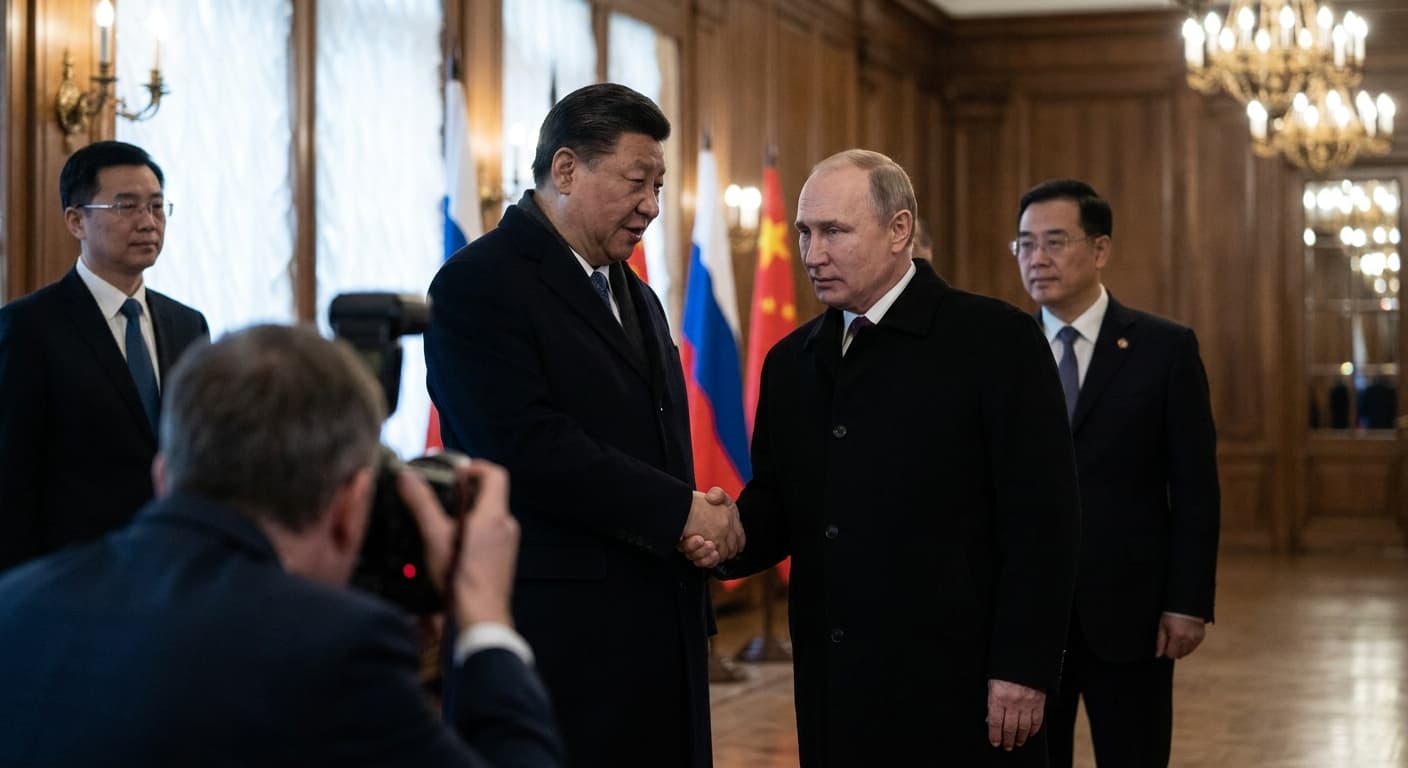
Xi Jinping Calls China-Russia Ties 'Precious'
Xi Jinping's description of China-Russia ties as 'precious' reflects a strategic imbalance, with Beijing dictating terms in the partnership.
US Politics
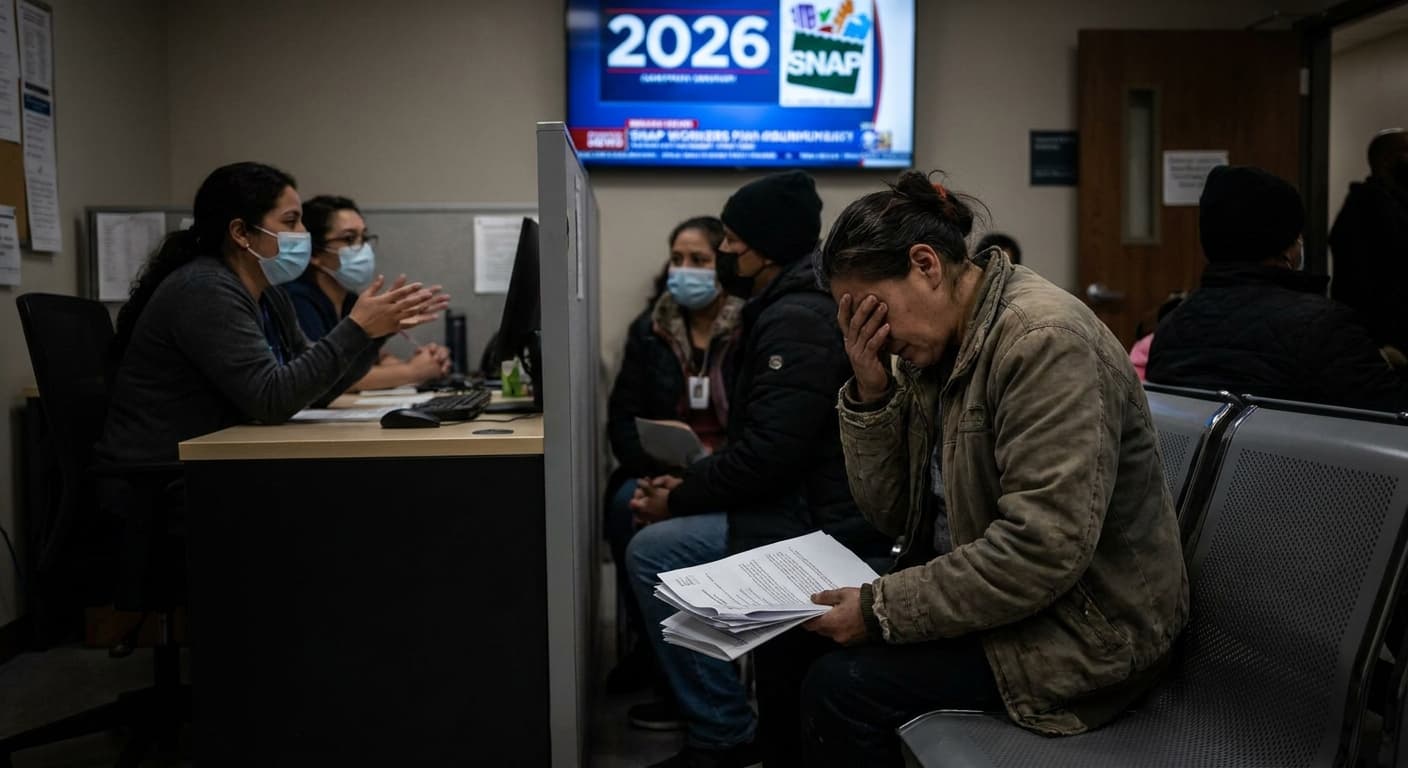
SNAP Food Assistance Faces Legal Challenges
In 2026, SNAP faces stricter eligibility rules and mounting legal challenges, threatening food assistance for the millions of Americans who rely on the program.

US Politics
White House Pressures Congress for Crypto Leg
The Trump administration's push for the CLARITY Act aims to reshape crypto regulation, impacting trillions in market value and the Trump family's wealth.

Conflict & Security
Drone Warfare Killing Aid Workers at Unprec
Over 1,000 humanitarian workers killed in three years as cheap armed drones collapse legal protections. Gaza, Sudan, Ukraine, and DRC see deliberate targeting of aid convoys and hospitals with zero prosecutions.