Venezuela's Debt Overhaul: Pigasse's Role
Centerview's Pigasse at the center of Venezuela's debt restructuring
Model Diplomat3 min readAmericas
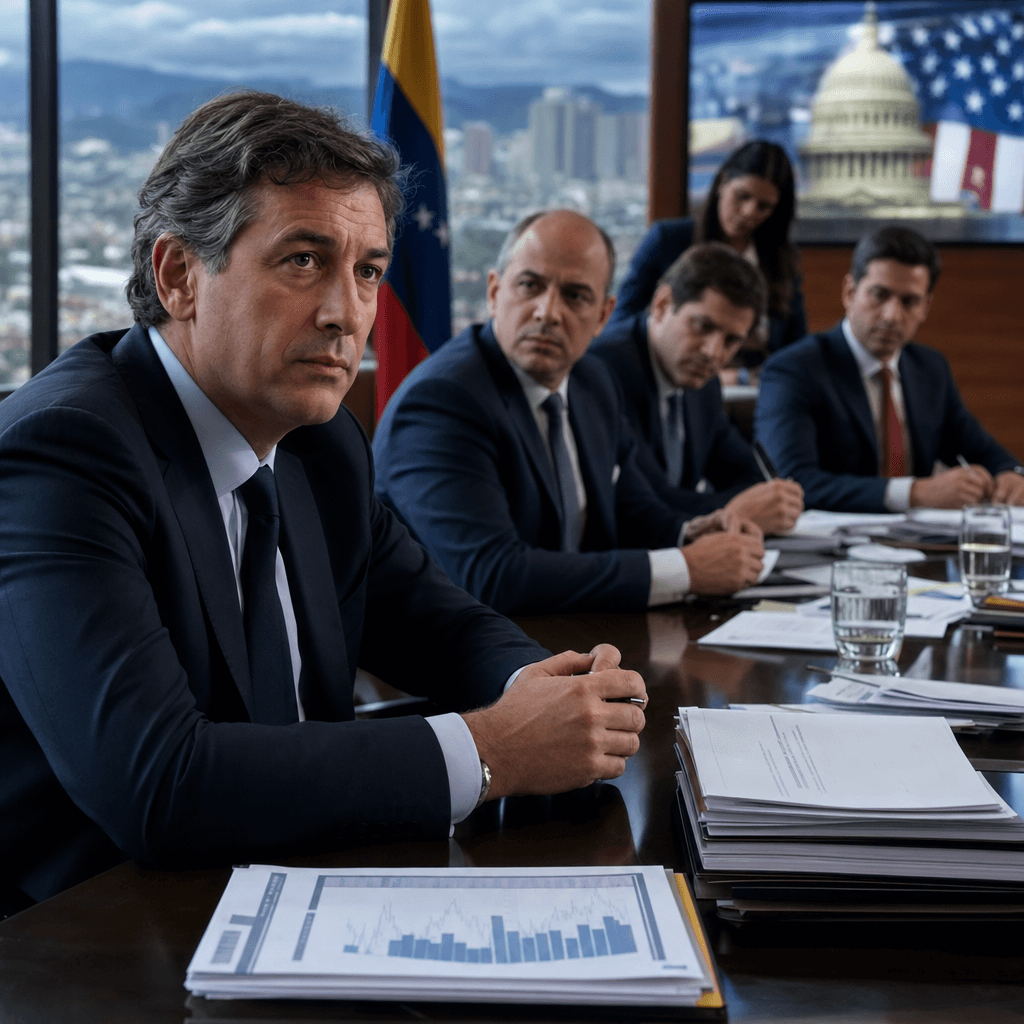
Pigasse, Washington and the Battle for Venezuela's Debt
Centerview’s appointment puts a politically connected French banker at the center of a $150bn reset — but Washington still controls the gate.
Matthieu Pigasse has become the public face of Venezuela’s debt overhaul because Centerview Partners got the mandate without a formal competition, a move that has already raised questions about who is really steering the process. France 24 reported that Pigasse’s firm was appointed adviser on a restructuring of more than $150 billion in debt, while Reuters also noted that rivals such as Lazard, Rothschild and Alvarez & Marsal were not formally invited to bid (France 24,
Reuters via MarketScreener).
Who actually holds leverage
The key leverage is not in Caracas; it is in Washington. The Biden-era sanctions architecture has been loosened just enough to let legal and financial advisers prepare restructuring options, but not yet to let Venezuela actually execute a deal with creditors, according to EFE’s reporting on the Treasury’s general license and the official terms summarized by the government itself (EFE,
Business Wire). That means the real gatekeeper is the U.S. government, which can shape who talks, how fast they talk, and what kind of deal is even legally possible.
That is why Pigasse matters. He is not just a banker; he is the channel through which Delcy Rodríguez’s administration can present a credible face to markets while still operating inside a political framework set in Washington. Pigasse told Reuters he has known Rodríguez and worked with her for 15 years, underscoring that this is a relationship deal as much as a technical assignment (France 24). For the wider geopolitical angle, see
Conflict and
Global Politics.
Why the appointment matters
For Venezuela, the benefit is speed and political control. The government wants to frame the restructuring as a break from the Maduro era’s default in 2017 and as a route back to financing, investment and sanctions normalization (Business Wire,
EFE). For Centerview, the upside is obvious: one of the largest sovereign restructurings in years, with the prospect of tens of millions of dollars in fees and the prestige that comes with a Venezuela file (
France 24).
The losers are just as clear. Rival advisory firms lost a mandate they were not given a fair shot at, and bondholders now face a process in which geopolitics may matter as much as pricing. That matters because Venezuela’s debt stack includes both Republic and PDVSA obligations, and the eventual writedown will determine not only creditor recovery but how much cash the state can divert back into oil production, infrastructure and basic services (Business Wire,
Reuters via MarketScreener).
What to watch next
The next decisive moment is June, when Venezuela says it will present a macroeconomic framework and debt sustainability analysis to the international financial community (Business Wire,
Reuters via MarketScreener). After that, the real test is whether Washington expands the license to allow direct creditor negotiations. If it does, Pigasse becomes the dealmaker. If it does not, Centerview is only managing expectations.
Discover more

International Relations
Pakistan's Key Role in US-Israel-Iran Meddle
Pakistan is seeking to mediate the US-Israel-Iran conflict, balancing high-stakes diplomacy against severe economic pressures and steep regional challenges.

Global Politics
US Seizes Iranian Ship, Tensions Surge
The US seizure of the Iranian ship Touska highlights a shift in control over the Strait of Hormuz, favoring Iran's strategic position.

Economics
Fed's Amex AML order puts correspondent banking on notice
Federal Reserve's Amex AML order requires board-level controls and a 90-day plan; OCC fined the bank $350 million over enterprise-wide deficiencies.
Conflict & Security
Guatemala: El Niño 2026–27 becomes regional security test
UNICEF: 25.8M children face El Niño risks in Latin America; Guatemala maps 188 municipalities for drought and food insecurity amid regional security test.