Venezuela Earthquake Response: Urgent Needs
International aid efforts face challenges in Venezuela's crisis.
Model Diplomat7 min readLatin America
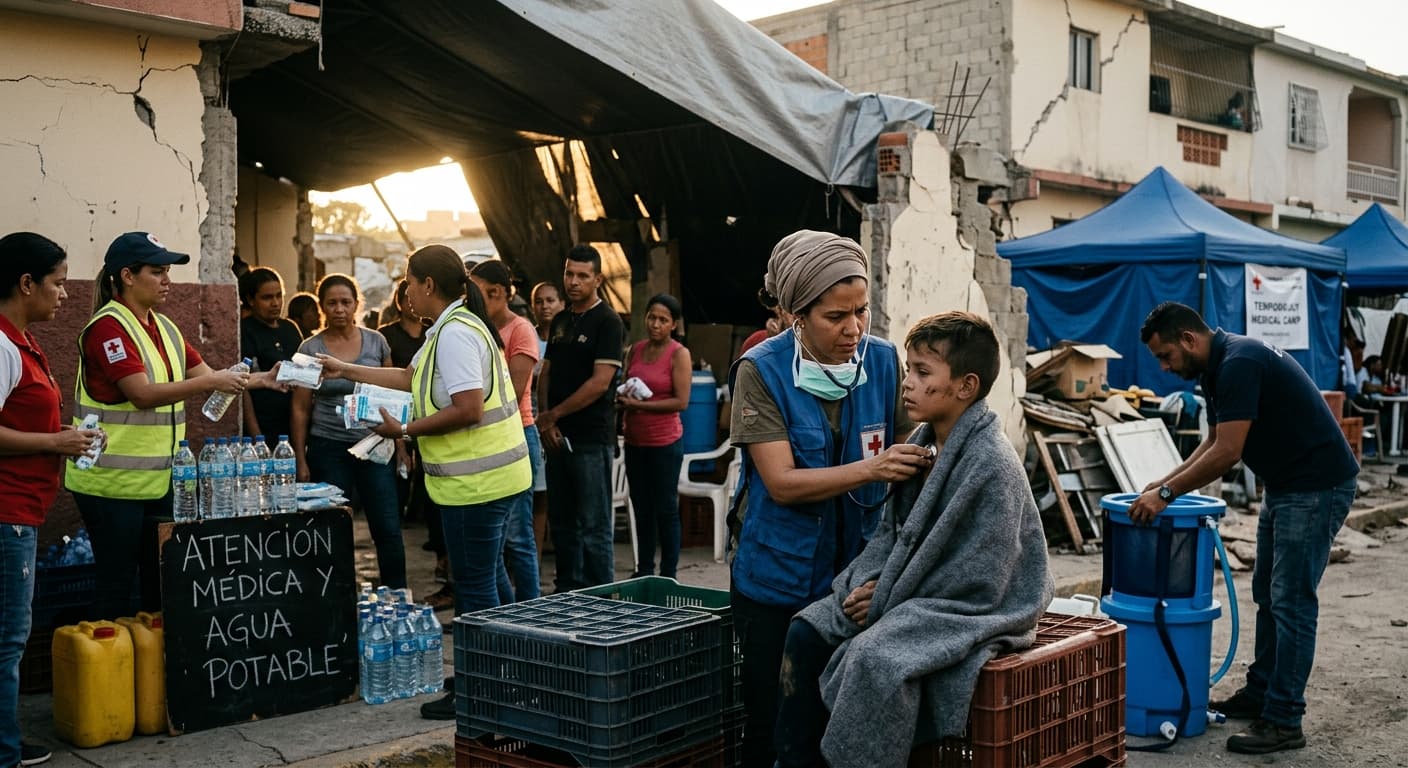
Venezuela earthquake: 96-hour window shifts from rescue to disease
Death toll at 3,535 as US, UN and IFRC scramble to plug gaps left by a weakened Venezuelan state and a health system already 37% short on medicine.
The next 96 hours in Venezuela's earthquake response will be decided not by rubble but by pipes: whether international actors can move enough water, sanitation and medical supplies into La Guaira and Caracas before communicable disease turns 17,854 displaced people into the disaster's second casualty curve. The international mechanism is functioning — 27 countries, US$300 million in US assistance, a UN CERF release, and a 900-strong US military footprint — but it is grafted onto a state that Venezuelans themselves say arrived last. That mismatch, not the tremor, is now the story: a foreign-led relief operation propping up an interim government led by Delcy Rodríguez, whose legitimacy depends on delivering aid it did not source and cannot fully control.
The toll, and what the toll conceals
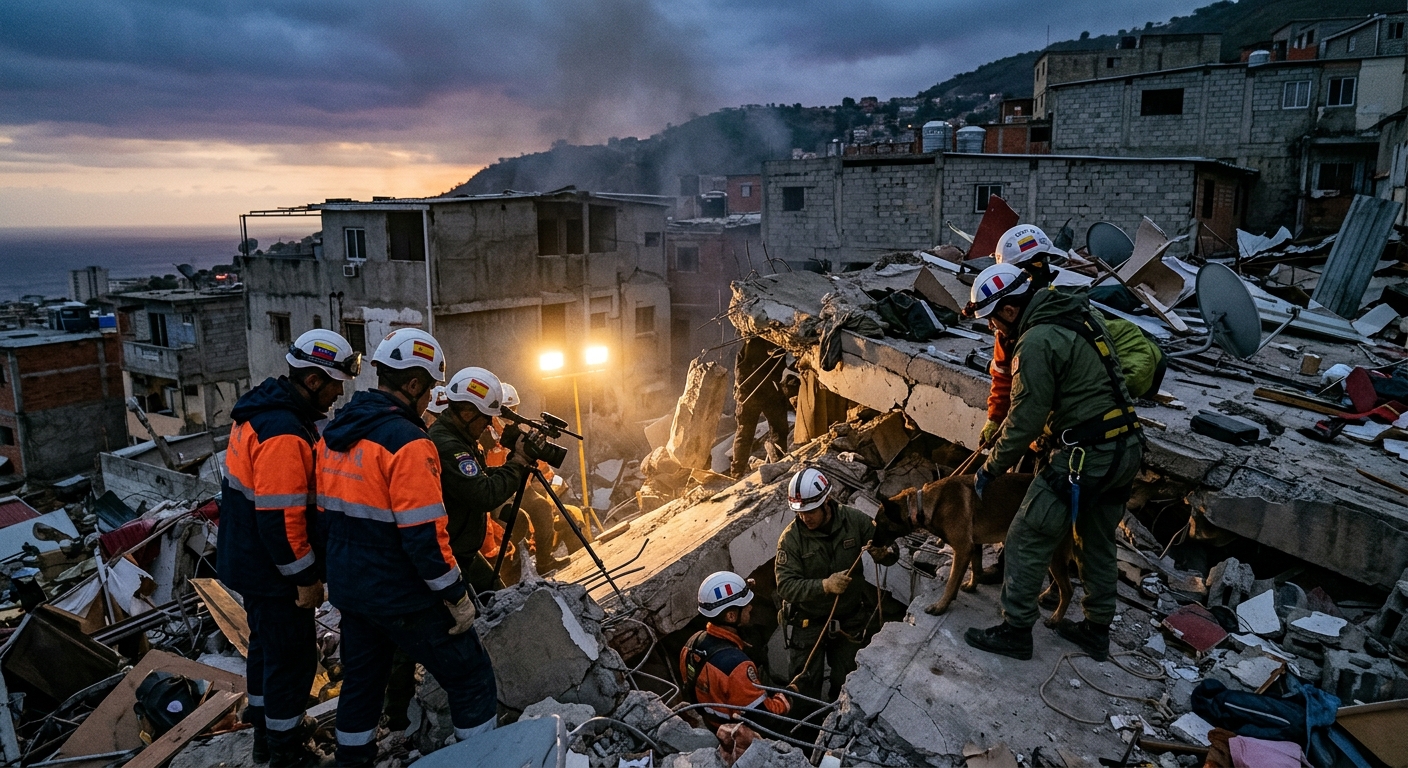
OCHA's Situation Report No. 13, issued on 6 July 2026, puts the confirmed toll from the 24 June M7.2 and M7.5 earthquakes at 3,535 dead, 16,740 injured and 6,462 rescued, with 1,048 aftershocks recorded across seven states, according to ExBulletin's reproduction of the OCHA text. La Guaira remains the epicentre of both damage and displacement. National Assembly President Jorge Rodríguez told state television on Monday that 17,854 people have lost their homes and 12,800 are living across 80 shelters in Caracas and La Guaira, figures relayed by
Al Jazeera.
Those numbers understate the disaster. Mass burials began this week at La Esperanza Cemetery for unidentified victims, and more than 30,000 people are still listed as missing, per Al Jazeera's newsfeed report on the funerals. The US Geological Survey's early estimate — reported by
UN News — put possible fatalities as high as 10,000. If even a fraction of the missing are confirmed dead, this becomes the deadliest natural disaster in Venezuelan history, eclipsing the 1999 Vargas mudslides that are the operative reference point in Caracas.
The response mechanism is working — mostly
The international system moved with speed that would be unrecognisable to critics of the 2010 Haiti response. Within 48 hours OCHA activated the International Search and Rescue Advisory Group, deploying 25 USAR and medical teams with over 1,000 personnel from a wide array of countries, according to the UN Geneva press briefing of 26 June. By 27 June, more than 2,000 rescuers from 27 states were on the ground,
the United Nations confirmed. Emergency Relief Coordinator Tom Fletcher released US$15 million from the Central Emergency Response Fund; IFRC launched a CHF 50 million appeal covering 300,000 Venezuelans; UNICEF flew in a 47-tonne shipment via its Copenhagen hub with EU logistics support, per
UN News on 1 July.
The bilateral tier is where the geometry gets interesting. The Trump administration has offered US$300 million channelled through the UN and NGOs, and has put roughly 900 SOUTHCOM personnel on the ground plus the USS Fort Lauderdale and USS Billings offshore, Al Jazeera reported on 2 July. US military engineers repaired the earthquake-damaged runway at Maiquetía International Airport — the choke point through which every heavy-lift pallet must flow. That single logistical fix, more than any single dollar figure, is what has allowed the UN, PAHO, and 50-odd other international teams (including from Ecuador and Israel, states without diplomatic relations with Caracas) to operate at scale.
The sanctions architecture bent to accommodate the emergency. The Council on Foreign Relations and
CSIS both note that OFAC issued a new general license carving out earthquake-relief entities from remaining Venezuela sanctions — layered on top of OFAC's existing humanitarian framework, which under
FAQ 665 already authorises UN agencies and the ICRC to transact with Venezuelan state entities for humanitarian purposes. In a system frequently accused of chilling licit aid, that pre-existing carve-out is now the load-bearing legal beam of the response.
The gap: a state that arrived last
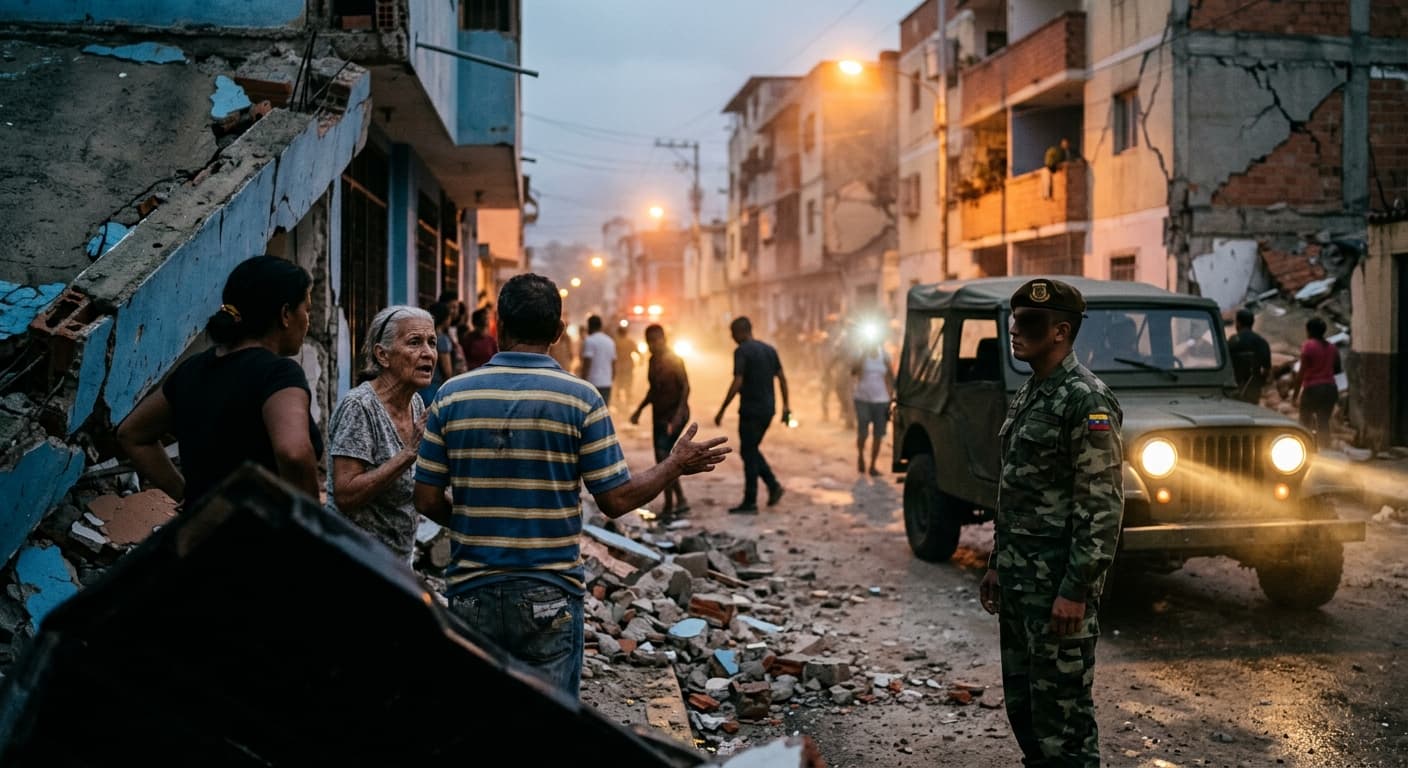
Where the mechanism strains is at the interface with the Venezuelan state itself. Carolina Jiménez of the Washington Office on Latin America put it plainly to Al Jazeera: "In a government in any other country, the first responder should be the state. In the case of Venezuela, the state has been the last responder." In Catia la Mar north of Caracas, she said, authorities still had not arrived. The Economist's field reporting from 1 July described public anger sharpening: when Delcy Rodríguez visited a collapsed building last Friday, residents shouted "where is the aid?" and "go away," according to
The Economist's podcast transcript.
The political context makes this combustible. Rodríguez inherited the presidency after the January 2026 US operation that seized Nicolás Maduro and transported him to New York to face drug-trafficking charges — a fact the BBC treated as the essential backdrop to her wobbly earthquake response. She has accepted help from right-wing governments — the Dominican Republic, El Salvador, Chile — that Maduro would have refused. That opening is what enabled the scale of the current operation. It is also what makes every failure of Venezuelan state delivery a legitimacy problem, not merely an operational one.
The next 96 hours: health, water, shelter
The rescue window is closed. Search-and-rescue teams remain deployed in coordination with OCHA per the 6 July SitRep, but the operationally decisive fight has moved to hospitals and shelters.
PAHO's 2 July assessment is stark: all eight health facilities it reviewed in La Guaira, Caracas and Miranda need immediate outside help; three have structural damage. At Vargas-IVSS hospital in La Guaira, 96 patients are crammed into a ward built for eight, the blood bank holds 35 units, and both trauma-unit ventilators are offline for lack of power, according to UN News. Venezuela's health system entered the emergency already short on up to 37% of essential medicines after years of financial crisis, the same PAHO briefing noted. PAHO has stood up a 48-bed field hospital and appealed, jointly with WHO, for nearly US$24 million over six months.
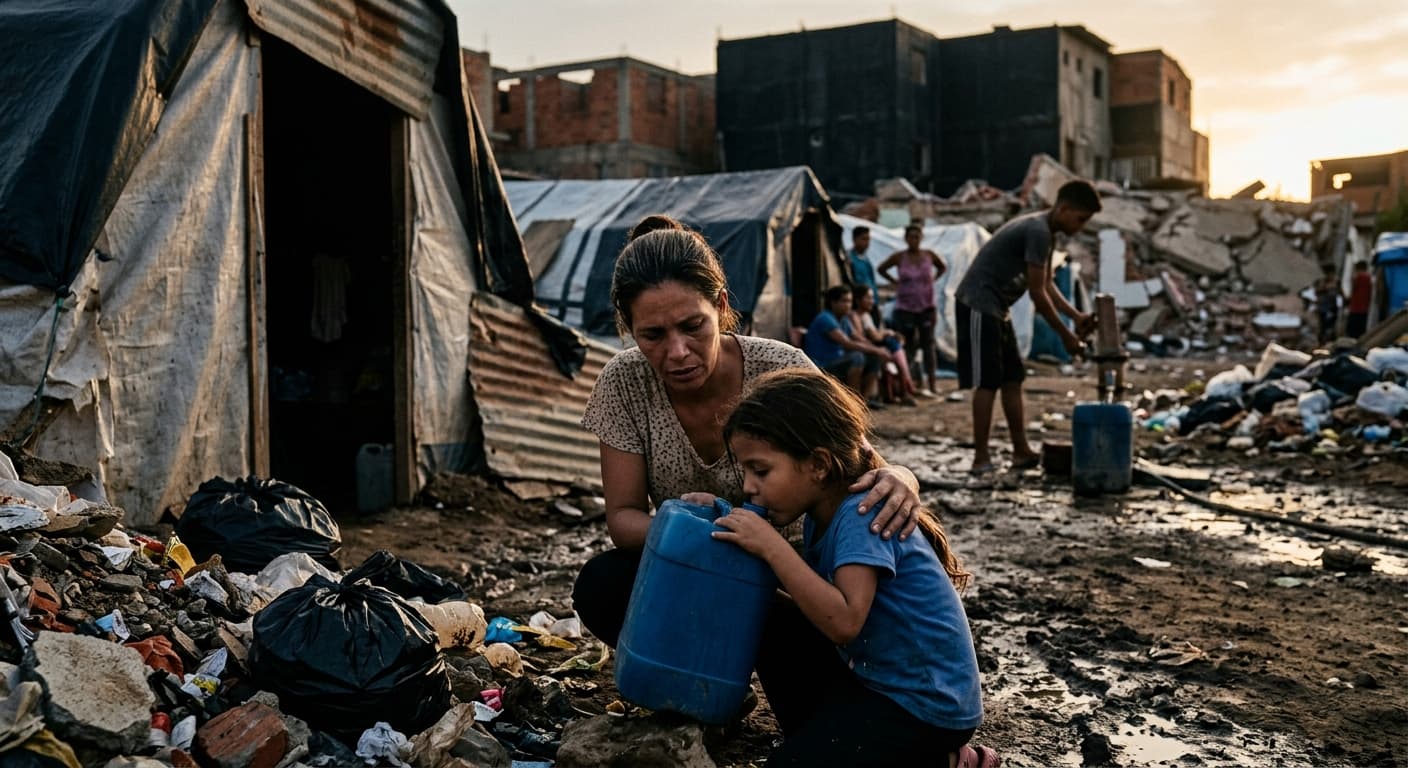
The disease vector is the priority variable. Al Jazeera's correspondent in a La Guaira shelter reported diarrhoea cases spreading and volunteers asking for portable toilets. UNICEF estimates 680,000 children need humanitarian assistance across six affected states, per UN News on 1 July. WFP has 3,000 tonnes of pre-positioned food inside Venezuela plus reserves in Colombia and 1,400 tonnes at its Panama regional hub, according to
WFP Country Director Stephanie Hochstetter's UN media briefing, and has launched a US$15 million appeal to reach 500,000 people over three months.
The financial gap remains the binding constraint. UNICEF's US$52 million earthquake ask sits on top of a 2026 Humanitarian Action for Children appeal for Venezuela of US$137.6 million that was only 35% funded before the tremor hit. That is the number the ministerial-level virtual pledging session scheduled at UN Web TV for 8 July — chaired by Assistant Secretary-General Indrika Ratwatte with Humanitarian Coordinator Gianluca Rampolla, per UN Web TV — will need to move.
Who benefits, who loses
The clearest winner of the past thirteen days is the Trump administration's argument that US Southern Command, not USAID, should be the American face of Western Hemisphere disaster response. CSIS argued explicitly that Venezuela is "the most significant test of the Trump administration's new model for foreign assistance," with USAID drawdowns shifting the burden to the military, per its analysis published on 25 June. The runway repair at Maiquetía and the offshore naval assets have vindicated that model in the short term — while conveniently reinforcing US leverage over a post-Maduro transition Washington engineered.
The clearest loser is the Rodríguez interim government. Every day the state cannot be seen delivering water, portable toilets and morgue capacity, the more the political oxygen goes to opposition leader María Corina Machado — whom the Trump administration passed over in January — and to the volunteer networks that Al Jazeera and NPR have documented running the actual response in places like Catia la Mar. The second-order effect is that a natural disaster is doing what a US-backed regime change did not: eroding the legitimacy of the Chavista security bloc that survived Maduro's removal.
The historical parallel that matters is not Haiti 2010. It is Mexico City 1985, when the Miguel de la Madrid government's failed earthquake response catalysed a decade of civil-society organisation that eventually broke PRI dominance. If shelter-cluster failures and cholera-risk headlines carry into August, the Venezuelan Red Cross — which lost its national headquarters and still mobilised thousands of volunteers within minutes, per IFRC's Loyce Pace at the 26 June UN briefing — and diaspora-linked mutual aid networks become the political infrastructure of a post-emergency Venezuela, not the state.
What to watch
- 08 July 2026 (tomorrow): the UN's ministerial-level virtual pledging briefing chaired by ASG Ratwatte, scheduled on
UN Web TV. Watch whether the CERF's US$15 million is topped up and whether the PAHO/WHO US$24 million health ask attracts sovereign donors beyond the UK's £2 million and the US $300 million.
- OFAC recent-actions page: monitor for a further Venezuela-related general license extension. The current earthquake carve-out is time-limited; any expiry inside 90 days would chill NGO banking transactions before reconstruction begins. Track
OFAC's Venezuela sanctions page.
- Death-toll trajectory: OCHA SitRep 14 is due imminently. With more than 30,000 people still listed missing per Al Jazeera and USGS modelling suggesting up to 10,000 fatalities, a step-change in the confirmed figure would reset the appeal ceilings above.
The Bottom Line
The international response to Venezuela's earthquake is working faster than the sanctions-era baseline predicted — 27 countries deployed, US$15 million from CERF, US$300 million from Washington, a US-repaired airport runway — but it is arriving into a state that its own citizens describe as the last responder. That gap is now the political story: a foreign-led relief operation is quietly doing the legitimacy work of an interim government the Trump administration installed, and the next 96 hours of water, sanitation and hospital surge will decide whether that arrangement holds through the summer.
Discover more
Conflict & Security
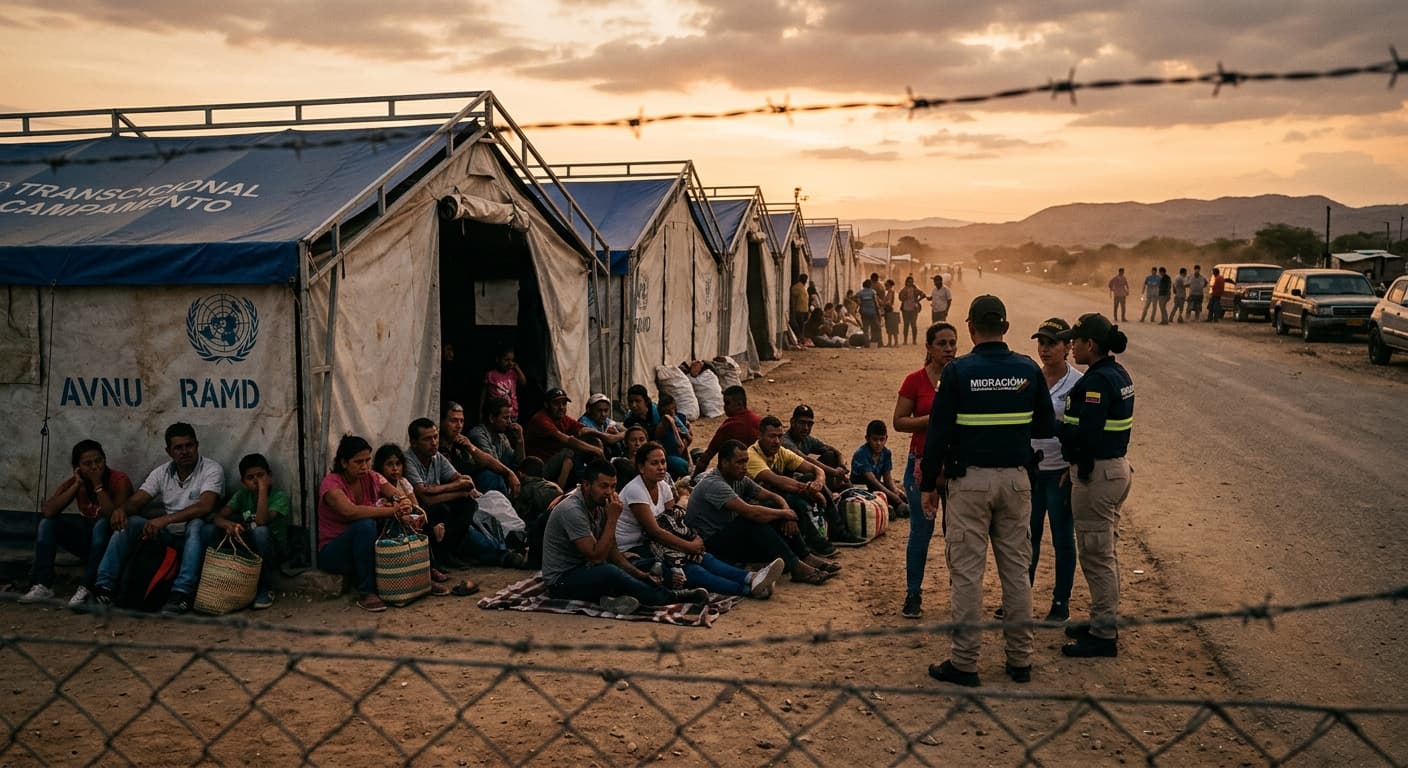
Venezuela's Transitional Camps: Migration Dét
Venezuela's 79 transitional camps aim to prevent a migration surge post-earthquake, but challenges loom as the one-month clock ticks.
Conflict & Security
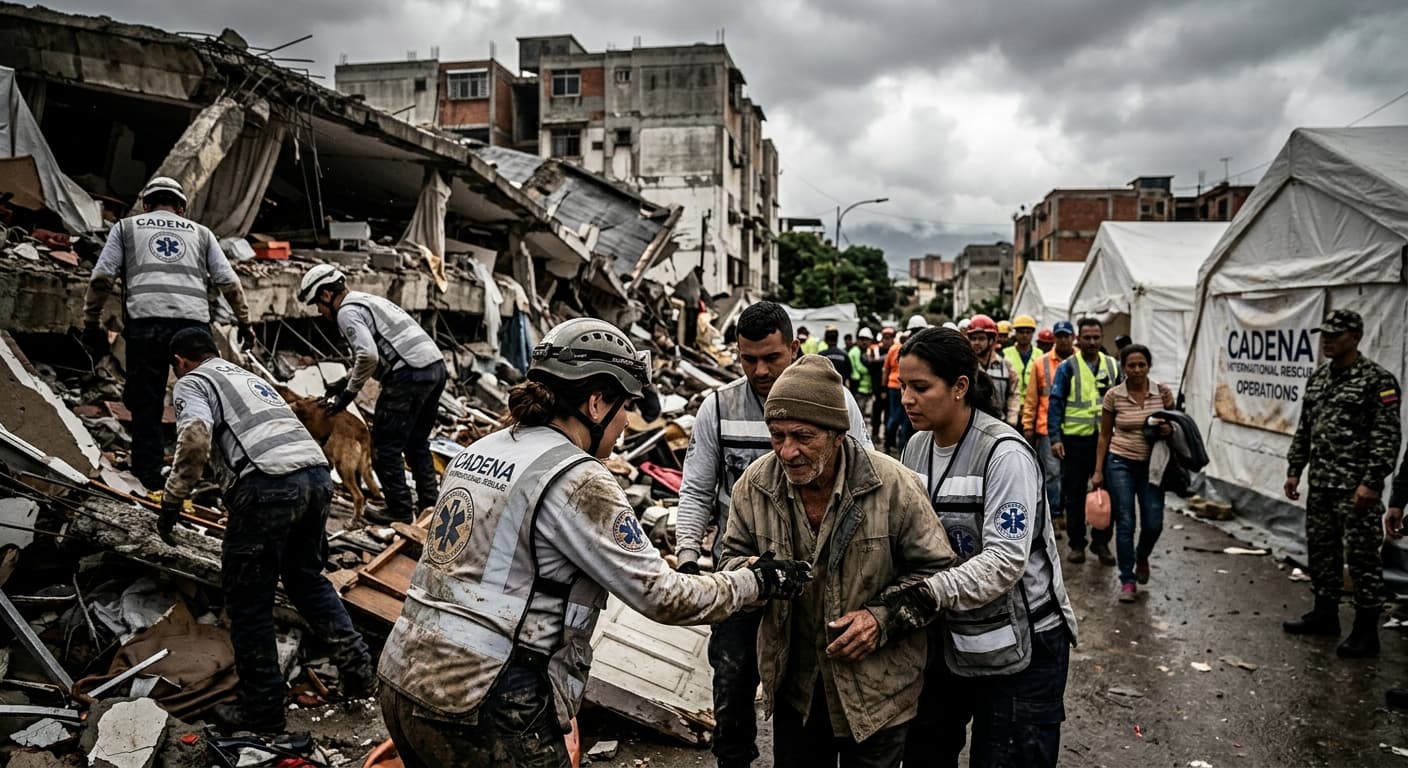
CADENA's Role in Venezuela's Earthquake
CADENA International's response to Venezuela's earthquake reveals the state's failure and the rise of NGO-led humanitarian efforts.
Conflict & Security
Venezuela's Sanitation Crisis Post-Earthquake
Venezuela's earthquake response faces a sanitation crisis, risking cholera and other diseases among 12,800 displaced in shelters.
Conflict & Security
Venezuela Earthquake Response Challenges
Venezuela's earthquake response faces significant challenges due to military control over aid distribution and political tensions, impacting relief efforts.