US Lifts Sanctions on Four Indian Firms
Trade deal benefits for Indian aerospace companies
Model Diplomat4 min readAsia
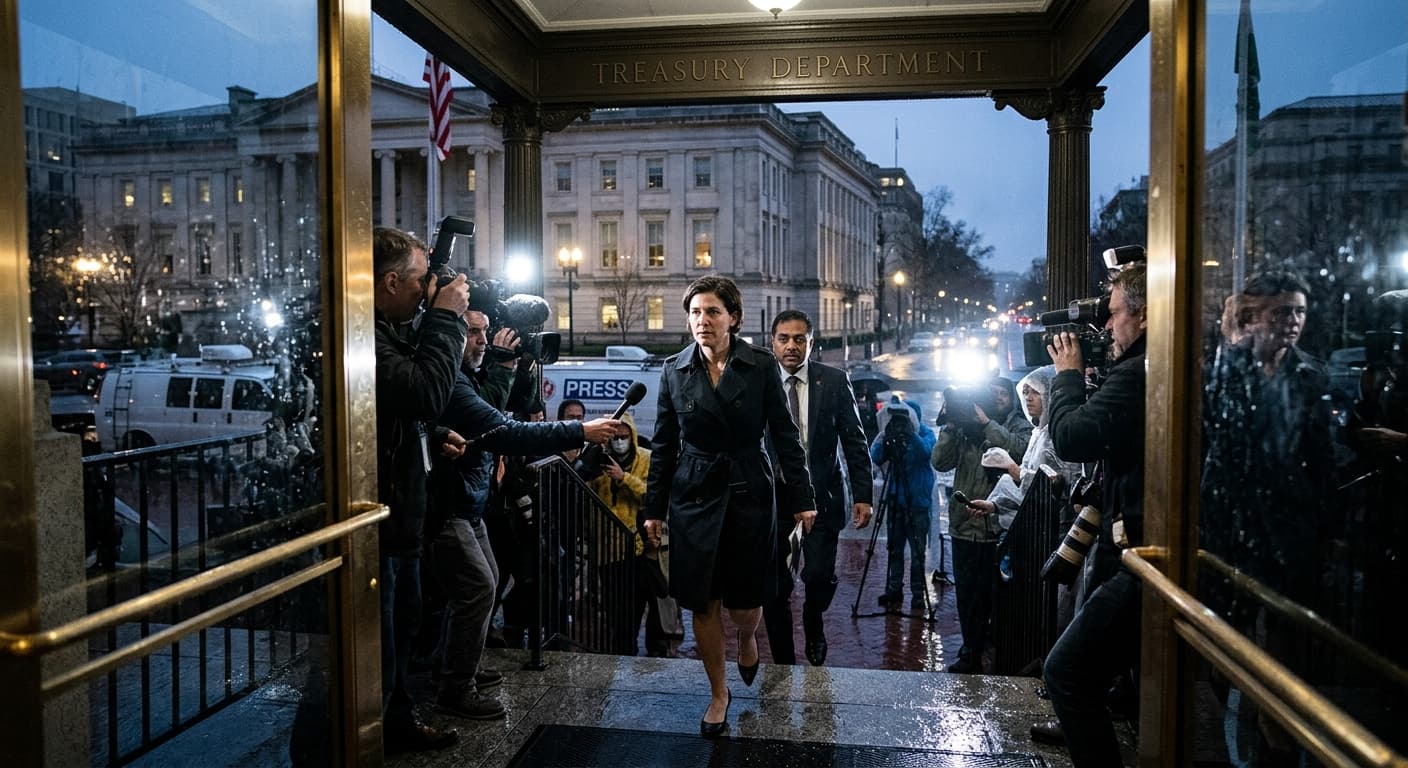
US Scrubs Four Indian Firms from Russia Sanctions List — the Trade-Deal Dividend Arrives
Washington delists Hyderabad, Delhi, and Ahmedabad companies accused of supplying Russia's military-industrial base, signalling the transactional logic of the Trump-Modi bargain is now flowing both ways.
The US Treasury removed four Indian companies from its SDN blacklist on Tuesday, effective immediately. The Office of Foreign Assets Control deleted RRG Engineering Technologies, Lokesh Machines, Galaxy Bearings, and Shaurya Aeronautics from the Specially Designated Nationals list — the same register that freezes assets and bars Americans from transacting with listed parties — according to documents released by the Treasury Department and reported by OrissaPOST.
These are not marginal actors. Each was sanctioned for allegedly channeling dual-use technology directly into Russia's war machine. Galaxy Bearings, blacklisted in October 2024, was accused of exporting roller bearings and assemblies — high-priority items for military manufacturing. RRG Engineering allegedly sent over 100 shipments of microelectronics to a sanctioned Russian firm. Lokesh Machines was flagged for routing machine tools to Russian manufacturers. Shaurya Aeronautics was accused of shipping radar and radio-navigational equipment. The allegations were serious enough that OFAC put all four on a list alongside Russian intelligence front companies and Iranian drone procurers.
So why are they off?
The answer lies in the architecture of the February 2026 Trump-Modi trade deal. Trump had levied 50% tariffs on Indian goods — the highest in Asia — including a 25% penalty explicitly tied to India's Russian oil purchases. In February, after a phone call, Trump announced tariffs would drop to 18% and claimed Modi "agreed to stop buying Russian oil," as reported by the BBC. India never officially confirmed halting purchases, but import data showed crude volumes from Russia declining from roughly 1.2 million barrels per day in January 2026 toward a projected 800,000 by March, per
Al Jazeera.
The delisting of these four firms is the sanctions-regime counterpart to the tariff relief. The US runs one of the most active delisting programs in the world — companies that negotiate compliance terms and cease prohibited conduct get taken off, a process the Brookings Institution has described as "sanctions success." The Treasury is now extending that logic to the bilateral relationship: New Delhi dials down Russian entanglement, and Washington reciprocates with concrete regulatory relief.
The timing matters. The Hindustan Times notes the delisting took effect July 1 — five months after the trade deal framework was announced, suggesting the companies likely reached individual compliance settlements with OFAC in the interim. The Treasury does not delist as a political favor; each entity must demonstrate changed conduct. That these four cleared that bar simultaneously points to coordinated negotiations, likely with Delhi's blessing.
The beneficiary here is India's defense-industrial sector, which has been caught between two incompatible realities: deep supply-chain integration with Russia on one side, and the threat of secondary sanctions that would sever access to US technology, dollar clearing, and Western export markets on the other. The Council on Foreign Relations has documented how Indian firms often stumbled into sanctions violations because they had no visibility into US export-control law — a problem New Delhi has been slow to fix. These delistings give India's mid-tier manufacturers a proof-of-concept: you can resolve OFAC exposure without bankruptcy, provided the bilateral relationship creates political space for it.
Lokesh Machines, the only publicly traded firm in the group, stands to gain most immediately — its share price has been depressed by sanctions risk, and restored access to US-linked supply chains and financial infrastructure changes its commercial calculus overnight.
What to watch
The Export Practitioner, a specialist trade publication, reported Tuesday that OFAC simultaneously delisted several Turkish firms accused of similar Russia-procurement activity, suggesting a broader recalibration rather than an India-specific gesture. If more Indian entities follow — and India's sanctions list includes over a dozen firms designated since 2023 — the signal hardens: the Trump administration is willing to unwind the third-country sanctions architecture as long as the underlying strategic bargain holds.
The counter-risk is Moscow's response. Russia has historically used discounted energy and arms-technology transfers to retain Indian alignment. If Delhi's pivot proves durable, expect Moscow to test it — either by restricting technology cooperation on joint ventures like the AK-203 rifle production line or by offering oil at prices Delhi struggles to refuse. The next stress point is likely the monsoon session of Parliament, when opposition parties will press the government to clarify whether the Russian oil commitment is formal policy or a Trump talking point.
Discover more

US Politics
SNAP Food Assistance Faces Legal Challenges
In 2026, SNAP faces stricter eligibility rules and mounting legal challenges, threatening food assistance for the millions of Americans who rely on the program.
US Politics
House Ethics Committee Pushes Sexual Miscond.
The House Ethics Committee has shifted responsibility for sexual harassment settlement records to the Office of Congressional Workplace Rights, complicating disclosure efforts.
US Politics
Congress Targets AI Chatbot Access for Terror
The House passed the Generative AI Terrorism Risk Assessment Act, focusing on AI's role in terrorism and potential surveillance implications.

Conflict & Security
Drone Warfare Killing Aid Workers at Unprec
Over 1,000 humanitarian workers killed in three years as cheap armed drones collapse legal protections. Gaza, Sudan, Ukraine, and DRC see deliberate targeting of aid convoys and hospitals with zero prosecutions.