US Minimizes Iran Conflict at IMF Meetings
US officials overlook Iran war's economic impact at IMF meetings
Model Diplomat3 min readGlobal

US at IMF Meetings: Out of Step on Iran Conflict Economic Risks
US officials at the IMF spring meetings treated the Iran war as a sideshow, while global leaders warned of its growing economic fallout.
U.S. representatives at the IMF/World Bank spring meetings in Washington downplayed the Iran conflict amid its mounting disruption to energy markets and global trade, creating a near-parallel reality from the wider international concern. While global leaders and IMF officials flagged the risk that the Iran war’s impact on oil supplies could slow worldwide growth and accelerate inflation, U.S. officials focused more narrowly on macroeconomic stability narratives that largely set aside the conflict’s spillovers Reuters.
Why This Matters
The Iran war is exacerbating volatility in global energy prices, with oil trading above $100 per barrel as disruptions to Gulf shipping routes and sanctions ripple through supply chains. Asian economies like Vietnam that rely heavily on imported oil face acute vulnerabilities that could hinder their growth trajectories and worsen global inflation pressures. The IMF’s leadership has projected that a 10% sustained rise in energy prices linked to the conflict could add 40 basis points to inflation and reduce global output by up to 0.2% within a year, subtly shifting the global economy toward an adverse growth scenario Reuters.
The U.S. approach, at least publicly during these meetings, signaled a discrepancy with other major economies and multilateral institutions. This apparent U.S. detachment risks sidelining urgent discussions on coordinated policies to manage energy market instability and mitigate trade disruptions stemming from the Middle East conflict. It could also undercut collective effort to reinforce global financial stability that the IMF champions in crises.
In a context where the IMF flagged geopolitical risks—including the Iran war and Taiwan Strait tensions—as critical variables that could derail the still-fragile global economic recovery, the U.S. sidelining of these concerns may reflect competing domestic policy priorities or strategic calculations around sanctions and energy diplomacy CFR.
What to Watch Next
The key risk is that the U.S. stance at the IMF meetings signals a broader underestimation of the Iran conflict’s economic risks, potentially fragmenting the international response. Watch for:
- Energy market developments: Renewed spikes or supply chain bottlenecks could force a policy reset among the U.S. and its allies aimed at stabilizing markets.
- IMF economic forecasts: The mid-April economic outlook will incorporate conflict spillover effects — a downgrading of global growth projections would increase pressure on Washington.
- Diplomatic signaling: Whether U.S. officials adjust messaging or policy coordination in upcoming G7 or G20 meetings to better align with global economic concerns.
- Emerging market distress: How oil-import dependent developing countries respond financially and whether the IMF activates emergency financing amid worsening inflation and growth pressures.
The divergence between U.S. officials’ framing and the broader global economic narrative underscores the geopolitical complexities surrounding the Iran conflict and the challenge of forging unified multilateral economic strategies in a fractious international environment.
For more on geopolitical risk affecting economic outlooks, see our Global Politics analysis and on U.S. policy dynamics,
United States.
Discover more

India
U.S. Missile Reserves Plummet in Iran War
US missile stockpiles are critically depleted by the Iran conflict, straining military readiness and forcing a rethink of global deterrence strategy and supply.

US Politics
Trump's Jones Act Waiver
Trump's waiver of the Jones Act exposes how the Iran conflict is driving up US fuel prices, easing shipping rules to ease pressure on domestic energy supplies.
US Politics
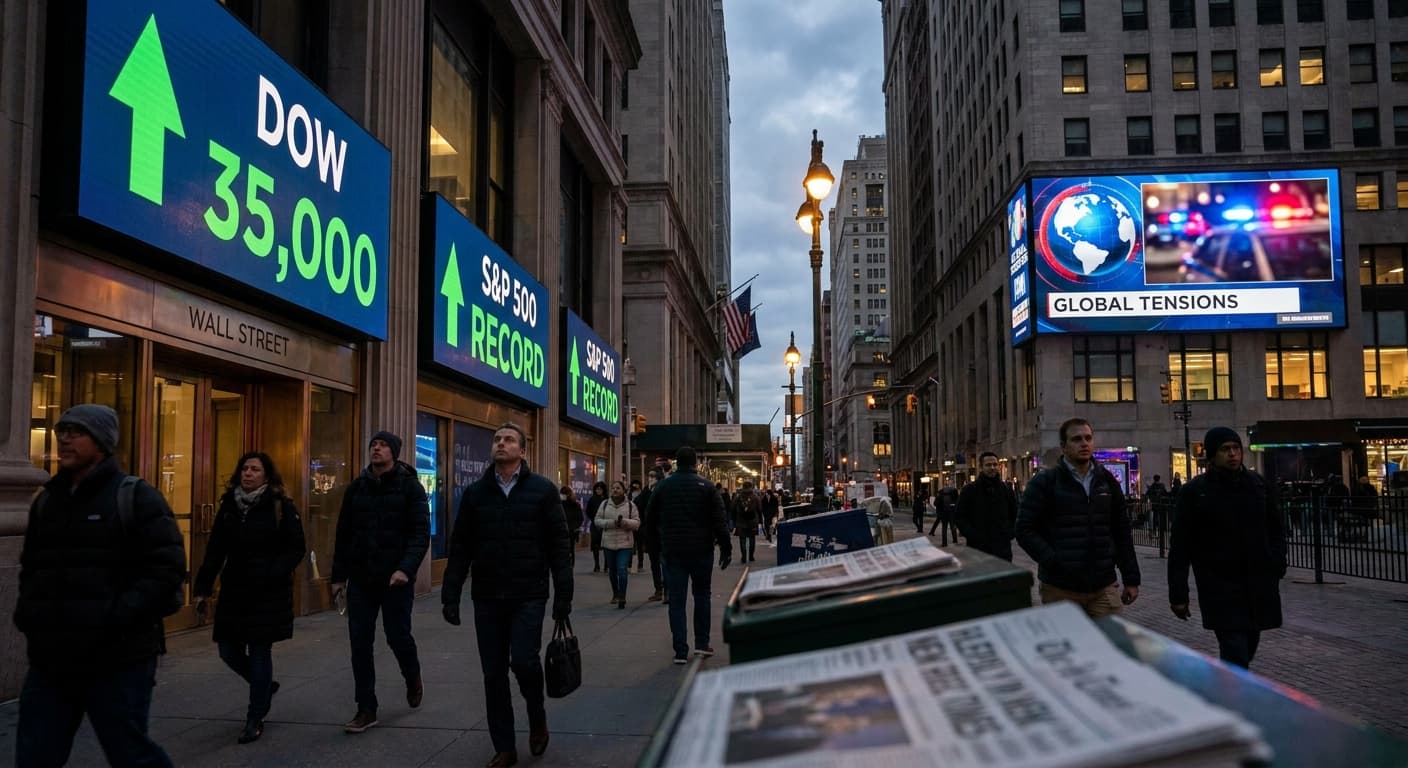
Wall Street Hits Record High Amid Iran Tense
Wall Street closed at record highs as the Iran ceasefire holds, but market breadth narrows with half the S&P 500's value in just 26 stocks.

Global Politics
US-Israel Airstrikes on Iran
The February 2026 airstrikes on Iran did not destroy its uranium stockpile, raising concerns about nuclear proliferation and regional stability.