UN Climate Vote Challenges Fossil Fuels
141 countries back climate-duty resolution, isolating major producers
Model Diplomat3 min readGlobal
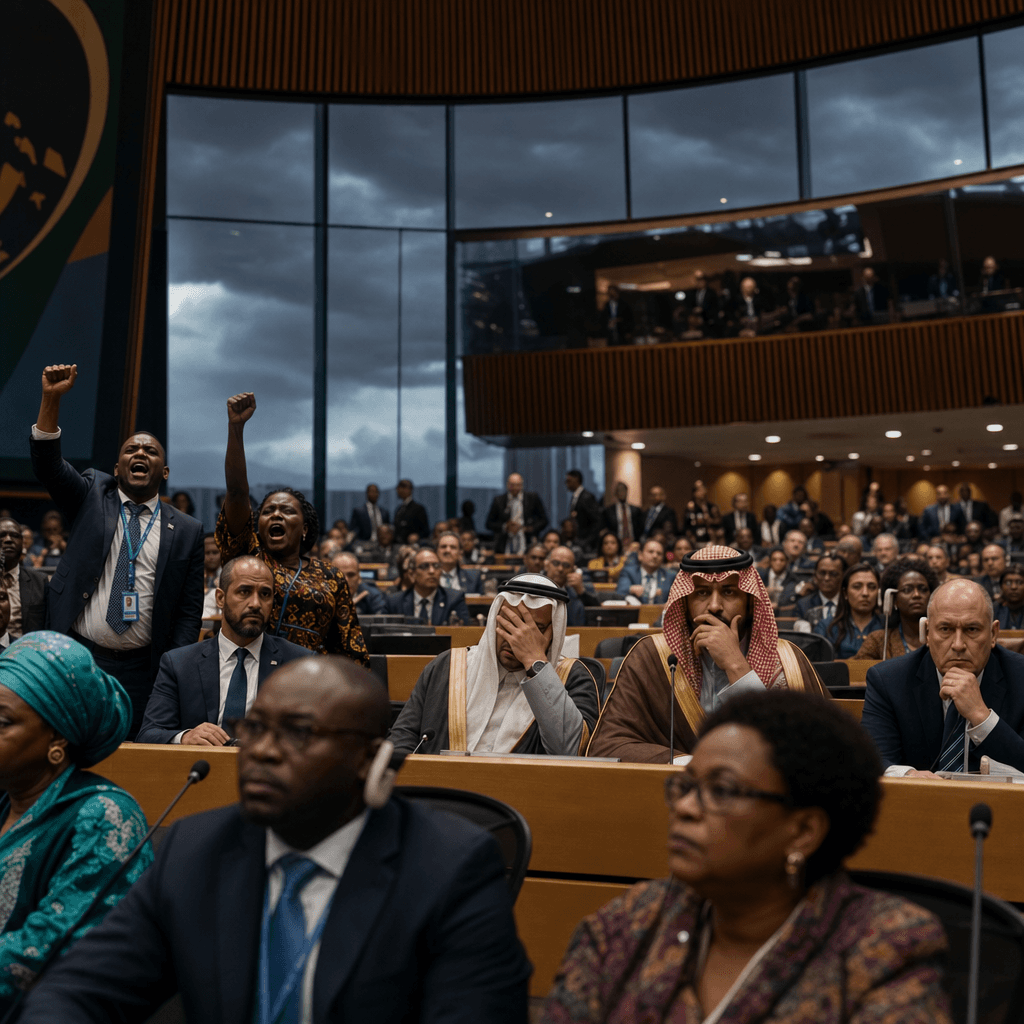
UN Climate Vote Puts Fossil Fuel Holdouts on Notice
Vanuatu turned a symbolic UN vote into leverage: 141 states backed climate-duty language, isolating the U.S. and other major producers while strengthening future legal fights.
The UN General Assembly has given new political cover to the climate-vulnerable bloc. On Wednesday, 141 countries backed a resolution that welcomes the International Court of Justice’s 2025 advisory opinion on states’ climate obligations, according to The Guardian and
Al Jazeera. Only eight voted no, including the U.S., Saudi Arabia, Russia and Iran, while 28 abstained.
The leverage has shifted, even if the law has not
This is not a binding treaty and it does not create fresh obligations. But it does something more useful for the countries pushing hardest on climate: it turns the ICJ’s legal reasoning into a broader diplomatic signal. As The Guardian reported, Vanuatu and its allies wanted unanimity, but the final text still won overwhelming backing after being co-sponsored by 90 states. That matters because in
Global Politics, legitimacy is often the first form of enforcement.
The losers are obvious. The U.S. tried to strip the resolution out of the UN process altogether, according to Al Jazeera. That is a defensive move: Washington knows the advisory opinion is being used to argue that fossil-fuel policy is no longer just a preference but a legal duty. Saudi Arabia and other hydrocarbon exporters are fighting the same battle from the other side. They did not stop the vote; they just made clear they will not help normalize the language.
Why small states are winning the argument
The key political fact is that Vanuatu and the Pacific islands have succeeded in moving climate action from the UNFCCC’s technical track into a wider law-and-politics frame. That is the point of the resolution: it does not settle responsibility, but it raises the cost of inaction for larger emitters. The Guardian quoted barrister Harj Narulla saying the vote adds “great political weight” that judges will notice, even if they say so quietly.
That is where the practical impact lies. Domestic courts, legislatures and climate litigators are more likely than diplomats to use this opinion. Joie Chowdhury of the Center for International Environmental Law told The Guardian the ruling is already feeding into national climate plans. In other words, the real audience is not the General Assembly chamber; it is parliaments, courts and regulators deciding how hard to lean on fossil fuels.
What to watch next
The next test is whether this vote shows up in national climate plans and courtroom filings before the next UN climate cycle later this year. If more governments cite the ICJ opinion in their policy updates, the resolution will have done its job: not changing the law overnight, but making it harder for holdouts to argue that climate inaction is still politically neutral. The question now is whether the momentum seen in New York travels into United States policy debates, or whether Washington and the big producers can keep the issue bottled up at the UN.
Discover more
India
UN Expert Albanese: India Violates Law
UN Rapporteur Francesca Albanese accuses India of breaching international law, spotlighting human rights concerns in Kashmir and prompting diplomatic pushback.

Global Politics
US Seizes Iranian Ship, Tensions Surge
The US seizure of the Iranian ship Touska highlights a shift in control over the Strait of Hormuz, favoring Iran's strategic position.

Conflict & Security
Drone Warfare Killing Aid Workers at Unprec
Over 1,000 humanitarian workers killed in three years as cheap armed drones collapse legal protections. Gaza, Sudan, Ukraine, and DRC see deliberate targeting of aid convoys and hospitals with zero prosecutions.

Global
World Normalises Taliban as Afghan Women Eras
UN data shows Afghan women erased from public life as Russia recognises the Taliban, EU hosts officials in Brussels, and ICC warrants for gender persecution go unenforced.