Uganda's Ebola Border Clampdown
Uganda tightens border controls amid rising Ebola cases.
Model Diplomat3 min readAfrica
Uganda’s Ebola Border Clampdown Is a Race Against Mobility
Three new cases lift Uganda’s total to five, but the real test is whether border controls can outrun cross-border movement.
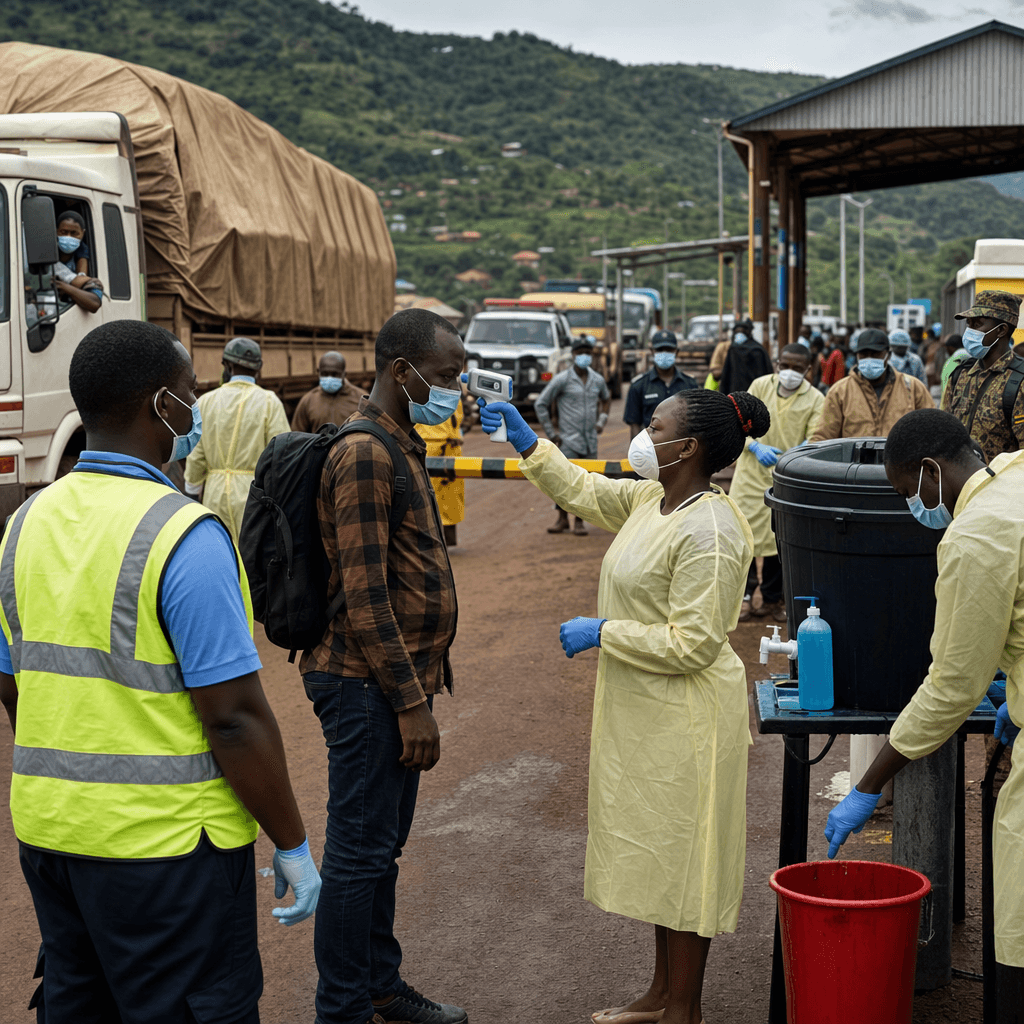
Uganda’s latest Ebola update is a containment story, not yet a national blowout: the Health Ministry confirmed three new cases on Saturday, bringing the total to five, and said all identified contacts are being monitored as tracing expands (Al Jazeera). The pattern matters. Two of the new infections are exactly the kind of secondary spread authorities fear — a driver who transported the first patient and a health worker exposed while treating that case — while the third is a Congolese woman who crossed the border, travelled to Kampala, and was only confirmed later after follow-up triggered by a tip-off (
Al Jazeera).
The leverage is at the border
Uganda is using the one tool that can still change the trajectory: mobility controls. It suspended public transport to the Democratic Republic of Congo after the first confirmed cases and is now leaning on tracing, isolation and surveillance to keep the outbreak inside known contacts (Al Jazeera). That is the right play because the virus is moving through the same cross-border channels that move traders, patients and informal workers. The outbreak sits on a porous frontier with an active epidemic in eastern DRC, where the WHO says there are nearly 750 suspected cases and 177 suspected deaths (
Al Jazeera).
This is where Uganda’s response intersects with regional politics. Kampala can tighten its side of the border, but it cannot solve the outbreak alone. The WHO has now revised the Bundibugyo strain’s risk to “very high” at the national level and “high” regionally, while keeping the global risk low (Al Jazeera). In other words, the spillover threat is concentrated in East Africa — especially for border districts, transport corridors and hospitals that absorb patients before anyone knows they are infected.
Why Bundibugyo changes the equation
Bundibugyo is the problem actor here. The strain has no approved vaccine or virus-specific treatment, which forces health authorities back onto classic containment: find cases, isolate them, track contacts, and bury the dead safely (BBC;
The Independent). That makes early detection decisive, but also harder, because Bundibugyo can be missed at first and does not give responders the pharmacological shortcut available in better-prepared Ebola outbreaks (
BBC).
The immediate winners are Uganda’s public health authorities and the WHO, which can still plausibly argue the response is working if contacts are contained and the case count stays small (Al Jazeera;
The Independent). The losers are cross-border transport operators, traders and health facilities closest to the frontier, which absorb the costs of restrictions and fear first. For
Global Politics, the broader lesson is simple: epidemics on the DRC-Uganda axis are now a test of state capacity and regional coordination, not just medicine.
What to watch next
The next decision point is whether Uganda can keep every new infection inside the contact list. If cases appear outside known chains, Kampala will almost certainly widen restrictions; if not, it can argue the border clampdown bought time while DRC’s epidemic remains the main source of risk (Al Jazeera;
BBC). Watch the Ministry of Health’s next case bulletin, WHO’s regional risk updates, and whether cross-border transport stays frozen or starts to reopen.
Discover more

Global Politics
US Seizes Iranian Ship, Tensions Surge
The US seizure of the Iranian ship Touska highlights a shift in control over the Strait of Hormuz, favoring Iran's strategic position.
India
Romanian Coalition Party Demands PM Resign
Romania's Social Democrats withdrew from coalition, joining far-right AUR to topple PM Bolojan, risking €10 billion in EU funds by August 2026.

Conflict & Security
Drone Warfare Killing Aid Workers at Unprec
Over 1,000 humanitarian workers killed in three years as cheap armed drones collapse legal protections. Gaza, Sudan, Ukraine, and DRC see deliberate targeting of aid convoys and hospitals with zero prosecutions.

Global
World Normalises Taliban as Afghan Women Eras
UN data shows Afghan women erased from public life as Russia recognises the Taliban, EU hosts officials in Brussels, and ICC warrants for gender persecution go unenforced.