Turkey-Syria Joint ISIL Detentions Signal Tie
Joint operation signals new security cooperation between Ankara and Damascus.
Model Diplomat3 min readMiddle East
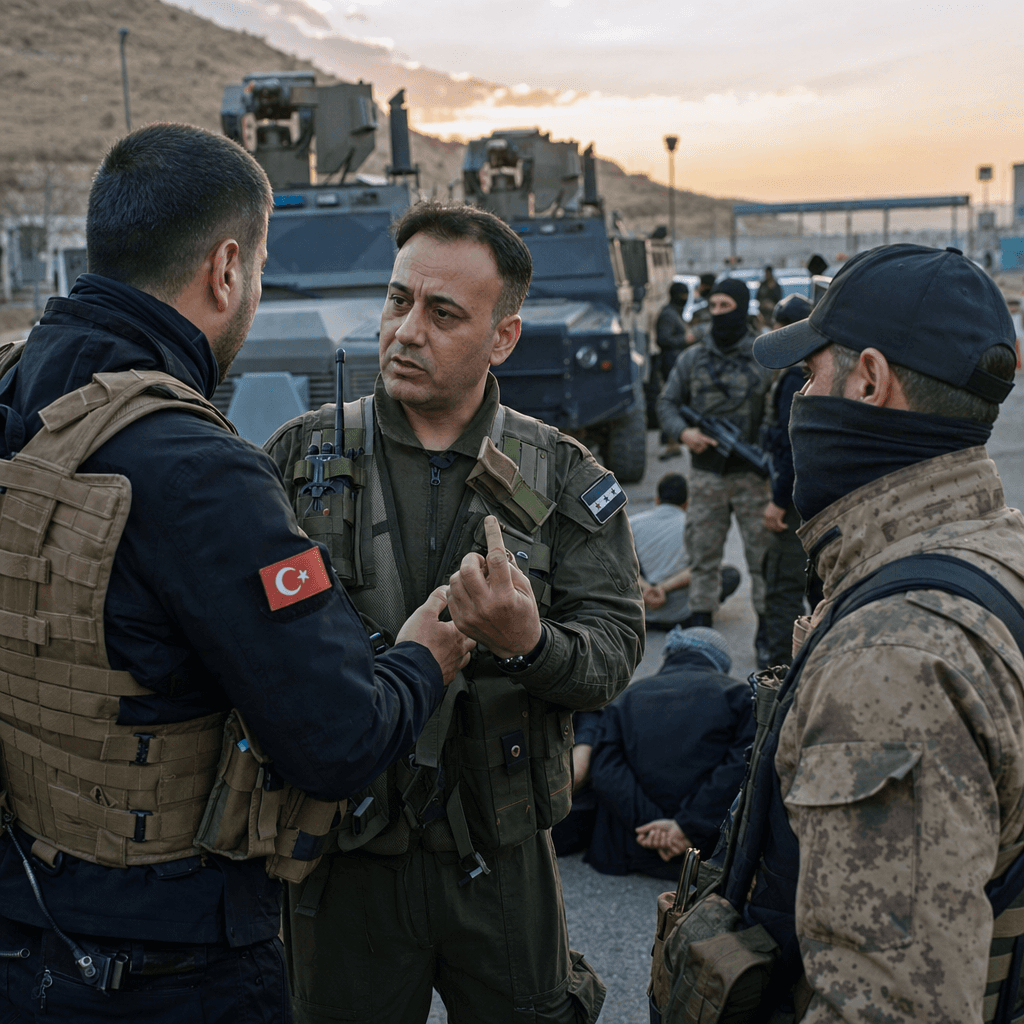
Turkey and Syria Turn an ISIL Raid into a Border Message
Joint detentions of 10 alleged ISIL operatives show Ankara and Damascus tightening security coordination — and using counterterrorism to validate a new political order.
Turkish and Syrian intelligence services detained 10 people suspected of ISIL links in a joint operation in Syria, according to Al Jazeera and Turkish state media; Interpol Red Notices were outstanding for all 10, and Turkish officials say the suspects were tied to attacks inside Türkiye (Al Jazeera). One detainee is alleged to have links to the 2015 Ankara bombings, while another, Ali Bora, is described as ISIL’s intelligence chief for Türkiye after joining the group in 2014 (
Al Jazeera). Turkish state media, cited by ANews, said nine of the 10 were transferred back to Türkiye and remanded in custody, with one suspect’s detention extended (
ANews).
What the raid signals
Ankara is using this operation to show it can project power across the border with Syrian cooperation, not just unilateral force. That matters because the Turkey-Syria file has changed fast since Bashar al-Assad’s fall and Ahmed al-Sharaa’s rise: Al Jazeera reported in May 2025 that Erdogan and al-Sharaa were already meeting publicly as sanctions began to ease, while a January 2026 Al Jazeera analysis said Ankara was recalculating its Syria strategy around security, reconstruction, and leverage over armed groups (Al Jazeera;
Al Jazeera). In
Global Politics, this is the clearest sign that counterterrorism is now being used as diplomatic currency.
Damascus benefits too. The new Syrian leadership gets to advertise itself as a security partner rather than a sanctuary for transnational militants. That helps al-Sharaa’s government in two ways: it reassures Türkiye on the border, and it strengthens its argument that it can police Syrian territory without relying on outside forces. The message is aimed as much at Washington and Gulf capitals as it is at ISIL remnants.
Who loses the most
The immediate loser is what remains of ISIL’s cross-border network. Even weakened, the group still depends on mobility, concealment, and weak seams between security services. A joint Turkish-Syrian raid cuts into that operating space and signals that those seams are narrowing.
The second loser is any actor that hoped the post-Assad transition would leave Syria fragmented enough for armed groups to maneuver. That includes ISIL facilitators, but also any militia ecosystem that thrives on rival jurisdictions. The fact that Turkish officials say the suspects were under surveillance before the arrest suggests a more integrated intelligence picture than Ankara and Damascus have had for years (Al Jazeera).
The political beneficiary is al-Sharaa, but only provisionally. He gains legitimacy from cooperation with Türkiye, yet he also ties his authority to a security bargain he does not fully control. If Damascus cannot convert tactical counterterrorism into broader territorial control, the partnership will stall at the border and remain mostly transactional.
What to watch next
The next test is whether this raid becomes a pattern. Watch for three things: more joint Turkish-Syrian operations, the legal status of the detained suspects in Türkiye, and whether Damascus starts moving against other armed networks that Ankara sees as a threat. The date that matters is the next high-level Ankara-Damascus security contact — because that is where the terms of this new relationship will be set, not in the detention cell.
Discover more

Global Politics
US Seizes Iranian Ship, Tensions Surge
The US seizure of the Iranian ship Touska highlights a shift in control over the Strait of Hormuz, favoring Iran's strategic position.

India
India-South Korea $50B Trade Expansion Plan
India and South Korea target $50 billion in bilateral trade by 2030, focusing on industrial cooperation and strategic alignment amid US pressures.

Economics
Fed's Amex AML order puts correspondent banking on notice
Federal Reserve's Amex AML order requires board-level controls and a 90-day plan; OCC fined the bank $350 million over enterprise-wide deficiencies.
Conflict & Security
Guatemala: El Niño 2026–27 becomes regional security test
UNICEF: 25.8M children face El Niño risks in Latin America; Guatemala maps 188 municipalities for drought and food insecurity amid regional security test.