Tunisia's Crackdown Fuels Regional Instabilty
UN Council remains silent on Tunisia's human rights abuses
Model Diplomat7 min readMaghreb
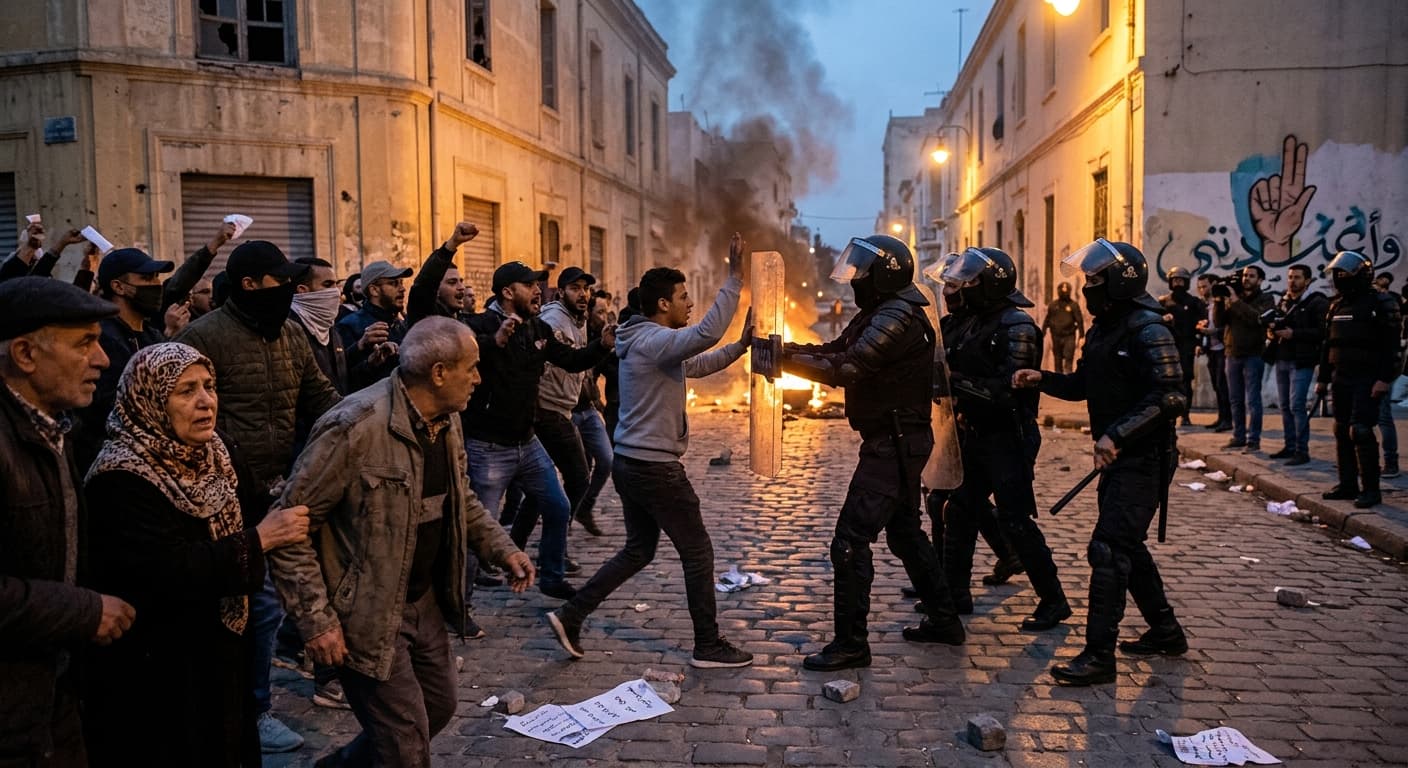
Tunisia's Crackdown Goes Regional as UN Council Stays Silent
Human Rights Watch says Tunisia's mass detentions, judicial purge and desert expulsions of migrants are now destabilising the wider Maghreb — and the UN just let the moment pass.
Five years after President Kais Saied's July 2021 power grab, Tunisia's crackdown has stopped being a domestic story. Life sentences for opposition figures, the collective expulsion of more than 11,500 refugees to the Algerian and Libyan deserts, and Algeria's January 2026 refoulement of a UNHCR-registered Tunisian dissident have turned Saied's authoritarianism into a load-bearing pillar of Maghreb migration diplomacy — and the UN Human Rights Council closed its 62nd session on July 8, 2026 without adopting a single country-specific resolution. That silence is the story. Tunisia's leverage over the EU's Central Mediterranean route is now large enough that the price of accountability has, for European capitals, become higher than the price of complicity.
That is the argument Human Rights Watch's July 8, 2026 statement, Sounding the Alarm over Tunisia's Crackdown, forces onto the table. HRW's Bassam Khawaja calls the pattern a "cornerstone of repressive policy." The regional consequences are already visible in Algiers, Tripoli and Rome.
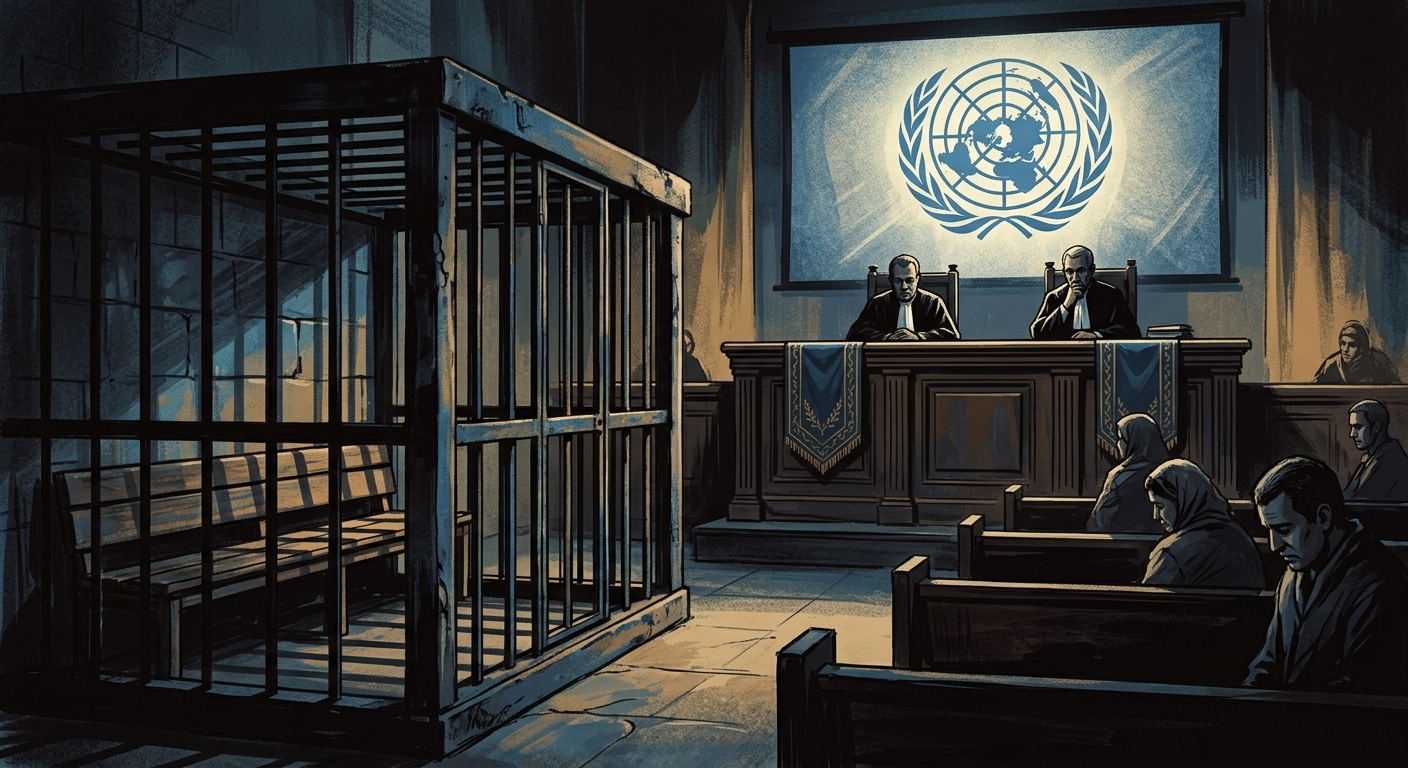
What Geneva watched and did not stop
The evidence base placed before the Human Rights Council over the past year is unusually thick for a country that receives no formal mandate. On May 7, 2026, UN High Commissioner Volker Türk publicly called on Tunis to end "widening repression targeting civil society organisations, journalists, human rights defenders, opposition figures, activists and members of the judiciary," according to the OHCHR press release. Türk demanded the "immediate and unconditional" release of everyone detained for expression, and flagged the temporary court-ordered suspensions of Avocats Sans Frontières and the Tunisian League for Human Rights as textbook abuses of the freedom of association.
A month earlier, UN Special Rapporteur on the independence of judges and lawyers Margaret Satterthwaite issued a rare individualised warning about the four-year sentence handed to Judge Anas Hmedi, president of the Tunisian Judges Association. Her April 2, 2026 statement called the case a reprisal for defending judicial independence "through professional associations" and documented "serious breaches of international human rights law" in the trial itself.
On December 5, 2025, the UN Committee on the Elimination of Racial Discrimination adopted concluding observations warning that "the situation of sub-Saharan migrants has sharply worsened" — the treaty body's second formal intervention on Tunisia since its April 2023 early-warning statement, which found Saied's "great replacement"–style February 2023 remarks in contravention of the Racial Discrimination Convention. The UN Working Group on Enforced Disappearances has separately transmitted a
general allegation warning that Tunisia's collective expulsions to desert border zones — where non-state armed groups operate — may amount to "acts tantamount to enforced disappearance."
None of it produced a Council resolution. HRW's Salsabil Chellali, the organisation's Tunisia director, told the session that the "continued silence from UN member states all but signalled a free pass" to Tunis.
The domestic escalation, in numbers
The scale is not disputed. On June 2, 2026, a Tunis court sentenced 84-year-old Ennahda leader Rached Ghannouchi to life plus 30 years in the so-called "secret apparatus" case, with 11 co-defendants also handed life terms, Al Jazeera reported. Three weeks later, on June 26, former Truth and Dignity Commission president Sihem Bensedrine — a 74-year-old journalist recognised globally as the architect of Tunisia's post-2011 transitional justice process — received a 25-year sentence and a heavy fine, prompting
Amnesty International to call the verdict an "outrageous injustice."
The Bensedrine case matters beyond her person: it is a retroactive prosecution of the truth-commission process itself. When you jail the woman who ran Tunisia's atrocity accounting for 1955–2013, you signal that documenting state abuse is now the crime.
The wider "conspiracy case" produced sentences of four to 66 years for 37 opposition figures, lawyers and researchers in April 2025, upheld on appeal in November 2025. Under Decree 54, Saied's 2022 "false information" law, at least 60 people including journalists, lawyers and Facebook users have been prosecuted for speech, according to figures the National Union of Tunisian Journalists provided to AFP. In October 2025, a court in Nabeul briefly imposed a death sentence on a Tunisian man for Facebook posts insulting Saied — a verdict lifted only by presidential pardon after international outcry.
The regional export
The angle that reframes this story is not that Tunisia is repressive. It is that Tunisian repression is now a regional operating system.
Consider three connected data points. First, between June 2023 and May 2025, Tunisian security forces carried out at least 70 collective expulsions involving over 11,500 people, most of them Black African migrants, according to Amnesty International's November 2025 report. At least 28 people were found dead along the Libyan border after the first 2023 wave alone. Second, on January 18, 2026, Algerian security forces handed former parliamentarian Seifeddine Makhlouf — a UNHCR-registered asylum seeker — to Tunisian police at the border without any refugee-status procedure, in what
Amnesty International called a "clear violation of the principle of non-refoulement." Third, on July 2, 2026, HRW documented that rival Libyan authorities have escalated their own "racist crackdown" on migrants,
with the EU deepening cooperation with those very actors.
The pattern is a Maghreb-wide feedback loop. Tunis expels sub-Saharan migrants into Libyan territory controlled by the Haftar-linked LAAF and militias with documented records of torture, rape and killing — abuses a UN fact-finding mission has previously found may amount to crimes against humanity. Algiers, meanwhile, refoulés Tunisian dissidents in the other direction. The three governments have effectively built a mutual-assistance regime for silencing critics and moving Black African migrants around their shared frontiers.
The Atlantic Council's Holly Dagres argues that Algeria exercises "increasing tutelage" over Saied and that North African regimes have collectively learned to "tap the veins of several global crises — including wars, migration, and rising populism in Europe — to revive their faltering rule." The Carnegie Endowment's
Sarah Yerkes documents the mechanics: Tunisia's role as a transit country has "become a geopolitical tool by which the Saied regime exerts leverage over its European neighbours."
The European bargain
That leverage is why Geneva stayed quiet.
On July 16, 2023, the European Commission signed a Memorandum of Understanding with Tunis worth €1.15 billion in headline value, including €105 million earmarked for migration management, per the Commission's own statement. Commission President Ursula von der Leyen has repeatedly touted an 80% drop in irregular arrivals from Tunisia to Italy as vindication. The German Council on Foreign Relations disagrees. Its
June 2026 policy brief argues the drop reflects a "statistical anomaly," Italian bilateral pressure, and Saied's own domestic incentives to crush departures — not the MoU. The European Ombudsman has already faulted the deal for lacking a human-rights impact assessment, independent monitoring, or a suspension clause.
The bargain has hardened despite mounting evidence of abuse. Cambridge's Journal of Race, Ethnicity, and Politics documents how "racialized EU externalization interacts with and reinforces anti-Black racism within Tunisia's border regime." The IOM recorded 765 deaths on the Central Mediterranean route in the first three months of 2026 — the deadliest such quarter
since data collection began in 2014.
Meanwhile, Tunisia's economy is decoupling from the reform track that would have given the EU normative leverage. Public debt has passed 80% of GDP, the International Monetary Fund's $1.9 billion Extended Fund Facility that Saied rejected as "diktats" remains dead, and the €900 million EU macro-financial tranche is largely undisbursed because it was conditioned on that IMF deal. The
International Crisis Group warned that a default could "exacerbate the risk of violence and imperil already fragile domestic stability" — the very outcome that would send another wave to Lampedusa.
The implication is uncomfortable for Brussels. The more brittle Saied's economy becomes, the more Europe needs his security services to hold the coast — and the less it can afford to sanction his prosecutions. That is the trade the HRC 62nd session quietly ratified by inaction.
What HRW is actually asking for
HRW's July 8 statement is more targeted than its critics allow. It is not asking for sanctions. It is asking UN member states to publicly condemn specific practices — Decree 54 prosecutions, the "conspiracy case" verdicts, the CERD-flagged expulsions — and to "move beyond political expediency." As HRW puts it:
The alarm has been sounded. Now the Human Rights Council and UN member states should set political expediency aside, break their silence, and publicly condemn the Tunisian government's repression.
The demand is deliberately calibrated to the one instrument European states retain: their voice. It is precisely the instrument they are choosing not to use.
What to watch
- September 2026 — HRC 63rd session. The next opportunity for a country-specific joint statement or resolution on Tunisia. Watch whether the cross-regional group that spoke on Tunisia in
2023 and 2024 reconstitutes, and whether any G7 state signs on for the first time.
- October 2026 — EU review of the Tunisia MoU. Amnesty and HRW have called for an independent human-rights impact assessment and a suspensive clause. The European Ombudsman's 2024 findings on the deal's inadequate safeguards remain unaddressed.
- Ghannouchi appeal. The Ennahda leader's defence has announced it will appeal the June 2, 2026 life sentence. A 2024
UN Working Group on Arbitrary Detention opinion already found he is being prosecuted for freedom of opinion — the appeal will test whether Tunisian courts still respond to any external legal pressure at all.
The Bottom Line
Tunisia's crackdown is no longer a domestic authoritarian drift; it is a Maghreb-wide export product, oiled by €105 million of EU migration money and Algerian complicity, that European capitals now depend on to keep Central Mediterranean arrival numbers down. The UN Human Rights Council's silence on July 8, 2026 was not neutrality — it was the price of that dependency. Read Human Rights Watch's statement as an argument that the arithmetic will not hold: as Tunisia's economy weakens and its expulsions push destabilisation into Libya, the containment strategy the deal was meant to buy is producing the crisis it was meant to prevent.
Discover more
US Politics
House Ethics Committee Pushes Sexual Miscond.
The House Ethics Committee has shifted responsibility for sexual harassment settlement records to the Office of Congressional Workplace Rights, complicating disclosure efforts.
India
700 Activists Accuse PM Modi of MCC Breach
Over 700 activists allege PM Modi breached election code with a televised address attacking opposition parties just before state elections.
Global Politics
US-Iran Tensions Rise
Tensions escalate in the Strait of Hormuz as Iran and the US clash over maritime control, with a ceasefire hinging on a contested MoU paragraph.

Conflict & Security
Drone Warfare Killing Aid Workers at Unprec
Over 1,000 humanitarian workers killed in three years as cheap armed drones collapse legal protections. Gaza, Sudan, Ukraine, and DRC see deliberate targeting of aid convoys and hospitals with zero prosecutions.

