Trump's Taiwan Call
Trump's potential call with Taiwan's leader raises tensions.
Model Diplomat3 min readAsia
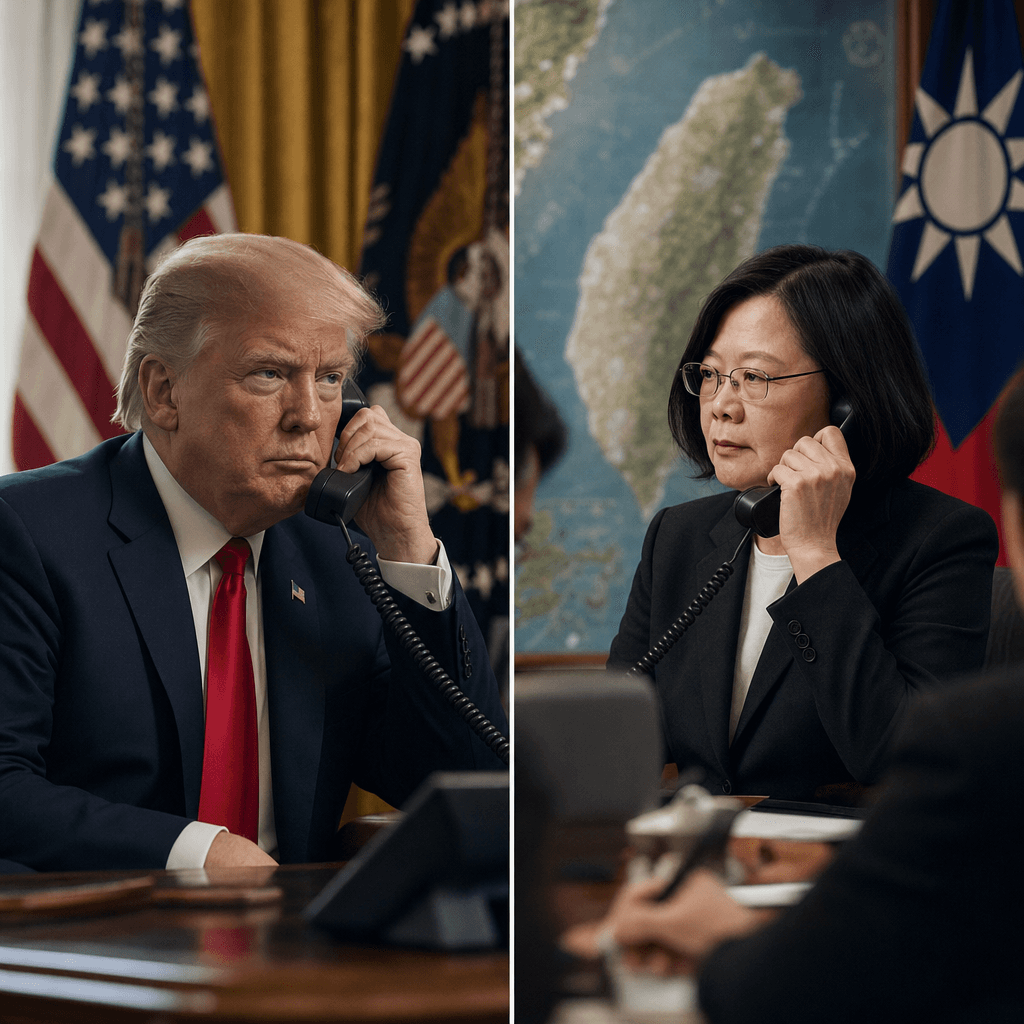
Trump’s Taiwan Call Reopens the China Front
Trump’s talk of calling Lai Ching-te turns Taiwan into a bargaining chip again, testing Beijing’s red lines and Washington’s credibility at once.
President Donald Trump says he will speak with Taiwan’s President William Lai Ching-te, a move that would break with decades of U.S. practice and immediately collide with Beijing’s position on Taiwan, according to Al Jazeera and
BBC News. The timing matters: Trump raised the prospect only days after his summit with Xi Jinping in Beijing, while the White House is still weighing a reported $14 billion arms package for Taiwan,
Al Jazeera and
The New York Times reported. That gives Trump leverage over both sides — but it also makes him the source of the instability.
The power dynamic is the point
Washington’s formal policy has rested on ambiguity since it switched diplomatic recognition from Taipei to Beijing in 1979, while still backing Taiwan’s defense under the Taiwan Relations Act, Al Jazeera reported. A direct Trump-Lai call would be the first such contact between sitting leaders in modern U.S.-Taiwan relations, and China would treat it as a political downgrade of its claim that Taiwan is part of Chinese territory,
BBC News and
The New York Times said. Trump is not simply signaling support for Taipei; he is also creating room to extract something from Beijing after the Xi summit, whether on trade, security, or a broader de-escalation package,
The New York Times reported.
That is why Taipei is leaning into the moment. Lai said he would be “happy” to talk, and Taiwan’s foreign ministry stressed that it wants to preserve the “stable status quo” in the Taiwan Strait, Al Jazeera reported. For Taiwan, any direct channel to Trump is useful because it reduces the chance that the island becomes just another item in U.S.-China bargaining. But it is also a warning: Trump has already suggested the arms sale could be used as a “negotiating chip,”
The New York Times said.
Beijing has the most to lose
China’s foreign ministry has already objected to “official exchanges” between Washington and Taipei and to U.S. arms sales to the island, Al Jazeera and
BBC News reported. That response is predictable because the issue goes beyond symbolism: Beijing sees Taiwan as a sovereignty question, not a bilateral irritant. If Trump follows through, Xi will face pressure to answer in ways that show resolve without blowing up the broader U.S.-China relationship he just tried to stabilize.
The sharper risk is that Trump’s improvisation leaves everyone guessing. In 2016, his call with then-president Tsai Ing-wen triggered a formal protest from Beijing, Al Jazeera noted. This time, the stakes are higher because the talk of a call is linked to actual arms-sales decisions, not just protocol. For readers tracking the regional balance,
Global Politics and
United States are the right lenses.
What to watch next
The next decision point is whether Trump actually places the call, and whether the White House approves the $14 billion package, BBC News and
Al Jazeera said. If both happen, Beijing will likely respond first with rhetoric, then with pressure on U.S. officials and perhaps on any pending bilateral contacts. If Trump backs off, that will tell Beijing he is still treating Taiwan as a bargaining chip — just one he is not yet ready to spend.
Discover more
Conflict & Security
De la Espriella's Razor Win Resets US-Colomb
De la Espriella's razor-thin election win signals a reset in US-Colombia relations, reshaping security ties and the agenda under a Trump-aligned approach.
International Relations
Colombia's Razor-Thin Rightward Pivot
Colombia swings right as Abelardo de la Espriella narrowly wins the presidential runoff by under one percent, exposing a deeply divided and polarized nation.
Global Politics
Iran Demands US Enforce Ceasefire
Iran insists the United States must enforce a ceasefire in Lebanon to uphold the memorandum of understanding, raising pressure on Washington and Netanyahu.

Conflict & Security
Trump's Iran Deal Faces Bipartisan Backlash
Trump's Iran deal draws fierce criticism from both Republicans and Democrats, exposing deep political divides over the ceasefire and the terms of the agreement.