Ecuador’s Drug War
US military support in Ecuador faces serious scrutiny and risks.
Model Diplomat3 min readSouth America
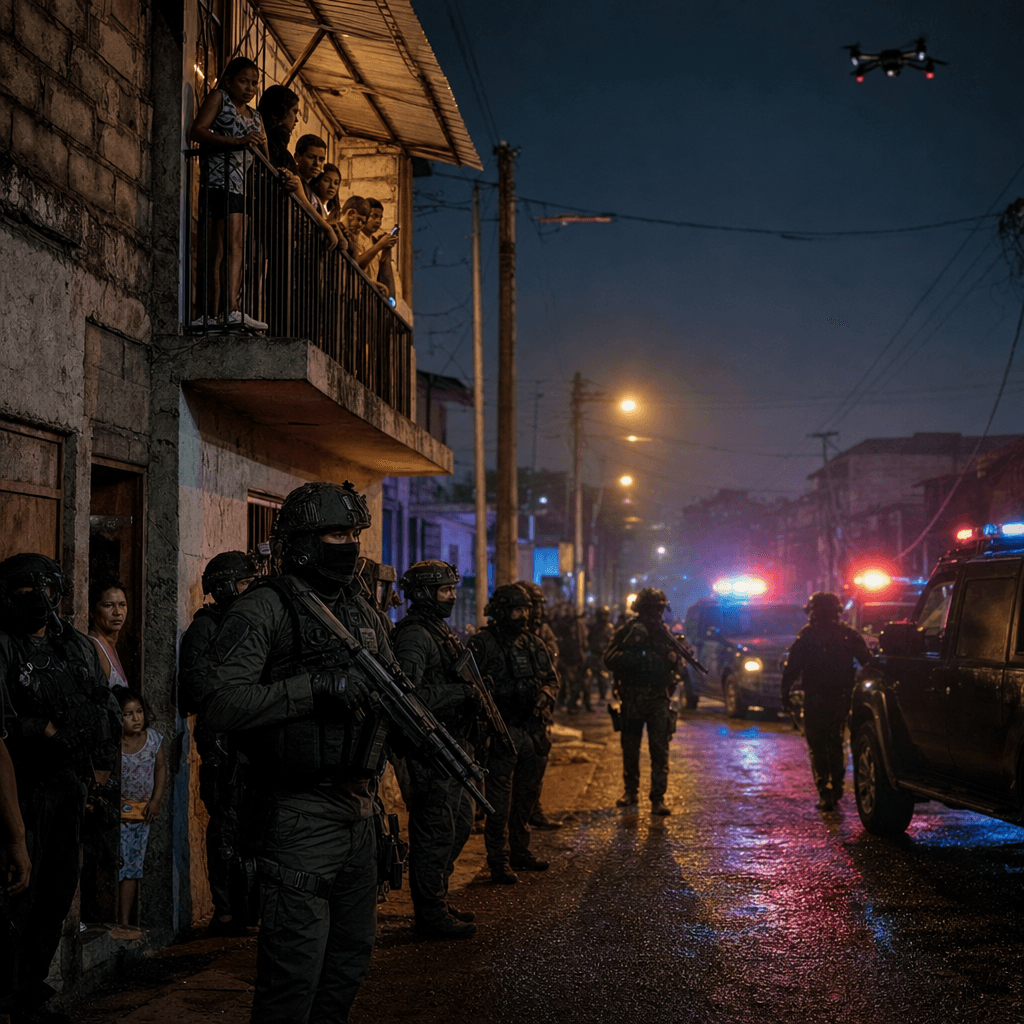
Ecuador’s Drug War Is Turning Into a US-Backed Liability
Washington is giving Quito military cover, but allegations of torture, disappearances and a murky legal basis are turning the anti-narcotics campaign into a political risk.
US lawmakers have put the Pentagon on notice: suspend joint anti-drug operations in Ecuador until it explains the legal basis for the mission and addresses allegations of grave abuses, including attacks on civilians, according to EL PAÍS. The letter, backed by roughly 20 Democrats, gives Defense Secretary Pete Hegseth until May 22 to respond. That is the leverage point now. Congress is asking whether the United States has signed onto an abusive campaign it cannot defend in public.
The leverage is Washington’s — but Quito is using it
President Daniel Noboa wants the United States for three things: intelligence, technology and political cover. He has sold the partnership as a force multiplier for Ecuador’s fight against criminal groups, telling CNN that Ecuadorian forces remain in the lead while US troops provide support. CNN en Español reported that Noboa framed the arrangement as sovereign cooperation, not foreign intervention.
That is the political bargain. For Washington, the attraction is operational access in a country that has become a key transit corridor for cocaine shipments and a growing test case for the Trump administration’s “narcoterrorism” doctrine. For Quito, the payoff is military capacity and a harder line against gangs. But the same arrangement now creates exposure in both capitals. If the Pentagon cannot show what US personnel did in March, or what rules governed the operation, it looks like a covert war run outside normal oversight. For a broader look at how this kind of security partnership becomes a political instrument, see Global Politics.
The allegations cut to the credibility problem
The March operation is the core problem. Reuters reported that Ecuador and US forces conducted a joint strike near the Colombian border against what Quito called a narcotics camp, using helicopters, drones and boats. But
EL PAÍS later highlighted doubts raised by witnesses and journalists: the target may have been a dairy farm, and military personnel allegedly attacked and questioned unarmed civilians, burned homes and tortured workers before the bombing.
That matters because Ecuador’s anti-gang offensive already has a weak results record. The lawmakers’ letter cited more than 9,200 homicide victims last year and said the militarized strategy has failed to reduce trafficking or violence, EL PAÍS reported. If those numbers stand alongside allegations of torture and forced disappearances, the campaign stops looking like law enforcement and starts looking like a liability chain: Ecuadorian troops on the ground, US support in the background, and no clear public accountability in either place.
What to watch next
The immediate test is the Pentagon’s answer to Congress. If it discloses the legal basis, the command structure and the safeguards, Noboa keeps his partnership. If it doesn’t, pressure will grow for a pause in support and for hearings over Conflict policy, command authority and human-rights oversight. The next decision point is not on the battlefield; it is whether Washington is willing to own the operation in writing.
Discover more
Global Politics
Trump's Conflicting Messages on Iran War
Trump's mixed messages on Iran reflect a strategy of audience management, benefiting Tehran amid a complex geopolitical landscape.

Global Politics
US Seizes Iranian Ship, Tensions Surge
The US seizure of the Iranian ship Touska highlights a shift in control over the Strait of Hormuz, favoring Iran's strategic position.

Conflict & Security
Drone Warfare Killing Aid Workers at Unprec
Over 1,000 humanitarian workers killed in three years as cheap armed drones collapse legal protections. Gaza, Sudan, Ukraine, and DRC see deliberate targeting of aid convoys and hospitals with zero prosecutions.

Global
World Normalises Taliban as Afghan Women Eras
UN data shows Afghan women erased from public life as Russia recognises the Taliban, EU hosts officials in Brussels, and ICC warrants for gender persecution go unenforced.