Trump's Child Care Funding Reversal Disrupts
Trump's rejection of child-care funding complicates bipartisan plans.
Model Diplomat3 min readUnited States
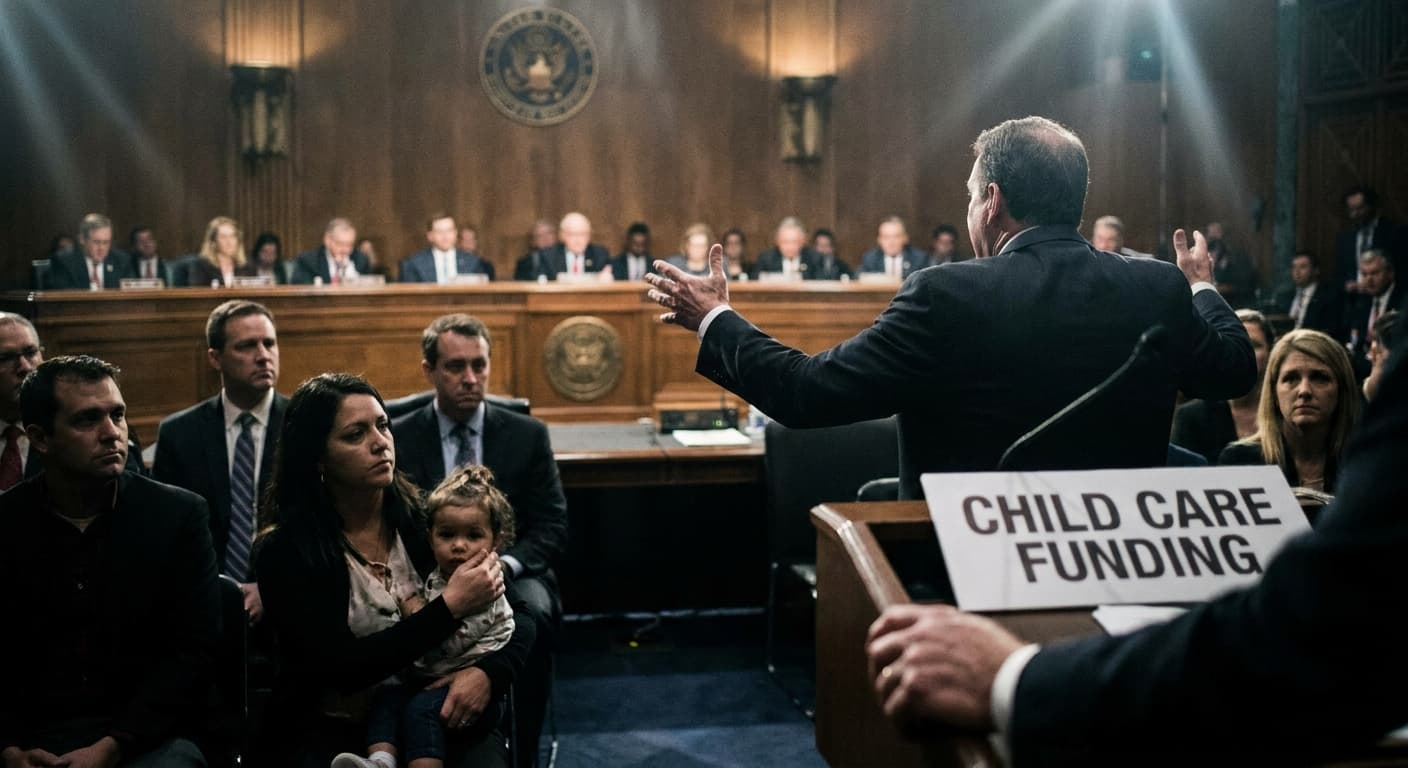
Trump's Reversal on Child Care Funding Disrupts Bipartisan Momentum
President Trump’s sudden rejection of federal child-care support this April throws a wrench into a rare bipartisan push to reduce costs for struggling American families.
On April 15, 2026, President Donald Trump publicly abandoned his previous commitment to federal investments aimed at lowering child-care costs, upending a bipartisan coalition in Congress and factions within the White House that had been steadily advancing related policy proposals. This reversal reverberates across legislative and policy circles just as momentum was building toward significant child-care affordability reforms.
Why This Matters: A Rare Bipartisan Win on Shaky Ground
Child care costs in the United States remain a crushing expense for millions of families, often rivaling housing or college tuition. Efforts to address this have historically been partisan quagmires, with conservatives skeptical of large government spending programs and progressives pushing expansive subsidies.
But over the past two years, a convergence emerged. Republican and Democratic lawmakers, recognizing the broad economic and social impact of child-care affordability—from workforce participation to early childhood development—began negotiating toward a package combining federal funding boosts with incentives for private-sector expansion and streamlined regulations.
Trump’s initial support added unusual weight to this coalition, signaling a potential breakthrough that could fundamentally shift federal child-care policy. His withdrawal not only stalls those legislative initiatives but also threatens to unravel trust among key bipartisan players who viewed his backing as a linchpin.
The Stakes: Families and Political Capital
The disruption comes at a politically sensitive moment. Child care is not just a policy issue; it’s a daily crisis for many voters grappling with rising inflation and wage stagnation. With a midterm election cycle looming, both parties had pragmatic reasons to push affordable child care as a vote-winning policy.
Trump’s decision reflects deeper ideological and political calculations. His rejection aligns with a broader pushback against federal spending perceived as welfare expansion—a stance that resonates with his political base but conflicts with pragmatic coalition-building efforts on Capitol Hill.
This move risks alienating moderates and working-class voters who had welcomed the prospect of relief in child-care expenses. It also opens space for Democrats to frame Republicans as obstructing tangible support for families, potentially leveraging the issue to gain ground in critical districts.
What to Watch Next
Congress now faces a precarious path. Will lawmakers attempt to salvage a narrower, less ambitious bill without the president’s imprimatur? Or will factions within the Republican party try to override Trump’s position to preserve bipartisan gains? The Senate’s stance will be crucial, as will signals from influential committee chairs spearheading child-care legislation.
The White House’s internal divisions are another wild card. While Trump’s office has publicly reversed course, other officials have privately expressed concern that retreating from child-care support could undermine broader economic recovery efforts and family welfare goals.
Finally, advocacy groups and state governments will amplify pressure. Many states have stepped up their own child-care assistance programs in response to federal gaps, but without coordinated support, the U.S. risks fragmenting coverage and exacerbating inequalities.
This episode underscores how volatile the intersection of social policy and political calculation remains in American US Politics, especially on issues once thought ripe for consensus.
For further insight into U.S. political dynamics and ongoing policy debates, see our coverage of Global Politics and
US Politics.
Trump abandons pledge on child care, upending bipartisan plans
Discover more
US Politics
Congress vs. White House: War Powers Clash
Tensions escalate as Congress challenges Trump's war powers and ballroom plans, exposing deepening conflict between executive authority and legislative power.

US Politics
Judge Limits Trump's White House Ballroom
A federal judge curtailed Trump's White House ballroom expansion, permitting only underground construction amid legal challenges and preservation concerns.

US Politics
House Republicans vs Senate
House Republicans split over DHS funding, pushing a narrow ICE and Border Patrol focus while the Senate backs a broader approach to immigration and security.

Conflict & Security
Drone Warfare Killing Aid Workers at Unprec
Over 1,000 humanitarian workers killed in three years as cheap armed drones collapse legal protections. Gaza, Sudan, Ukraine, and DRC see deliberate targeting of aid convoys and hospitals with zero prosecutions.