Trump’s Revenge Tour Is Hitting Congress’s Wall Hard
Trump is winning primaries but losing leverage in Congress as Republicans balk at his $1.8 billion fund and ballroom push, and Senate leaders hit pause.
Trump’s week in Washington ended with a blunt signal of resistance: Senate Majority Leader John Thune sent the chamber home until June rather than force Republicans to vote on the White House’s $1.8 billion “anti-weaponization” fund and related ballroom security money, Axios reported. The immediate trigger was procedural, but the power shift is bigger: Trump can still punish enemies inside his party, but he is no longer getting clean obedience on Capitol Hill.  Axios
Axios
The White House overreached
The fund has become politically toxic because it was announced as part of a Justice Department settlement resolving Trump’s IRS dispute and would draw from the government’s judgment fund, with Attorney General Todd Blanche overseeing the process, CNN reported. Republicans say they were not consulted, do not know who would get paid, and are uneasy that the money could reach people convicted in connection with the Jan. 6 attack. Susan Collins said she did not support the fund “as it has been described,” while Thom Tillis called it “stupid on stilts.”  CNN
CNN
That matters because Trump did not just ask Congress to swallow an unpopular settlement. He tied it to a must-pass immigration enforcement bill, then layered on $1 billion for White House ballroom security, turning a narrow reconciliation package into a referendum on his personal agenda. The Globe and Mail, citing Reuters, reported that Republicans already dropped the ballroom money before walking away from the broader vote, and that Thune said the White House should have consulted Congress before announcing the settlement.  The Globe and Mail
Revenge is paying off in primaries, not legislating
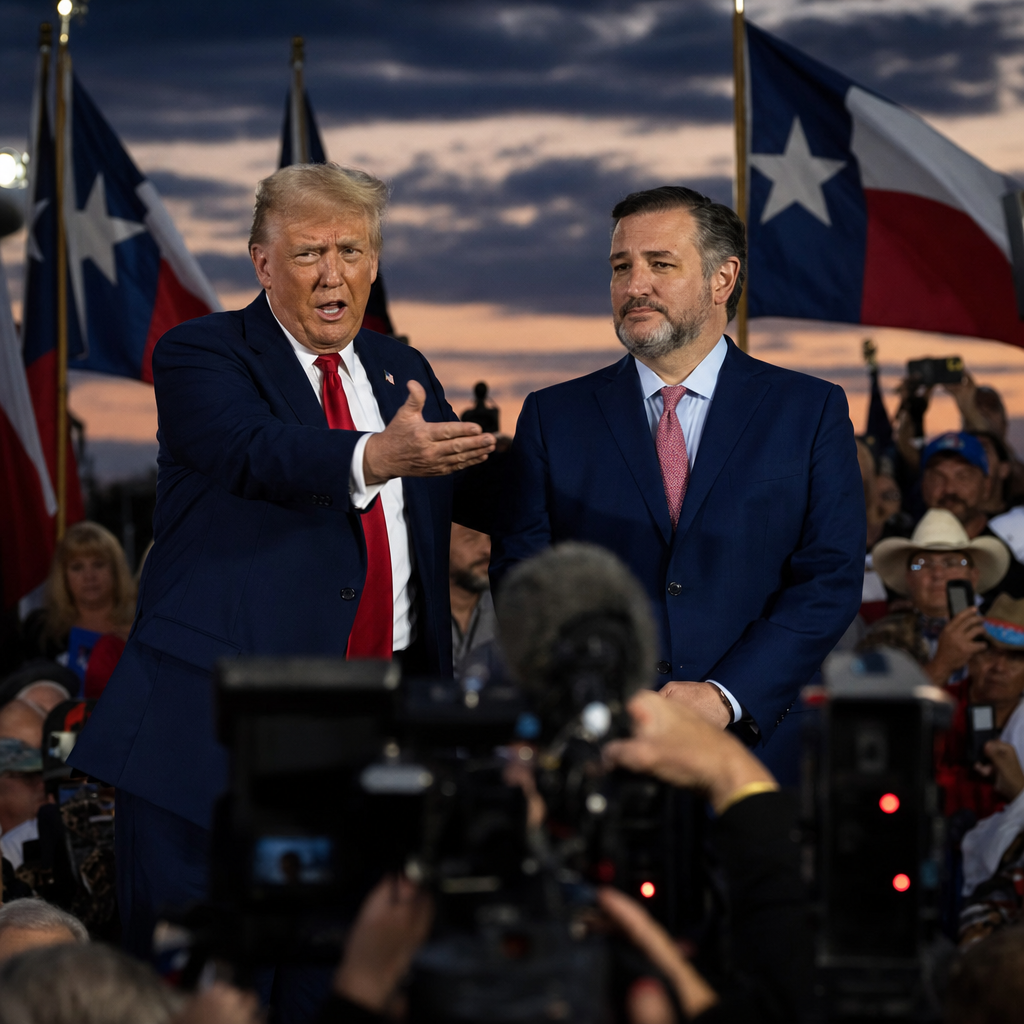
This is the downside of Trump’s current method of control. He is still dominant in Republican primaries, but that power is producing more senators with nothing left to lose. Axios noted that Trump helped knock off Sen. Bill Cassidy in Louisiana, backed a challenger to Rep. Thomas Massie in Kentucky, and is now intervening in Texas against Sen. John Cornyn. Those moves may please the base, but they also harden a bloc of Republicans — including Cornyn, Cassidy, Tillis, Rand Paul, Susan Collins and Lisa Murkowski — who are more willing to embarrass him in public. Axios
That is the real power problem. In a primary, Trump only needs fear and attention. In Congress, he needs votes, timing and procedural discipline. Instead, his own priorities are giving moderates cover to say no. Pennsylvania Rep. Brian Fitzpatrick has already moved to block the fund, and House Republicans are openly questioning the optics of the ballroom money, CNN reported. CNN
For broader context on how presidential leverage works when party loyalty collides with institutional rules, see  US Politics and United States.
What to watch next
The next decision point is June, when senators return from the Memorial Day recess and Thune decides whether to strip out the anti-weaponization fund, rewrite it, or let Democrats keep forcing politically painful amendments. Axios The other test is whether House Republicans can keep delaying the ballroom and Iran-war votes without looking like they are simply running out the clock. If Trump cannot convert primary victories into legislative discipline by early June, this stops being a week of turbulence and starts looking like a governing ceiling.
*