Trump's Peace Promises
Examining the impact of Middle East tensions on Dearborn's community
Model Diplomat3 min readMichigan
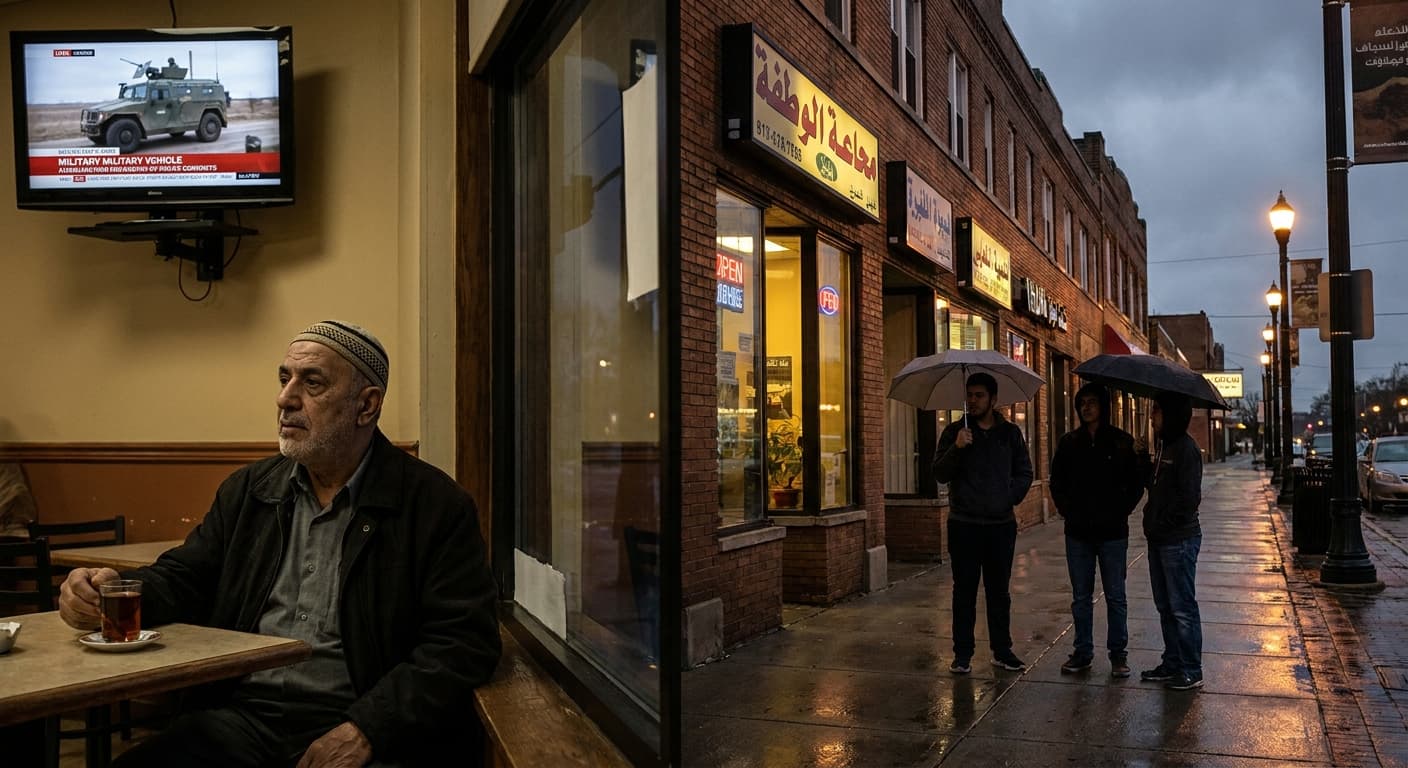
Trump vowing peace in the Middle East feels distant to Dearborn’s Arab Americans
Eighteen months into Trump’s second term, the Gaza–Lebanon conflict and Middle East tensions continue to reverberate deeply across the Arab American community in Dearborn, Michigan.
Eighteen months after Donald Trump’s second inauguration, his repeated pledges to bring peace to the Middle East feel to many in Dearborn like echoes from a distant political campaign rather than impending reality. The Associated Press’s recent reporting from this city, home to the largest Arab American population in the U.S., paints a vivid picture of a community still grappling with the far-reaching impacts of the Gaza-Lebanon conflict and intensifying regional tensions, compounded by fears over family members caught amid uncertainties in Lebanon, Gaza, and Iran.
Dearborn: The U.S. epicenter of Middle East anxieties
Dearborn’s Arab American population, estimated at over 40% of the city’s 110,000 residents, has long served as a barometer for broader American ties and sentiments regarding Middle Eastern affairs. Most are directly linked by family or heritage to Lebanon, Palestine, Iraq, Syria, or Yemen. While Trump’s 2024 campaign pushed a narrative of bringing peace to the region—leaning heavily on his administration’s normalization deals with Gulf states and opposition to Iran—the localized reality in Dearborn is far more complex and fraught.
The ongoing Gaza-Lebanon conflict reignited in late 2025, following a decades-long cycle of hostilities between Israel and Hezbollah-backed Lebanon as well as Hamas in Gaza. For many in Dearborn, relatives remain in harm’s way, compounded by the specter of Iran-backed proxy conflicts expanding across the region. Amid these developments, the community voices a deep sense of vulnerability—the sense that U.S. policy has fallen short in addressing the underlying drivers of instability, leaving them to live in anxiety and uncertainty about the near future.
Why Trump’s peace promises ring hollow in 2026
Trump’s peace pledges focused heavily on transactional diplomacy—sweeping agreements between Arab states and Israel—but critics in Dearborn and beyond argue this approach fails to resolve core issues that stoke the conflict, including Palestinian statehood, Lebanese sovereignty, and Iranian regional ambitions. The recent flare-ups reflect these unresolved tensions.
Moreover, Trump’s administration was characterized by rhetoric that often alienated American-Muslim and Arab communities domestically. Many viewed his inflammatory statements and policies on immigration and Middle East affairs as exacerbating Arab American marginalization rather than healing divisions or fostering peace.
This disconnect underscores a wider challenge for U.S. Middle East policy: balancing strategic alliances and realpolitik with the lived realities of diasporic communities at home who bear personal stakes in regional conflicts. Dearborn’s experience illustrates the limits of peace as a political slogan when its promises do not translate into stable, protective realities for those with ties to conflict zones.
What to watch next
Dearborn’s situation signals broader trends that U.S. policymakers cannot afford to ignore. As the 2026 midterm elections approach, Arab American voter mobilization driven by foreign policy grievances could shape local and national outcomes—particularly in key swing states like Michigan.
On the international front, watch for how Washington recalibrates its approach to Lebanon and Gaza amid Iran’s continued influence and entrenched hostilities. The Biden administration, now in its second term, faces pressure to pursue a more nuanced diplomatic strategy that addresses the multilayered roots of conflict rather than relying primarily on deals with regional power brokers.
In Dearborn and similar diaspora hubs, peace will not be measured by headline-grabbing accords but by tangible improvements in security and stability for families still caught in the crossfire abroad.
For more on the intricate dynamics of U.S. ties to the Middle East, see our coverage of Global Politics and the role of diaspora communities in shaping foreign policy at home.
Sources:
Discover more
Global Politics
Iran's Fragile Ceasefire
With Iran's ceasefire nearing its end, uncertainty mounts over stalled US-Iran negotiations and the fragile prospects for lasting Middle East stability ahead.
US Politics
Congress vs. White House: War Powers Clash
Tensions escalate as Congress challenges Trump's war powers and ballroom plans, exposing deepening conflict between executive authority and legislative power.

US Politics
Mike Johnson's Congress
Speaker Mike Johnson's leadership is reshaping Congress, critics say, enabling Trump's aggressive executive agenda while deepening partisan gridlock today.

Conflict & Security
Drone Warfare Killing Aid Workers at Unprec
Over 1,000 humanitarian workers killed in three years as cheap armed drones collapse legal protections. Gaza, Sudan, Ukraine, and DRC see deliberate targeting of aid convoys and hospitals with zero prosecutions.