Trump's Optimism on Iran Talks and Tensions
Trump claims Iran is compliant, but IAEA can't verify stockpile.
Model Diplomat8 min readMiddle East
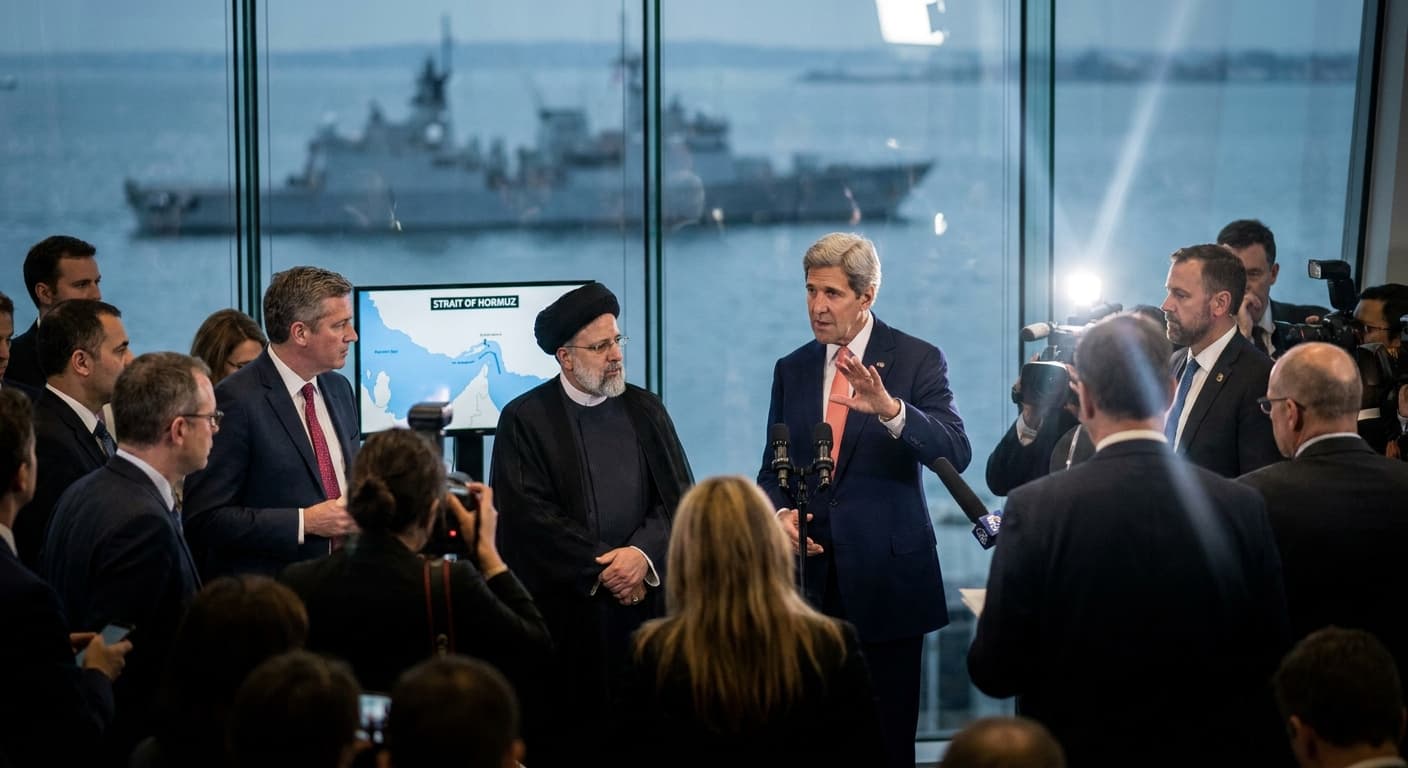
Trump's Iran Optimism Meets a 440-Kilogram Uranium Problem
Trump says Iran has agreed to "just about everything," but the IAEA can't verify a gram of the stockpile — and the August 16 deadline is what actually matters.
On July 3, 2026, President Donald Trump told reporters that Iran had "agreed to just about everything we need" in nuclear talks — his most bullish public assessment in the 16 days since he and Iranian President Masoud Pezeshkian signed a 14-point Memorandum of Understanding in Evian, France, on June 17. The claim, carried by Anadolu Agency, is doing heavy political work at home. It is not doing much diplomatic work in Doha. The gap between Trump's optimism and the technical reality is now the story — and it is measured precisely in 440 kilograms of near-weapons-grade uranium that the International Atomic Energy Agency (IAEA) still cannot inspect, count, or verify.
That gap explains everything else: why oil has fallen back below $71 a barrel, why Vice President JD Vance won't rule out a return to combat, why Iran's parliament speaker is publicly barring inspectors, and why the entire negotiation is quietly sliding toward an extension of the August 16 deadline rather than a final deal.
What Trump is actually claiming — and what mediators actually said
Trump's optimism follows two days of indirect technical talks in Doha on June 30 and July 1, 2026. US envoy Steve Witkoff and White House adviser Jared Kushner met Qatari Emir Sheikh Tamim bin Hamad Al Thani and Qatari-Pakistani mediators; Iranian negotiators sat in a separate room. Qatar's foreign ministry spokesman Majed al-Ansari described "positive progress," building on the "Islamabad Memorandum of Understanding" and the earlier Lake Lucerne summit, per Al Jazeera.
The Iranian readout is materially different. Deputy Foreign Minister Kazem Gharibabadi said the two meetings addressed "US violations of its obligations" and the release of $6 billion in frozen Iranian funds — not a comprehensive nuclear settlement. Iranian officials publicly denied any direct US contact. Vance dismissed that as a "Persian negotiating tactic" on the Michael Knowles Show; Iran's foreign ministry, in turn, warned Trump that "no negotiations on a final deal" are possible while he keeps threatening military action, Al Jazeera reported.
The core issue is not atmospherics. It is that Trump is selling a comprehensive breakthrough while the actual document — a 14-point framework — defers every hard question. The BBC's full text shows the parties merely "agreed to discuss" the enrichment question "based on a satisfactory framework being agreed upon in the final deal." That is diplomatic language for: we did not agree.
The uranium problem no one can see
The technical anchor of Trump's problem sits in Vienna. In its June 4, 2026 report to the Board of Governors, GOV/2026/33, the IAEA stated bluntly that during the entire reporting period since the February 28 strikes, "the Agency has not been able to fulfil its obligations under the NPT Safeguards Agreement" at any Iranian facility except the Bushehr power plant. Inspectors visited BNPP once, from June 1 to 3. That is it.
The report lists what the agency cannot verify: whether Iran has suspended enrichment, whether it has suspended reprocessing, the size of the uranium stockpile, work on heavy-water projects, and Iran's centrifuge inventory. Pre-war, the IAEA assessed Iran's stockpile at 440 kilograms of uranium enriched to 60 percent purity — enough, if further enriched, for roughly ten weapons. Much of it is believed to sit in tunnels at Isfahan, one of the sites the US bombed. It has not been seen since.
On June 10, the Board of Governors adopted resolution GOV/2026/40, calling Iran's non-cooperation "a matter of proliferation concern." Two weeks later, at the Bürgenstock talks, Vance announced that Iran had agreed to invite inspectors back. Iran's foreign ministry told IRNA the same day that Tehran had made "no new commitments." On July 2, Parliament Speaker Mohammad Bagher Ghalibaf went further: inspection of the bombed sites at Fordow, Natanz and Isfahan is "not allowed under any circumstances," and parliament has passed a law to that effect.
That is the wall Trump's optimism is running into. Downblending 440 kilograms of near-weapons-grade uranium on site "under the supervision of the IAEA" — as point eight of the MoU requires — is not possible if IAEA inspectors cannot enter the sites where the material is stored.
Why he is optimistic anyway: the market, the base, the midterms
Trump's political incentive to project a deal is now overwhelming. Brent crude fell to $70.82 per barrel on July 2, below its February 27 pre-war level and down 38 percent from the April 30 peak of over $126, according to Al Jazeera's markets desk. Every optimistic statement pushes prices lower; every threat pushes them higher. Trump has said, on the record, that markets track his rhetoric — "every time we talked about the possibility of peace, the stock market shot up like a rocket ship," he told reporters at Evian, per the
BBC.
The domestic politics reinforce the same instinct. The BBC's diplomatic editor Paul Adams noted at a June 24 cabinet meeting that Trump is "in a bind": a satisfactory deal is out of reach, some in his own party — and Benjamin Netanyahu — want him back at war, and November's midterms are visible on the horizon. The Wall Street Journal reported, and Al Jazeera corroborated, that when Trump was recently presented with a full menu of options to restart the war, he told advisers he preferred to give diplomacy a chance and would extend the 60-day truce if needed. [WSJ link needed]
The White House is running an "America First" framing to match. Its June 17 release credited "Operations Midnight Hammer and Epic Fury" and quoted G7 leaders welcoming the deal — but the same release, notably, sidesteps enrichment, sanctions timing, and the $300 billion reconstruction fund. Those are the concessions Congress and Netanyahu will scrutinize; the White House is not litigating them yet.
What Congress is doing about it
The war powers question is not resolved. On April 27, 2026, Senator Tim Kaine (D-VA) — joined by Schiff, Schumer, Booker, Duckworth, and Baldwin — introduced S.J.Res.185 directing removal of US Armed Forces from Iran hostilities absent specific authorization. Schiff's earlier
S.J.Res.184 had already noted that the 60-day War Powers Resolution clock, triggered by Trump's March 2 notification, expired on May 1, 2026.
The resolutions did not force withdrawal — the ceasefire and MoU intervened — but they did establish a bipartisan trip-wire. A collapse of the MoU that led Trump to resume kinetic operations without a fresh notification would put those measures on the Senate floor within days under expedited procedure. That is a real constraint on the "finish the job" threat Trump keeps deploying rhetorically.

The Council on Foreign Relations reads it as an Iranian win
The most contrarian expert take on this deal comes from the Council on Foreign Relations. Its analysis argues that Trump "concluded the conflict without a strategic victory — on terms that seem to favor Iran," noting that under the MoU Iran will enjoy a moratorium on sanctions in oil sales, will be able to enrich uranium (pending the final deal), and will not be required to dismantle its network of proxies. The Warsaw-based
OSW Centre for Eastern Studies reaches a similar conclusion: "Wars are defined by their narratives. The Americans are talking of peace; the Iranians of victory."
That reading is uncomfortable for Trump but tactically useful. If the final deal looks like the JCPOA-plus, he can claim he ended a war Obama could not have prevented; if it collapses, he can blame Iranian intransigence and revert to Operation Epic Fury without political cost. The optimism is the option value. Trump collects market lift and midterm framing regardless of whether a deal closes.
The costs sit elsewhere. Israel — whose prime minister was publicly admonished by Trump at the G7 for continuing operations against Hezbollah — is watching a US president unilaterally define the endgame of a war Jerusalem started. Gulf states applauded the reopening of Hormuz but face, per CFR, the prospect of transit tolls after August 16 that Kuwait and Qatar cannot easily route around. And Senator Jeanne Shaheen (D-NH) called the MoU "a very bad deal" that fails to address Iran's regional proxies or missile program, in comments to the BBC.
The verification cliff-edge
The IAEA is the point of failure to watch. Director-General Rafael Grossi said in a June 24 statement that inspections "will indeed take place" and that "we will be working on the modalities" soon — adding that whether that happens "in one week or in 10 days" is important but not essential.
By July 2 it had been not one but two weeks. Iran's parliament speaker had publicly ruled out access to the bombed facilities. Iranian Deputy FM Gharibabadi said access to damaged sites "will only be addressed within the framework of a final deal" and after "practical steps had been taken to lift all sanctions" — a sequencing Washington explicitly rejects.
The MoU's point nine locks in a "status quo" on Iran's nuclear program while talks continue. If that status quo means no inspections, the deal is a moratorium on visibility, not on enrichment. That is precisely what killed political support for the JCPOA in Trump's first term.
Diplomat View
Trump will extend the August 16 deadline rather than restart the war. The evidence is convergent: oil markets are pricing in peace, the Wall Street Journal reports he prefers diplomacy, Vance's public position leaves the door open, Senate war-powers resolutions loom, and neither Trump nor Pezeshkian benefits from resumed hostilities before the US midterms or before Iranian regime consolidation under Mojtaba Khamenei. Expect a 30- to 60-day rollover framed as a "final push," a partial IAEA inspection deal that covers Bushehr and one or two undamaged facilities — not Fordow, Natanz or Isfahan — and continued release of frozen assets in tranches tied to Hormuz transit compliance.
The forecast breaks if two things happen simultaneously: Israel executes a unilateral strike on an Iranian nuclear or missile site that Iran cannot ignore, and Trump's political base reads extension as weakness. In that case, "finish the job" becomes operative language, not a bargaining chip. Netanyahu's public statements after July 15 and IAEA access to Isfahan by August 1 are the tell-tales — not Trump's rhetoric.
What to watch next
- July 15–20, 2026 — Next scheduled round of US–Iran indirect talks in Doha, per Qatar's foreign ministry, after Khamenei funeral processions conclude.
- August 1, 2026 — Informal IAEA benchmark for a first inspection at a damaged site; missing it signals the verification track is stalled.
- August 16, 2026 — 60-day MoU deadline. Expect extension announcement, not a final deal.
- September 2026 — Senate could revive S.J.Res.185 if kinetic operations resume without new congressional authorization.
- November 3, 2026 — US midterms. A stalled deal is a manageable story for Trump; a resumed war, without congressional authorization, is a constitutional crisis on top of a military one.
Discover more
Conflict & Security
De la Espriella's Razor Win Resets US-Colomb
De la Espriella's razor-thin election win signals a reset in US-Colombia relations, reshaping security ties and the agenda under a Trump-aligned approach.
International Relations
Colombia's Razor-Thin Rightward Pivot
Colombia swings right as Abelardo de la Espriella narrowly wins the presidential runoff by under one percent, exposing a deeply divided and polarized nation.
Global Politics
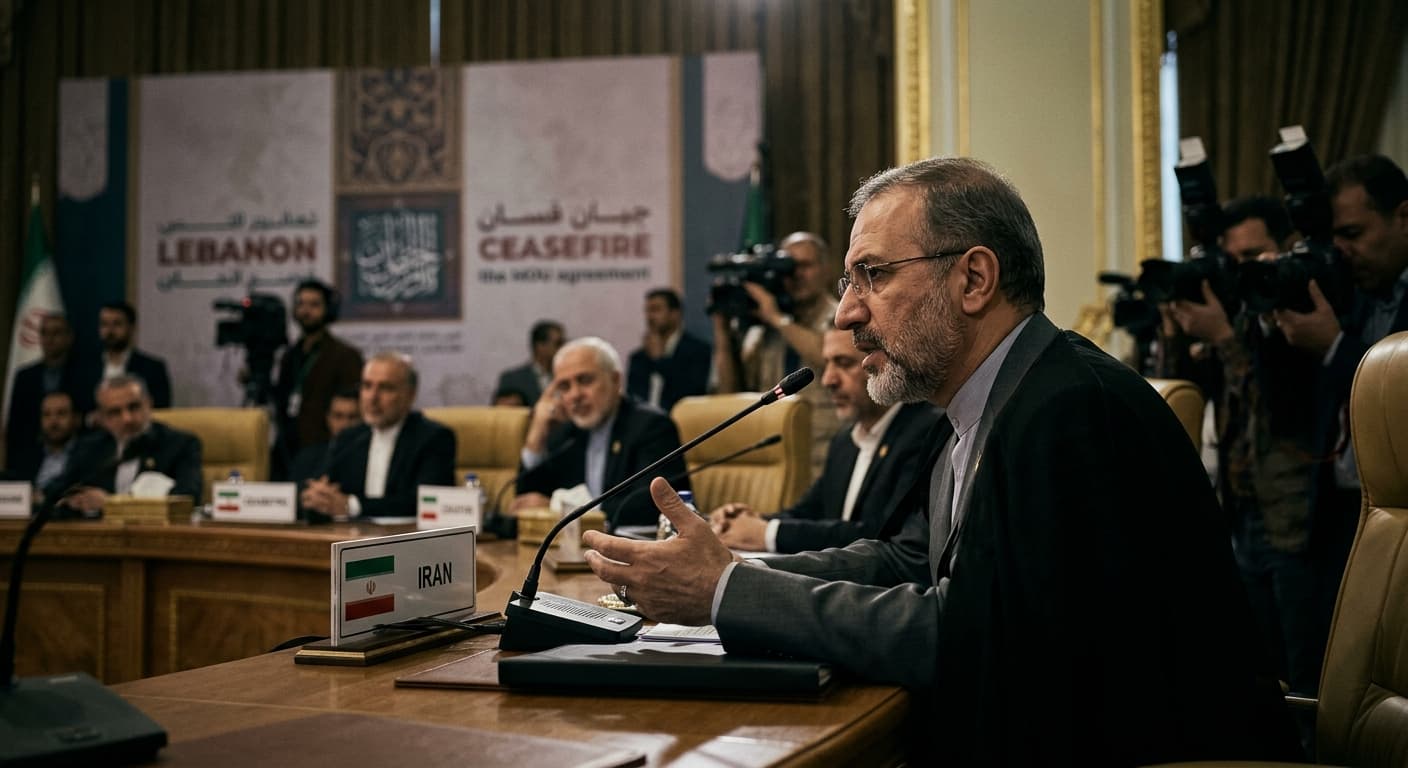
Iran Demands US Enforce Ceasefire
Iran insists the United States must enforce a ceasefire in Lebanon to uphold the memorandum of understanding, raising pressure on Washington and Netanyahu.

Conflict & Security
Trump's Iran Deal Faces Bipartisan Backlash
Trump's Iran deal draws fierce criticism from both Republicans and Democrats, exposing deep political divides over the ceasefire and the terms of the agreement.