Trump’s Oman Threat Raises Stakes in Hormuz
Trump's remark pressures Gulf mediator Oman amid Hormuz tensions.
Model Diplomat3 min readMiddle East
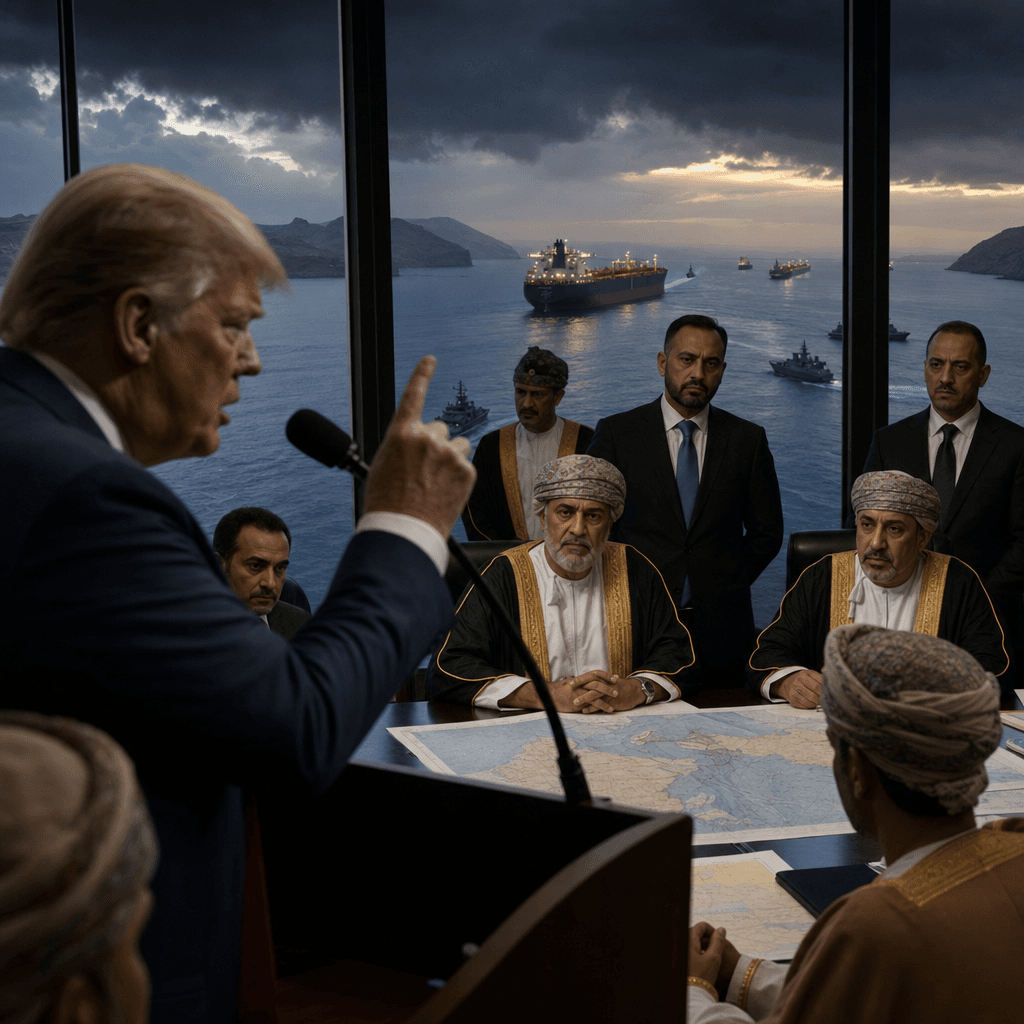
Trump’s Oman Threat Raises Stakes in Hormuz Standoff
Trump’s remark turns a shipping dispute into pressure on a Gulf mediator, risking Oman’s role and raising the cost of any Hormuz deal.
Donald Trump’s offhand threat to “blow” Oman up if it sides with Iran over the Strait of Hormuz is less about literal intent than leverage: he is trying to force terms on the world’s most sensitive shipping lane by putting even a neutral Gulf state on notice, according to Al Jazeera. The White House did not immediately clarify the remark, and the State Department amplified it online with a transcript that kept “Oman,” not “Iran,” in the quote, making this look deliberate rather than a verbal slip.
Why Oman matters
Oman is not just another Gulf capital. It has long served as a backchannel between Washington and Tehran, and Al Jazeera says Muscat has been a key mediator since the February 28 war began. That makes Trump’s warning strategically clumsy: if the administration is trying to broker a ceasefire or a maritime understanding, threatening the one Arab state trusted by both sides weakens the very channel it may need to use again.
The immediate issue is the Strait itself. Al Jazeera says it handles more than 20 percent of global oil traffic, while Reuters, in reporting on the wider negotiating track, said before the war roughly a fifth of the world’s oil and gas passed through the waterway. In other words, this is not a side dispute. It is the choke point through which energy prices, insurance rates and regional military posture all flow. See also Conflict and
Global Politics for the broader strategic context.
What Trump is trying to extract
The leverage play is broader than Oman. On Wednesday, Trump also renewed pressure on Arab states — including Saudi Arabia and Qatar — to normalize ties with Israel as part of any future deal with Iran, Al Jazeera reported. That tells you the administration’s sequencing: it is trying to bundle maritime access, regional recognition of Israel and an end to the war into one package.
Reuters, via Annahar, shows the same hard line from the other side of the table. Trump is demanding free passage through Hormuz, rejecting any Iranian tolls or control arrangements, and has said the strait must be open “one way or the other.” Iran, meanwhile, has been pushing for a reopening on its terms, including sanctions relief and changes to the security arrangement. That leaves very little room for compromise: if either side concedes, it looks like a retreat.
Who gains, who loses
The short-term winner is the hardline camp in Washington that wants maximum pressure and visible strength at sea. The loser is Oman, which now has to defend its neutrality while avoiding being dragged into a confrontation it did not seek. Gulf shippers also lose, because any hint that the US may escalate around Hormuz tends to raise the cost of moving oil, fertilizer and other cargoes even if no shots are fired.
This matters because the real battlefield is no longer just military. It is the credibility of mediation. If Trump is signaling that even Oman can be treated as a target, then regional states will price in a deal process that is unstable, personalized and easily reversed.
What to watch next
The next decision point is whether Washington walks back the Oman line or doubles down with a formal statement. Watch for any response from Muscat, and for whether the mediation channel — reportedly routed through Qatar and other intermediaries in Reuters coverage — keeps moving or stalls. If Oman publicly distances itself from any Hormuz scheme, Trump’s pressure campaign will have made the deal harder, not easier.
Discover more

Global Politics
US Seizes Iranian Ship, Tensions Surge
The US seizure of the Iranian ship Touska highlights a shift in control over the Strait of Hormuz, favoring Iran's strategic position.

Conflict & Security
Drone Warfare Killing Aid Workers at Unprec
Over 1,000 humanitarian workers killed in three years as cheap armed drones collapse legal protections. Gaza, Sudan, Ukraine, and DRC see deliberate targeting of aid convoys and hospitals with zero prosecutions.

Global
World Normalises Taliban as Afghan Women Eras
UN data shows Afghan women erased from public life as Russia recognises the Taliban, EU hosts officials in Brussels, and ICC warrants for gender persecution go unenforced.
Conflict & Security
West Africa Food Crisis: Three Shocks in 2026
Conflict, climate extremes, and the Strait of Hormuz closure drive a severe food crisis in West and Central Africa, with fertilizer prices surging 80% and millions displaced.